

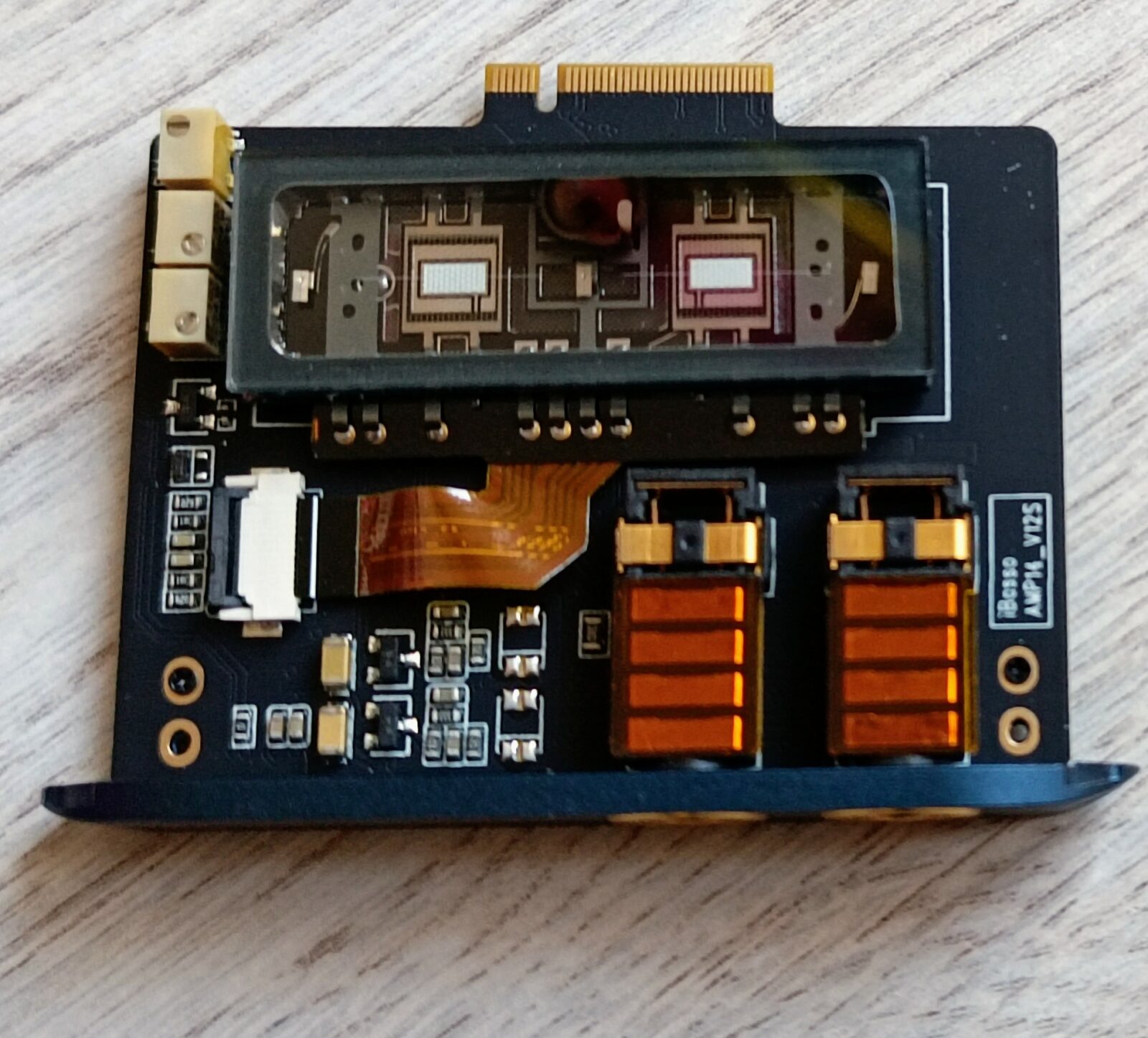

The iBasso AMP14 review sample was kindly provided free of charge in exchange for an honest review.
I didn’t receive monetary or any other kind of compensation and I don’t use affiliate links.
The price of the AMP14 is $279 and you can order it from iBasso shop.
The iBasso amplifier modules
If you are unfamiliar with the iBasso ecosystem, you may not be aware of the replaceable amplifier module system found in their DAPs, such as the DX240, DX300, and DX320. These DAPs offer a unique design feature where users can easily install different amplifier modules to slightly alter the sound signature of the player with each card. The amplifier modules of the DX240 and DX300/320 have different sizes and are not interchangeable.
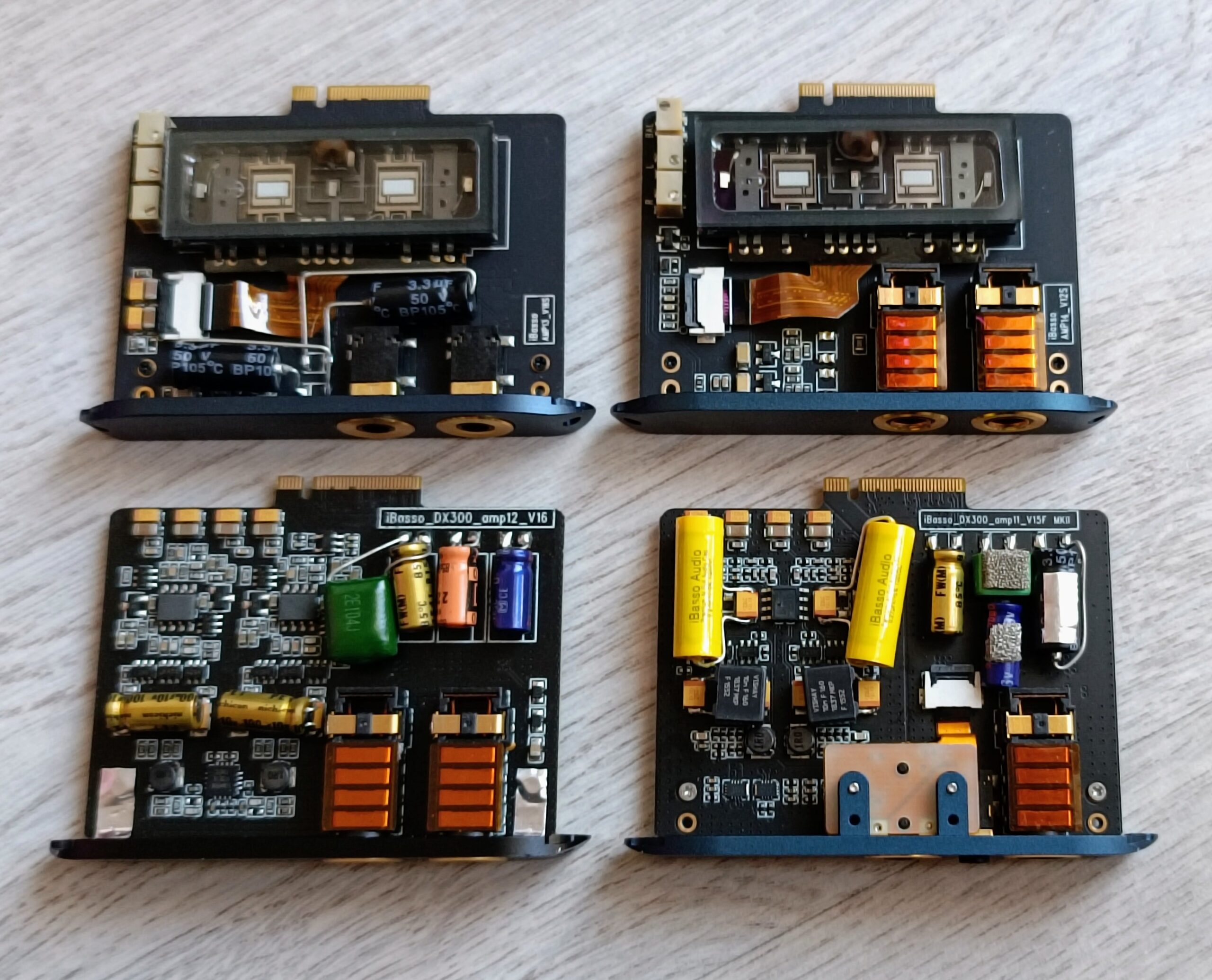
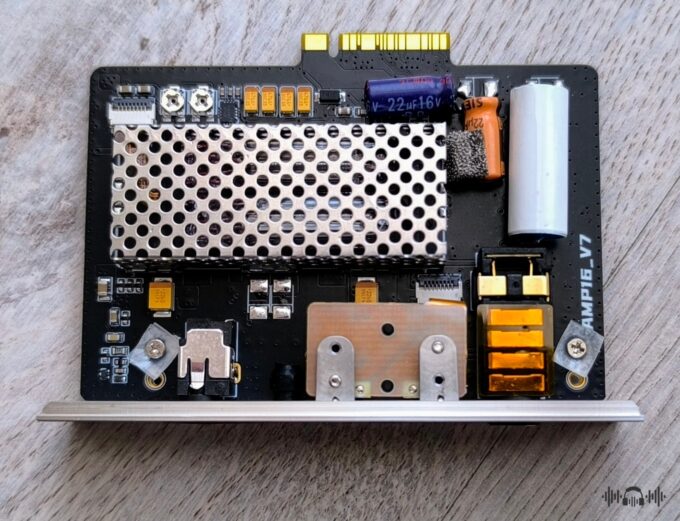
The DX320, their flagship player, comes with the AMP11 MK2s pre-installed as a standard, but there are also three other modules available. These include the class A discrete balanced AMP12, the Nutube single-ended AMP13, and the newly released iBasso AMP14.
It’s worth noting that all of these amplifier cards are also compatible with their previous flagship player, the DX300.

iBasso AMP14 Review
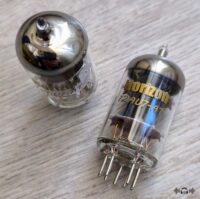
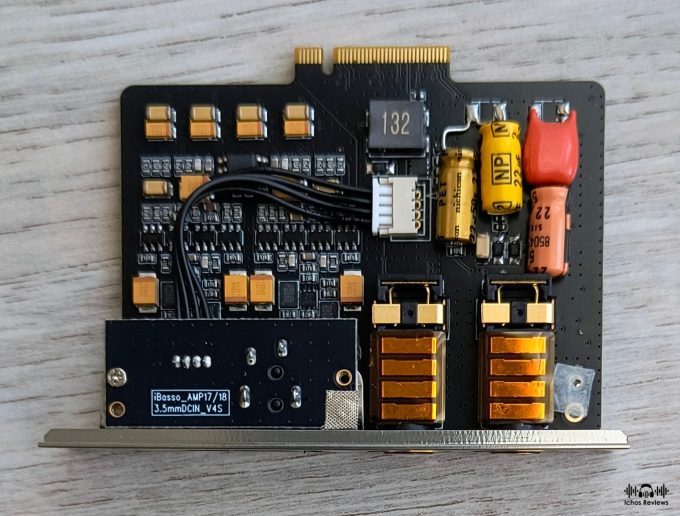
The iBasso AMP14 utilizes a 6th generation triode Nutube 6P1 as a voltage amplifier, similar to the AMP13. However, it now incorporates a JFET differential converter to achieve a differential output. To ensure precise volume control, the AMP14 employs two JRC volume control chips, resulting in a true balanced volume control across 4 channels.
The signal then proceeds through a 4 channel balanced output buffer stage, delivering a robust 5.2V RMS from the 4.4mm headphone socket. Additionally, there is a dedicated balanced line output with a lower 1.8V RMS, which deviates from the industry standard of 4V. If you require a full-scale 4V balanced line output, the AMP12 would be a suitable option to consider.
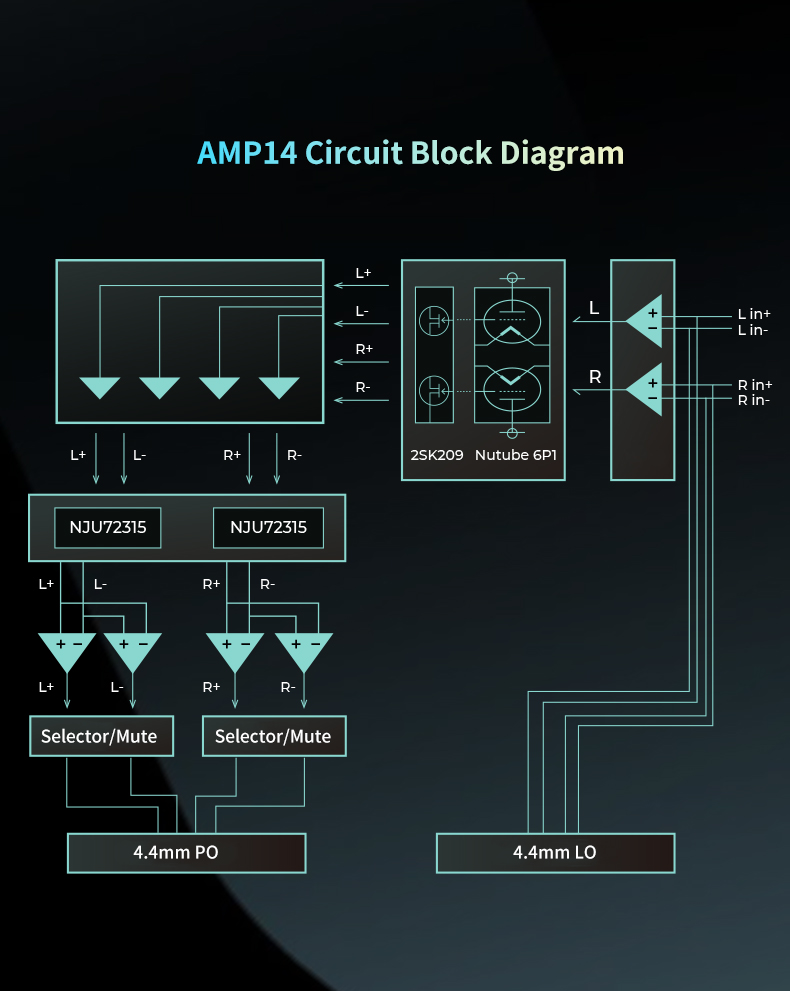
In addition, the iBasso AMP14 incorporates a cathode input that has a lower impedance than the grid, resulting in a decrease in signal interference from external sources. This design feature allows for excellent control over the noise floor and minimizes WiFi interference, thereby enhancing the overall online streaming experience. Furthermore, the tube microphonic effect is effectively managed.
The AMP section of the DX320/DX300 is equipped with its own battery power, making it an ideal match for the iBasso AMP14, which has specific power supply requirements. To meet these requirements, the iBasso AMP14 utilizes two high-performance DC-DC chips from Linear Technology, providing a total of four DC-DC power supplies. One of these supplies is 3.6V for the cathode, regulated by a low-noise LDO, while another is 14V for the anode of the Nutube. Additionally, there is a +8V and a -8V supply, together forming a 16V voltage swing that powers the op-amps.
You can read more here

Accessories
The iBasso AMP14 is carefully packaged in an ESD protection bag to ensure its safety during installation. It is important to handle the internal components with caution to avoid any damage.
In addition to the AMP14, you will receive a sturdy carrying case to store any unused cards, a hex screwdriver, an extra set of screws, adhesive foam tape, and a clear TPU case for your DAP.
While the DX320 comes with a standard leather protective case, you have the option to use the transparent case with the AMP14 and AMP13, allowing you to enjoy the mesmerizing glowing effect at the back of the player.

Power output and noise
The manufacturer recommended burning the iBasso AMP14 for over 100 hours before conducting the evaluation using the DX320. Throughout the evaluation period, I tested the AMP14 with a variety of headphones, including the Meze Elite, Focal Clear Mg, FiiO FH9, and iBasso SR3, which range in sensitivity.
A significant distinction between the AMP13 and the AMP14 is the remarkable reduction in noise with the latter. It is nearly silent, unaffected by WiFi interference, and exhibits extremely low microphonic noise.

The chassis needs to be tapped forcefully in order to detect any microphonic noise. Surprisingly, I didn’t encounter any wireless interference issues, even though I exclusively listened to streaming services during the evaluation process.
The power output is certainly adequate for headphones with regular sensitivity. However, it falls short compared to the impressive 8.3V (2000mA) of the AMP12 or the 7.1V of the stock AMP11 MK2s, despite surpassing the 4.1V of the AMP13 with its 5.2V output.
Similar to the AMP13, the iBasso AMP14 requires some time to warm up and deliver its optimal sound quality. It reaches its peak performance after approximately thirty minutes of continuous music playback.

Listening impressions
The following section includes comparison references to all the other three AMP cards that are available for the DX320.
I had high expectations for the iBasso AMP14, coming from the AMP13. I was anticipating a similar “tubey-warmish” sound signature, but with more power, improved dynamics, and better overall technicalities due to the balanced circuit. However, I was proven wrong.
To my surprise, the iBasso AMP14 is considerably more dynamic and impactful than the AMP13. It is also technically superior. While it may not hit as hard or rumble as much as the AMP12 or the stock version, it comes close enough and provides satisfying bass impact when large dynamic swings or extra bass are desired.
The bass on the AMP14 is tight and controlled, with exemplary layering and precise timing. However, it is not as visceral and meaty as the AMP13 or even the AMP12.
What sets the iBasso AMP14 apart is its surprising crystal-clear and transparent sound. Despite being a tube amplifier, it is incredibly resolving and offers the most articulated mid-range. It excels at retrieving micro details, providing a joyous interplay between all the small particles of the music that come together to form the whole picture.
It’s important not to mistake this detail retrieval for being “analytical,” as the AMP14 presents the finest details in a natural and enjoyable manner.

More listening impressions
Surprisingly, the iBasso AMP14, despite being a tube amp, exhibits a tendency to emphasize and bring out the upper-mids and treble frequencies. It delivers a vibrant and airy sound that is reminiscent of the stock AMP rather than the AMP13 or AMP12.
In comparison, the latter amplifiers offer a more natural and realistic sound in the higher frequency range, particularly the AMP13, which is smoother than the AMP14. Unlike the AMP13, the iBasso AMP14 lacks the warm and smooth characteristics associated with tube amps, as well as the relaxed and easy-going nature.
The AMP13 presents a more diverse and colorful sound, resembling an analog experience. The notes seem to have a looser connection with a longer decay. On the other hand, the iBasso AMP14 is exceptionally fast, providing better definition and a sharper, more impactful attack.
What exactly does the Nutube contribute to the sound that the stock amp’s solid state circuit cannot? It enhances the weight and roundness of the notes, resulting in a fuller and more textured sound. The treble is just as rich as the bass, creating a more realistic overall music experience, particularly with acoustic instruments.
The iBasso AMP14 stands out in terms of micro-dynamics and shading gradients, offering an open and holographic sound. On the other hand, the AMP13 focuses on a centered image that expands beyond the listener’s head, although not as stereoscopic as the AMP14, which provides a more diffuse and grand sound with exceptional imaging and depth layering.
The iBasso AMP14 is a rare example, especially for a portable player, where headphones like the Focal Clear Mg sound incredibly expansive. Additionally, headphones such as the Sennheiser HD8XX truly shine with all genres of music, particularly large-scale symphonic works.

The balanced line out
The direct output from the dual DAC’s I/V stage provides a balanced line output that remains unaltered. This results in a pure and authentic sound, showcasing remarkable fidelity and transparency. The audio quality is exceptional, and some may argue that it represents the true essence of the ROHM chip’s sound. It is definitely worth experiencing.
From a technical perspective, it is important to note that the absence of voltage gain limits the signal level to 1.8V, which is lower than the industry standard of 4V.
Thus said, having connected the balanced line output to both my Kinki EX-M1 integrated amplifier and the Cayin C9 balanced headphone amplifier, I found that there was no need to increase the volume for any type of compensation. The sound quality remained stellar without any adjustments.

In the end
The iBasso AMP14 is a valuable addition to the iBasso amplifier modules lineup, providing users with an additional choice to enhance the sound of their DAP. With a sound signature that closely resembles the stock amp, the iBasso AMP14 caters to individuals who appreciate the subtle warmth of tube amplification without compromising on technical prowess, transparency, and overall audio fidelity.
Copyright – Petros Laskis 2023.
+ Natural and organic timbre
+ Stellar technicalities and transparency
+ Holographic and immersive
+ Excellent macro and micro dynamics
+ More powerful than the AMP13
+ Low noise and microphonics
+ True balanced line output
+ Accessories
- The stock amp is more silent
- Tube flavour is not that intense









Leave a comment