

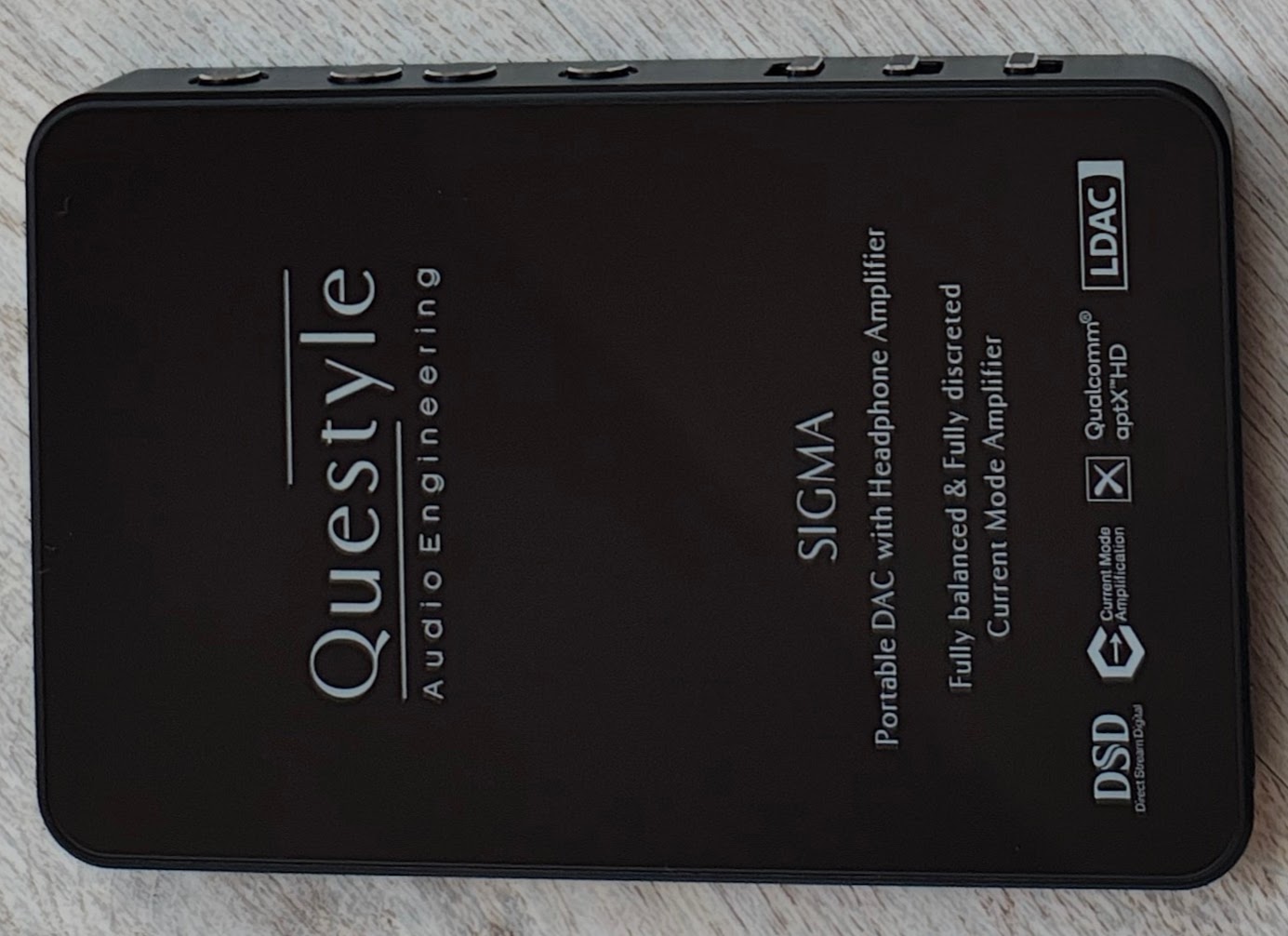

The Questyle Sigma was kindly provided free of charge in exchange for an honest review. I didn’t receive monetary or any other kind of compensation and I don’t use affiliate links.
The price of the Questyle Sigma is $549 and you can buy it from Questyle’s official shop.
Questyle
Questyle is a boutique audio brand from China that is mainly known for their patented Current Mode Amplification (CMA) technology that is used in all their devices, from portable USB DACs to full sized desktop DAC/amps.
The brand develops high-end audio products that blend technological innovation with a minimalist, elegant design. Unlike many other Chinese brands, Questyle maintains a deliberately limited catalogue, offering only a small selection of carefully chosen products, updated only when the company has something really new to bring to the table. The company currently makes several portable and desktop DAC DAC/amps, as well as two earphones.
You can read more Questyle reviews here.
Questyle Sigma
The Questyle Sigma is the brand’s latest battery powered, portable DAC and headphone amplifier. The device is identical looking and shares a lot of common characteristics with the Questyle CMA18 Portable, that is now discontinued, but it also has many new features as we are going to find later on.
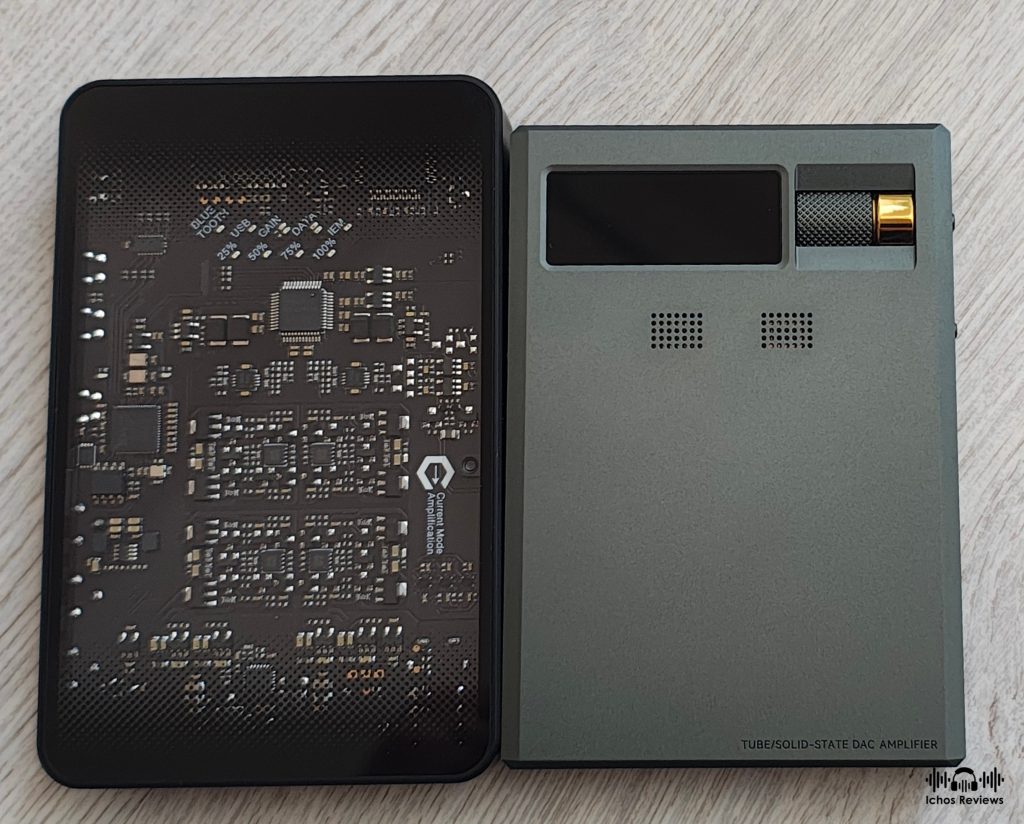
The Sigma uses a single AK4493 DAC chip from AKM, engineered with Questyle’s TTA architecture to deliver desktop-grade audio performance. It supports sampling rates up to 768kHz/32bit PCM and DSD512 while it is compatible with Android, Windows, macOS, iOS and HarmonyOS. The Sigma is also officially MFi certified by Apple for guaranteed compatibility with their products.
The main difference in comparison with the CMA18 portable resides in the CMA headphone amplification circuit that is now a fully discrete, fully balanced design, instead of using Questyle’s SiP modules. Thanks to this new architecture, the Sigma delivers 5W of peak power with 3A of maximum current instead of 2A of the previous model and 20Vp-p of peak output voltage.
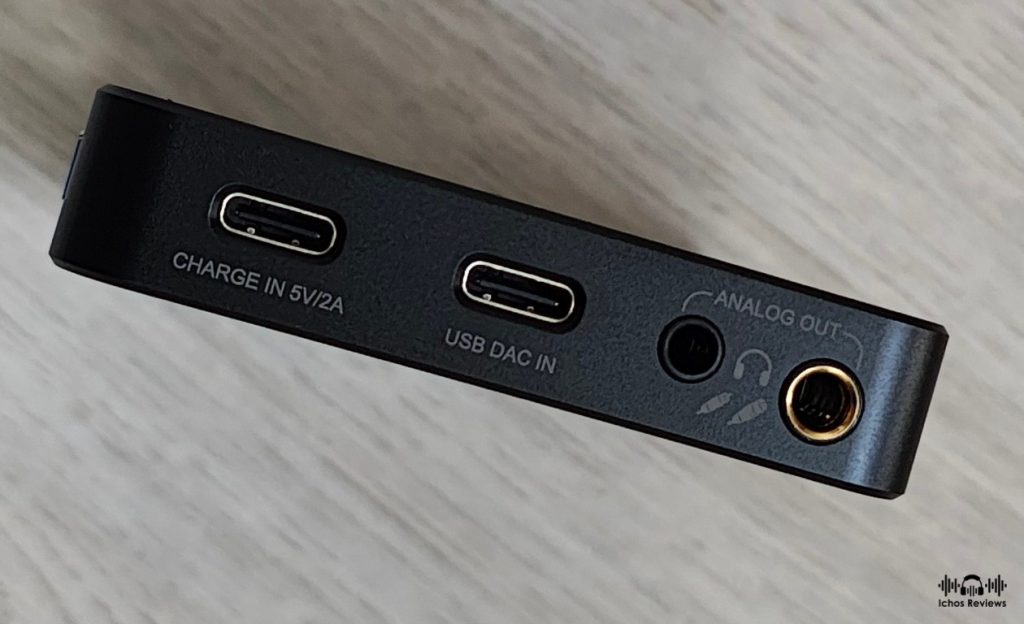
Another new feature is that the Sigma is now equipped with two USB type-C inputs, one for data and the other for power so you can use and charge the device at the same time. What is no more found is the ADC recording function and the 3.5mm coaxial input but the Sigma is $150 less expensive than the CMA18 Portable.
Design and build quality
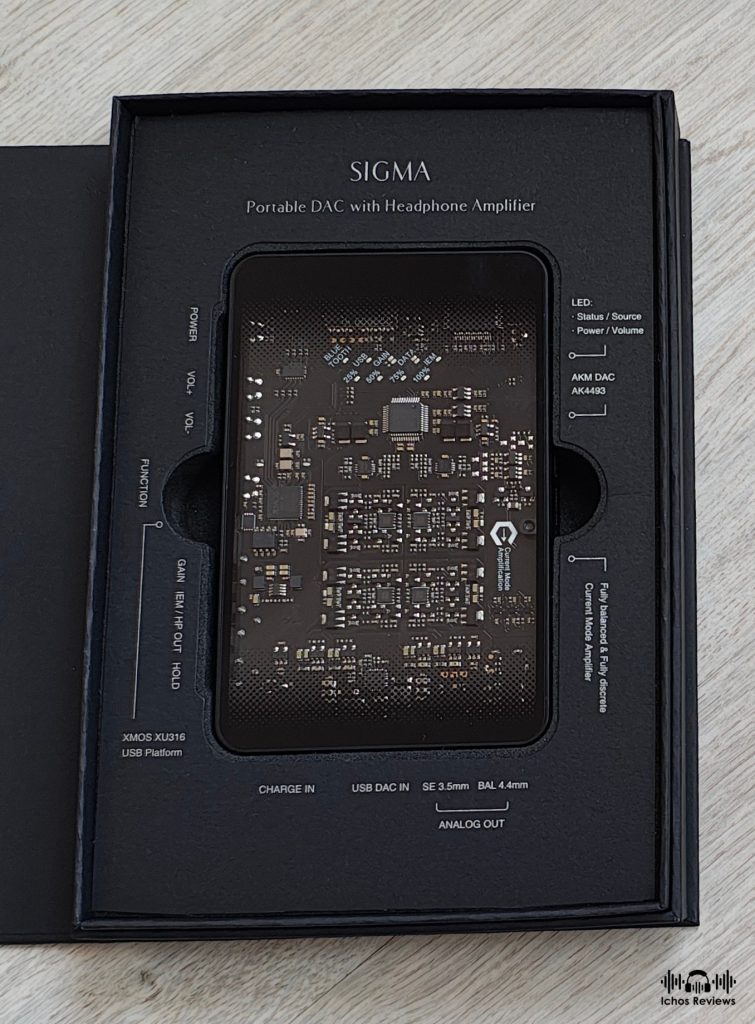
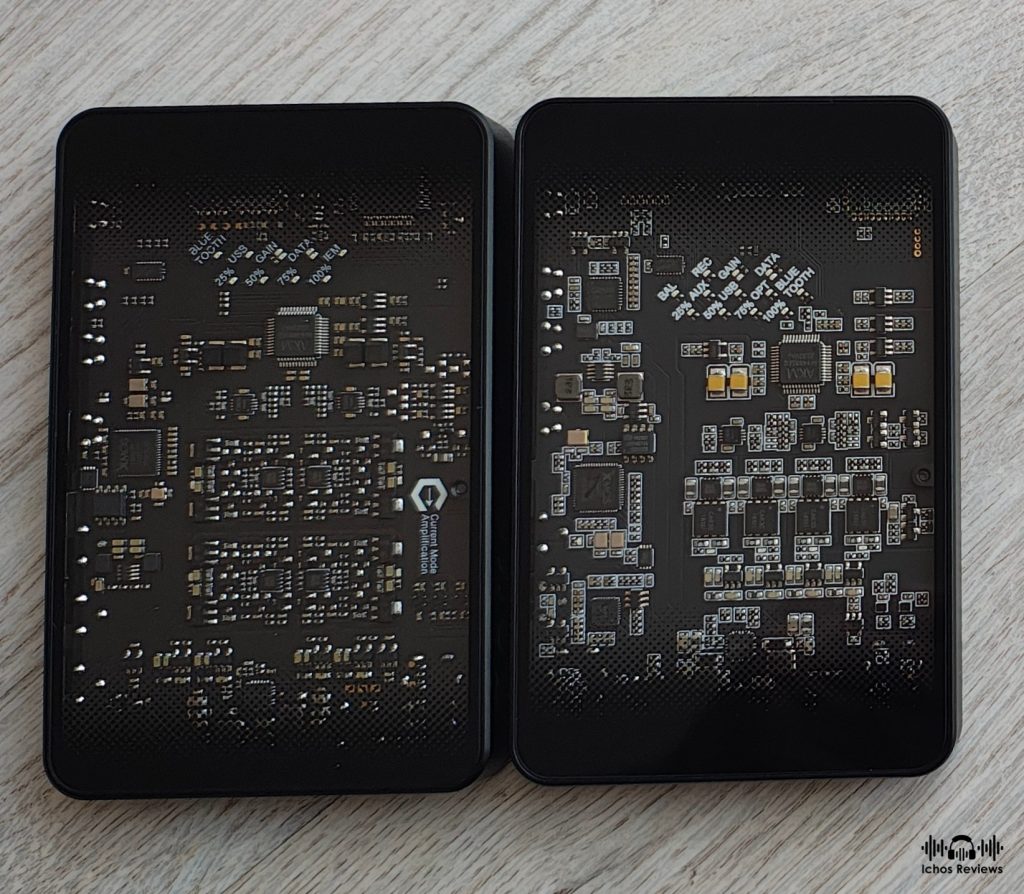
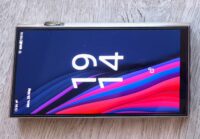
When something looks great you better leave it as it is, so it doesn’t come as a surprise that Questyle made the Sigma identical looking to the CMA18 Portable, one of the most unique and attractive portable devices on the market.
It has a rectangularly shaped chassis with smooth, rounded corners and edges that is made from CNC-machined, sandblasted aerospace aluminum.
The front panel is a high quality transparent glass frame that exposes the inner circuitry. Gradient dot matrix details at the top and the bottom add a contrasting finishing touch while the back of the unit is also covered with the same type of glass.
Questyle went as far as to apply an RF signal suppression coating to the glass in order to block EMI from entering the sensitive electronic components.
If there is a downside to the whole design, is that the back is very slippery and can’t stay still when placed on a flat surface. The Sigma is exceptionally well made and has better assembly quality than the CMA18 Portable because this time the buttons won’t wobble when you shake the device.
Interface and layout
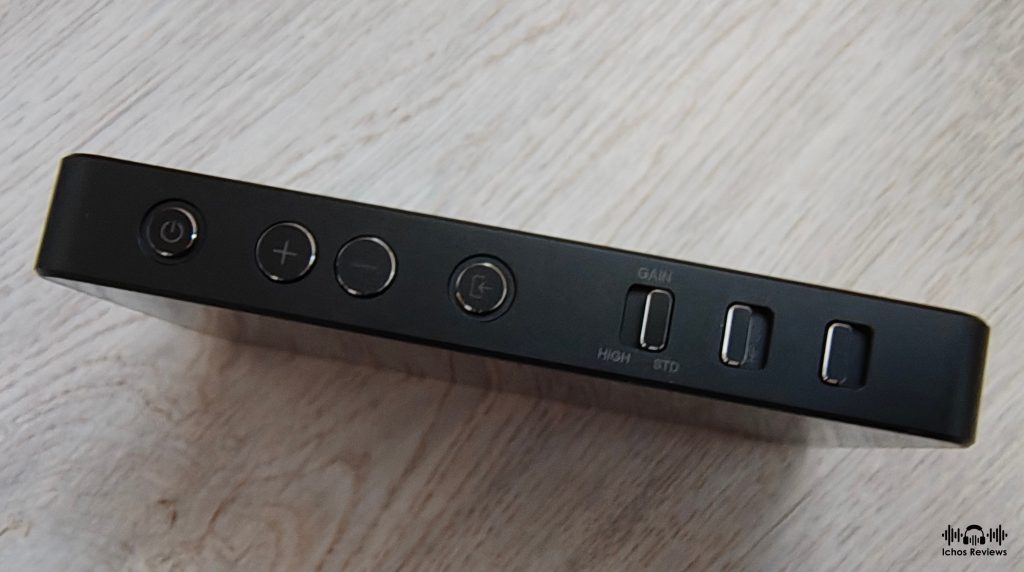
The Sigma is relatively compact (11cmx7cmx1cm) and not that heavy (164g) with a functional layout so you can use it with one hand. All buttons and switches are placed at the left side. Starting from the top we can see the power on/off, volume up/down and input selector buttons, followed by gain, IEM/headphone mode and hold switches. Operating the device is pretty simple and self explanatory.
The two USB type-C inputs and the analog outputs (3.5mm and 4.4mm) are located at the bottom of the device. I am a right handed person but I find it more convenient to use the Sigma with the thumb of my left hand.
The Sigma lacks any sound customization options and doesn’t connect with an application to enable a graphic equalizer or let the user select digital filters.
The LED light indicator system
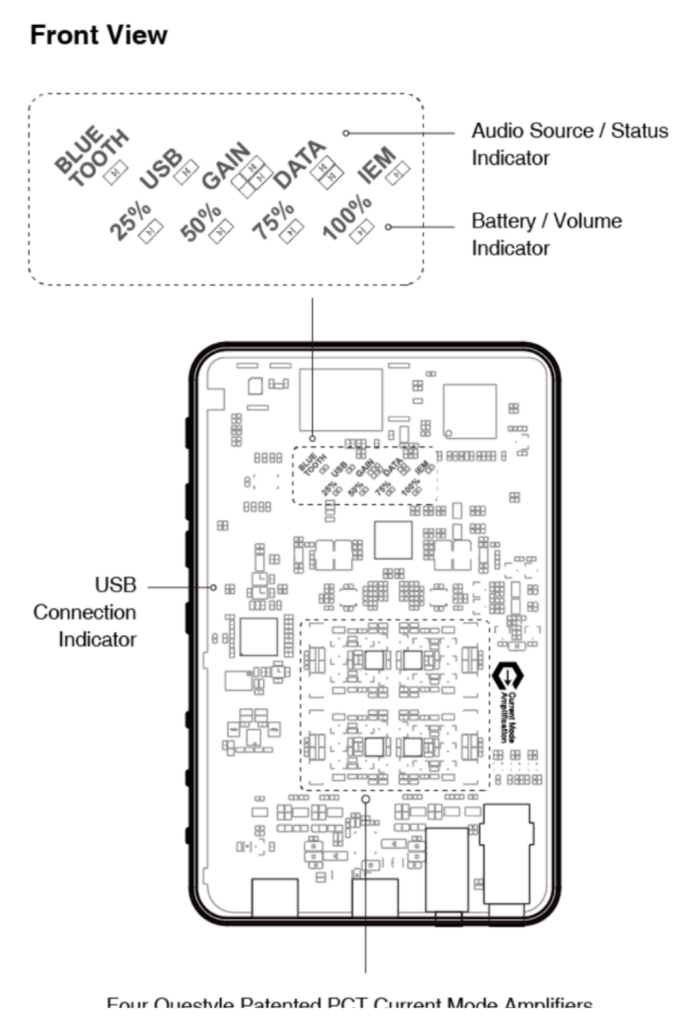
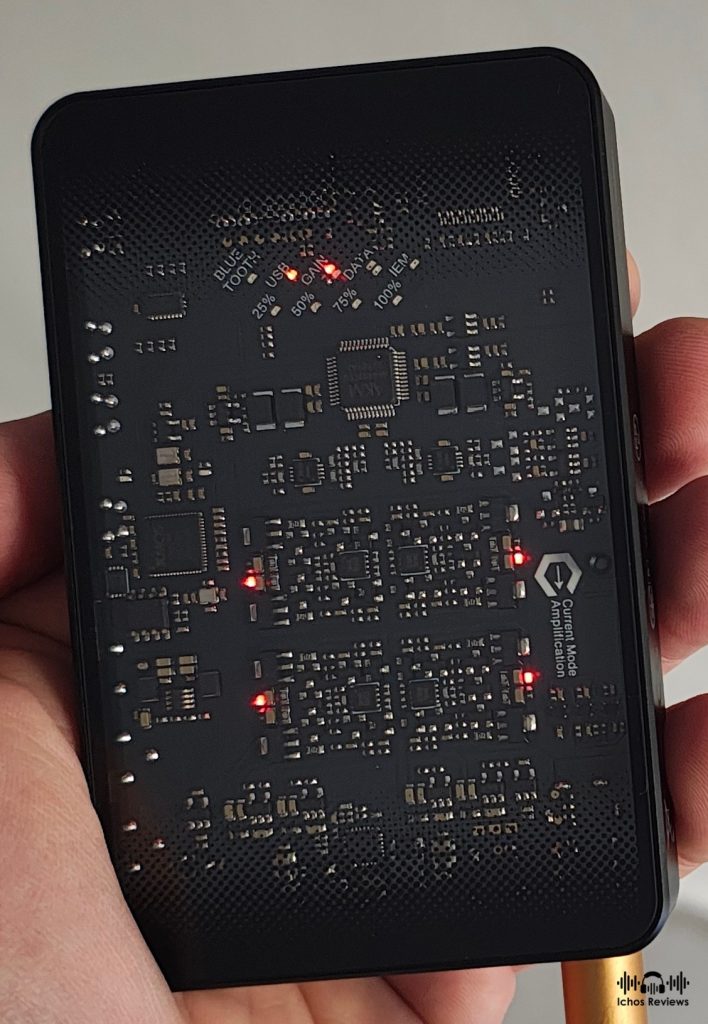
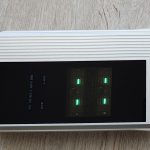
Instead of using an OLED display, the Sigma incorporates a retro inspired indicator system with as many as 16 different LEDs that light to indicate working status and other useful information. An interesting design that either you hate or love because it makes the Sigma look like a Christmas tree.
Please refer to the image below for a detailed description of what type of information is indicated by each LED. The volume and battery levels are displayed by the same LED array. You have to short press the power on/off button to make the battery level display while the volume level is displayed every time you adjust it.
Bluetooth connectivity
The Sigma incorporates Qualcomm’s latest generation Snapdragon sound with a chip that supports the LDAC, aptX Adaptive and aptX HD codecs together with LE Audio.
Bluetooth connection is stable and reliable within a reasonable distance of a few meters away from the phone. The aptX HD and Adaptive codes work like a charm but depending on your phone you might experience short sound interruptions in LDAC mode. In this case it is advisable to adjust LDAC’s quality settings.
The sonic performance is excellent as long as you don’t mind the usual Bluetooth limitations that make the sound quality slightly inferior to the wired connection.
Battery duration
The Sigma is equipped with a single 4300mAh battery that charges in about 3 hours. Questyle specifies up to 12 hours of working time but in real life conditions it gives about 8-9 hours of mixed use (Bluetooth and USB) from its balanced output. Not that bad considering that the Sigma is a relatively slim and not that bulky device.
Power output and noise
Questyle specifies 1200mW/32Ω from Sigma’s balanced output, plenty of power to run a great variety of headphones without the need to connect an external power source like you do with the Cayin RU9.
The Sigma was able to drive headphones, like the Focal Clear Mg and the Sennheiser HD660S2 with excellent grip and control. Its high current delivery also makes the Sigma an ideal source for current hungry planar magnetic headphones, like the Meze Audio Poet and the Hifiman HE1000 Stealth.
The amplifier has two gain settings, high and standard, as well as a special IEM mode that minimizes the signal path and enables an ultra-fine, 64-step volume control. The IEM mode offers fine volume control adjustments for earphone use but its background is not totally black. Very sensitive earphones, like the iBasso Epitome, can pick a certain amount of hissing noise that is only audible during very silent music passages.
The maximum line output level is 2.5V from the 3.5mm and 6.8V from the balanced connection. In order to use the line outputs you will need either 3.5mm to RCA or 4.4mm to XLR cables. The device runs cool and it never gets warm.
Accessories
The package includes two USB type C to C cables, a 12cm short one and a 120cm longer one, as well as a USB A adapter. A high quality leather case with a magnetic back is available as an optional accessory. Considering the selling price of the Sigma and what is offered by the competition, I would have expected the case to be included as a standard.
Listening impressions
Put simply, the Questyle Sigma offers class-leading audio quality without any negative points worth mentioning except the mild hissing with very sensitive earphones.
Questyle has always made good sounding audio gear but this time they have surpassed themselves. The newly introduced amplification circuitry of the Sigma is much more capable and gives it the advantage over the Questyle CMA18 Portable.
The sound is generally speaking more dynamic and less flat, the bass is fuller and punches harder while the sonic timbre has been improved to the better with more natural and less artificial characteristics. The Sigma is a musical and engaging source but at the same it retains excellent neutrality and transparency.
The bass is fast, tight and controlled with great definition even with the most demanding music passages where it never loses composure and timing. The mid-range is produced with impressive clarity and precision but it also has a rich and colorful harmonic foundation that makes it especially realistic and lifelike.
More listening impressions
The treble is slightly less forward than the CMA18 Portable, yet it remains lively, extended, and energetic. The Sigma is a luminous and highly resolving DAC, but Questyle’s well implemented tuning makes it sound mildly smooth and never clinical or overly analytical.
The textures are refined and polished enough with no trace of grain, decay is quick yet not too fast and the overall timbre is clean and natural without much digital glare.
The soundstage of the Sigma is slightly more open and spacious than the CMA18 Portable with improved depth layering and positioning accuracy. The Sigma never sounds flat or one dimensional and while it can’t match the holographic projection of the Cayin’s RU9 tube stage, it still is grand, immersive and atmospheric.
The tonally balanced Sigma pairs well with all types of headphones, from bright to warmer ones, respecting and highlighting their tonal characteristics instead of applying its own. It goes without saying that the Sigma sounds enjoyable with everything you throw at it, from modern electronic to classical music, and is equally suitable for both casual and critical listening.
The line output
I have tested the Sigma’s balanced line output with the Aune N7 headphone amplifier to find out that it sounds identical to the phone output, bearing the exact same sonic qualities as described above. A versatile source that can be used either with its embedded headphone amplifier or as a line output DAC to external amplifiers.
In the end
The CMA18 Portable was already an excellent sounding and very competent source but Questyle have managed to surpass themselves. The Sigma does not only sound more refined and sophisticated but Questyle has also addressed all the functional limitations of its predecessor, like the lack of an independent charging input.
The Sigma is one of the most powerful DAC/amps without the need to connect an external DC power supply and is also exceptionally well made and premium looking. Actually, the Sigma is one of the best sounding battery powered DAC/amps and it easily ranks among the top choices within its category.
Copyright – Petros Laskis 2026.
+ Class-leading sonic performance
+ Neutral and balanced sound signature
+ Excellent fidelity and transparency
+ Technical and resolving yet not clinical or sterile
+ Natural timbre without much digital artificiality
+ Open and spacious soundstage
+ High current powerful headphone amplifier
+ Two USB inputs and Bluetooth connectivity
+ Special IEM mode
+ Good battery duration for the size
+ Relatively compact and not too heavy
+ Exceptionally well made and premium looking

- The LED light indicator system is not that practical
- No app support or sound customization options
- Low background noise with very sensitive earphones
- No true battery bypass mode
- Pricier than the competition with limited accessories







Leave a comment