


The Zorloo ZuperDAC Max review sample was kindly provided free of charge in exchange for an honest review. I didn’t receive monetary or any other kind of compensation and I don’t use affiliate links. The price of the ZuperDAC Max is $149 with a USB type-C cable and $159 with an extra lightning cable. You can order it directly from the Zorloo online store
ZuperDAC Max (and PRO)
The Zorloo ZuperDAC series commenced with the initial generation USB DAC dongle, resembling a USB stick with a 3.5mm headphone output. Subsequently, the second generation ZuperDAC-S was introduced, featuring a detachable cable.
Presently, the ZuperDAC Pro and ZuperDAC Max mark the third generation releases within the ZuperDAC family. These models uphold the identical design philosophy, aiming to deliver exceptional audio performance within a compact form factor.

Let’s have a quick look at both of them:
ZuperDAC Pro offers a 3.5mm single-ended audio output, while ZuperDAC Max provides the option of both 3.5mm single-ended and 4.4mm balanced audio output. Both models utilize the advanced ESS 9281AC PRO DAC chip, which includes a headphone amplifier and supports high sampling frequencies up to PCM 768kHz and DSD512. Additionally, they feature a built-in MQA Renderer, allowing you to fully decode Tidal Master content and enjoy it to the fullest. Furthermore, these DACs ensure bit-perfect lossless music playback for an exceptional audio experience.

ZuperDAC Pro has an auto detect circuitry upon headphone insertion to determine the proper output voltage level to suit the loading requirements.
1Vrms for <150Ω and 2Vrms for >=150Ω.

The ZuperDAC Max offers two options for audio output: single-ended 3.5mm or balanced 4.4mm. It also features a boost button that allows you to adjust the audio output levels to suit your headphone’s requirements. The balanced output ensures a clear and noise-free audio path. By default, the power output is 1Vrms for the 3.5mm output and 3Vrms for the 4.4mm output. However, with the boost button, you can increase the power output to 2Vrms for the 3.5mm output and 5Vrms for the 4.4mm output. You can connect the audio output directly to your headphones or HiFi system as a line output. Additionally, the ZuperDAC Max is compatible with various operating systems such as iOS, Android, Linux, macOS, and Windows 10/11, without the need for any drivers, thanks to its USB Audio Class 2 high-speed compliance.
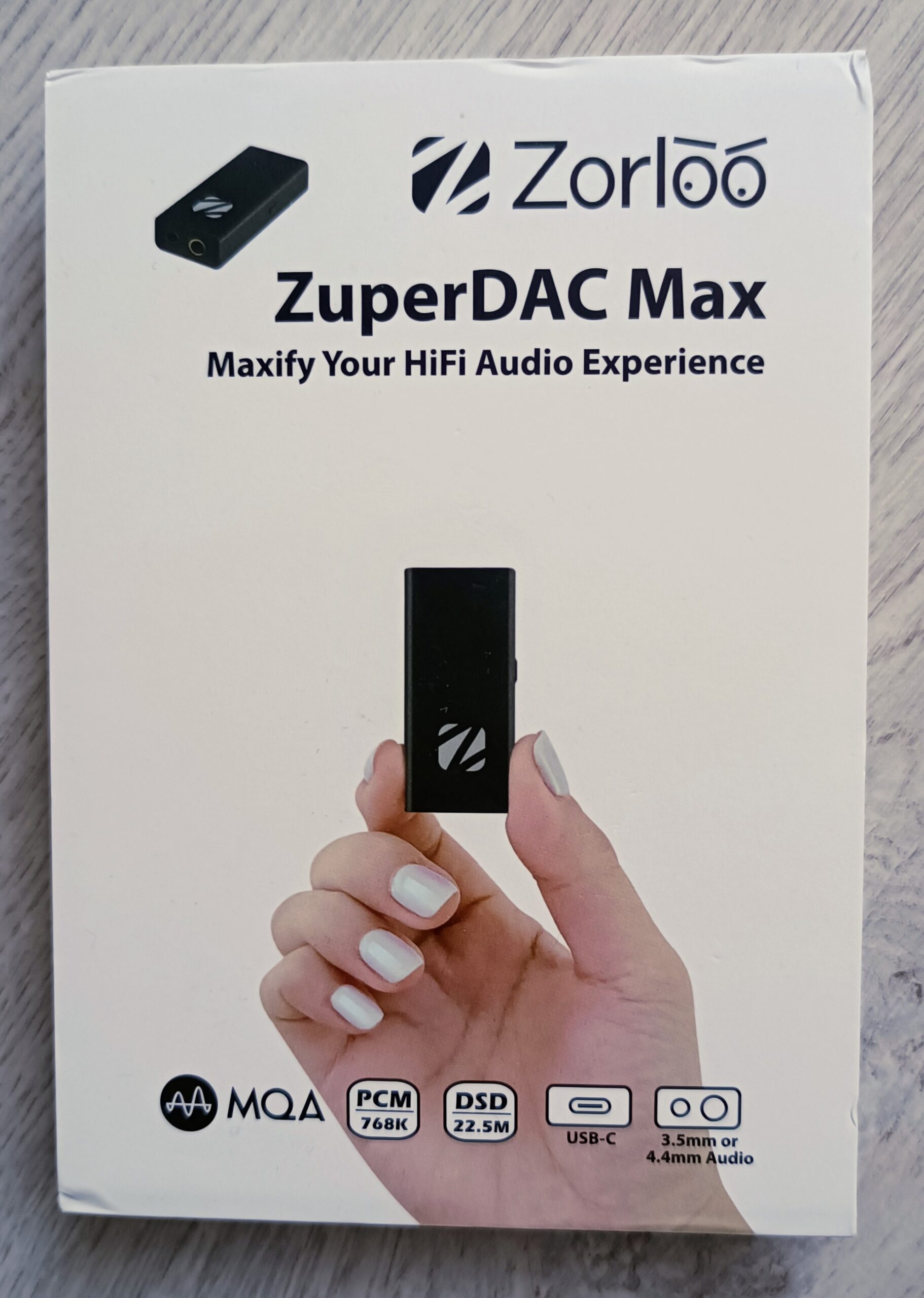
Both devices lack physical buttons for adjusting the volume, but they do feature a small LED indicator. This LED will illuminate in blue when the device is idle or playing audio with a sample rate of 48kHz or lower. If the audio has a sample rate higher than 48kHz, the LED will turn red. Additionally, when playing MQA content, the LED will emit a magenta light. In the case of the ZuperDAC Max, pressing the boost button will activate an additional LED that will shine in green.
The rest of the review continues with the Zorloo ZuperDac Max.

Build quality and appearance
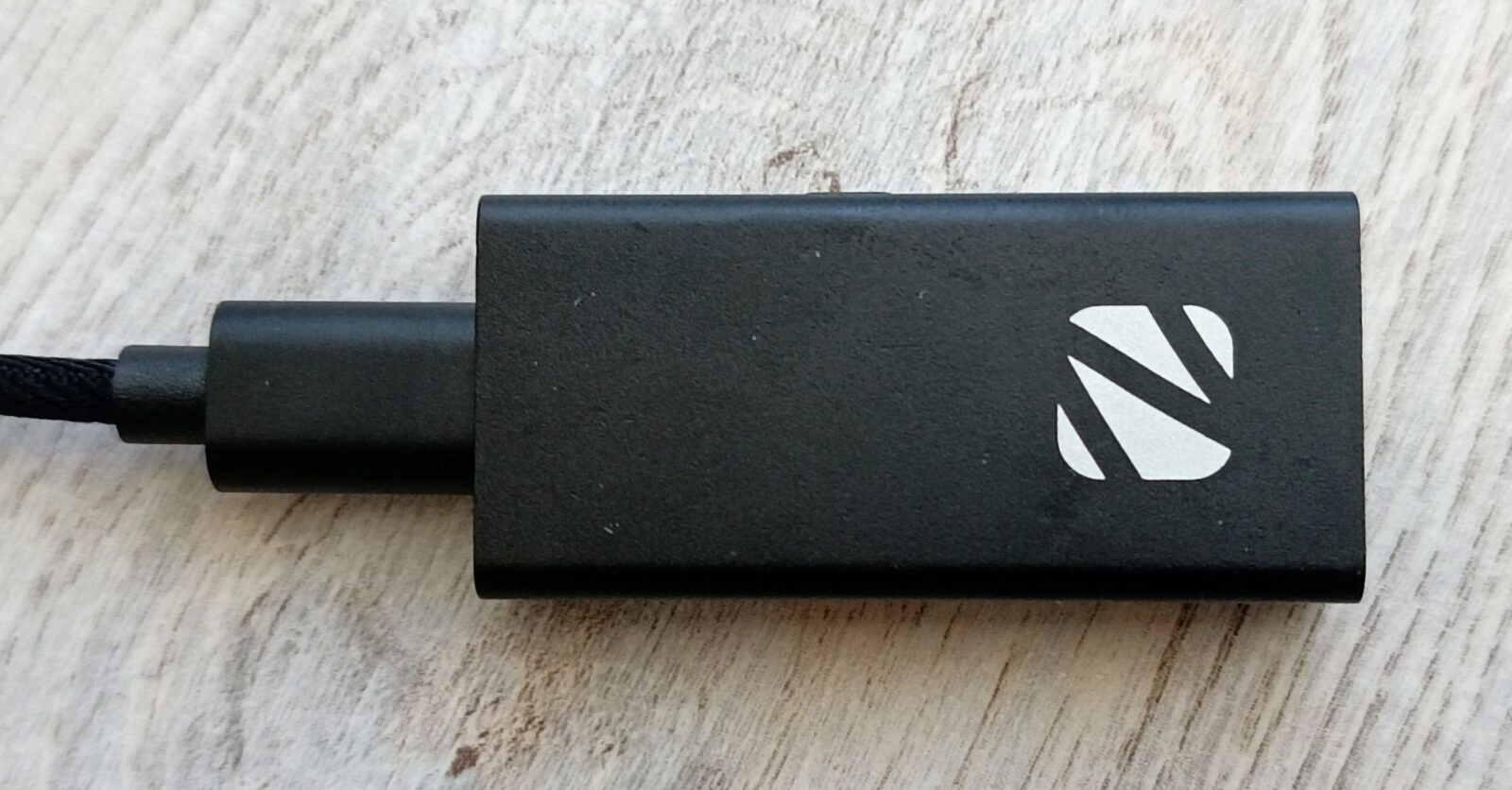
The ZuperDac Max is an incredibly compact and lightweight USB-DAC dongle, measuring just 46×21.5×10.5 mm and weighing only 15g. It stands out in the market for its ability to support both 3.5mm and 4.4mm headphone outputs. While it shares a similar compactness with the EarMen Sparrow, the ZuperDac Max differentiates itself by featuring a 4.4mm plug instead of the Sparrow’s 2.5mm plug. Its minimalist design showcases a rectangular chassis crafted from a single piece of aluminum, providing a sleek black matte finish and ensuring exceptional build quality.

Accessories
The Zorloo ZuperDac Max comes bundled with a USB-C cable and a USB-A adapter so you can connect easily to your smartphone or PC/Mac.
For iPhone/iPad with lightning interface, you can use a lightning cable that is sold separately.
The rather short cable is of typical quality with aluminum plugs and a fabric outer sheathing.

Power output and noise
The ZuperDac Max boasts impressive power, even without activating the boost button. Its boosted balanced output of 5Vrms allows it to effortlessly drive a wide range of headphones, including planar magnetics. Even regular headphones like the Sennheiser HD660S2 and Focal Clear Mg are a breeze for this device. However, it’s important to note that when the boost is enabled, it may result in higher power consumption from the host device and increased heat dissipation.
Don’t overlook the 3.5mm output, as it still delivers significant power without compromising the overall sound quality, albeit with some minor compromises in soundstage expansiveness and imaging. The Zorloo ZuperDac Max ensures complete silence thanks to its excellent electromagnetic interference shielding.
Before conducting the listening evaluation, the DAC was left playing music for approximately 100 hours. Apart from the aforementioned headphones, I also tested various IEMs such as the Penon Vortex and the FiiO FDX.

Listening impressions
The overall sound signature of the Zorloo ZuperDac Max is characterized by the implementation of a high-quality ESS DAC chip, resulting in exceptional transparency, impressive technical performance, and remarkable clarity. The sound is incredibly clear and revealing, with excellent detail retrieval for its category, and it maintains the typical ESS treble fidelity.
Despite its transparency, the Zorloo ZuperDac Max does not sound overly bright, treble forward, or harsh, even when paired with brighter headphones. It offers a reference-neutral tuning that exposes both the strengths and weaknesses of your headphones and the recording quality. However, it should not be mistaken for an unforgiving or punishing DAC. It does not aim to beautify or color the sound.
That being said, the sound character of the Zorloo ZuperDac Max is far from boring, clinical, or artificial. It provides plenty of engagement and musicality, with mostly natural timbre and minimal digital glare. The music is reproduced with convincing realism.
In terms of technical performance, the ZuperDac Max excels. The bass is tight, controlled, and fast, with precise timing. Surprisingly, the DAC is also dynamic and impactful, especially when the boost mode is activated. Its overall performance comes remarkably close to larger, battery-powered USB DACs or even mid-range DAPs.
The mid-range is well-balanced, transparent, and spacious, with rich harmonic content and clear articulation. These qualities also extend to the treble, which is fast, agile, sparkling, and brilliantly detailed, without being overly bright or piercing.
The Zorloo ZuperDac Max creates an open and expansive soundstage, enhancing the sense of spaciousness, holography, and instrumental separation. It particularly complements headphones known for their staging capabilities.

The ZuperDac Max showcased exceptional performance, delivering a delightful and melodious listening experience filled with authenticity, profoundness, and organic tonal quality, regardless of the audio content. Its compatibility with the significantly pricier Focal Clear Mg was remarkable, resulting in an impressive audio output even when handling intricate classical compositions like Scriabin’s symphony No.4.

Compared to the FiiO KA3 ($89.99)
The FiiO KA3 is a USB-DAC dongle that is designed to be compact in size. It is equipped with the ES9038Q2M DAC chip and dual RT6863 op-amps, which allow it to handle amplification duties effectively. With a maximum power output of 240mW/32Ω and 4Vrms, it delivers impressive performance.
Although the FiiO KA3 does not support MQA streams, you can still make use of the FiiO control application. This application enables you to choose from seven low pass filters and adjust various parameters such as headphone impedance and gain, enhancing your listening experience.
On the other hand, the ZuperDac Max is a pricier option. However, it offers additional features such as MQA support, a smaller form factor, and a maximum voltage swing of 5Vrms. These added benefits may justify the higher price tag for those seeking a more advanced audio solution.

Both DACs offer similar sound quality, with only slight variations. The KA3 provides a slightly fuller sound and a touch less dryness, while the ZuperDac Max delivers more impact and dynamics, along with improved clarity and driver control. Apart from these nuances, everything else remains largely unchanged, requiring careful attention and critical listening to notice any differences, which may not be significant enough to mention. However, if you require a compact and powerful DAC dongle with MQA support, you may need to invest some extra money.

In the end
The ZuperDac Max can be compared to the Tasmanian devil, as it possesses a charming and adorable appearance. However, one should not underestimate the power that lies within its small and compact design. Despite its diminutive size, this DAC dongle offers an astonishing level of power and exceptional sound quality. If you have been searching for a USB-DAC dongle that is both compact and lightweight, equipped with 3.5mm and 4.4mm headphone jacks, enhanced power output, low power consumption, and remarkable sonic performance, then look no further than the ZuperDac Max. It truly is the Tasmanian Devil of USB-DAC dongles.
Copyright – Petros Laskis 2023.
+ Reference sound quality
+ Excellent technicalities
+ Crystal clear and transparent
+ Not clinical sounding
+ Open sounding with accurate imaging
+ Compact and lightweight
+ Powerful
+ Dead silent
+ Well made

- No hardware buttons for volume control
- Gets warm especially in the boost mode
- Short USB cable
- Lighting cable is not included
- Slightly bright






Leave a comment