


The Cayin RU9 was kindly provided free of charge in exchange for an honest review. I didn’t receive monetary or any other kind of compensation and I don’t use affiliate links.
The price of the Cayin RU9 is $499 and you can buy from Cayin’s official AliExpress store. Customers within EU can order it from here.
Cayin
Cayin is a renowned high fidelity audio brand that blends traditional craftsmanship with modern innovation. Founded in 1993, the company has built a strong reputation for producing all shorts of audio gear, like high quality amplifiers, digital audio players (DAP), DACs, and portable devices.
The brand incorporates both solid-state and vacuum tube technologies, combining innovative engineering and musical tuning philosophy to deliver not just technical excellence but also an engaging and emotionally rich listening experience.
Cayin RU9
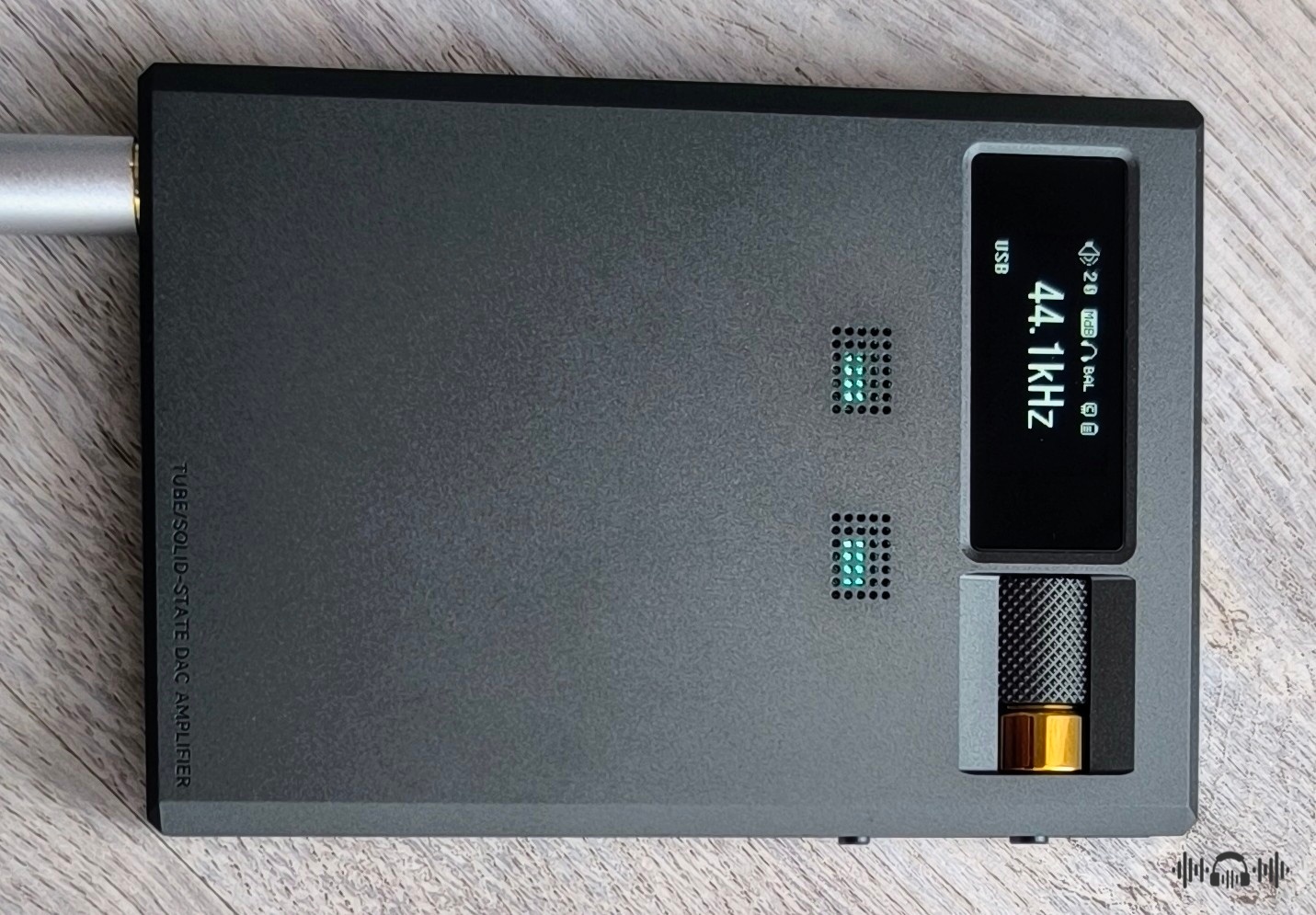
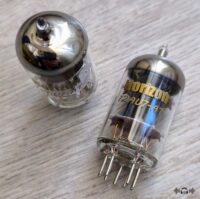
The Cayin RU9 is a flagship portable USB DAC/amp with dual Korg Nutube 6P1 vacuum tubes that can be bypassed for a full solid-state output. The RU9 is not exactly a DAC dongle with mini tubes, like the iBasso Nunchaku, but a bigger device with internal battery and Bluetooth connectivity.
Technical highlights
The Cayin RU9 is equipped with two AK4493SEQ DAC chips each operating in mono mode for a full differential output. The 4-channel headphone amplifier is powered by two OPA1662 op-amps and four Nexperia power transistors.
The input stage is divided into three different sections. The 1st stage is built with low noise JFETs optimised for buffering. The 2nd stage is for voltage gain with the aid of dual 6P1 Nutubes and the 3rd one is a buffer driver made with JFETs that enhance the current driving capability of the tube circuit. The tube stage can be bypassed for a full solid state output.
The circuit incorporates various high quality components including the 4-channel JRC NUW1195A volume controller, special LDOs for clean power supply, a dedicated XMOS XU316 USB receiver and the Qualcomm QCC5125 Bluetooth chipset among others.
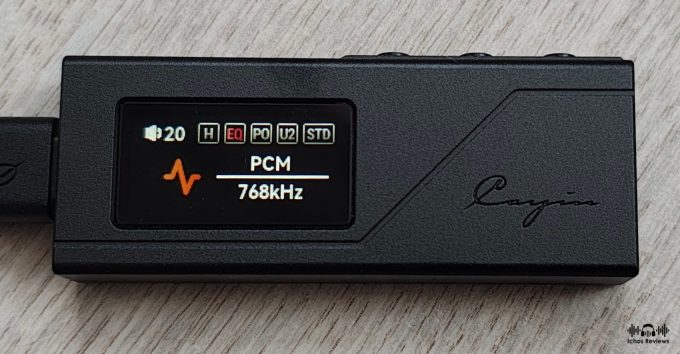
The RU9 supports sampling rates up to 768kHz/32bit PCM and DSD512, as well as the LDAC, aptX HD, aptX LL, aptX, ACC and SBC Bluetooth codecs.
You can learn more about the Cayin RU9 innovative design here.
Triple timbre sound
The RU9, just like many Cayin DAPs, offers three different sound timbres made possible through advanced audio circuits for a customized listening experience.
The first one is a “classic tube timbre” with no large-loop negative feedback. In this mode each stage operates independently through local feedback and the overall gain is determined by the cumulative gain of each stage. The distortion characteristics closely resemble classic tube amplifiers with a higher THD value and thermal noise.
The second one is called the “modern tube timbre” where a large-loop negative feedback circuit determines the total gain thus reducing THD and thermal noise significantly.
The “solid-state timbre” entirely bypasses the tube circuit and is built with low-noise op-amps to deliver accuracy and neutral tonality.
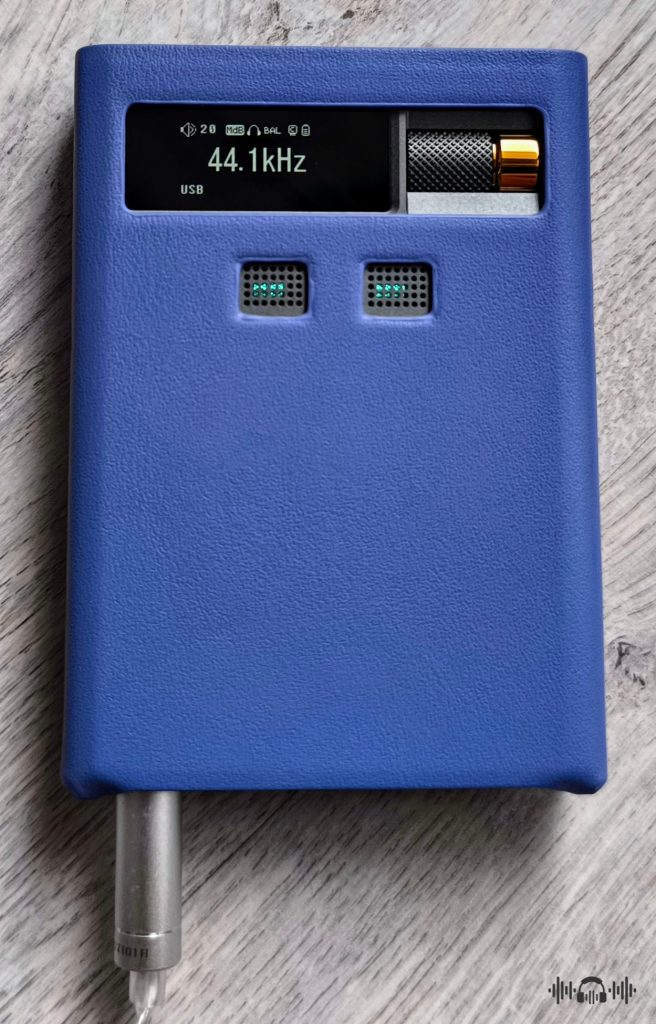
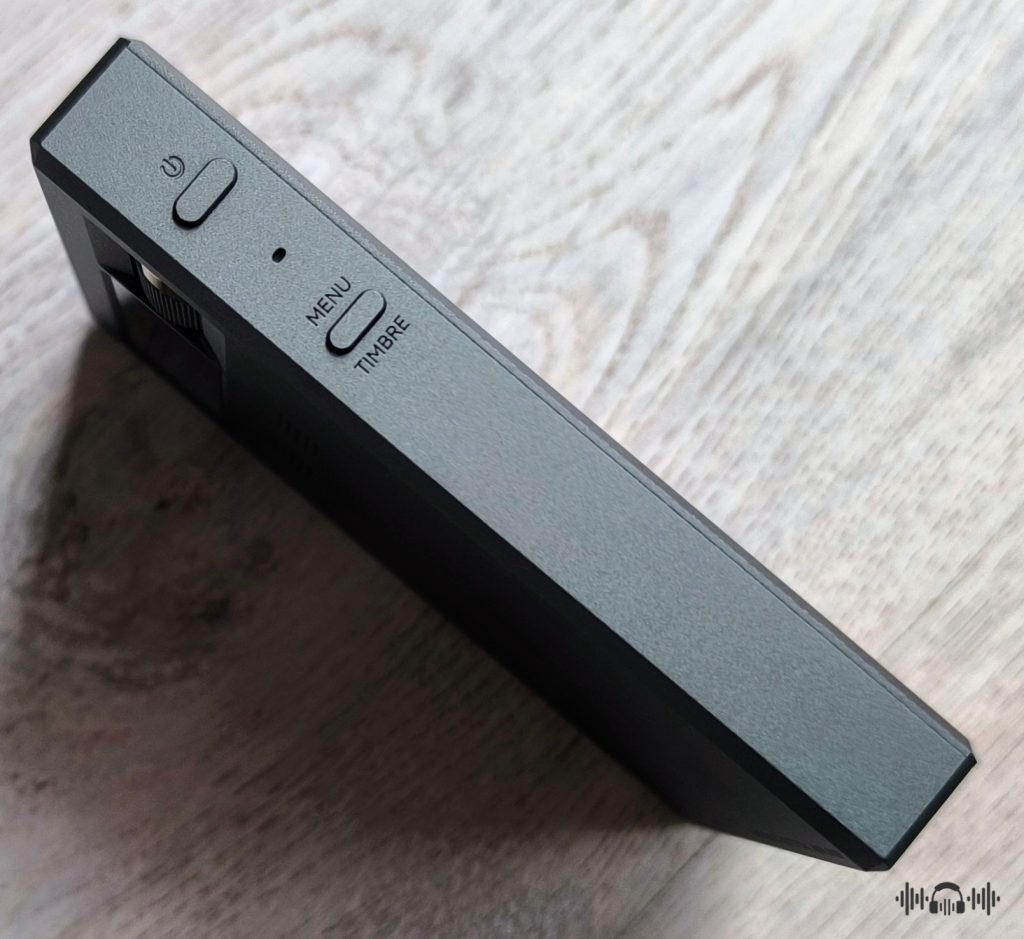
You can easily cycle through the three timbres with the aid of a dedicated side button. The selection is displayed at the upper right corner of the LCD screen. Each tube mode needs 6 seconds to initialize and engage the tube circuit while a plug must be connected to one of the two headphone outputs.
The Hyper mode
The Hyper mode is an advanced feature of the RU9 that is activated when an external 5V DC power supply is connected to the dedicated USB type-C port and the corresponding switch is toggled to the DC position.
It further increases the amplifiers quiescent current and operating voltage thus raising the RU9’s power output to 1000mW*2/32Ω from the balanced output and 420mW*2/32Ω from the single ended, when these numbers are 620mW*2/32Ω and 310mW*2/32Ω respectively in battery mode.
Please note that the Hyper mode is not like FiiO’s desktop mode and does not entirely bypass the internal battery that still gets charged and provides power to the circuit.

Design and layout
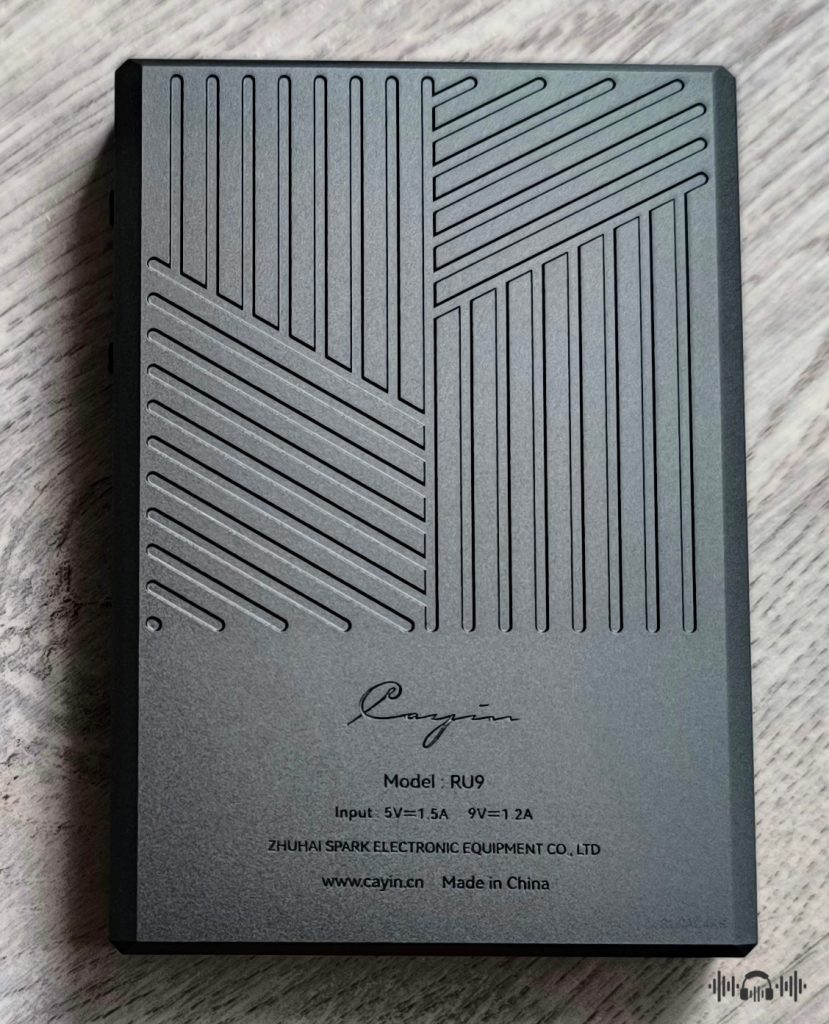
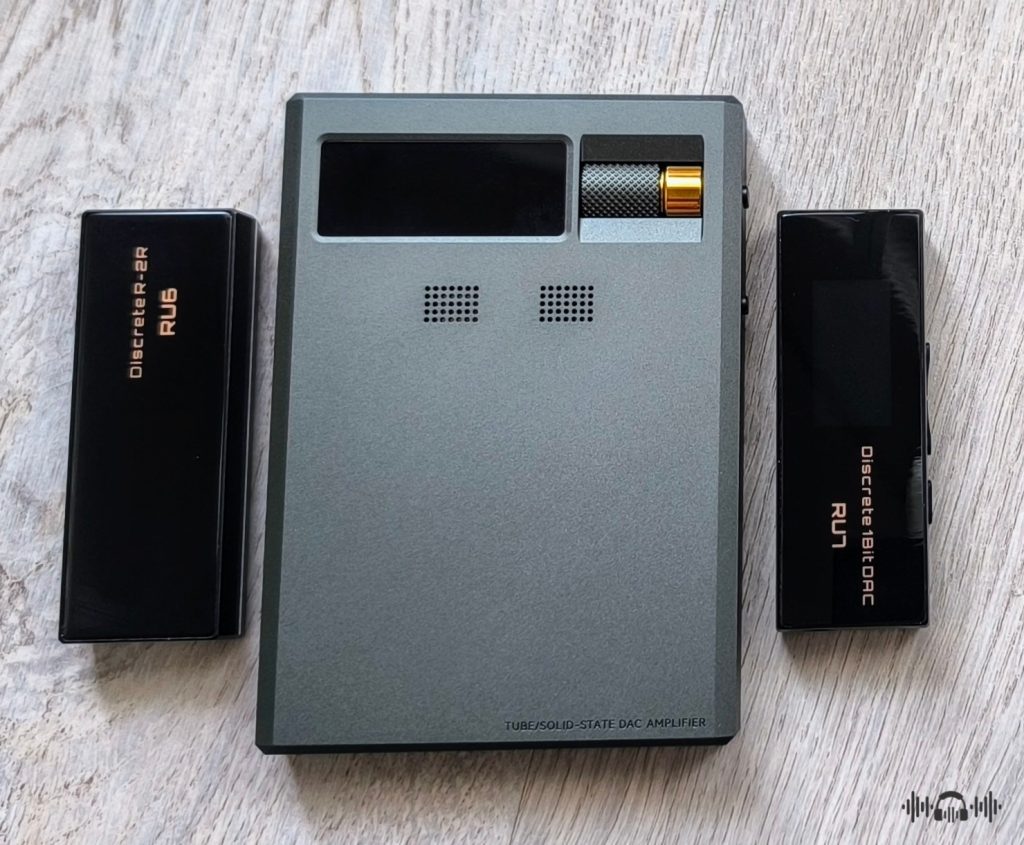
The RU9 is not actually a USB DAC dongle, like the Cayin RU6 and the RU7, but a portable device with a different design and bigger footprint.
It has a rectangularly shaped chassis made from aluminum alloy that is a tad more oblong than a perfect square as it measures 100mmx70mm. The chassis is uniquely slim (15mm) and relatively lightweight (150g) so it can easily fit in the palm of the hand and be carried inside a pocket.
The upper part of the chassis has a small plastic frame with the Bluetooth antenna positioned underneath it. Two small perforated windows at the front showcase the glow of the tubes while effectively blocking EMI. A handy feature is that the back is equipped with a concealed magnet that attaches to tablets and smartphones with magnetic backing.
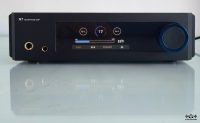
The RU9 has a 0.96” LCD screen that is rather difficult to read but it gets the job done by displaying multiple useful information and allowing easy navigation to the menus.
One handed operation is made possible thanks to the ergonomically positioned side buttons and the knurled rotary knob. There are three buttons at the left side for music playback control and another two multifunction buttons at the right side together with a multicolor LED indicator that displays charging status and input sampling rate at a glance.
Connectivity and operation
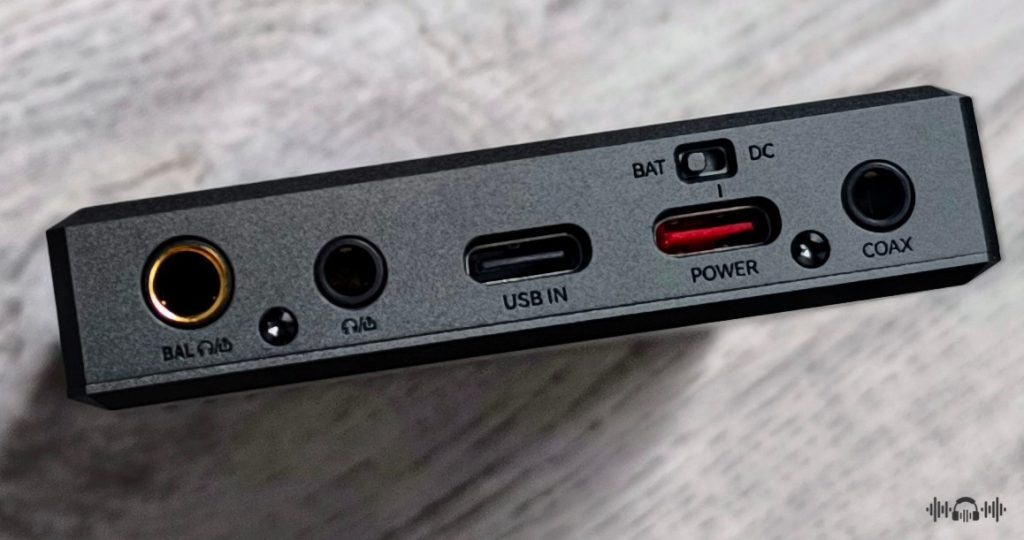
The RU9 has two audio outputs (4.4mm and 3.5mm) and two USB type-C inputs all located at the bottom of the chassis, together with an independent 3.5mm coaxial jack and the DC mode switch.
One USB port is for data input alone and the other one for charging and enabling the DC mode. Both audio outputs can be set as either headphone or line-outs with three gain settings. The S/PDIF is bidirectional so you can use the RU9 as a USB to S/PDIF converter.
The configuration menu is accessed by long pressing the timbre button. The upper button is only used to power on/off the device and wake the screen. The menu allows the user to select input source and output mode, set the gain, select digital filters independently for PCM and DSD, set screen timeout and idle shutdown timer etc. The RU9 is not compatible with a smartphone application and doesn’t support EQ.
Some suggestions for UI improvement
The RU9 is simple and easy to control but there are a couple of things that could make it even more functional.
The volume control knob, that is also used to scroll through the menu, doesn’t always register an action with each “click” unless turning it very slowly. Adjusting the volume or pressing the timbre button doesn’t wake the screen so you are left to guess what is really happening. There is no shortcut button for easy gain setting, something that can only be done by entering the menu. Not very practical but I think that both these issues can easily be fixed with a firmware update.
Accessories
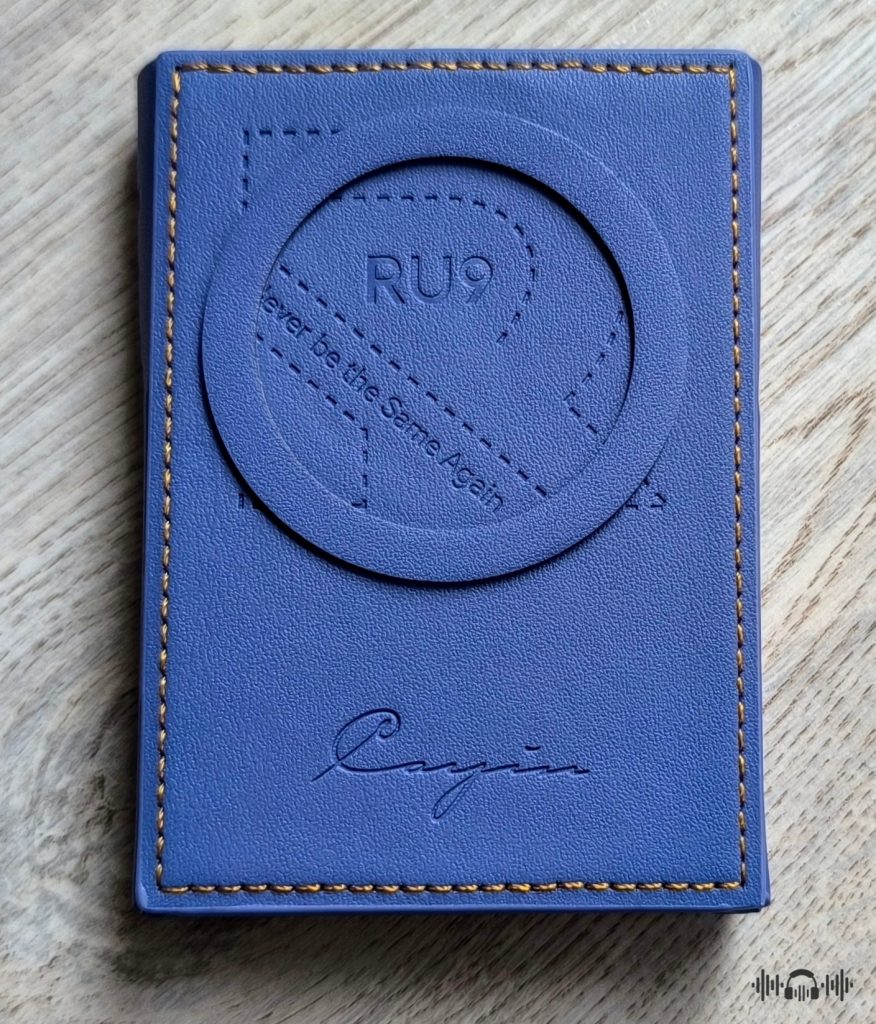
The package includes an L-shaped USB type C-C cable, a high quality hand-crafted leather case with a magnetic attachment and an adhesive magnetic ring that you can use for phones that don’t have their own magnetic back. The case is very well made, it fits the device firmly and has precisely aligned press points.
Battery duration
The battery capacity of the RU9 is just 2000mAh so it doesn’t come as a surprise that it lasts about 3 hours in tube mode and 4 in solid-state, playing music from the balanced output. Enabling the Bluetooth further reduces the battery duration.
Thankfully, the RU9 includes a user selectable function that allows it to draw power from the USB host while playing music, helping to extend battery duration. However, this feature cannot fully charge the battery that will eventually be depleted.
Bluetooth performance
The Bluetooth performance of the Cayin RU9 is not without some issues. The working distance is rather short, you must have the RU9 positioned really close to the phone otherwise the connection either drops entirely or you get too much interference noise. Sometimes it helps to lower LDAC quality or manually select aptX HD but still the best option is to keep distance as close as possible.
When properly connected, the wireless audio performance is very good but slightly inferior to the cable connection as is to be expected with the usual loss of quality in the treble and restrained dynamics.
Power output, heat and noise
The Cayin RU9 is already quite powerful when used with the battery and can reach desktop-level performance when the DC mode is enabled. The battery mode’s 620mW*2/32Ω can easily drive headphones like the Meze Audio 105 AER while 1000mW*2/32Ω can handle much more difficult loads like the iBasso SR3.
The DC mode is not solely to be used for harder to drive headphones but it is also recommended to enable whenever possible because it further enhances the dynamic behavior of the Cayin RU9, helping it to sound more impactful and effortless.
The Cayin RU9 doesn’t generate any tube microphonic noise even if you tap the chassis while it is surprisingly silent in all three modes. The solid-state mode is dead silent, while both tube modes have an exceptionally low noise floor even with sensitive earphones. The RU9 can become very warm during extended use but not excessively hot.
Listening impressions
Solid-state timbre
The sonic performance of the Cayin RU9 in solid-state timbre is not less than spectacular with a sound signature that combines excellent technical behavior and transparency with a touch of warmth and plenty of musicality.
The low-end is neutrally tuned and well extended but with a reference flat frequency response without any mid-bass coloration. The bass is actually fast, tight and controlled with great layering and definition. It has strict timing and can follow the most demanding material without losing its pace. The textures are a little lean and dry, the bass is not that visceral and full bodied but it excels in dynamic punch, especially in Hyper mode.
The mid-range is very resolving and expressive with decent harmonic variety and impresses with its natural tonality. The treble is fast paced and energetic but it never becomes bright or sharp. The RU9 extracts plenty of detail without sounding clinical. The timbre is realistic enough without too much digital glare or artificiality in the higher frequencies.
The soundstage is surprisingly big and expanded, spacious and sufficiently layered with class-leading imaging. It is grand and immersive enough, it can resolve plenty of ambient information, especially when listening to high quality live recordings.
Modern tube timbre
Switching to the Modern tube timbre you can’t fail to notice that it adds a touch of extra harmonic richness to the mids, a bit of elasticity and body to the bass and lowers digital glare without muting the treble. The overall technical performance and transparency remain intact while the soundstage gains a few extra layers of depth without losing its imaging precision. The Modern tube mode is exceptionally well implemented, it represents the best of both worlds (tube and solid-state) and is the happy medium between the three timbres.
Classic tube timbre
This timbre mode goes a step further by offering a more colorful and richer harmonic palette. The sound is now more organic and analog-like with zero digital glare in the higher frequencies.
The bass gains extra weight and is more flexible but it loses some control and speed in comparison to the other two modes. The mid-range sounds more euphonic and expressive but not as refined and resolving. Additionally the treble becomes more relaxed and polite but less energetic and clearly defined.
The soundstage gains in height but at the expense of some imaging precision. The Classic timbre is more “dirty” and “tubey”, it makes the RU9 sound less “hybrid” and closer to the classic tube characteristics with the least solid-state imprint.
(It is recommended to let the tubes warm for about half an hour before actual listening in order to sound at their best)
Great matching versatility
It is pretty obvious that the Cayin RU9 with its triple timbre modes and the Hyper DC input can easily mix and match with all shorts of earphones and headphones.
Warmer ones will partner better with the solid-state or even the modern tube timbres while brighter ones would pair exceptionally well with the classic tube timbre. I tested the RU9 with various favorite earphones and headphones but could not find a combination that I didn’t like. Additionally the RU9 never felt like the weak link even with pricier models like the Meze Audio Poet.
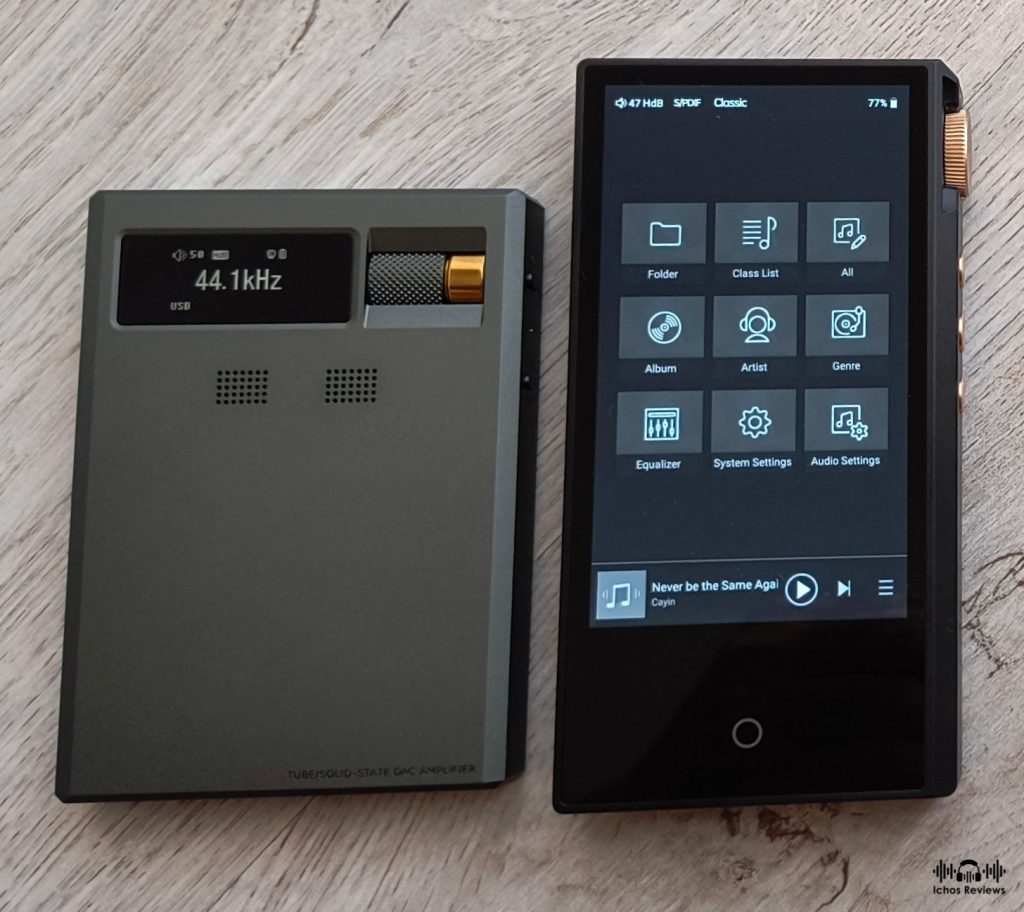
Vs the Cayin N3Ultra
The N3Ultra is a vacuum tube DAP with triple timbre modes but instead of the Korg Nutube 6P1 it uses dual JAN6418 mini tubes. However it has the same DAC chip architecture as the RU9. It is a pure DAP without WiFi or Bluetooth connectivity and it only supports local file playback from an SD card or USB DAC input.
The Cayin N3Ultra is bigger and heavier than the RU9 but in exchange it houses a higher capacity battery that can keep it running about 7-8 hours depending on the situation. The N3Ultra is without the DC hyper mode so its maximum power output is limited to 600mW*2/32Ω, almost the same as the RU9 in battery mode.
A key advantage for some users might be that the N3Ultra supports a full featured parametric EQ.
Except for their obvious design differences, the RU9 is a portable DAC/amp that can sit behind your phone but it doesn’t play local files like the N3Ultra , these two audio devices have slightly different sound signatures.
Sound comparison
In solid-state mode the N3Ultra sounds a little warmer and more natural than the RU9, especially in the mid-range, but also less technical and not as clean or transparent. The bass on the RU9 is more controlled and textured but not as visceral or full bodied as in the N3Ultra. However it is considerably more dynamic and impactful, especially in Hyper mode. The treble of the RU9 is more energetic and extended but not as smooth as in the N3Ultra. The soundstage of the RU9 is more expansive with advanced imaging precision and additional depth layering.
In Classic tube mode the N3Ultra sounds a little more organic and analog-like than the RU9. It has a richer harmonic presentation and more tube warmth than the RU9 but it is less technical and precise.
Switching to the Modern tube mode there is something strange happening as the N3Ultra becomes a bit brighter and more aggressive in the treble than the RU9, without improving its overall technical performance. In both tube modes, the RU9 has a blacker background than the N3Ultra that produces a faint hissing noise.
Is one better than the other? Not necessarily, they just sound different but equally good. The key differences between them are the form factor and scope of use rather than the actual sonic performance.
Vs the Cayin RU7
I will keep this one short. The Cayin RU7 is a true USB DAC dongle that is much smaller than the RU9 but considerably less powerful (400mW*2/32Ω) and not as silent while it lacks all the extra functions.
The RU7 might lack the harmonic richness and the organic quality of the RU9 when set to either one of the two tube timbres but it considerably outperforms it in solid-state mode. The 1-bit DAC of the RU7 produces much more analog and natural timbre than the D/S DAC chips of the RU9 without lagging behind in technicalities, its sound is both more resolving and refined. For anyone who needs of a small DAC dongle and doesn’t care about tubes, the RU7 is the obvious recommendation.
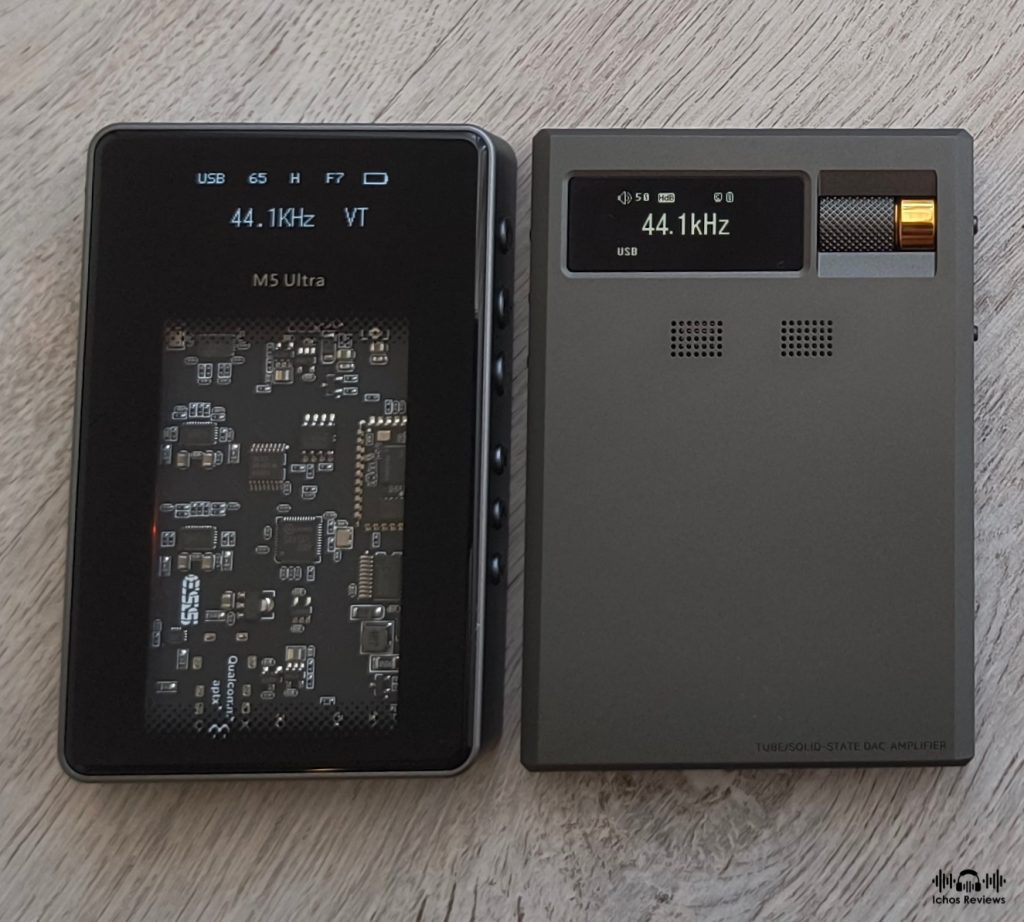
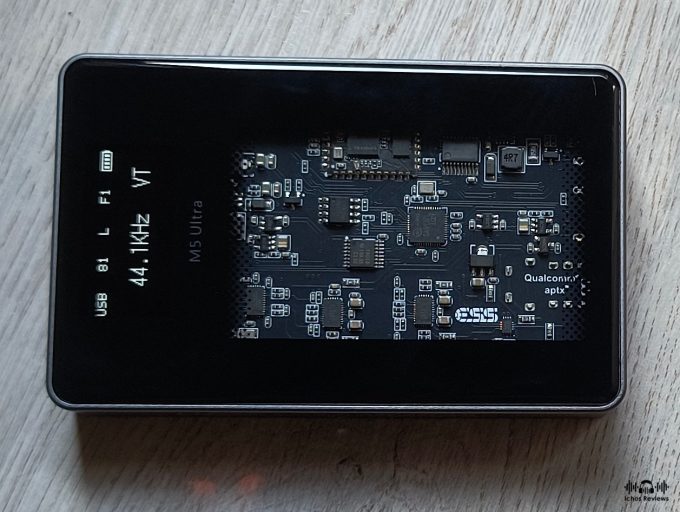
Vs the Muse HiFi M5 Ultra
The Muse HiFi M5 Ultra is a portable DAC/amp with internal battery, Bluetooth connectivity and dual JAN6418 vacuum tubes. Priced at $299, the M5 Ultra is $200 less expensive than the RU9 but it lacks several features like the Hyper mode, SPDIF input/output, pure line outputs and the magnetic back cover.
The M5 Ultra is slightly bigger and heavier than the RU9 but it houses a 3000mAh battery that can keep it running a couple of hours longer. It has a separate USB type-C port for charging while playing music but it doesn’t raise its power output. The power output of the M5 Ultra is not specified by the company but it seems to be around 500mW*2/32Ω.
In solid-state mode these two devices sound more alike than different. They are both very technical and transparent while not lacking in musicality and expression. The RU9 is somewhat cleaner and more transparent, with better definition and control over the bass but it doesn’t sound as full bodied and weighty as the M5 Ultra. The Hyper mode of the RU9 gives it the edge in driving demanding loads and sounding more dynamic but the M5 Ultra injects more elasticity and is less dry.
In tube mode the M5 Ultra demonstrates richer harmonies with a more organic timbre, the tubes are more effective, they add extra warmth and smoothen the treble but they also produce some background noise and decrease the overall transparency. The tube mode of the M5 Ultra is less technical and not as clean sounding or precise as both tube timbres of the RU9 but it offers a denser sound with much stronger tube characteristics.
In the end
The Cayin RU9 is a tube-hybrid, portable USB DAC/amp with excellent sonic performance from all its three sound timbres, be it tube or solid-state. It is also compact, lightweight and very well made with plenty of connectivity options and a handy LCD screen.
The RU9 would be great and highly recommended even if it didn’t have the Hyper DC mode that further enhances its power output, making it able to drive more demanding loads and sound even better. Now, with this feature, it competes with desktop devices and can easily be considered as one of the best sounding and most versatile flagship portable DAC/amps, the obvious choice for anyone who likes tubes.
Copyright – Petros Laskis 2025.
+ Tube and solid-state timbres
+ Excellent sonic performance in all three timbres
+ Very good technical behaviour in all three modes
+ The tube timbres add plenty of harmonic richness
+ Spacious and immersive soundstage
+ The Hyper mode almost doubles its power output
+ Practically silent in all three timbres
+ Portable, thin and lightweight
+ Magnetically attaching back
+ Very well made and easy to handle
+ Lots of functions and hardware buttons
+ Versatile wireless and wired connectivity
+ High quality accessories

- Short Bluetooth range
- Mediocre battery duration
- Small screen that is difficult to read
- No app and EQ support







Leave a comment