


The FiiO Q7 review sample was kindly provided free of charge in exchange for an honest review. I didn’t receive monetary or any other kind of compensation and I don’t use affiliate links. The price of the FiiO Q7 is $799 and you can order it from FiiO.eu
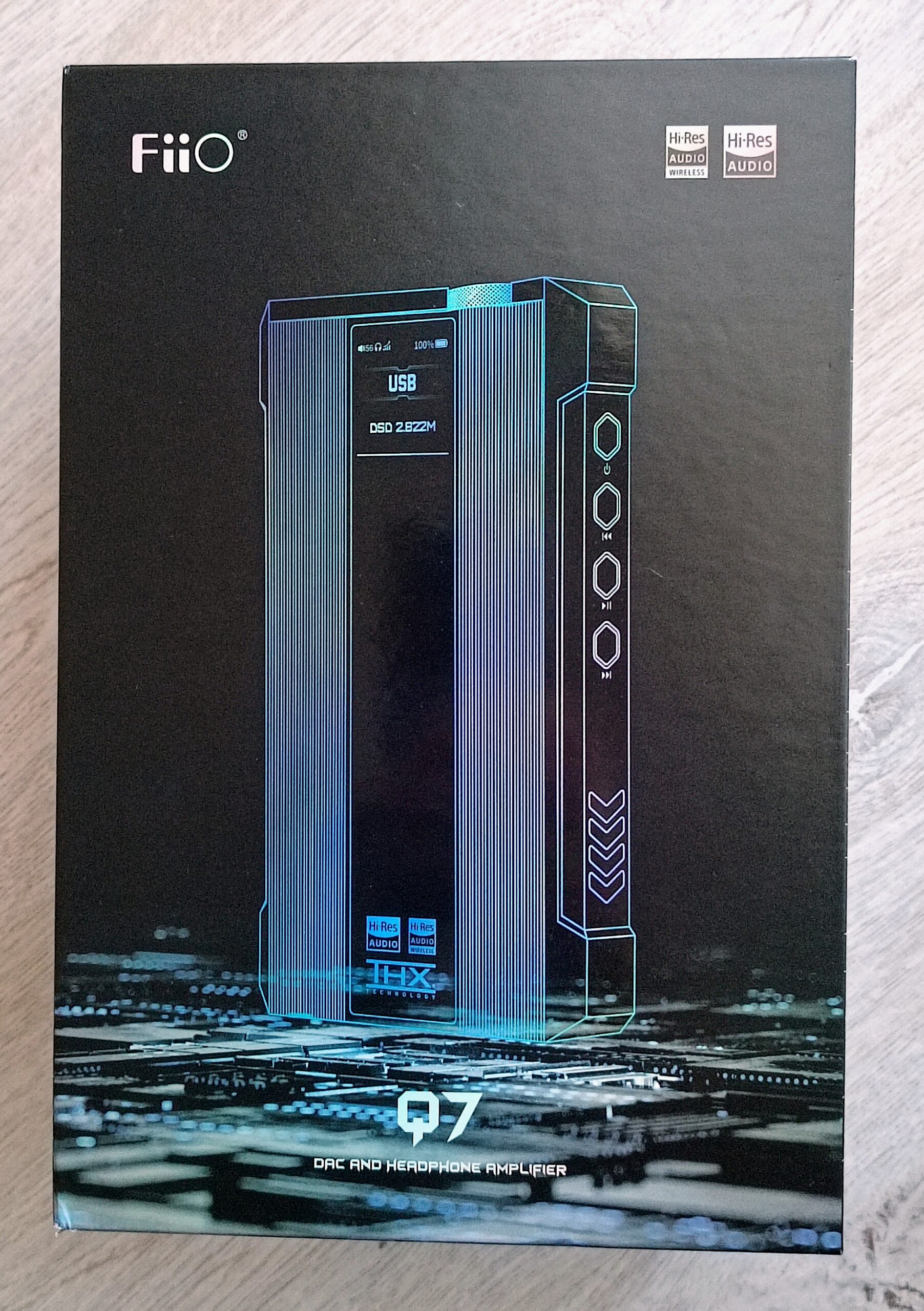
FiiO Q7 – Technical highlights
The Q7 stands as FiiO’s premier portable, desktop-grade DAC/amp, filling a void that has persisted for a considerable duration since the previous offerings, the now discontinued Q5S TC and the entry-level Q3 MQA.
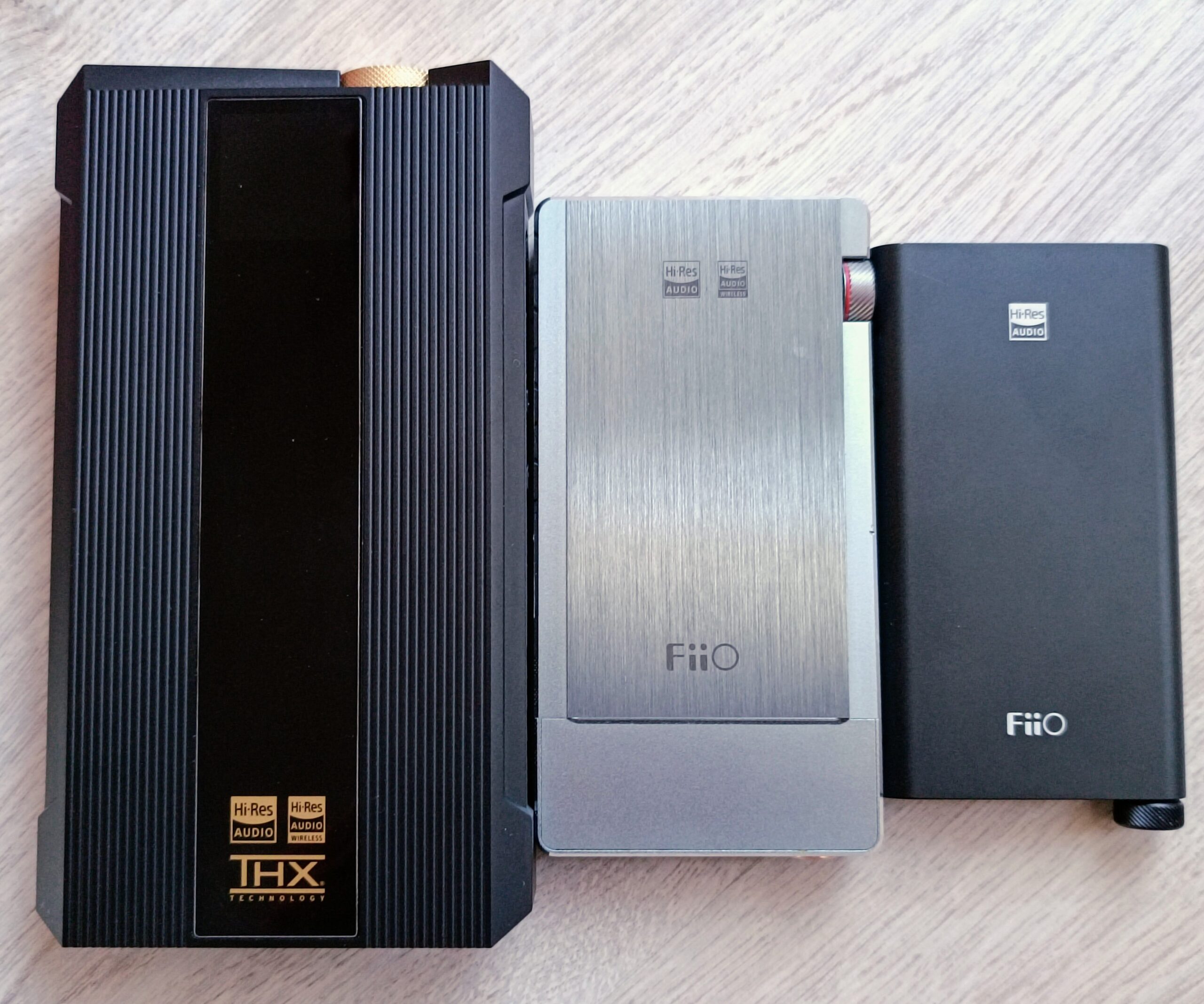
Unsurprisingly, the FiiO Q7 is built upon the successful architecture of FiiO M17, the flagship DAP. However, there are a few notable differences. Firstly, the Q7 utilizes a single ES9038PRO DAC chip instead of two, and it does not include the Android section.
Similar to the M17, the Q7 boasts dual THX AAA 788+ amplification circuits in a fully balanced configuration, providing an impressive output power of up to 3000mW. This power output surpasses that of the M17, which is quite remarkable.
The Q7 offers five gain settings, including a high-power option for over-ear headphones, thanks to its dual portable/desktop power supply modes.
Another difference lies in the XMOS receiver. The Q7 now incorporates the XU316 instead of the XUF208. Additionally, it combines two independent audio clocks to ensure jitter-free decoding of 32bit/768kHz PCM, native DSD512, and MQA unfolding up to 8X from the USB input.
Furthermore, the Q7 features coaxial and optical inputs, and it supports Bluetooth wireless connectivity through the QCC5124 Qualcomm chipset. This chipset enables high-resolution LDAC, aptX HD, and aptX adaptive codecs.

The Q7 offers the flexibility of operating in either DC or battery powered modes through its dual supply mode. When in battery mode, the Q7 can deliver a remarkable power of up to 1500mW, thanks to its impressive 9200mAh battery. On the other hand, when in DC mode, the battery is bypassed entirely, resulting in a doubled power output of 3000mW, providing a desktop-like experience with undistorted power.
You can read everything about the Q7 here

Appearance and build quality
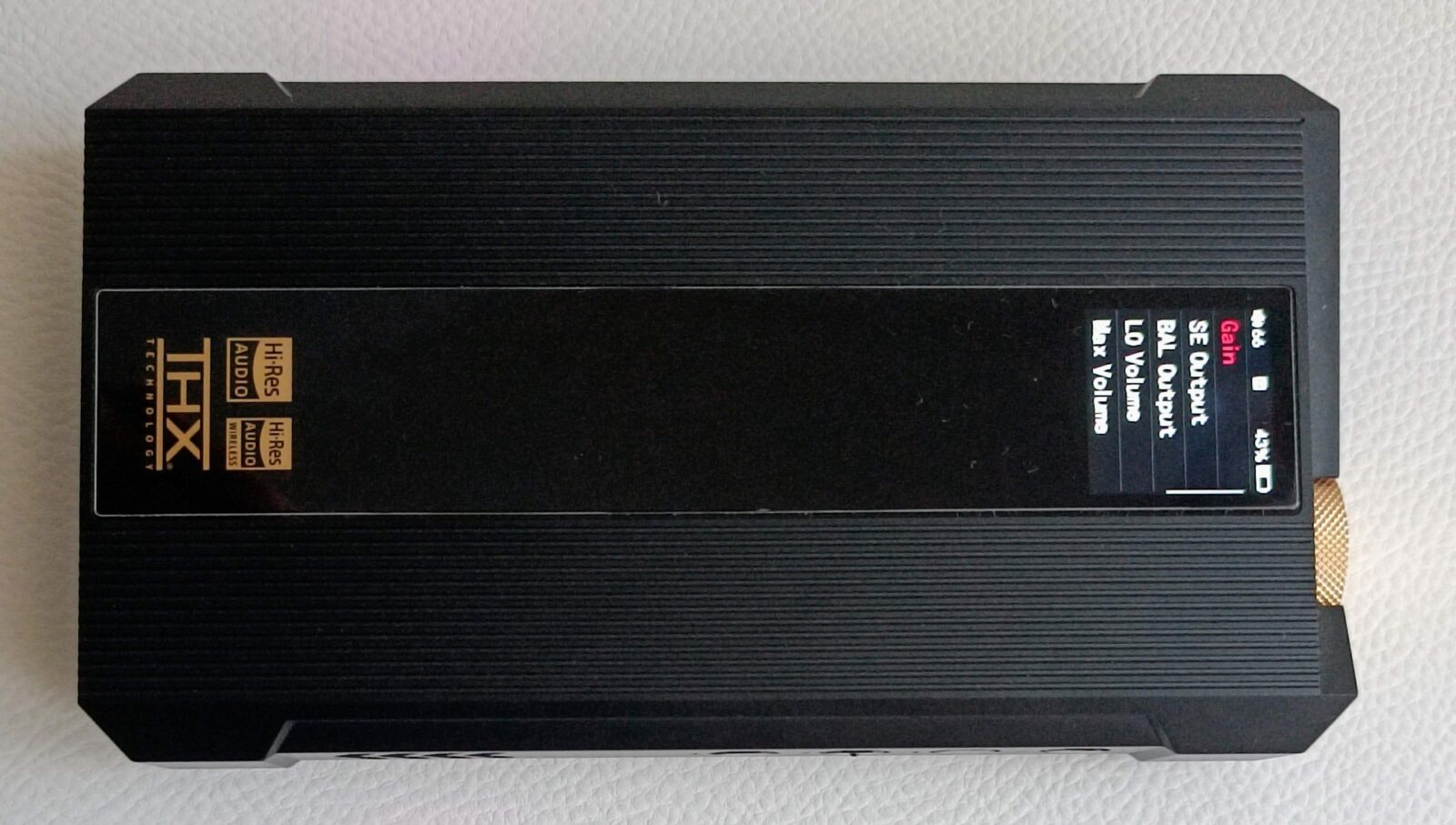
The M17 and Q7 share a striking resemblance, with the only notable difference being the absence of an IPS screen on the Q7. However, the Q7 compensates for this by incorporating its own compact 1.3″ full-color display, positioned at the upper section of the front face. Despite its small size, this display offers excellent clarity and visibility, allowing users to easily access important information like audio format and sampling rate through the configuration menu. Adding to its futuristic appeal, the Q7 boasts mech-inspired body lines that now extend to the front face, along with captivating RGB lights that give it an otherworldly appearance.

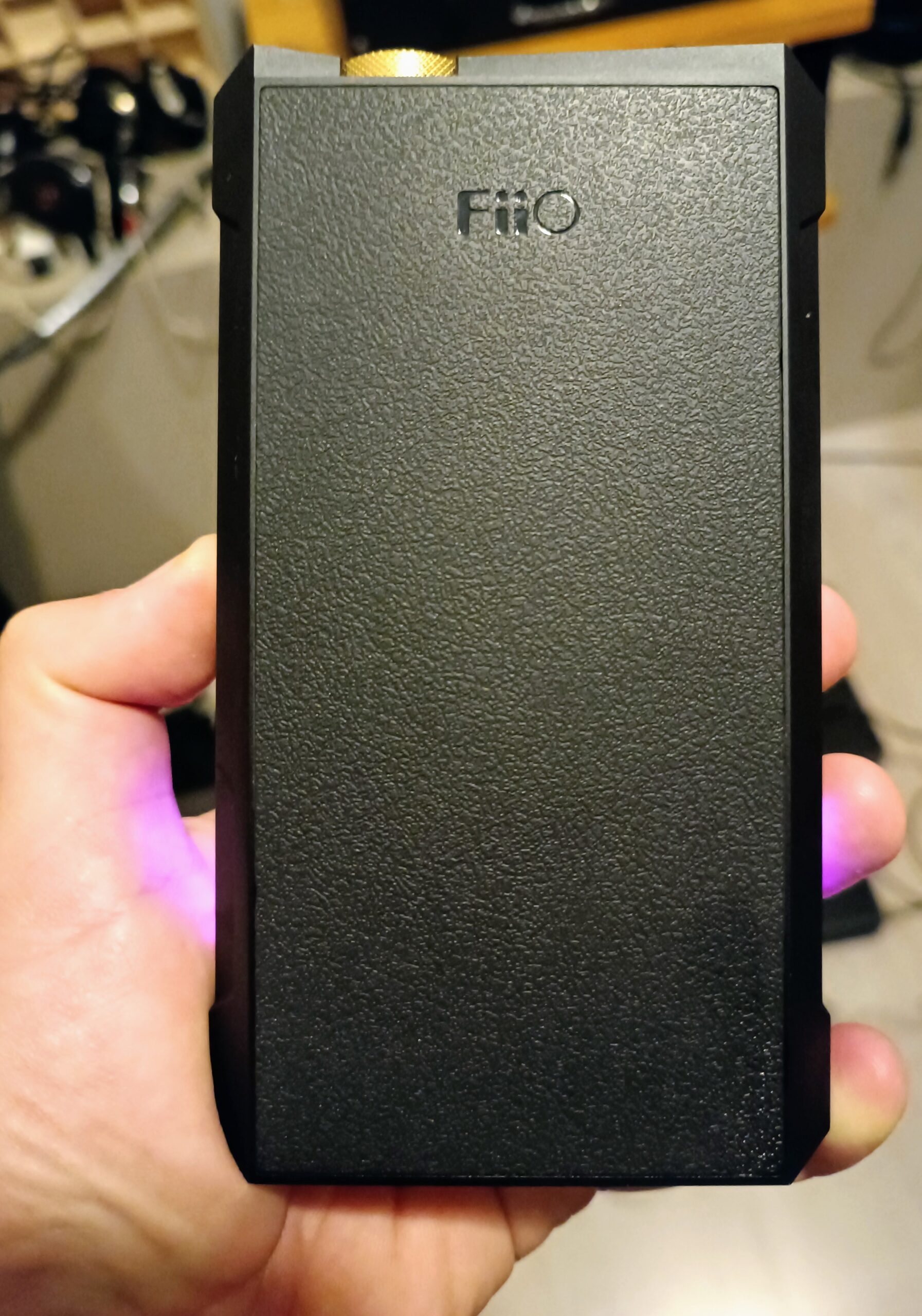
The chassis is crafted from durable aluminum alloy using CNC machining techniques. FiiO’s commitment to exceptional build quality and flawless finish is evident in this product. At the front face, there is a center stripe adorned with a gorilla glass insert, which is safeguarded by a pre-applied film. On the other hand, the back plate’s exterior surface is composed of a slip-resistant, hardened plastic compound.
With dimensions of 158x88x28mm and a weight of 620g, the Q7 is a substantial device that cannot be considered portable. Instead, it should be regarded as a transportable DAC/amp that can be conveniently carried in a small bag.
Layout and user interface
The Q7 features four headphone outputs (6.35mm, 3.5mm, 4.4mm, and 2.5mm) at the top, eliminating the need for an adapter. Additionally, it is equipped with a multifunction volume control knob. Unlike the M17, this knob does not rotate between minimum and maximum positions. Instead, it adjusts the volume in small clicking steps. A single press of the knob allows you to access the digital inputs selection screen, while a long press takes you to the main menu. To select a desired function or value, simply rotate the knob and press to confirm.
On the right side of the chassis, you will find the power on/off button, along with three buttons for controlling music playback (play/pause, previous track, and next track). The bottom of the Q7 houses the DC and three digital inputs, as well as two switches. One switch is used to toggle the USB charge on/off, while the other enables/disables the DC mode.

The menu of the FiiO Q7 offers a range of notable features. These include the ability to choose from seven different low pass filters, independently configure the single ended and balanced outputs as dedicated line level outputs, and set the line output mode as either fixed or variable. Additionally, the menu allows for gain setting and provides various other options to enhance the user experience.
The FiiO Q7 is a comprehensive device that covers almost all the necessary features. However, there are two notable omissions. Firstly, it lacks an auto power off timer that would automatically turn off the device after a certain period of inactivity. Secondly, it does not have a built-in WiFi module.
It would be highly desirable if the Q7 could connect to your home network and stream music, similar to the functionality offered by the Chord Mojo 2 with the Poly add-on module. This would provide users with even more convenience and flexibility in enjoying their music.

FiiO Control application
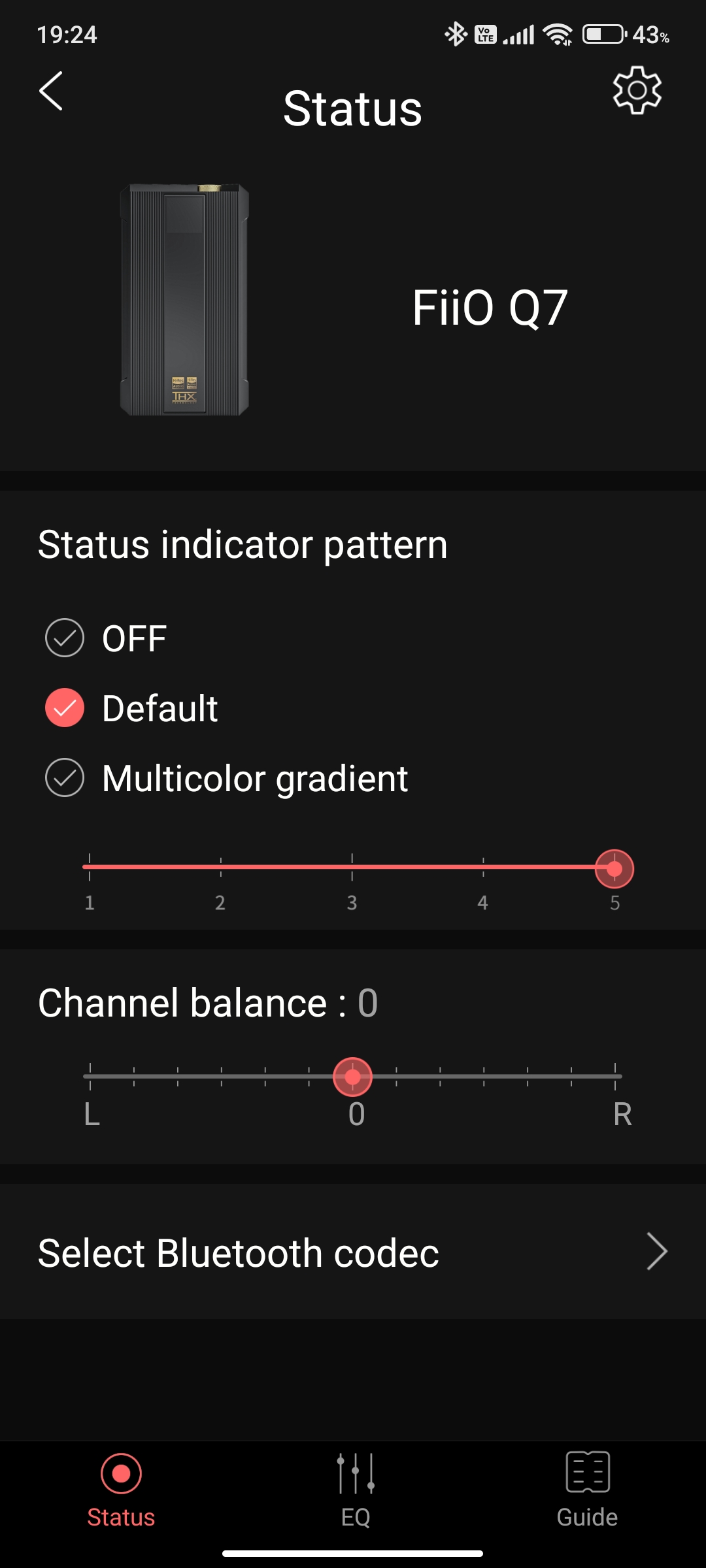
In addition, the Q7 is fully compatible with the FiiO control application, providing additional options for customizing the device. These options include configuring the RGB lights pattern, selecting the Bluetooth codec, and enabling the EQ, which is specifically designed for Bluetooth mode.
Furthermore, the Q7 incorporates Bluetooth low energy technology, ensuring that it remains connected to the FiiO Control application at all times, even when not in Bluetooth mode. This feature consumes minimal battery power, allowing for extended usage without worrying about draining the battery quickly.
Battery duration
I have not conducted a comprehensive benchmark test to measure the battery duration due to the numerous variables involved. However, I can confidently state that the Q7 lasted approximately 8-9 hours under mixed usage conditions, which is quite impressive considering its powerful capabilities. To fully recharge the battery, it typically takes around 5 hours.
Additionally, you have the option to charge and play music simultaneously using the DC power adapter, with the power switch set to battery mode. Alternatively, you can connect the Q7 to a PC and play music while recharging, although the charging rate will be slower in this case. If you intend to use the Q7 in dedicated desktop mode, it is recommended to set the power switch to DC mode not only to enable the ultra high gain, but also to extend the battery life.
Accessories
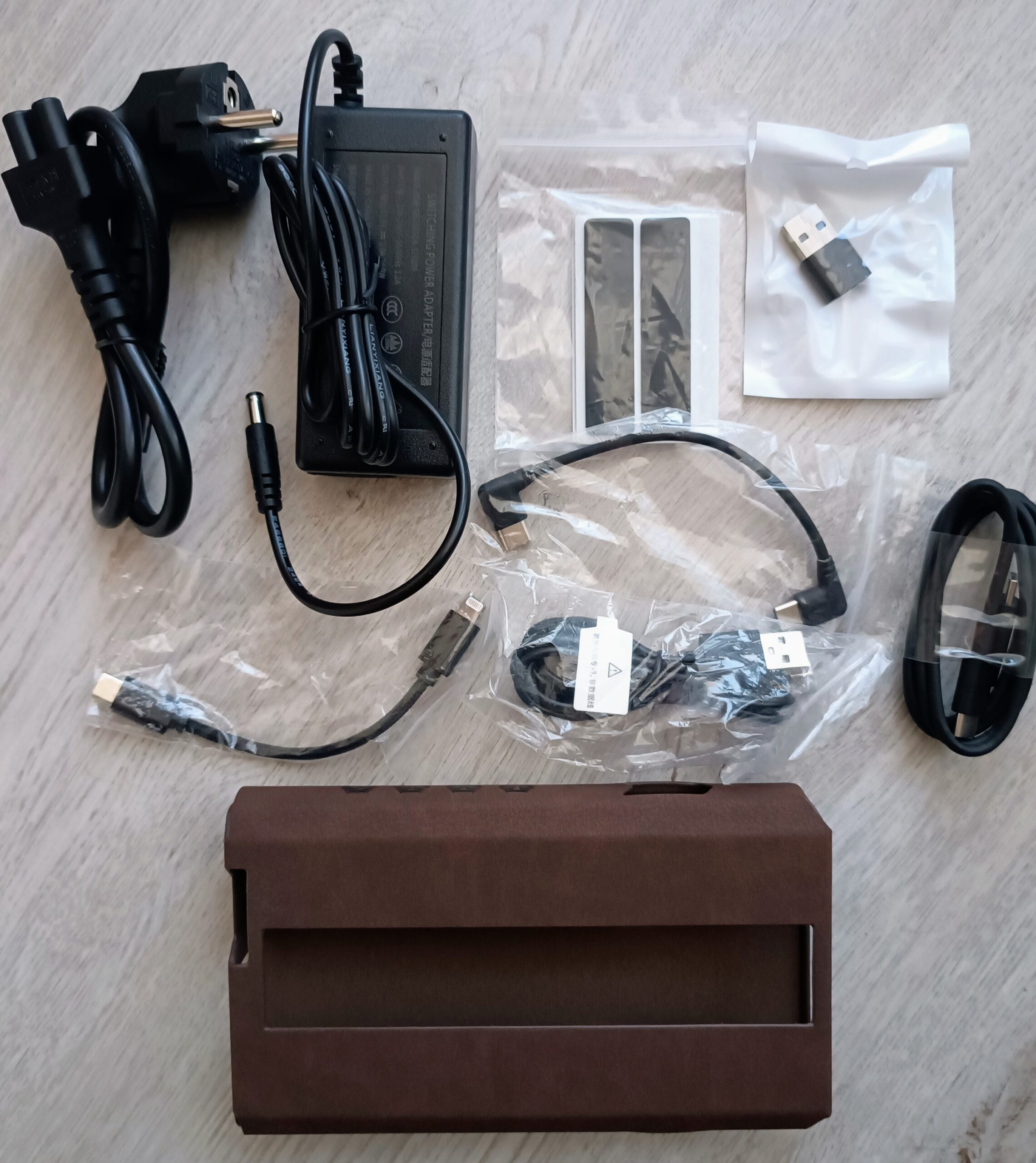
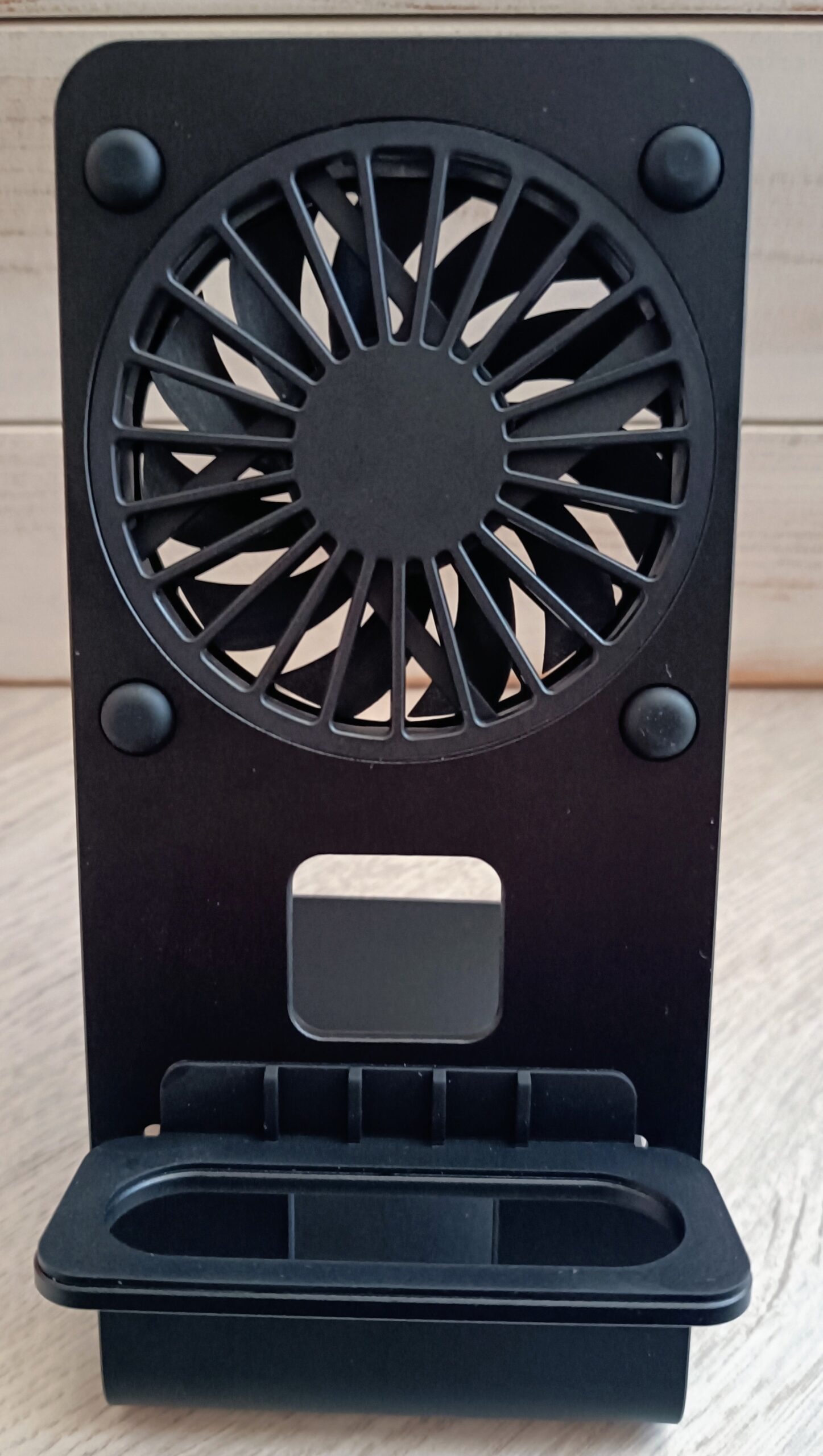
The FiiO Q7 is accompanied by an extensive assortment of accessories, which includes a low noise external power adapter, a cooling stand equipped with a fan, a leatherette case, a pre-applied tempered protection film, dust cups for the majority of the inputs, and four distinct USB cables.
However, the carrying case may feel slightly loose, similar to the M17 model. Nevertheless, FiiO has taken measures to address this issue by incorporating padded strips that can be attached to the interior of the case. These strips effectively fill the gap and facilitate precise button pressing.
Associated gear
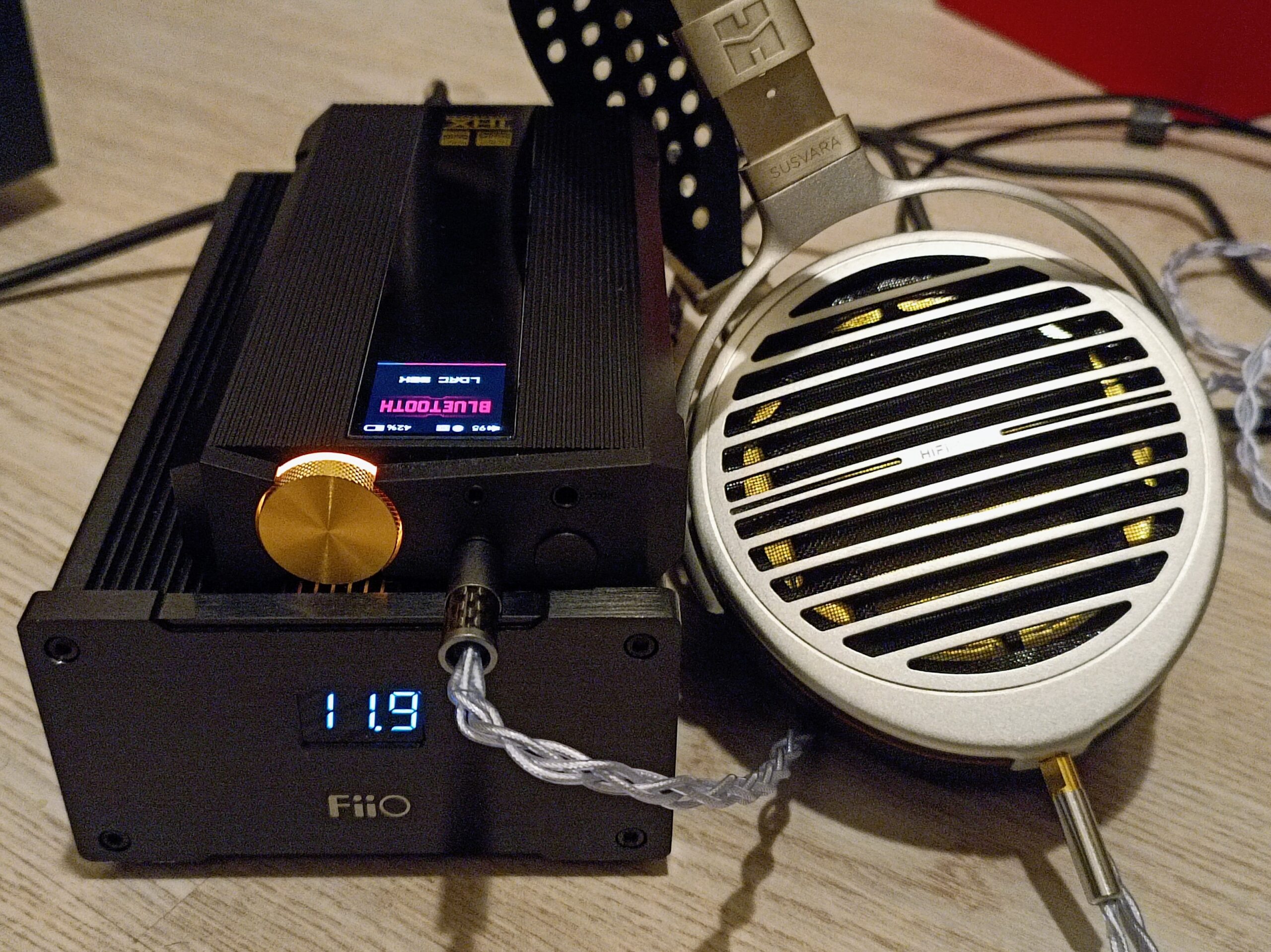
The HIFIMAN Arya Stealth, Focal Clear Mg, Sennheiser HD660S2, and Meze 109 PRO were the primary headphones used for most of the listening tests. Lavricables provided all headphone cables, which were made of pure silver.
To assess compatibility, Bluetooth reception, and sound quality of the Q7, I relied solely on a laptop and an Android tablet. However, for critical listening tests, I utilized the iFi NEO Stream and the Cambridge Audio CXC CD transport. To test the DC power mode, I employed both the supplied switching power adapter and the FiiO PL50 linear power supply.

Power output, heat and noise
The Q7 boasts impressive power, even without activating the DC power mode. With a balanced output delivering 1.5W/32Ω, it can easily drive a wide range of headphones. However, when switched to the DC power mode, the output surges to an impressive 3W/32Ω, making it suitable even for power-hungry planar magnetic headphones like the Susvara.
In battery mode, the Q7 offers four gain settings (low, medium, high, super high), while connecting the DC adapter unlocks the ultra high gain option. You can configure the ultra high gain to automatically activate when the DC adapter is plugged in, or manually select it from the menu.
I would recommend keeping the ultra high gain setting on manual to prevent accidentally damaging your earphones. The jump from any other gain setting to ultra high is quite significant. In my experience with headphones like the HiFiMan Arya Stealth, Focal Clear Mg, and Meze 109 Pro, the super high gain was already more than enough.
Even with the ultra high gain enabled, the Q7 maintained a mild working temperature. While I don’t own highly sensitive IEMs, I found that with other headphones like the FiiO FH7S and FDX, the Q7 provided a noise-free, black background without any electromagnetic interference (EMI).

Listening impressions
The Q7 is a DAC that offers a neutral and transparent sound, showcasing top-tier technicalities. However, it does have a slight upper-midrange/treble coloration, resulting in a slightly bright timbre. Despite this, the Q7 still manages to maintain a musical and engaging sound, especially when paired with the right headphones. It is worth noting that gear matching becomes crucial when using such a revealing source like the Q7, as it does not add much of its own character.
In terms of timbre, the Q7 delivers a natural and non-artificial sound, with just a touch of treble glare. The tonality is realistic, offering a smooth and refined texture with plenty of harmonic richness. However, it may not be considered overly organic or analog sounding. The Q7 strikes a careful balance between musicality and technicalities, although the latter tends to have a slight upper hand.
This DAC is more likely to be appreciated by those who prioritize technicalities over strict timbre realism. It boasts an energetic and spirited modern sound signature, rather than resembling a retro vinyl setup. The Q7 is versatile and performs well with various genres of music. When listening to classical music, it provided an enjoyable experience, particularly when paired with darker sounding headphones like the Sennheiser HD650. These combinations resulted in excellent sound synergy, making the Q7 one of the best matches available for a battery-powered DAC/amp.

The bass performance of the Q7 is truly exceptional. It extends deeply and has a significant impact, while also being incredibly tight and controlled. The layers of the bass are exceptionally well-defined, creating a dynamic and contrasting sound that is rarely heard from a non desktop DAC/amp.
Not only does the bass hit hard, but it also maintains speed and timing with precision. The texture of the bass is always full-bodied and crystal clear, adding to the overall richness of the sound.
Moving on to the mid range, it offers a spacious and finely articulated sound. The texture of the mid range is weighty and full-bodied, contributing to a neutral and linear frequency response. However, there is a noticeable intensity in the upper-mids that extends to the treble.
It’s important to note that this intensity is not a frequency inconsistency. In fact, the Q7 measures ruler flat. Instead, it’s about how the second order harmonics and overtones are resolved, with certain elements being emphasized. This can affect the timbral coherency of the Q7.
The treble of the Q7 is crystal clear and transparent. It is sharp, yet not aggressive or fatiguing even after extended listening sessions. The Q7 manages to be both detailed and lively, without sounding artificially analytical.
One of the standout features of the Q7 is its spaciousness and ambience. The soundstage is grand in size, with impressive reverb and laser sharp imaging. The depth layering is excellent, creating a truly immersive listening experience.
The Q7 is capable of doing justice to any headphone you pair it with. It particularly excels when listening to large scale symphonic and choral works, accurately positioning and distinguishing every performer.

Battery vs DC modes
No audible differences were detected when switching between the DC and battery power modes using the default gain settings. The sound output remained consistent in both modes. However, a noticeable change in sound quality was observed when switching to the pure DC ultra high gain, even with headphones that are easy to drive.
The sound became more dynamic, powerful, and impactful, with improved driver control and a slightly expanded soundstage. It should be noted that with sensitive earphones, some noise floor became audible. The ultra high gain mode, known as the Q7 ultimate mode, effectively bridges the gap between transportable and desktop performance. It is recommended to use this mode whenever a mains plug is available nearby.

The FiiO PL50 linear power supply
When utilizing the FiiO PL50 linear power supply in DC mode with the ultra high gain enabled, it adds an extra touch of excellence. The Q7’s sound and technical performance are elevated to a new level, with improved clarity and enhanced detail retrieval. The background becomes absolutely black, resulting in a more immersive listening experience.
Additionally, the rise and fall times are faster, transients are speedier, and the attack is quicker, leading to astonishing dynamics. These advancements bring the Q7’s sound and technical performance remarkably close to that of competitive desktop gear in the same category.
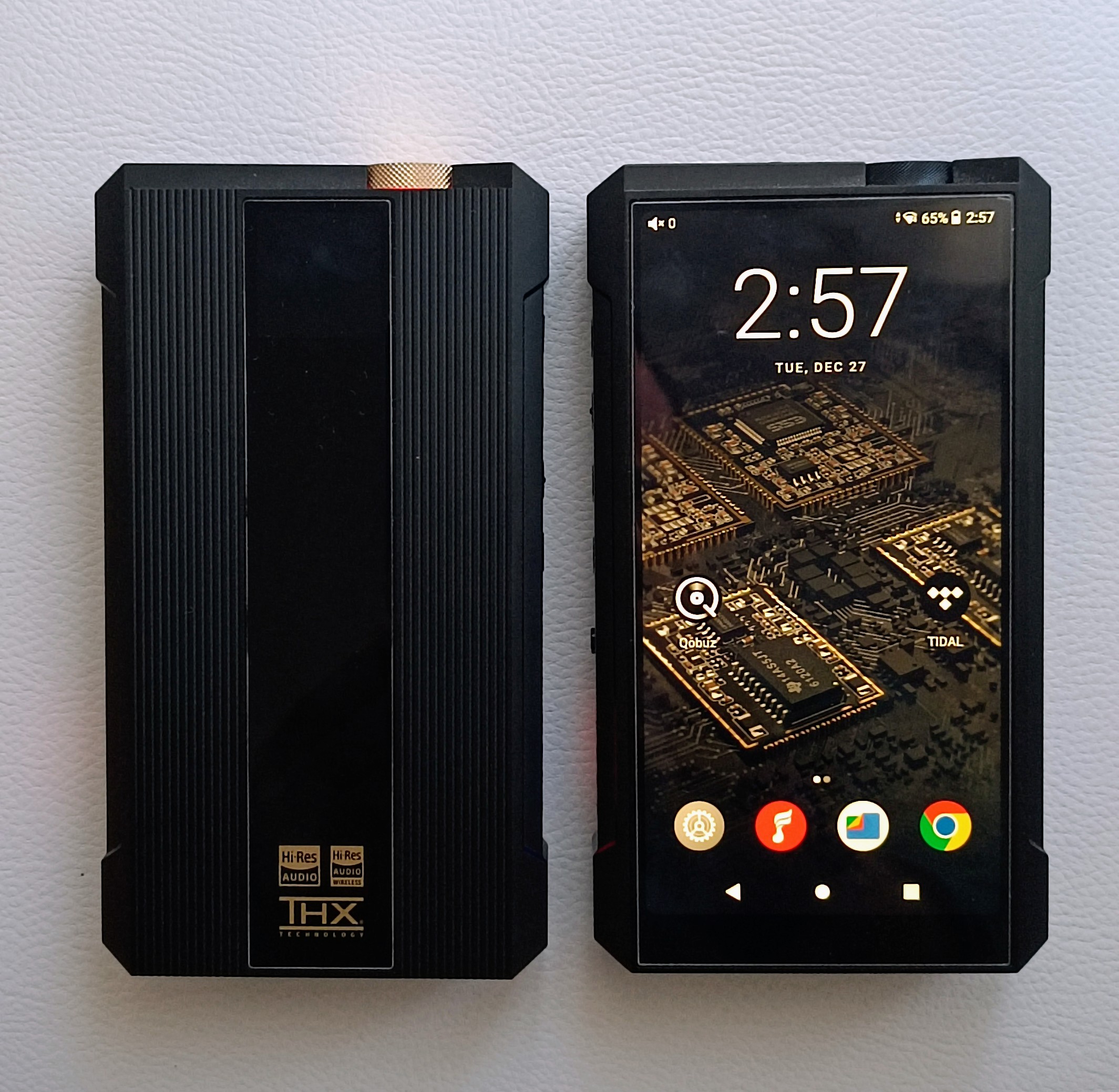
Compared to the FiiO M17 ($1799)
Given their nearly identical internal circuit structure, it is no surprise that these two devices share many similarities in terms of sound performance. Both offer a well-balanced blend of technicality and musicality. However, it is important to note that the M17 is not simply the Q7 with the addition of an Android OS and a larger touch screen.
In terms of sound quality, the M17 surpasses the Q7 with its slightly more natural and realistic timbre. It lacks the upper-mids/treble glare that can be found in the Q7, resulting in a more musical and engaging listening experience. The M17 also offers a smoother and more refined sound, with better resolution and articulation. Its soundstage is more expansive and immersive, making it the undisputed king among FiiO’s range of portable products.
However, where the M17 falls short is in sheer dynamics and driver control. The Q7’s extra power reserves give it an advantage in this aspect, making it a better choice for driving demanding headphones and delivering impactful bass. It is worth noting that the M17 comes with a higher price tag, and with the same amount of money, one could purchase the Q7, the FiiO PL50, a smartphone, and still have some spare change for a bottle of excellent wine.
Compared to the EarMen Angel ($799)
The EarMen Angel is a portable DAC/amp that comes at the same price as the FiiO Q7. Unlike the Q7, it has a rectangular prism shape which makes it slightly bulkier, but it is significantly lighter in weight. While the Q7 is known for its comprehensive features, the Angel embraces minimalism. It lacks a screen, Bluetooth connectivity, DC mode, and has fewer inputs/outputs and a lower battery capacity. This design caters to those who prefer a simpler and more easily transportable device without the need for excessive power output and additional features found in the Q7.

In terms of sound quality, the Angel is no slouch when it comes to transparency, fidelity, dynamics, and overall technicalities. However, the Q7 surpasses it in all these aspects and is even more powerful, dynamic, impactful, resolving, detailed, and open sounding.
Nevertheless, the Angel has a hidden advantage. Although it may lack a bit in technicalities and raw power, it compensates with an added dose of musicality. It has a warmer and more organic sound, with a touch of realism and natural timbre.
Both options are excellent, and as the well-known proverb goes, “different strokes for different folks.”

In the end
The FiiO Q7 is a remarkable all-in-one solution that effectively combines the portability of the M17 with the functionality of desktop gear. It offers exceptional sound performance, a wide range of inputs and outputs, a compact design, wireless connectivity, dual power modes, and an impressive power output that surpasses many dedicated desktop DAC/amps. Moreover, it comes at a highly competitive price. The FiiO Q7 truly stands out as the ultimate all-in-one solution, whether you’re on the go or at home.
Copyright – Petros Laskis 2022.
+ Neutral and balanced
+ Excellent technicalities
+ Dynamic and impactful
+ Desktop-grade headphone amplifier
+ Desktop mode
+ Stellar Bluetooth performance
+ Extended battery duration
+ All-in-one solution
+ Excellent build quality
+ Numerous inputs and outputs
+ Color IPS display
+ Accessories
– Slightly more technical than musical
– Revealing and unforgiving
– A touch bright
– I wish it had a WiFi module
– Big and heavyweight for portable use






Leave a comment