



The FiiO R9 review sample was kindly provided free of charge. I didn’t receive monetary or any other kind of compensation and I don’t use affiliate links. The price of the FiiO R9 is $1500 and can be ordered from FiiO.eu.
FiiO R9 Review
The R7 marked FiiO’s initial foray into the realm of all-in-one desktop devices, seamlessly integrating a DAC, headphone amplifier, preamplifier, and media streamer into a single unit, complete with an LCD touch screen. This multifunctional, compact device boasts a plethora of digital and analog connections, offering users the full advantages of the Android operating system, just like they would experience on a DAP.
Building upon the triumph of the R7, FiiO introduces the R9 as their new flagship media streamer, incorporating numerous enhancements and updates that surpass its predecessor. These improvements are succinctly summarized in the accompanying image.

Technical highlights
DAC
The R9 no longer utilizes the single ES9068AS DAC decoder; instead, the R9 incorporates two units of the top-of-the-line ES9038PRO DAC chip. This particular chip is also found in various other FiiO devices such as the M17, K9 PRO ESS, M15S, and Q7. FiiO’s engineers possess extensive expertise in working with this chip, enabling them to maximize its audio performance to unprecedented levels. Within each DAC chip, there are 8 separate D/A converters that are interconnected in parallel, resulting in a fully differential output.
Headphone amplifier
The R9 boasts the groundbreaking 8-channel THX AAA 788+ headphone amplifier design, a first in the world. These headphone amps, powered by a high-voltage power supply, are interconnected in parallel through 2×2 groups to achieve a four-way fully balanced design, significantly improving transient performance. The heat dissipation is efficiently managed with comb-shaped heat sinks and an optimized circuit layout, ensuring the R9 can deliver continuous and stable high-power output. As a result, the R9 is capable of producing an impressive 7300mW per channel at 32Ω, which is 102% higher than the output of the R7.
Audio architecture
The R9 boasts an intricate audio architecture consisting of five meticulously designed stages: IV, LPF, gain, pre-amplification, and current expansion. A crucial component of this audio circuitry is the OPA2211 op-amps, manufactured using the silicon-germanium (SiGe) CMOS process, guaranteeing exceptional performance of the chip. Thanks to its variable gain and variable power supply voltage design, the R9 offers five distinct levels of gain, enabling you to precisely adjust the volume to your preferred listening level.

USB receiver
Additionally, the R9 incorporates the advanced XMOS 16-core XU316, known for its exceptional performance and minimal delay, enabling support for 768kHz/32bit and DSD512. FiiO’s lab test reveals that the latency in USB DAC mode ranges from 20 to 60 milliseconds. Furthermore, the device features a 4th-generation phase-locked FPGA, equipped with dual Femto-second crystal oscillators.
Power supply
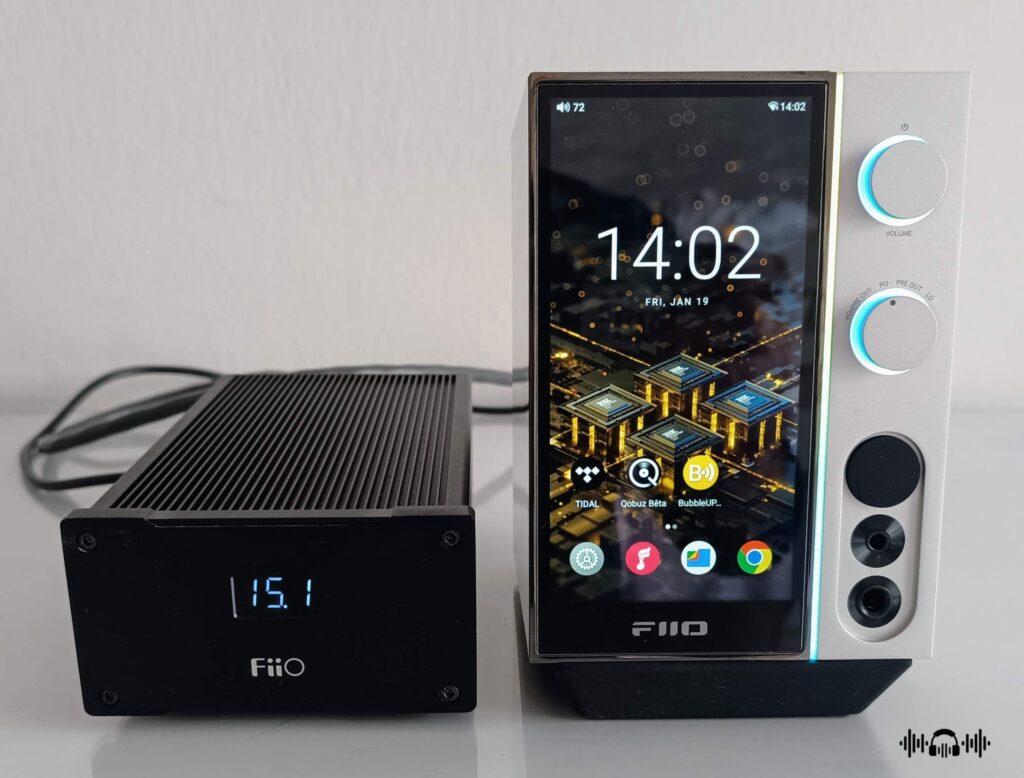
The R9 incorporates a brand-new 40W switching power supply, which is not only low-noise and high-efficiency but also long-lasting, making it suitable for industrial-grade applications. In addition to its built-in power supply, the R9 can also be powered by an external DC power supply such as the FiiO PL50. This flexibility allows users to pair the R9 with a high-performance linear power supply that delivers its own unique sound characteristics. Moreover, when the R9 is connected to an external AC power supply, you have the option to activate the “Ground Lift” feature, which effectively reduces crosstalk and enhances the purity of the audio output.
To ensure optimal performance, the R9 is equipped with multi-stage power supplies that are specifically designed for the digital and analog sections of the circuit. These power supplies incorporate numerous precision LDOs (Low Dropout Regulators) to ensure stable secondary voltage levels throughout the device.
HDMI ports
The R9, unlike its predecessor the FiiO R7, comes with a significant enhancement – an independent HDMI chipset that enables HDMI input, HDMI output, and HDMI ARC. This means that the R9 supports high-resolution audio and high-definition visuals with a picture output of up to 4K 60Hz. With the introduction of HDMI, the R9 can now seamlessly transition from the desktop to the living room, expanding its usability.
Bluetooth connectivity
The R9 is equipped with the Qualcomm QCC5125 Bluetooth chip, which provides support for various audio codecs such as LDAC, aptX Adaptive, aptX LL, aptX HD, aptX, AAC, and SBC for Bluetooth reception. Additionally, it supports AAC, SBC, aptX, aptX HD, LDAC, and LHDC for transmission. Bluetooth connection is stable without sudden disconnections or any audible noise. A nice feature when net is not available or for listening with wireless headphones.
Full technical specifications are available here.
Accessories
The package includes a lot of high quality accessories that are pictured below;

Design and appearance
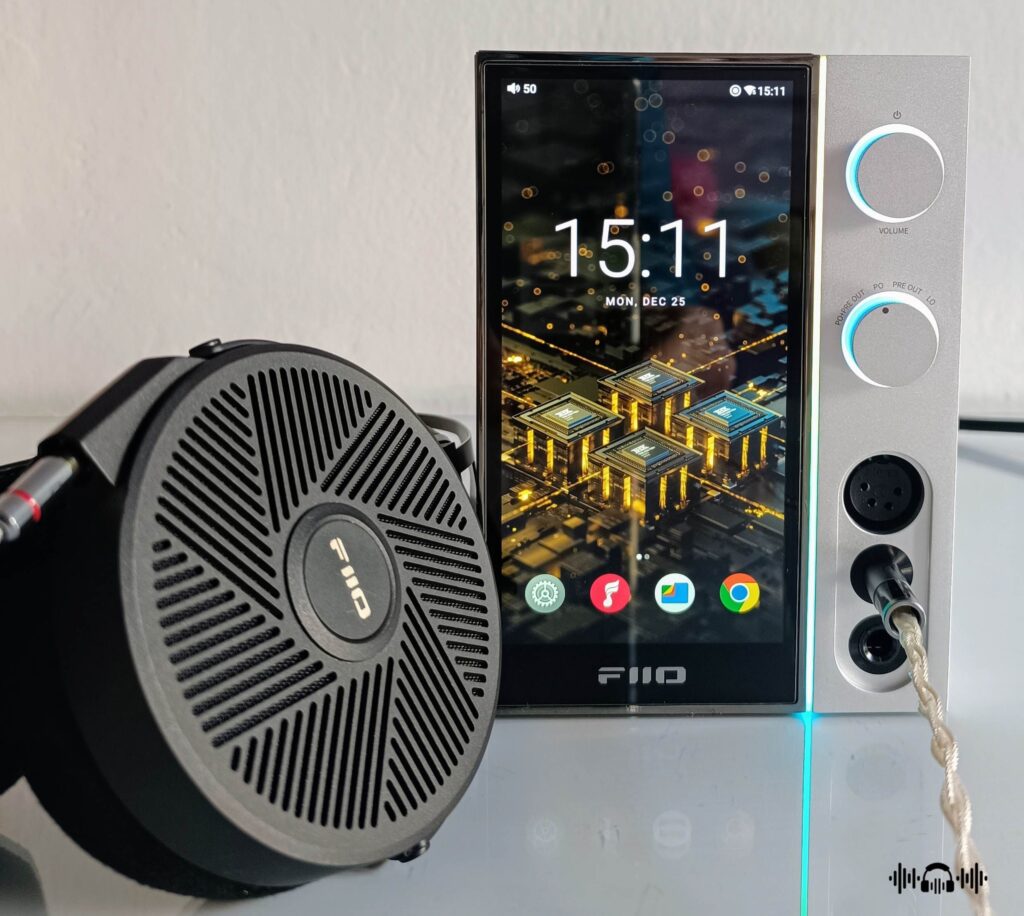
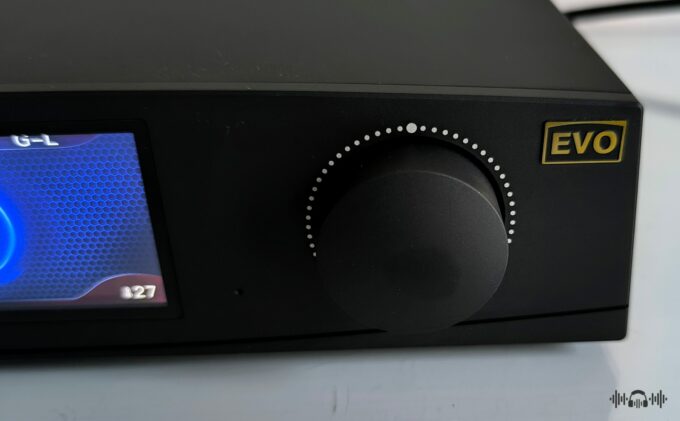
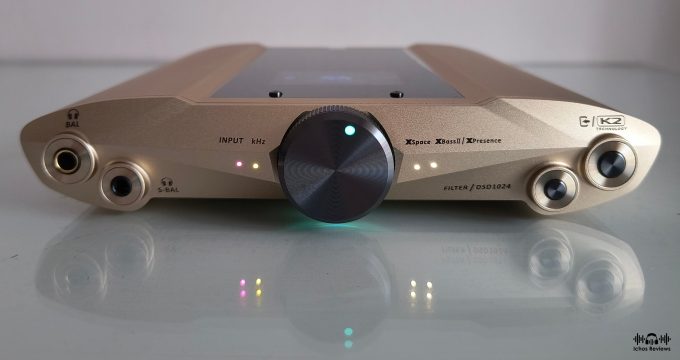
The R9 showcases a sleek metal bicolor design, enhanced by a mirror-polished metal section that has undergone meticulous polishing and electroplating processes. Its high-density metal body ensures durability and stability, effectively minimizing sound performance degradation caused by vibrations. Moreover, the newly designed dynamic light bar, along with the vibrant RGB lights on the knobs, adds a touch of allure to any desktop setup. These lights exhibit varying color patterns based on the input sampling rate and can be easily customized or turned off through the menu.
Compared to the R7, the FiiO R9 boasts a weightier and sturdier build, exemplifying exceptional build quality. Its premium outer appearance exudes a luxurious sensation. However, it is worth noting that the mirror surfaces tend to attract fingerprints and require regular cleaning to maintain their pristine appearance.

Inputs and outputs
The FiiO R9 boasts a wide range of analogue and digital inputs/outputs, making it a versatile multimedia hub.
On the front, you’ll find 6.35mm, 4.4mm, and 4-pin XLR headphone outputs, each catering to different audio preferences. Additionally, the package includes two dust covers to safeguard the connectors that are not frequently utilized.
Moving to the rear, you’ll discover a wealth of connectivity options. These include one XLR balanced output, two sets of RCA line outputs, two coaxial outputs/inputs, one optical output, one optical input, HDMI in, HDMI ARC/output, USB, and USB type-C ports. The USB port supports host functionality, USB DAC input, and USB audio output, while the type-C port supports OTG function.
Furthermore, the R9 is equipped with a convenient card reader, a 100 Mbps LAN port for seamless network connectivity, and an external DC input. It also comes with a mains input plug and a power on/off switch for added convenience.

Operating and output modes
The FiiO R9 offers a range of operation modes that can be conveniently accessed either through the drop-down menu or by pressing the multifunction volume button. These modes include Android, pure music, USB DAC, Bluetooth receiver, AirPlay, Roon Ready, Coaxial/optical input, HDMI input, and HDMI ARC.
The FiiO R9 offers various combinations for utilizing its headphone and line outputs. These combinations can be easily selected using the rotary knob. You have the option to use both the phone and pre out simultaneously, with the added benefit of adjustable volume. Alternatively, you can choose to use the phone out only or the pre out only, both with adjustable volume control. Furthermore, there is a line out option available with a fixed level.
In addition to these options, the FiiO R9 also provides coaxial and optical outputs, allowing you to connect it to an external DAC for enhanced audio experience.
User experience
The FiiO R9 boasts a stunning 6″ (2160*1080) vertical (portrait) screen, providing enhanced readability and ease of use compared to its predecessor, the R7. With improved visibility, vibrant colors, heightened brightness, and excellent response time, the screen delivers an exceptional visual experience. Additionally, the screen supports double tap to wake and can be utilized in landscape mode.
Equipped with a powerful Snapdragon 660 processor, 4GB of DDR4 RAM, 64GB of ROM, and the open Android 10 OS, the R9 ensures swift and responsive performance, delivering a seamless user experience. Operating the FiiO R9 is as effortless as using your smartphone or DAP (Digital Audio Player). You can effortlessly install and utilize third-party streaming music and other applications without any concerns regarding compatibility issues. Throughout the evaluation period, the FiiO R9 underwent one firmware update without experiencing any system crashes. FiiO has also committed to upgrading the Android OS to version 12 through a future firmware update, expected in 2024.
The R9 offers global SRC bypass for flawless music playback, ensuring bit-perfect audio reproduction. Additionally, it supports a 10-band dynamic EQ with a global effect. Although I personally do not utilize equalizers and have not tested the EQ functionality extensively, it is a noteworthy feature for those who prefer to customize their audio experience.

Remote controlling the FiiO R9
The FiiO R9 offers various options for remote control. One option is to use the FiiO Control application, which provides limited functionality but allows you to select different modes, adjust volume, choose tracks, and perform a few other functions. Another option is the FiiO Link, which is exclusive to the FiiO Music player. It supports Android WiFi and Bluetooth controls, as well as iOS Bluetooth control. Additionally, the R9 can be controlled remotely using the Bluetooth RM3 remote control that comes with it.
If you prefer screen mirroring on your cell phone, you can use the FiiO Cast application. However, it’s worth noting that the performance of this feature can sometimes be lagging. One drawback of the FiiO Cast is that whenever you switch to another application on your phone, it will revert back to the home screen, requiring you to set everything up again.
It’s important to mention that the FiiO R9 does not natively support UPnP, so it won’t be recognized as a renderer by applications like BubbleUPnP. However, there are alternative solutions available…
UPnP workaround
Fortunately, there is a solution to enable global UPnP support. To begin, you will need to install the paid version of the BubbleUPnP application on the FiiO R9. Once installed, open the application and navigate to the renderers menu. From there, select the FiiO R9 as the local renderer output device.
Next, you will need to install and launch BubbleUPnP on your phone or tablet. Upon doing so, you will notice that the FiiO R9 is now available in the list of renderers.
With this setup complete, you can now utilize the BubbleUPnP interface to remotely control the FiiO R9 and stream music from your preferred music services, as well as from network or physically attached drives.
Power output and associated gear
As previously mentioned, the FiiO R9 headphone amplifier boasts an impressive power output, capable of delivering a continuous 7.3W/32Ω with a peak output voltage of 50Vp-p. It offers five gain settings, namely Ultra high, Super high, High, Medium, and Low, along with three different volume curves to ensure optimal compatibility with a wide range of headphones, from highly sensitive IEMs to more demanding planar magnetic models.
The amplifier’s power is more than sufficient for virtually any headphone available in the market. Ultra high gain at 90 steps out of the 120 is plenty enough to drive the HIFIMAN Susvara with impressive dynamics and plenty of headroom. Other headphones I’ve tested, such as the Meze Elite or the Focal Clear Mg, where a just a piece of cake for the R9. Furthermore, the low gain setting provides a noise-free and silent experience, even when used with highly sensitive earphones like the Soundz Avant. Additionally, the single-ended output is sufficiently powerful and can easily drive headphones that do not support balanced connections.
As per our standard practice, the FiiO R9 was subjected to a 100-hour burn-in period while playing music. All headphone and earphone cables used during testing were provided by Lavricables.
Listening impressions
Let’s begin by discussing the DAC line output of the FiiO R9, which underwent testing in a 2-channel system comprising the Audio Physic Spark 6 speakers and the Kinki EX-M1 integrated amplifier in a dedicated listening room.
Without a doubt, the FiiO R9 exhibits exceptional sound quality as a DAC, meeting the highest standards. This makes it a suitable choice for demanding speaker and headphone systems alike. In fact, its performance can easily be compared to that of various standalone DACs in the same category, and in some aspects, it even surpasses them in terms of transparency, neutrality, and technical prowess.
However, I would not recommend purchasing the FiiO R9 to pair it with entry-level or mid-range active monitors. The R9 truly deserves to be paired with high-quality active monitors or passive speakers and headphones.
DAC line output
The FiiO R9 provides an impressive level of transparency and fidelity, delivering crystal-clear sound with exceptional definition. While the frequency response is measured as perfectly linear, careful listening reveals a slight emphasis on harmonics in the low-end, giving it a slightly more pronounced presence without overpowering the overall sound.
In terms of sound temperature, the R9 falls somewhere in between warm and cool, striking a balance that avoids any extreme tonalities. The texture of the sound lacks the organic or analogue characteristics typically associated with high-end audio, but it is far from clinical or sterile. This implementation of the ES9038PRO by FiiO represents their most mature and sophisticated effort to date. It seems that they have pushed the performance to its limits, and any further improvements would require taking the discrete route.
FiiO has successfully achieved a remarkable feat with the R9 by creating a sound that is incredibly transparent, akin to a mirror-like fidelity, and possessing top-tier technicalities. What sets it apart is its ability to minimize the digital glare and artificiality that are often associated with this particular DAC chip. The R9’s sound character is neutral yet exhibits a natural timbre, with a lean texture that avoids dryness. Its detail retrieval is astonishingly accurate without feeling fake, and its resolution reaches master class levels.
In depth analysis
The treble is vibrant, sparkling, and full of energy, with a slight sharpness that never crosses into being overly bright or fatiguing. It maintains an airy and luminous quality, showcasing excellent separation and definition. While the R9 is not forgiving and will expose mediocre recordings, it is not excessively revealing or punishing either. As mentioned earlier, the timbre remains natural without any digital artificiality. The texture, although lean, is consistent across frequencies, ensuring that higher pitched instruments do not sound thinner than their lower counterparts and never fade prematurely. The refined texture of the sound ensures that it is never coarse, edgy, or rough.
The midrange is characterized by its presence, articulation, and expressiveness, showcasing a high level of musicality. A comprehensive approach is taken towards the midrange, ensuring that it is not overly projected or emphasized compared to the rest of the mix. Instead, it is reproduced with equal importance, resulting in a cohesive sound presentation. The separation, clarity, and definition of the midrange are exceptional, allowing for the subtlest notes, every breath, and movement to be heard. This creates a vibrant and realistic listening experience. While the harmonic variety is satisfying, the sound remains colorful and harmonious, although not to the extent found in competitive DACs with more advanced output stages.
The bass in this DAC is characterized by its strength, impact, and contrast, showcasing its exceptional ability to handle sudden dynamic changes seamlessly. Whether transitioning from silence to a climax or vice versa, the bass remains powerful and impactful. It is a perfect match for dynamic amplifiers, ensuring that your system’s low-end heft and punchiness are not compromised. The bass is also fast, tight, and controlled, exhibiting precise timing and exemplary layering. While it may not possess a weighty and visceral texture, it never becomes dry or skinny, maintaining a lean yet engaging quality.

As for the R9, whether used as a DAC or an all-in-one device, it offers a soundstage that fills the room or your headphones with an expansive and tall presence. The images produced are precisely focused and accurate, contributing to a grand and magnificent presentation. However, there is room for improvement in terms of depth layering and ambient resonances, which could enhance the overall listening experience.
The Headphone amplifier
The THX amplification modules are expertly designed to provide pure and clear headphone amplification, maintaining the integrity of the R9 sound signature. Rather than altering the sound, these modules enhance the headroom and dynamic range, ensuring an exceptional listening experience with any headphones of your choice. The DAC’s superior sound is faithfully reproduced in your headphones, preserving the original quality without any loss or interference from the amplifier. This results in a truly remarkable listening experience that respects and highlights the unique tonal characteristics and balance of your headphones.
Sonic enhancement
The inclusion of the all to DSD feature in all FiiO DAPs allows for global up-sampling of all input signals to DSD64. While this procedure does require a significant amount of power, it is not a concern in the R9 as it is not battery powered. The only downside is that the working temperature may be slightly increased. However, the all to DSD function, especially when used in conjunction with the second harmonic regulation, can enhance the overall sound quality by providing a smoother and more refined audio experience with improved timbre realism. Therefore, I highly recommend giving it a try.
With the FiiO PL50 linear power supply
I will be brief. The internal switching power supply of the FiiO R9 is undeniably well-designed, boasting minimal noise and ample wattage to ensure smooth operation while still having power to spare for the THX amplifiers.
However, incorporating a top-notch external linear power supply, such as the FiiO PL50, is the icing on the cake, an additional enhancement for the perfectionist who strives to extract every ounce of performance. With the FiiO PL50, you can expect a darker background, more refined textures, profound silence, heightened dynamics, and improved clarity. To be honest, the FiiO R9 can be fully enjoyed without it, but I understand that many of you won’t be able to resist the temptation of taking things to the next level.
Comparison with the FiiO M17 and K9 PRO ESS
The FiiO M17 DAP and K9 Pro ESS desktop DAC/amp also feature dual ES9038PRO DAC chips and THX amplifiers. However, I won’t delve into a detailed comparison between them because their general tonal characteristics are more or less identical. Additionally, the form factor and functionality of these devices speak for themselves. Therefore, the question arises as to whether the FiiO R9 justifies its higher price not only for its unique design and connectivity, but also for any discernible sound differences.
To put it simply, the FiiO R9 stands out as the most refined and sophisticated sounding option among the three. While the overall sound signature may be quite similar, the R9 surpasses the others in terms of its natural and realistic timbre, reduced digital artificiality, improved resolution, finer textures, wider dynamic range, higher fidelity, and better sound cohesiveness.

Comparison with the Fiio R7
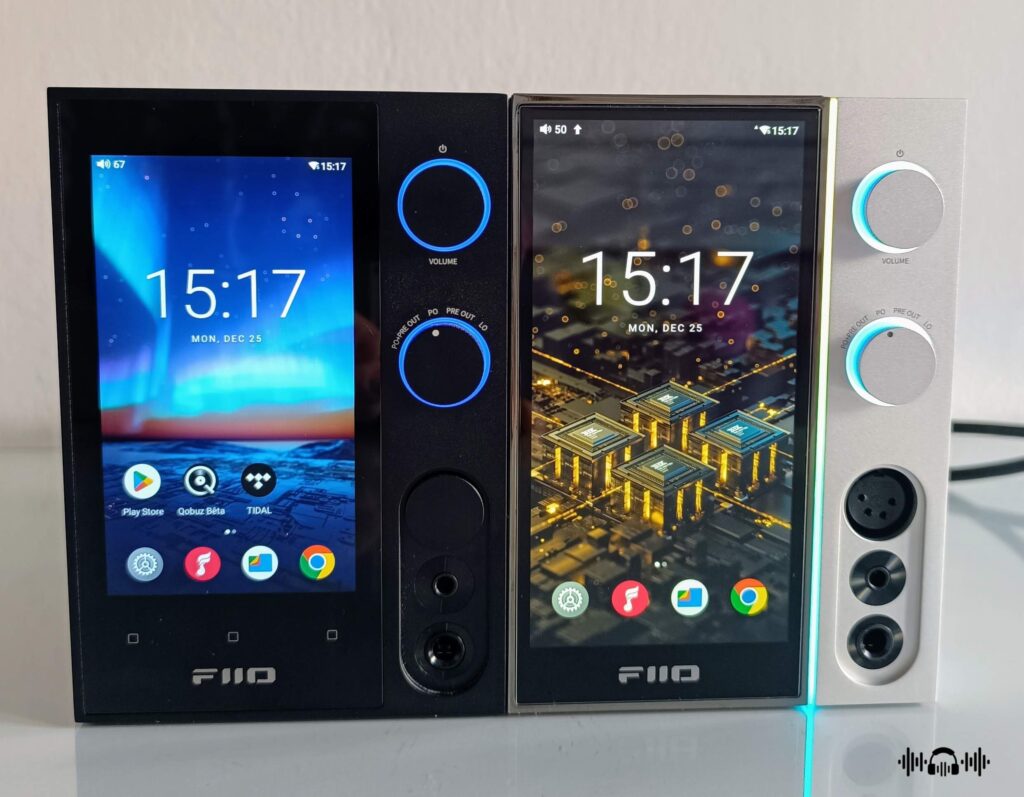
The FiiO R9 surpasses the FiiO R7 in terms of sonic performance, with even more impressive features. It offers higher output power, enhanced dynamics, improved resolution and refinement, a darker background, a more expansive soundstage, better transparency, and a more natural and realistic timbre. These differences justify the flagship status and the price difference between the two devices, as they provide a superior audio experience with reduced artificiality and digital glare.
Moreover, the R9 boasts additional functions and connectivity options, making it a more versatile choice. It is also better constructed and has a more premium appearance. The device features a larger and more vibrant screen, while its internal components and circuitry have been upgraded to further enhance its performance.
In the end
The FiiO R9 stands as FiiO’s most refined and sophisticated audio device to date, boasting an unparalleled level of sound quality. By harnessing the power of the ES9038PRO DAC chips and the THX amplification modules, FiiO has pushed the boundaries of audio performance to their limits, leaving little room for further improvement.
In addition to its exceptional audio capabilities, the FiiO R9 also serves as a versatile wireless media streamer and DAC/amp, offering a comprehensive range of inputs and outputs. Its user-friendly interface and seamless integration with smartphones make it a joy to use. Despite its compact size, the FiiO R9 exudes a premium aesthetic and is crafted with top-notch materials, ensuring durability and longevity.
Consider the FiiO R9 as a minimalist, high-end Swiss army knife for audio enthusiasts. Simply connect your active speakers or headphones, and immerse yourself in the music. While FiiO’s extensive catalog already covers a wide range of products, the only missing piece seems to be a power amplifier, the R9’s companion for driving passive speakers. However, only time will tell what the future holds for FiiO’s innovative lineup.
Copyright – Petros Laskis 2024.
+ Neutral and transparent
+ Mirror-like fidelity
+ Natural and realistic timbre
+ Minimum artificiality and digital glare
+ 6" touch screen
+ Powerful THX amplifier
+ Dead silent
+ Multiple connectivity options
+ Multimedia hub
+ Various Features
+ Ease of use
+ Compact size
+ Premium looking
+ Impressive quality
+ Accessories

- No line input
- UPnP is not natively supported
- Screen casting instead of a full featured application
- Lean textures
- Unforgiving / Requires high quality recordings








Leave a comment