


The iBasso Nunchaku was kindly provided free of charge in exchange for an honest review. I didn’t receive monetary or any other kind of compensation and I don’t use affiliate links. The price of the iBasso Nunchaku is $299 and you can buy it from here.
iBasso
iBasso is an audio brand with a cult status and many devoted fans. They make earphones, headphones and some of the best sounding digital audio players (DAPs), and portable USB DACs that usually sell-off before they even get uploaded to their website. The name iBasso is synonymous with the word “value for money”. All their products combine excellent sound and build quality with affordable prices, in a price to performance ratio that is difficult for other brands to match. iBasso is extensively covered by this website and you can read further reviews here.
iBasso Nunchaku
iBasso has great experience with miniature tubes so it doesn’t come as a surprise that their latest USB DAC dongle, the Nunchaku, is equipped with a dual tube buffer. The Nunchaku is not the first of its kind, there are a couple other portable DACs with tubes, but the Nunchaku is the only one that is really compact sized and lightweight.
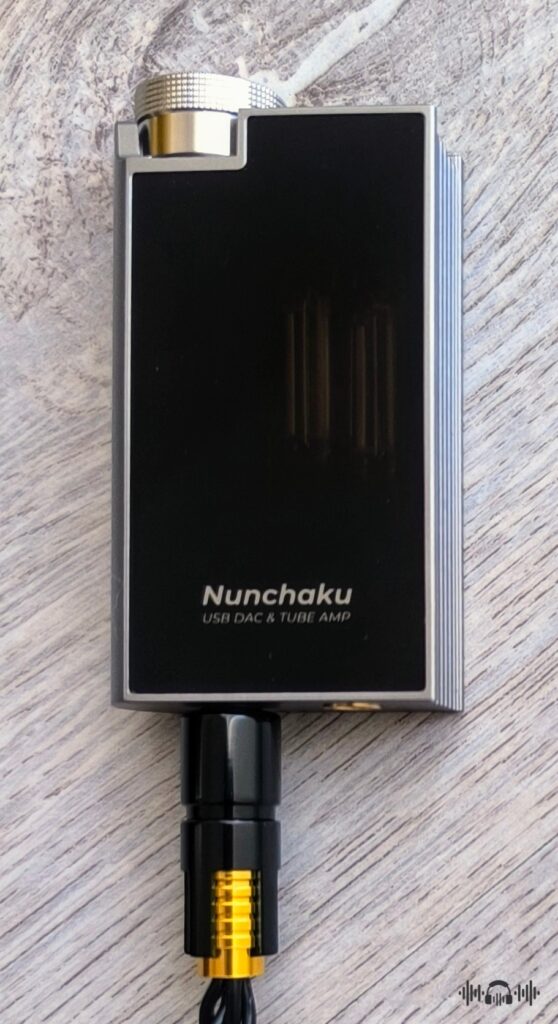
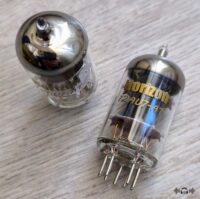
The Nunchaku utilizes two Raytheon JAN6418, directly heated vacuum tubes that are hand matched one by one. Unlike most portable products that use 9V or 12V power supplies, the Nunchaku features a 22.5V anode power supply specifically designed for the JAN6418 tubes, ensuring that they operate at their full potential.
The tubes are implemented in a “hanging” installation method with the aid of PORON material that is used to suspend them within the chassis. This kind of suspension is effective in shock absorption and greatly reduces the microphonic effect.
In addition to the tube output mode, the Nunchaku also features a user switchable Class AB amplification circuit. Except for the slightly different sound signatures between the two modes, the Class AB mode has the benefit of zero background noise and total absence of microphonic effect, making it ideal for use with sensitive IEMs.
The SNR and dynamic range ratings of the Nunchaku are 107dB and 110dB respectively for the tube mode, numbers that rise to an astonishing 130dB and 130dB in Class AB mode.

Technical highlights
Despite its compact size, the Nunchaku is designed with a flagship audio architecture that utilizes the two tubes with four Tl high-performance dual OPAMPs and four pieces of BUF634A.
For the digital audio conversion the Nunchaku relies on dual CS43198 DAC chips with an in-house developed FPGA and a KDS femto-second oscillator to lower jitter. The Nunchaku supports sampling rates up to 32bit/769kHz PCM and native DSD512. The device is plug ‘n play with Android, iOS, Mac and Win10 computers.
While in tube mode, the Nunchaku utilizes a high-end, JRC hardware volume control instead of a simple digital attenuator. The DAC works at its maximum output state following a tube amplifier with the JRC hardware control, a method that helps lower noise and improve SNR.
You can read more technical information and specifications here.
Design and build quality
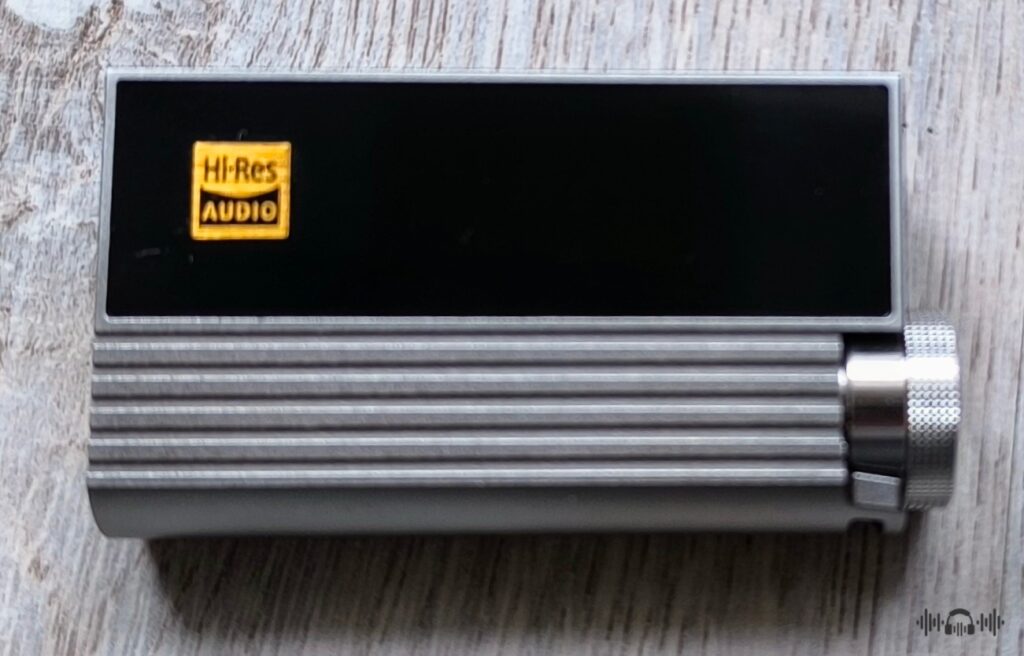
When I first heard about the iBasso Nunchaku, I thought that it was going to be rather big as it had to house two tubes. However, after getting it in my hands, I was positively surprised to discover that it is not only very compact but also lightweight enough.
The Nunchaku measures 65×34.6x15mm, the same dimensions as the iBasso DC Elite, and weighs 50g, that is 10g lower than the DC Elite. As a comparison with other brands, the FiiO KA17 measures 64×27.7×12.7mm and weighs 33.5g while the Cayin RU7, 12x24x66mm and 25g.
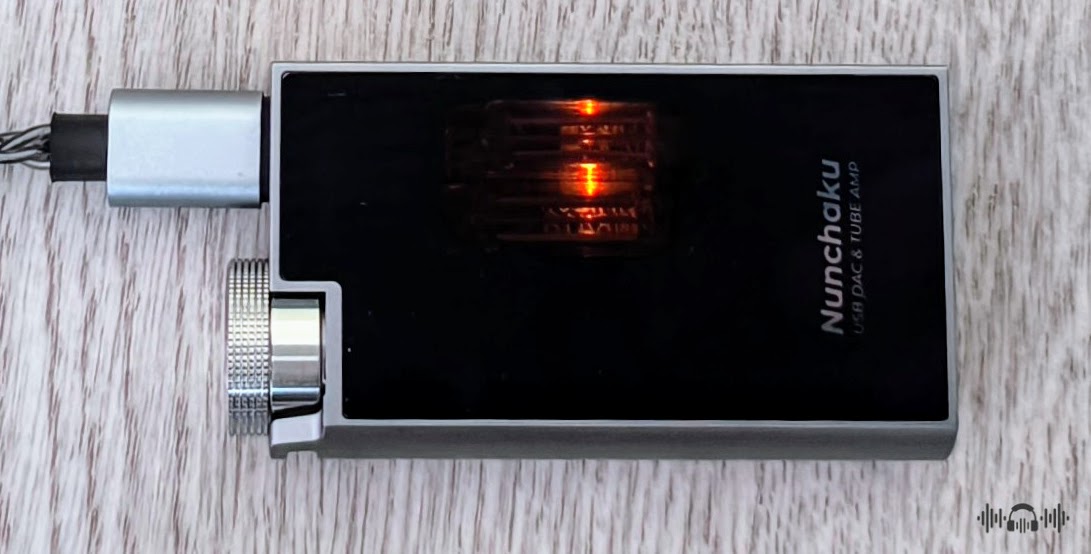
The Nunchaku shares the same outer appearance with the iBasso DC Elite with some notable differences. The rectangularly shaped enclosure is made from titanium alloy that is reinforced with glass panels at the front and the back. The front panel houses a 0.96” OLED display while the back is transparent glass so you can see the two tubes glowing. The iBasso Nunchaku is exceptionally well made and is available in gray or red finishes.

Connectivity and operation
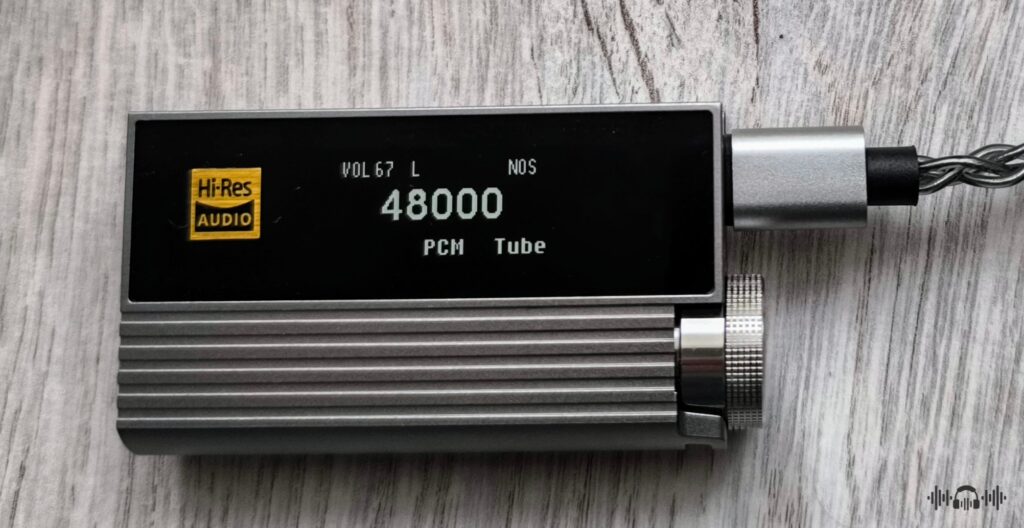
The Nunchaku has a type-C USB input and two headphone outputs, one 4.4mm balanced and one 3.5mm that can be configured as a digital SPDIF output through the menu.
The device is equipped with a 0.96” screen that displays current sampling rate and other useful information at a glance. The user interface is similar to that of the iBasso DC07PRO.
You can use the multifunction knob to adjust the volume and navigate through the menu. The knob has excellent feel and a smooth operation with a clicking feedback.
Press and hold the knob to enter the configuration menu and perform various adjustments. The Nunchaku is also compatible with the iBasso UAC application that you can use to do several adjustments without the need to reach for the knob and the display.
Inside the menu you can select tube or Class AB mode, adjust the low pass and high pass filters, enable the SPDIF out, adjust the amplifier’s gain and balance, rotate the screen and configure its time out. The device doesn’t support playback control and doesn’t have a built-in microphone while it would be great if it had a button shortcut for fast switching between the tube and Class AB modes.
Accessories
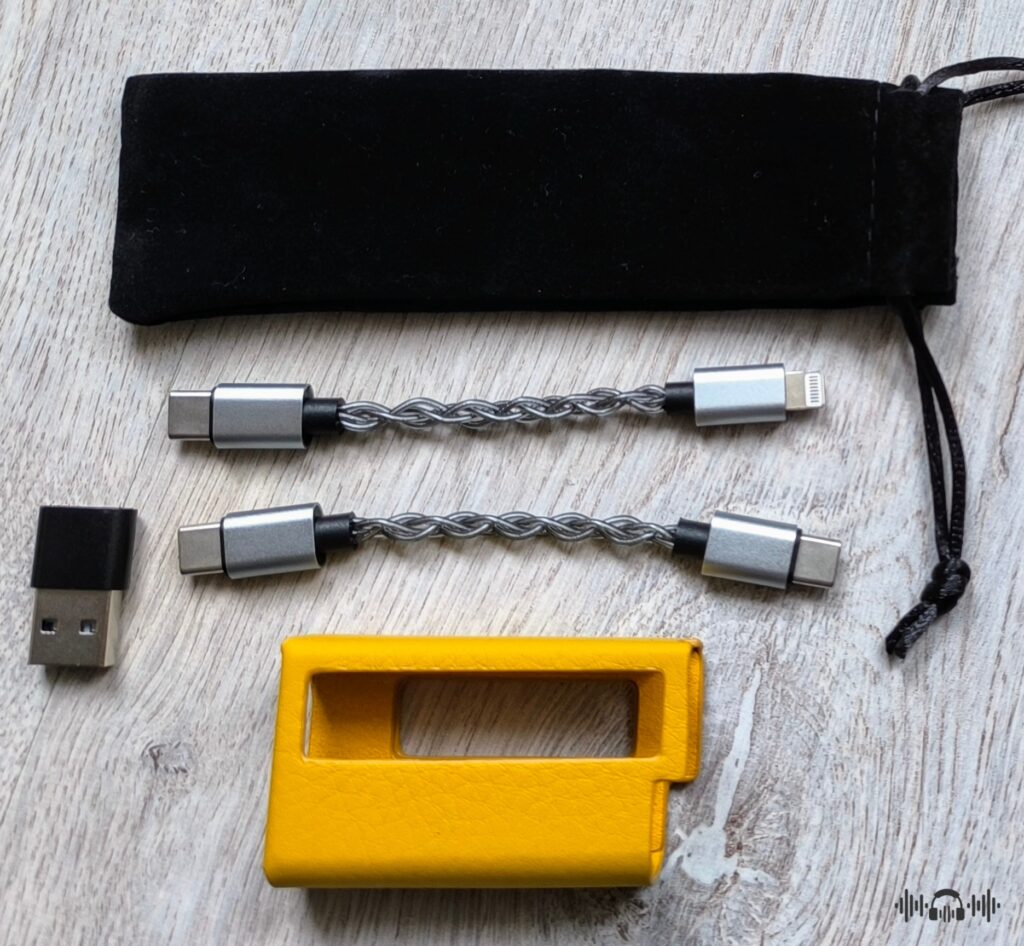
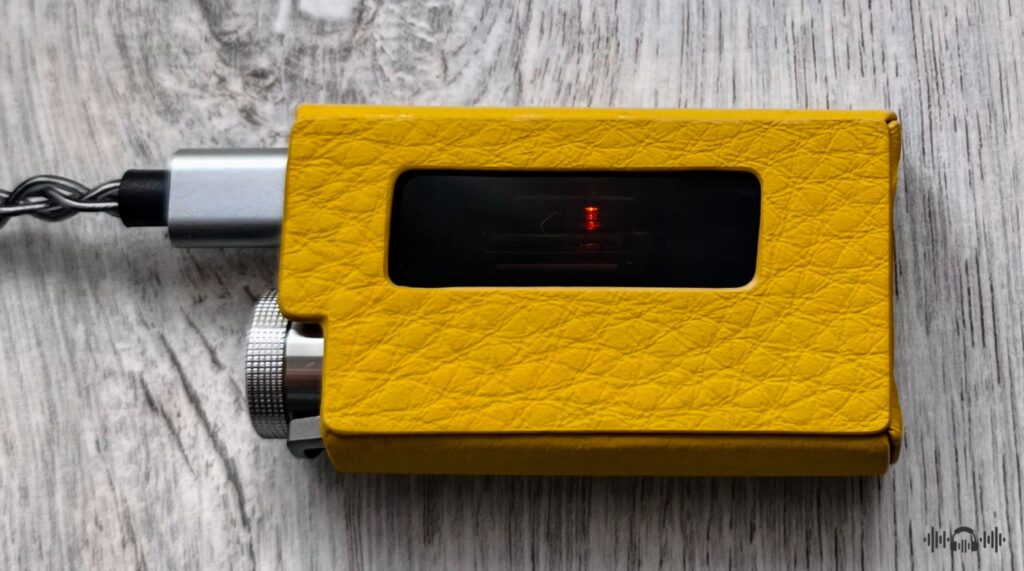
The package includes a yellow leather case, two high quality USB cables (type-C to C and type-C to Lighting) in a storage pouch and a USB adapter.
Power output and efficiency
The Nunchaku can deliver up to 525mW*2/32Ω from its balanced output in tube mode. Enough power to run most earphones and various, easy to drive, full sized headphones like the Aune SR7000. This number drops to 450mW*2/32Ω in Class AB mode, still plenty of power for most applications and on par with other competitive USB DAC dongles.
Power consumption is as low as advertised. I measured 0.11A/0.58W in tube mode and 0.09A/0.49W in Class AB. The Nunchaku is not only exceptionally efficient for a device with a tube buffer but it is also one of the most efficient portable USB DAC dongles among the competition. Go ahead and use it without worrying about your phone’s battery duration.
Background noise and heat
I tested the tube mode with sensitive earphones, like the Soundz Avant, to discover that the noise floor is much lower than expected. You can barely hear a faint hiss that doesn’t affect actual music listening. Tube microphonic noise is also minimum, you must tap the chassis with your fingers in order to hear a low ringing sound. The Nunchaku is well shielded against phone EMI while in Class AB mode, it is dead silent. A really excellent and worry free performance by any means.
Normally someone would expect the two tubes to generate a lot of heat, however the Nunchaku barely gets warm, it is actually colder to the touch than the iBasso DC07PRO.
(The Nunchaku was left playing music for 100 hours in order to make sure that the tubes were properly burned-in).
Listening impressions
Let’s start with the tube mode which is the most obvious feature of the iBasso Nunchaku and its major selling point.
The two tubes are very effective in adding a touch of a pleasing harmonic distortion without affecting the overall technical performance of the DAC. The sound signature is exceptionally musical, mildly sweet and warm without becoming syrupy and dark or out of control. This is a modern sounding device where the tubes are masterfully implemented to shape the timbre and the textures in a way that doesn’t mess with the linearity and the technicalities of the device.
The tube mode has excellent bass and treble extension with a flat frequency response throughout so it doesn’t sound less linear than Class AB. The treble doesn’t roll-off or lack vividness and clarity while detail retrieval is more than sufficient. The bass is tight and controlled with very satisfying definition and layering. The solid state mode might sound a bit more impactful and dynamic but the tubes pull ahead with greater elasticity and fuller textures.
What the tubes do is to imbue the sound with a rich, analog-like “tube” flavor, add a touch of smoothness and give a more laid-back presentation than the Class AB mode. The most notable effect has to do with the timbre, which is exceptionally natural and organic, while the textures are more visceral and lush than in solid state mode. The mid-range is where all the magic hides, the Nunchaku is expressive and melodic, it makes the music flow and shine with the most colorful harmonies.
More listening impressions
The Nunchaku is the most organic and analog sounding USB DAC dongle I have tested so far, easily surpassing both the Cayin RU7 and the iFi GO bar Kensei that used to be my benchmarks in this regard. The combination of the NOS filter with the tube buffer is outstanding, the sound of the Nunchaku is completely absent of any digital artificiality or metallic harshness. The Nunchaku sounds more like a miniature vinyl player rather than your typical USB DAC dongle.
The tubes also positively affect the soundstage that becomes more holographic and immersive. The Class AB mode is a little more effective when it comes to positioning accuracy and separation but it can’t match the grandness and the liquidity of the tubes.
These miniature JAN tubes can’t replicate the full tube experience but you do get a good taste of the famous tube magic in a portable package.
Class AB vs Tube modes
The overall sonic performance of the Class AB mode is somewhat better than the iBasso DC04PRO but not as technical and profound as in the iBasso DC07PRO. Generally speaking, the sound quality of the Class AB mode is at least on par with most competitive USB DAC dongles that feature a similar audio architecture.
The sonic differences between the two modes were described in detail in the previous section of the review. The Class AB mode offers marginally better technical performance and increased clarity throughout the whole frequency range. The sound is faster, slightly more resolving and a touch more dynamic and impactful but also drier, with leaner textures and a less natural timbre.
These are the classic differences between solid state and tube audio circuits, there are certain benefits and takeaways on both methods. However, the best part in the case of the Nunchaku is that you can have both of them in the same device.
Pairing diversity
Thanks to its dual modes, the iBasso Nunchaku is a versatile USB DAC dongle that can match well with a great variety of different earphones and sound good with all types of music.
As an example, the natural timbre and the holographic soundstage of the tube mode make it ideal for classical music listening, while its warm and easy going nature pairs well with brighter and more strident earphones. On the other hand, the Class AB mode is a great option if you want to add some sparkle to darker earphones or for listening to modern tunes. Add also to the equation the various digital filters and you have plenty of options to experiment and find your favorite sonic combination.
In the end
Tubes or solid state? This is an all time endless debate but you don’t have to argue anymore because with the iBasso Nunchaku you can have both options on the same device. The Nunchaku is the first really compact sized and lightweight USB DAC dongle to have both a tube buffer and Class AB working modes, each one with its own unique sound signature.
The miniature JAN tubes are exceptionally well implemented with excellent sonic and technical performance, minimal noise, low power draw and negligible heat generation. The Nunchaku is also equipped with a handy OLED display, a multifunctional knob and is compatible with an accompanying application for greater ease of use.
Very well made and competitively priced, the Nunchaku is the most natural sounding USB DAC dongle I have tested thus far and the perfect way to experience tube sound on the go. It has now become my favorite USB DAC dongle and if you are a tube addict like me, then you should definitely put the Nunchaku on your shortlist.
Copyright – Petros Laskis 2025.
+ Tube and solid state modes
+ Exceptionally natural and organic timbre
+ Melodic mid-range and smooth treble
+ Visceral and weighty bass
+ Competitive technicalities in tube mode
+ Even better technicalities in Class AB mode
+ No digital glare or artificiality
+ Grand and holographic soundstage
+ Very efficient in both modes
+ Dead silent in Class AB mode
+ Minimum heat generation
+ Plenty of configuration options
+ Compatible with the UAC application
+ Compart sized and lightweight
+ OLED display and multifunctional knob
+ Beautifully glowing tubes
+ Two high quality cables and protective case
+ Exceptionally well made and reasonably priced

- The yellow color of the case might not appeal to everyone
- Faint hiss in tube mode
- Not as powerful as the competition
- Class AB mode is less powerful than tube
- Can't switch modes on the fly
- No playback control buttons




Leave a comment