



The Meze Audio Poet was kindly provided free of charge in exchange for an honest review. I didn’t receive monetary or any other kind of compensation and I don’t use affiliate links. The price of the Poet is $2000 and you can buy it from Meze Audio or authorized dealers around the world.
Meze Audio
Set in Baia Mare Romania, Meze Audio has been crafting high quality headphones and earphones since 2011. From their flagship Elite to the budget-friendly Alba, Meze Audio’s headphone and earphones have earned numerous prestigious awards and the consumer’s love, no matter their price. Their products combine pristine sonic performance, timeless design, luxurious build quality, premium materials and exceptional wearing comfort. You can read the whole story here and discover their models by reading further reviews here.
Meze Audio Poet
Are you a fan of Meze Audio’s Liric 2 portable form factor but wished for the advantages of an open-back headphone? Luckily for you, Meze Audio has recently created its open-back sibling, the Poet.
The Poet is a compact sized planar magnetic headphone that blends the design and the functionality of the Liric with the top-of-the-line diaphragm technology that is used in the flagship model, the Elite.

Technical highlights
For people that are not familiar with Meze Audio’s planar magnetic headphones, let’s remember that all their models feature the Isodynamic Hybrid Array technology that was developed by Rinaro Isodynamics, a pioneering company that is based in Ukraine.
The Poet features the Rinaro MZ6 Isodynamic Hybrid Array driver that is a synthesis of the MZ4 and the MZ3SE drivers featured in the Liric 2 and Elite headphones respectively. This new design is a scaled down version of their flagship Isodynamic Hybrid Array technology and aims to inject the high-performance experience of the Elite into the more compact body of the Poet.
The MZ6 driver is exclusively created by Rinaro for Meze Audio and is one of the most advanced and lightweight full-size planar magnetic drivers available to date. Its key features are the reinforced polymer housing designed to withstand the demanding 10,7N magnetic loads, the biaxially oriented, semi-crystalline polymer film, Parus diaphragm and the hybrid magnet array that creates 0.3 Tesla of Isodynamic magnetic field.
Another innovative technology that is used in Meze Audio’s planar magnetic headphones is the dual-driven voice coil system. A switchback coil, positioned in the upper section of the driver, is optimized for the efficient reproduction of lower frequencies and a spiral coil, placed directly over the ear canal, excels at reproducing mid-to-high frequencies.
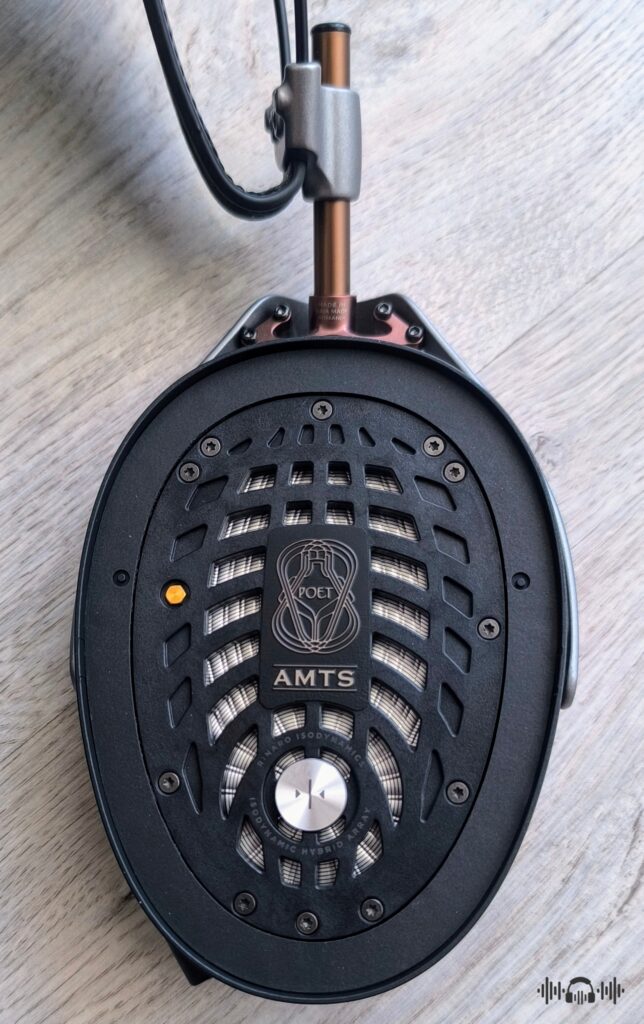
The Poet also incorporates the Acoustic Metamaterial Tuning System (AMTS) that was introduced in the second generation of the Liric. This technology relies on a precision-crafted metal component that strategically covers select openings in the driver frame, to effectively attenuate high-frequency peaks for a less fatiguing listening experience. This system is patented by Dan Clark Audio.
You can read more about the Poet here.
Design and build quality
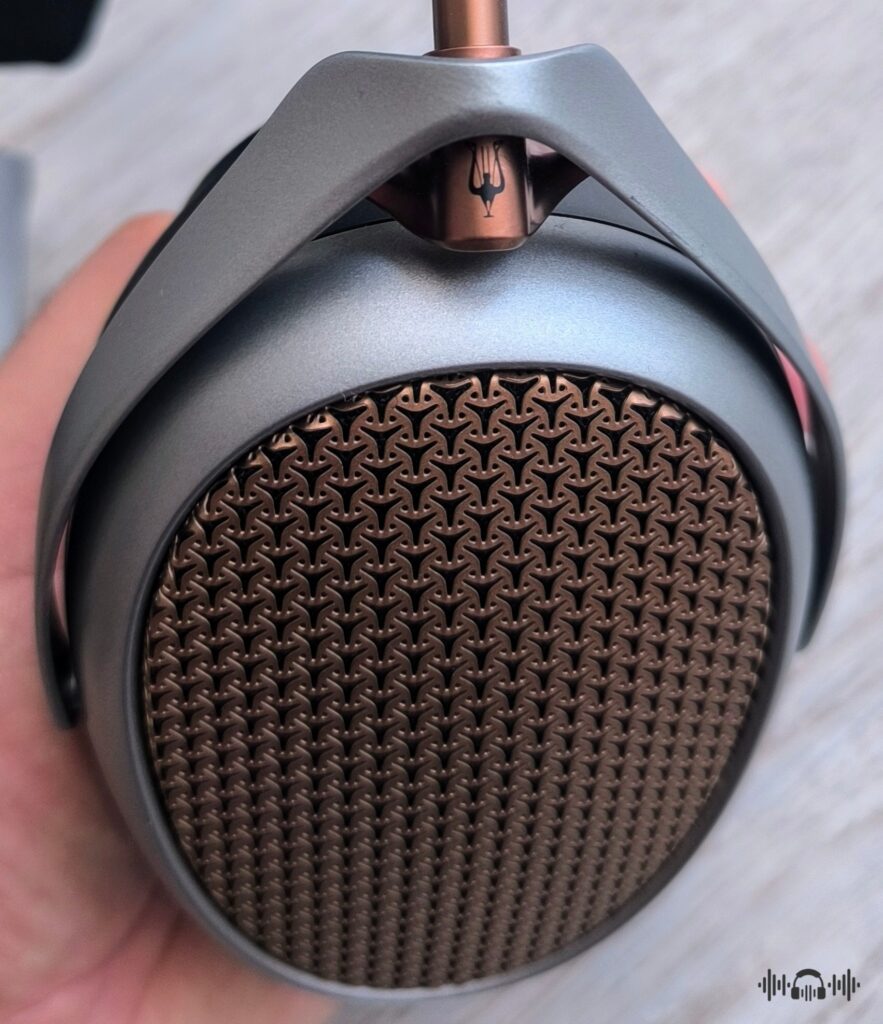
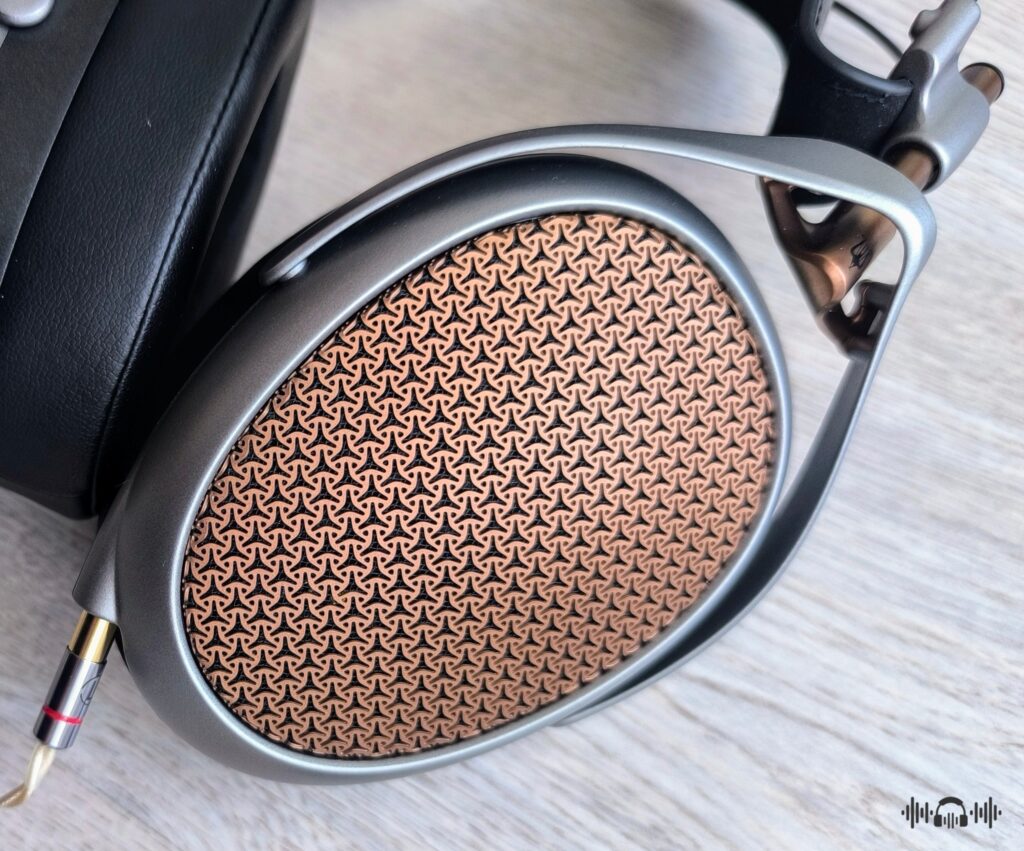
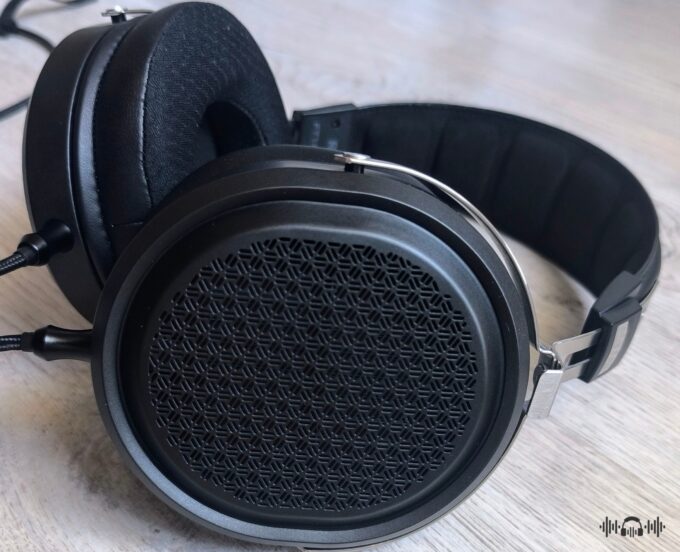
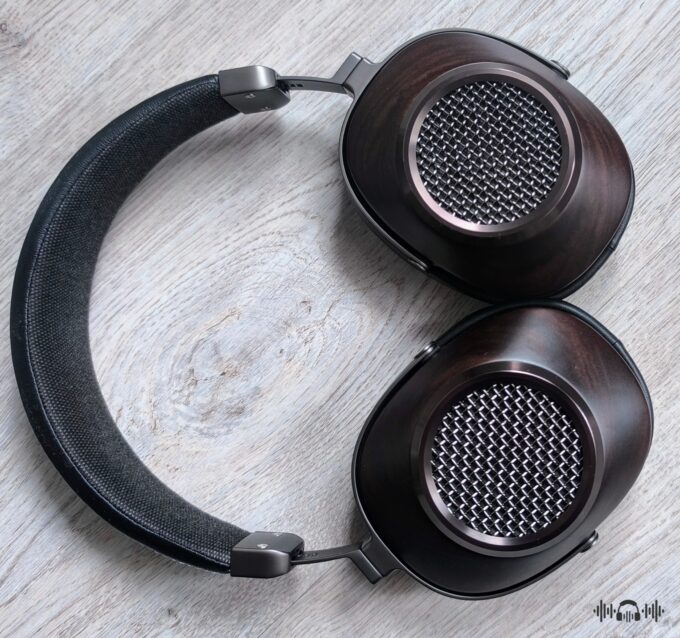
The stunning design of the Poet resembles that of the Liric 2 but the two headphones are not identical looking. They share the same magnesium made, oval shaped, outer frame but in a silver matte finish for the Poet instead the total black of the Liric 2. Silver colored are also the yokes and the metal parts that join the headband with the adjustment rods that retain their shiny copper finish as in the Liric 2.
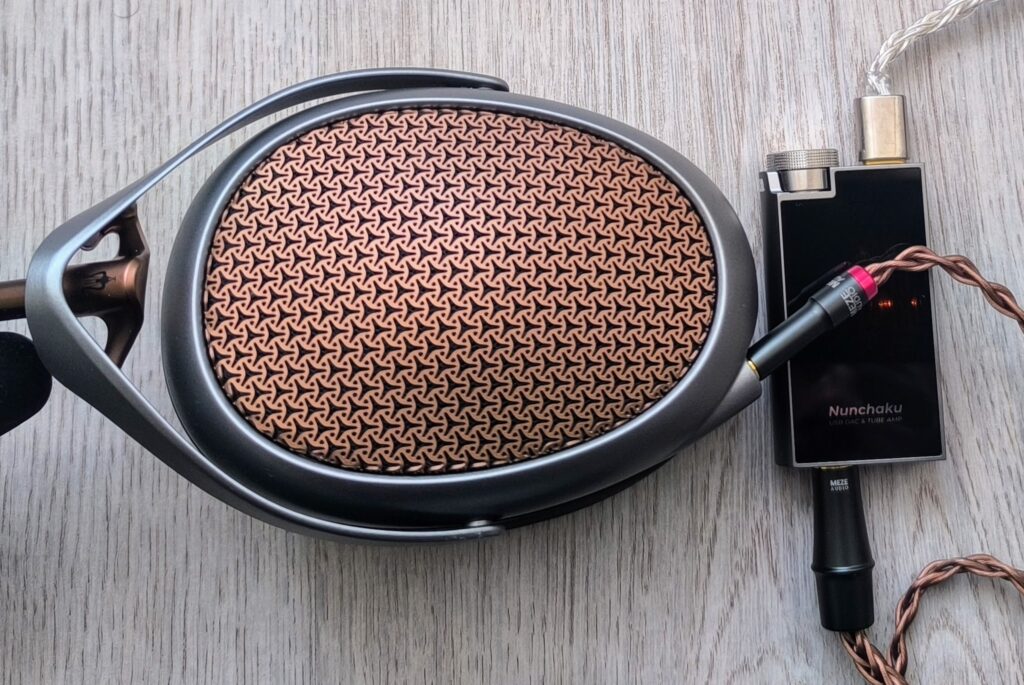
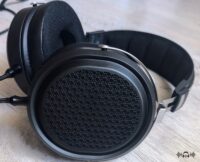
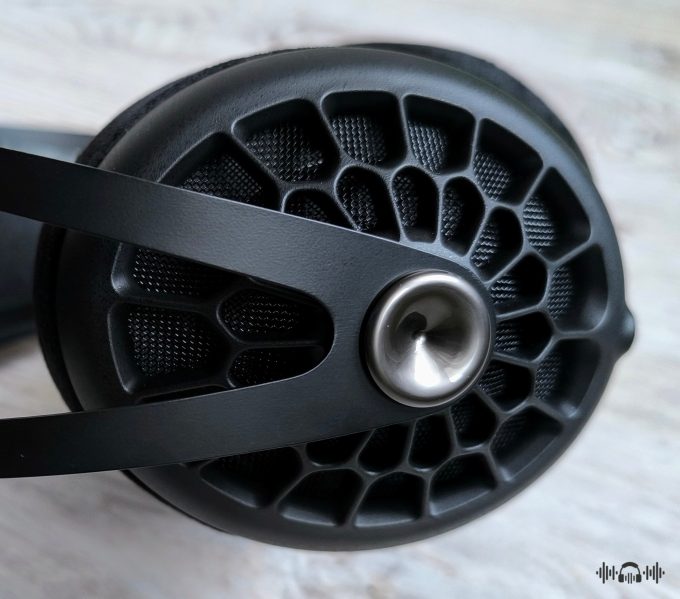
The ear-cups of the Poet have outer grills made of steel with oriental-like perforated patterns that are not only aesthetically pleasing but their shape and density are carefully calculated to help with the final tuning. Their delicious bronze color seems to pay homage to the original Empyrean and I have to admit that is still my favorite color among all the other versions that Meze Audio has released through the years.
The Meze Audio Poet is an exceptionally well made headphone with high quality leather and metal parts without a single piece of plastic. It combines outstanding craftsmanship with a luxurious yet not flashy appearance. Additionally, the Poet is fully serviceable as every part of the headphone chassis can be easily disassembled and serviced.

Wearing experience
The Poet is a relatively lightweight planar magnetic headphone that weighs 405g, that is 22g less than the Liric 2 and 44g than the Empyrean II. The weight gets evenly distributed around the head thanks to the self-adjusting headband that is unique to the Poet and different from the headbands that are used on the Liric 2 or the Elite/Empyrean II models. It consists of a lightweight metallic outer frame and a suspended leather strap that doesn’t have inner padding. However it is wide enough and soft so it easily adjusts to the shape of the head without causing any hot spots.
This headband is not as advanced as that of the Elite or the Empyrean II models but it does a much better job stabilizing the headphone to the head than that of the Liric 2. The clamping force is medium and doesn’t exert any annoying pressure, however it is strong enough to keep the headphone in place so you can move your head around without the fear of it slipping out, as it sometimes happens with the Liric 2.
Magnetically attaching ear pads
The Poet features a magnetically attaching ear pad system that is inherited from the Elite/Empyrean II models and was also introduced in the second generation of the Liric. The oval shaped ear pads are made of high-grade memory foam with a PU-leather exterior and an Alcantara interior. Their size is large and deep enough to marginally cover the whole ear without letting it touch the inner mesh. I have compared the Poet ear pads to that of the Liric 2 and they are identical.
The ear pads of Meze Audio Poet are not as roomy as that of the Elite/Empyrean II but it is still an exceptionally comfortable headphone with the added benefits that it is more lightweight and compact sized than the two flagship models.

Stock cable
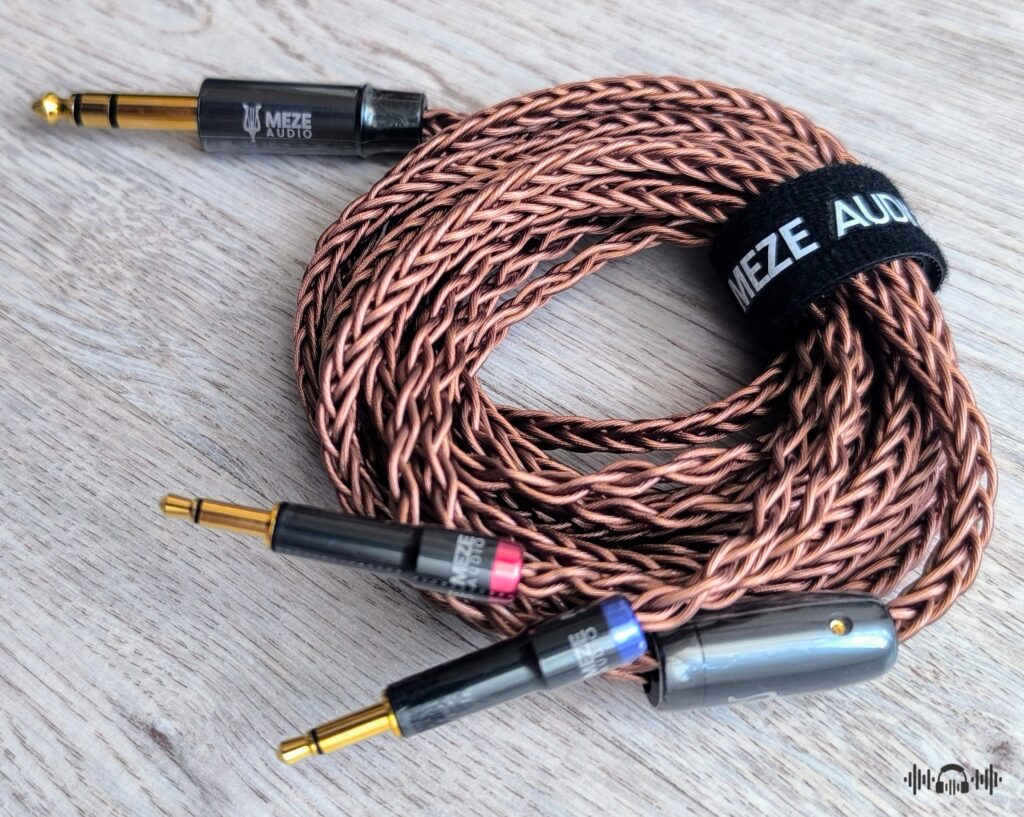
Meze Audio has learned a few lessons from the past and doesn’t repeat the same mistakes twice. All their premium headphones come now equipped with high quality cables worthy of their status. The Poet features a dual-entry, 3.5mm, detachable cable system and comes equipped with a 2.5m long, hand-braided Furukawa PCUHD copper cable with a 6.35mm termination plug. The cable has high quality plugs, it is very well made and easy to handle without inducing any microphonic noise.
Meze Audio claims that the 6.35mm termination plug ensures the widest compatibility with desktop setups. However it excludes balanced desktop setups and most portable sources that are usually balanced. So it is a rather odd choice for Meze Audio to equip the Poet with a 6.35mm cable.
A balanced cable with a 4.4mm plug and a single-ended adapter is the way to go these days. 90% of my audio setups are balanced and I guess that the same applies for the majority of the users out there. It is a shame that this high quality cable is not going to have much use and most people will have to buy an additional balanced cable. Hopefully Meze Audio will offer buyers the option to order the Poet with a cable of their choice.
Accessories
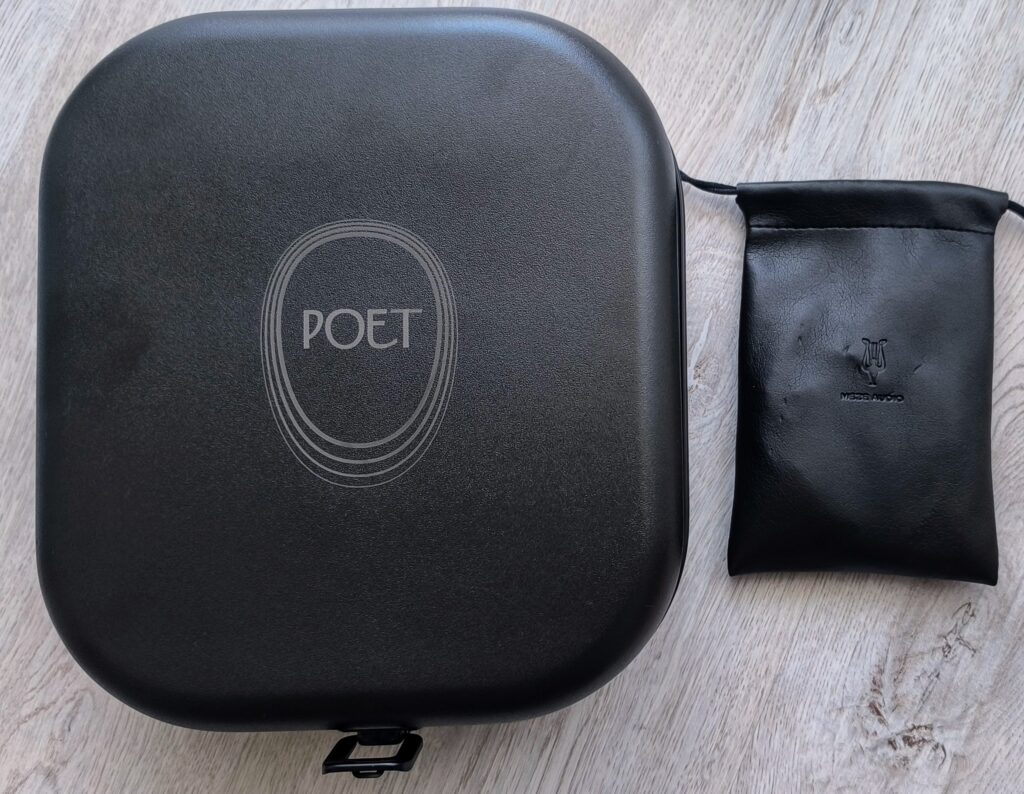
Except for the cable, the retail package includes a PU-leather cable pouch and a high quality ABS plastic suitcase with foam inserts to protect the headphone. The case is lightweight and well made but it doesn’t have a handle.
Sensitivity and associated gear
The Poet is rated at a 55Ω of impedance with 101dB SPL/mW of sensitivity so while it does need some amping it doesn’t have to be very powerful. I had excellent results (and great synergy too) with the Hifiman Serenade (Gold upgrade) but the Poet also did very well with powerful DAPs like the Cayin N6iii or the iBasso DX340. Luckily enough, I had the exact same Meze Audio cable with a 4.4mm plug and I also used a Lavricables pure silver cable to connect the Poet with my balanced sources.
Listening impressions
The Poet is an exceptionally balanced and tonally accurate headphone, one of the best options available if you care to hear human voices and the instruments of the symphony orchestra as close as possible as they sound in a live performance at a concert hall.
The Poet is like having been tuned by a famous conductor or a prestigious musician. The acoustic engineer who was responsible for the voicing of the headphone must have been a person with a great expertise in the field of music production and deep musical knowledge.
With the Meze Audio Poet you don’t just listen to the music but you can also feel it, it is a headphone that touches your heart and arouses your senses. The listening experience is so live and lifelike that it doesn’t only communicate the ultimate realism of the music but it goes even further to let you discern its finest nuances.
The fundamental frequencies, the overtones and the harmonies of every single instrument are so precisely reproduced that trained audiophile ears can easily recognize the timbral differences between a Pleyel and an Erard grand piano, a Ruckers and a Hemsch harpsichord or a Stradivari from a Guarneri violin.
The Poet is first and foremost about producing the actual timbre and the natural tones of the sound. It cleverly uses its advanced technical skills to serve the cause and make it sound even more lifelike and realistic. People often confuse brilliance and overly analytical sound characteristics with fidelity and resolution but it is not always the case.
More listening impressions
The treble of the Poet is relatively smooth and polite but it still sounds lively and energetic enough to convey the real essence of the music without being perceived as too bright or overly exposed as it usually happens with more analytical headphones. These might appear more impressive at first listen with their super analytical skills (that some users might appreciate of course) but they tend to end as sounding fatiguing, metallic sharp, sterile and artificial.
The Poet on the other hand is unusually resolving and provides excellent detail extraction but at the exact needed amounts to add natural depth without making the sound clinical and sterile. The textures are extra refined and the timbre is organic with plenty of analog-like characteristics and devoid of any artificiality, metallic sharpness or grain.
The sound has excellent clarity and definition throughout the whole frequency range but it is not glass-like clean or ice cold. The Poet is not too warm or dark sounding or veiled but when compared to some other headphones, like the Hifiman HE1000 Stealth or the Meze Audio Empyrean II, it is definitely a warmer and smoother listen with reduced aggressiveness and less brilliance.
The Poet has plenty of transparency to highlight and communicate the unique sound characteristics of every different source but it also has a strong temperament that doesn’t allow them to take over its personality. It is nearly impossible to make the Poet sound less musical than it is and the only way to kill its personality is to use heavy equalisation. But if you intend to do so, you better not buy the Poet – it is blasphemy – this headphone is not made for you.
And some more
The mid-range is all about harmony and timbre, the Poet is unbelievably expressive and musical with an extremely colorful sound palette that resonates within the soul of the listener. The overall tuning is balanced without much upper mid-range emphasis or any kind of recession in favor of the lows and the highs. Voices and instruments are reproduced exactly as the mix dictates without using any mainstream tuning tricks to bring them forward or push them backwards.
The textures have meat around the bones but at the same time there is plenty of intricate muscle shaping. The music is flowing like spring water and it takes a few seconds to forget that you are listening to headphones and let yourself relax and dive into the music.
Low-end perfection
The tuning of the low-end reaches absolute perfection, the tonal accuracy of the Poet is really impressive all the way from the sub-bass up to the lower mid-range. You will not find a single instrument to sound colored and out of tune while bloating and masking are unknown words into the Poet’s vocabulary. The bass extends deep enough to reproduce the lowest audible notes without any further boosting. Bass-heads and Harman target aficionados will probably be disappointed and better look elsewhere. The rest are going to rave with the Poet’s rare tonal precision that makes it possible to reproduce all the low frequency instruments with their actual pitch.
From a technical point of view, the bass is not lacking in any single department. It is fast, tight and controlled with outstanding layering and definition. The textures are visceral enough, the bass is elastic and weighty without sounding dry or thin. With the right source pairing it can become very punchy and impactful with impressive micro and macro dynamic contrasts. The Flux Lab Acoustics M-Field is an amp that can make the Poet shine and reach its full potential when it comes to bass raw power and dynamics.
The soundstage
If there is a minor drawback in the Poet’s overall sonic performance is that it doesn’t sound as wide and expansive as someone would expect from a high-end open back headphone. The presentation is rather intimate and it doesn’t reach out of the head in a generous manner. Don’t take this wrong though as it does have plenty of extra openness and spaciousness in comparison to the Liric 2 but the horizontal extension and the projection of the soundstage are not that spectacular.
However, the Poet compensates with its depth layering and imaging precision that are unquestionably on a true flagship level. The Poet has an uncanny ability to communicate the grandness and the scale of the music and faithfully reproduce the natural ambience of the recording venue. It is a very skillful headphone that it might not sound as open as the Elite or the Empyrean II but it can certainly draw you into the music. Please note that high quality balanced sources can work wonders in helping the soundstage to open a lot.
Vs the Meze Audio Elite
These two headphones share the same driver DNA so it doesn’t come as a surprise that they have a similar kind of tuning and tonal balance with some minor differences of course. The Elite is not as neutrally tuned in the low-end, it is slightly warmer and more colorful than the Poet but it still has a reference-like tonal precision. The Elite is also a bit more relaxed in the upper mid-range and the treble frequencies while you have the option to fine-tune it with the aid of the two different ear pads that are available for this model.
Leaving tonal balance aside, the most notable differences between these two models have to do with their technical performance where the Elite is – not surprisingly – the clear winner. The Elite presents a considerably bigger and more immersive soundstage, it is grander and more holographic with enhanced imaging and depth layering.
The Elite is also cleaner and more transparent than the Poet while it resolves better and sounds more refined. The bass is more dynamic and impactful in the Elite, it sounds fuller and more visceral with advanced technicalities. The Elite is the flagship model that combines technical supremacy with excellent tonal balance and exceptionally natural timbre but the Poet offers a great portion of the same kind of performance at a fraction of the cost.
Vs the Meze Audio Empyrean II
The comparison between the Poet and the Meze Audio Empyrean II yielded similar observations regarding their comparative technical performance like the ones you have read in the Elite section above.
Their most notable difference has to do with their overall tonal balance. The Empyrean II is a V-shaped take on Meze Audio’s house sound, it is a brighter sounding headphone with more recessed mids and emphasized bass but without crossing too much the limits of acceptable neutrality. The Empyrean II represents Meze Audio’s variation on the renowned Harman target curve and is a successful one, but if you are after reference tonal accuracy then you should consider the Poet despite its slight technical inferiority.
Vs the Meze Audio Liric 2
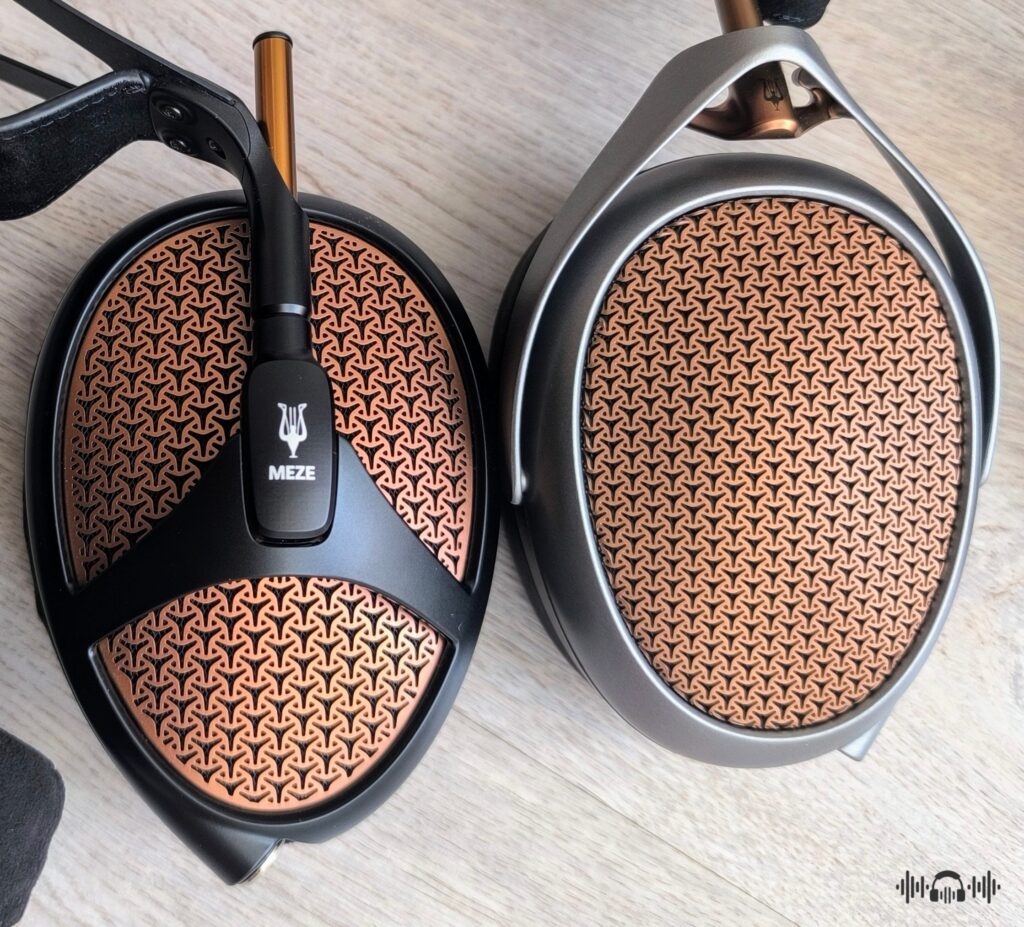
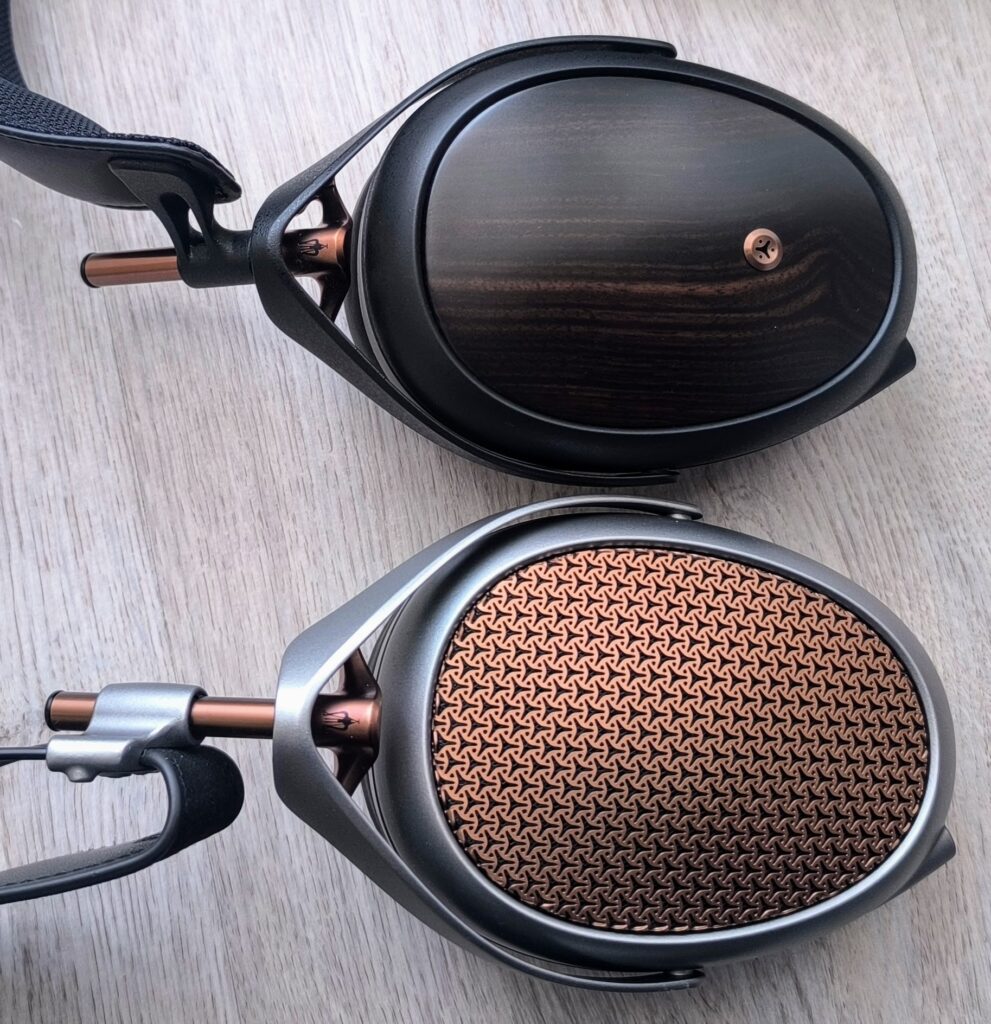
The closed-back sibling of the Poet is a headphone that mildly emphasizes the fun elements of the music without sacrificing too much in tonal precision and transparency. With a raised bass selve and more energetic treble, while retaining the same kind of mid-range presence, it is a headphone that will please the casual audiences more than the Poet but without totally excluding critical listeners.
The soundstage of the Poet might not be that more expanded than that of the Liric 2 but it does sound airier and more spacious while it offers a more natural flow of the music. The Liric 2 has a more sparkling and energetic treble but it is also brighter and not as smooth as the Poet. The bass is more punchy and impactful on the Liric 2, slightly dominant and more fun, but also less technical. These two headphones can be considered as complementary and each one should appeal to different audiences.
In the end
This review was a lengthy one and I have run out of words. There is nothing more left to add than that the Meze Audio Poet is not just a headphone but an actual poet that will speak verses to your heart and communicate the true essence of music like no other headphone can do.
“In stillness, the words unfold, a story told in silent reverie.” Der Dichter spricht von Robert Schumann.
Copyright – Petros Laskis 2025.
+ Neutral and balanced sound signature
+ Impressive tonal precision
+ Exceptionally organic and natural timbre
+ Punchy and dynamic bass with excellent technicalities
+ Unusually musical and engaging
+ Expressive mid-range and non fatiguing treble
+ Superior resolution and refinement
+ Excellent imaging accuracy and separation
+ It scales very well and doesn't need too much power
+ Outstanding build quality with premium materials
+ Fully serviceable
+ Lightweight and comfortable
+ Better headband design than the Liric 2
+ Timeless and luxurious appearance
+ High quality cable and accessories

- Rather intimate and not that expansive soundstage
- It needs a balanced cable
- Not as comfortable as the Elite and the Empyrean II models
- Not a mainstream tuning








Leave a comment