


The Cayin RU7 was kindly provided as an extended loan in exchange for an honest review. I didn’t receive monetary or any other kind of compensation and I don’t use affiliate links. The price of the Cayin RU7 is $289 and you can buy it from here.
Cayin RU7
The RU6 was the first USB DAC dongle by Cayin and a revolutionary one because was the first of its kind to use a discrete R2R ladder DAC instead of a usual D/S chip. The RU7 is their next installment and despite looking almost identical to the RU6 it packs some surprises under the hood.
Technical breakdown
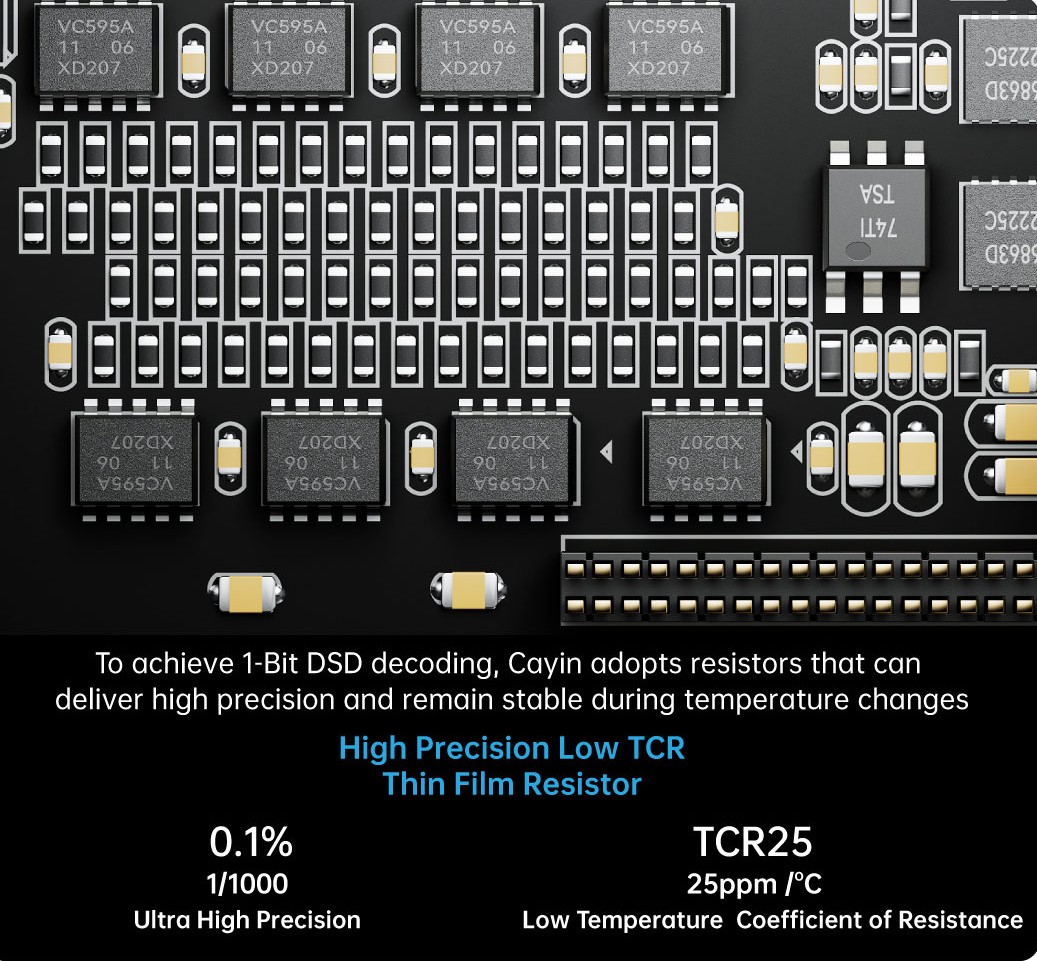
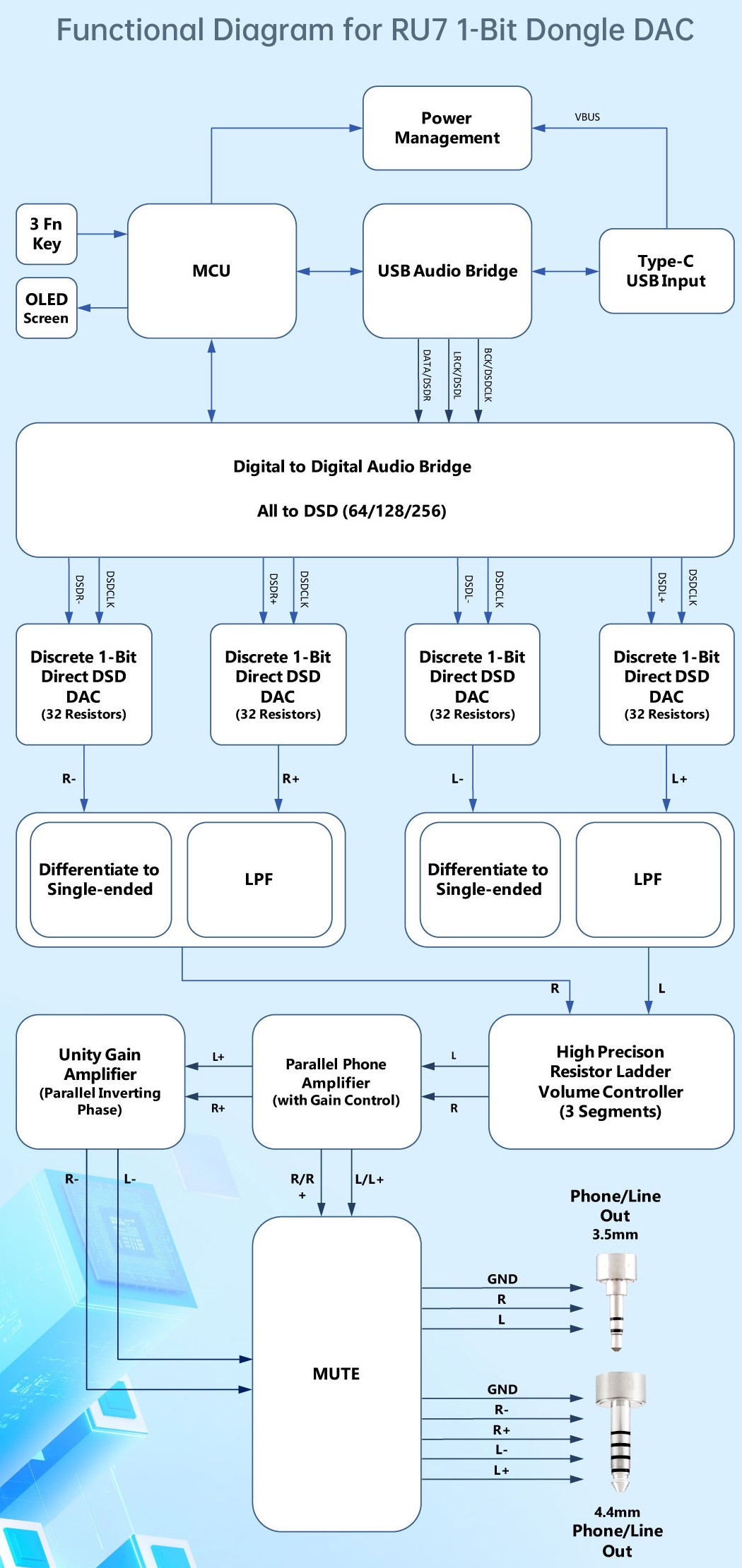
The Cayin RU7 is essentially a miniaturized version of their latest N7 player as it relies on the same principle for converting digital to analog signals. It uses a fully balanced discrete 1-Bit DSD DAC to convert digital signal to analogue signal through a fully differential 4-ch DAC architecture. A digital to digital bridge converts all incoming signals to DSD format before feeding the 1-Bit DAC circuit that is composed of 128 pcs (4 x32), high precision, thin film resistors, that closely resembles the discrete DAC of the N7 DAP. The output of the resistor network will go through a 3-level active LPF and then converted to single-ended signal for volume adjustment. To achieve 1-Bit DSD decoding, Cayin adopts resistors that can deliver high precision and remain stable during temperature changes. The RU7 supports PCM up to 32-Bit/384kHz and native DSD256 decoding.
When Cayin found that off-the-shelf analog volume options could not meet the high precision, low noise, low power consumption requirements that were needed for the RU7, they resorted to developing their own discrete resistor network volume control. It consists of 100 steps through 3 segments of resistors and switching relays to offer precise control over a wide volume range, satisfying even the need of most sensitive IEM users. Segment 1: 1-49 / Segment 2: 50-79 / Segment 3: 80-100. A discrete resistor network DAC circuit is very demanding on incoming data integrity so it is recommended to keep the digital volume of mobile phones at full output to safeguard the quality of audio digital signals.
The signal is then amplified by high power amplifiers that consist of dual amplifiers in parallel, providing 4-channel high power balanced driven output. The second phone amplifier is a parallel unity gain inverting phase amplifier. The maximum power of the Cayin RU7 is 160mW@32Ω from the 3.5mm jack and 400mW@32Ω from the 4.4mm.
A novel design that differentiates the Cayin RU7 from the RU6 is that it has a shared line output. This function will configure the 3.5mm or 4.4mm phone outputs into fixed voltage outputs, bypassing the volume control. The output voltage is 1.2Vrms for the 3.5mm output and 2.4Vrms for the 4.4mm. The line out voltages are carefully selected to retain as much details and dynamics of the 1-Bit DAC with minimum noise and distortion. Thanks to this function you can connect the RU7 to a portable/desktop amplifier or a home audio system and use it as a miniature 1-Bit DAC.
EMI shielding
If something was to be criticized about the Cayin RU6 was its sensitivity in electromagnetic interference and noise from the cellular antenna. So for the RU7, and in order to be sure that it is well shielded and immune to EMI, Cayin used an all aluminum thick chassis and splitted the circuitry into two 6-layers PCB, with digital and analog circuits installed in separate boards. Thus safeguarding signal integrity and making sure that the noise from reference clock and DSP will not bleed into the amplification circuit.
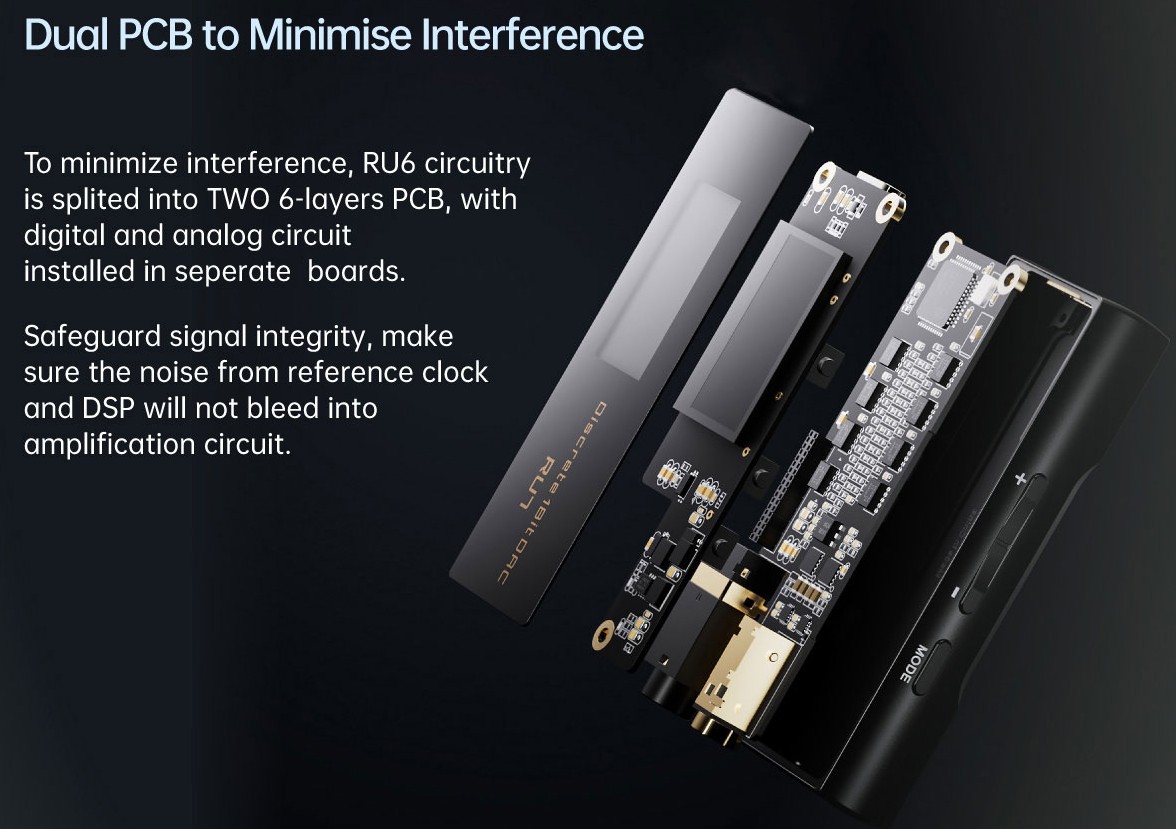
After extensively testing the RU7 with various sources, it can happily be reported that it is well shielded and immune to EMI with an impressively low noise floor that helps a lot with detail retrieval.
Build quality and appearance
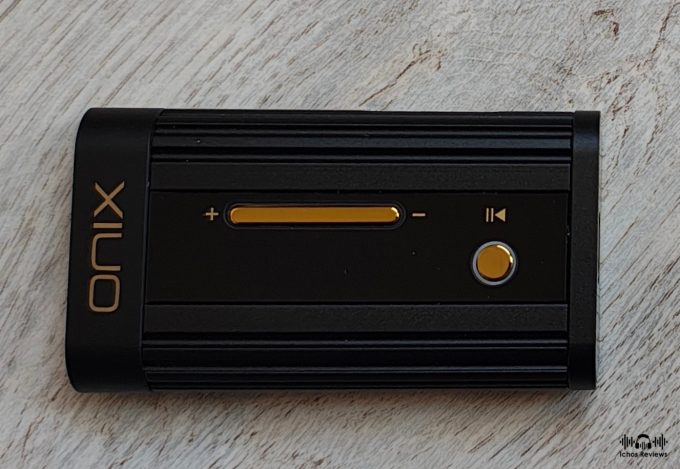
The Cayin RU7 is lightweight and compact, not that bigger than competitive USB DAC dongles. It measures 12x24x66mm and weighs 25g, so it is small enough to fit inside your pocket. The front face is fully covered with a glass panel that adds a luxurious feeling to the appearance while build quality and finish are simply excellent.

User interface
The Cayin RU7 is very easy to operate, the only thing you have to do is to plug it into the host’s USB port without the need to install any drivers. However, for Windows users it is recommended to install the Cayin custom USB drivers.
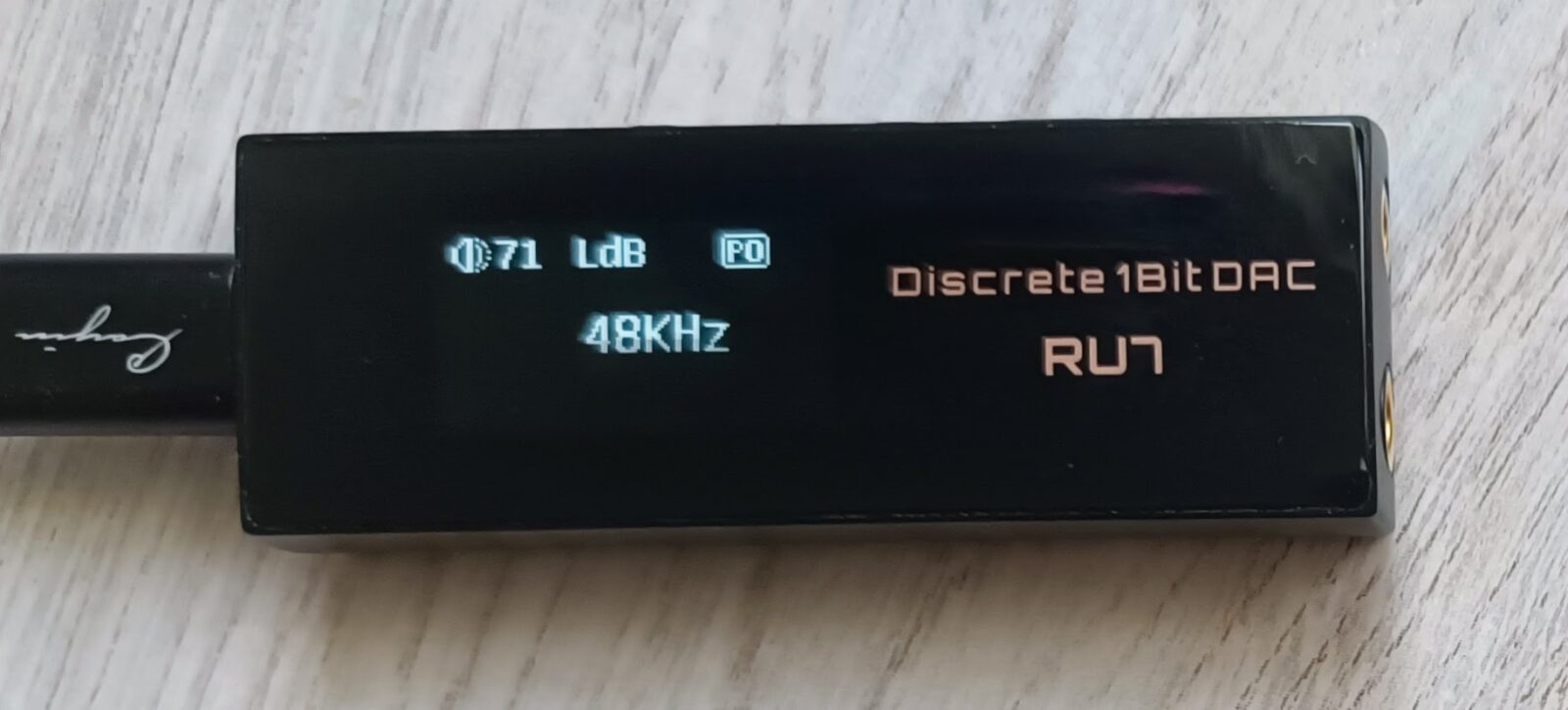
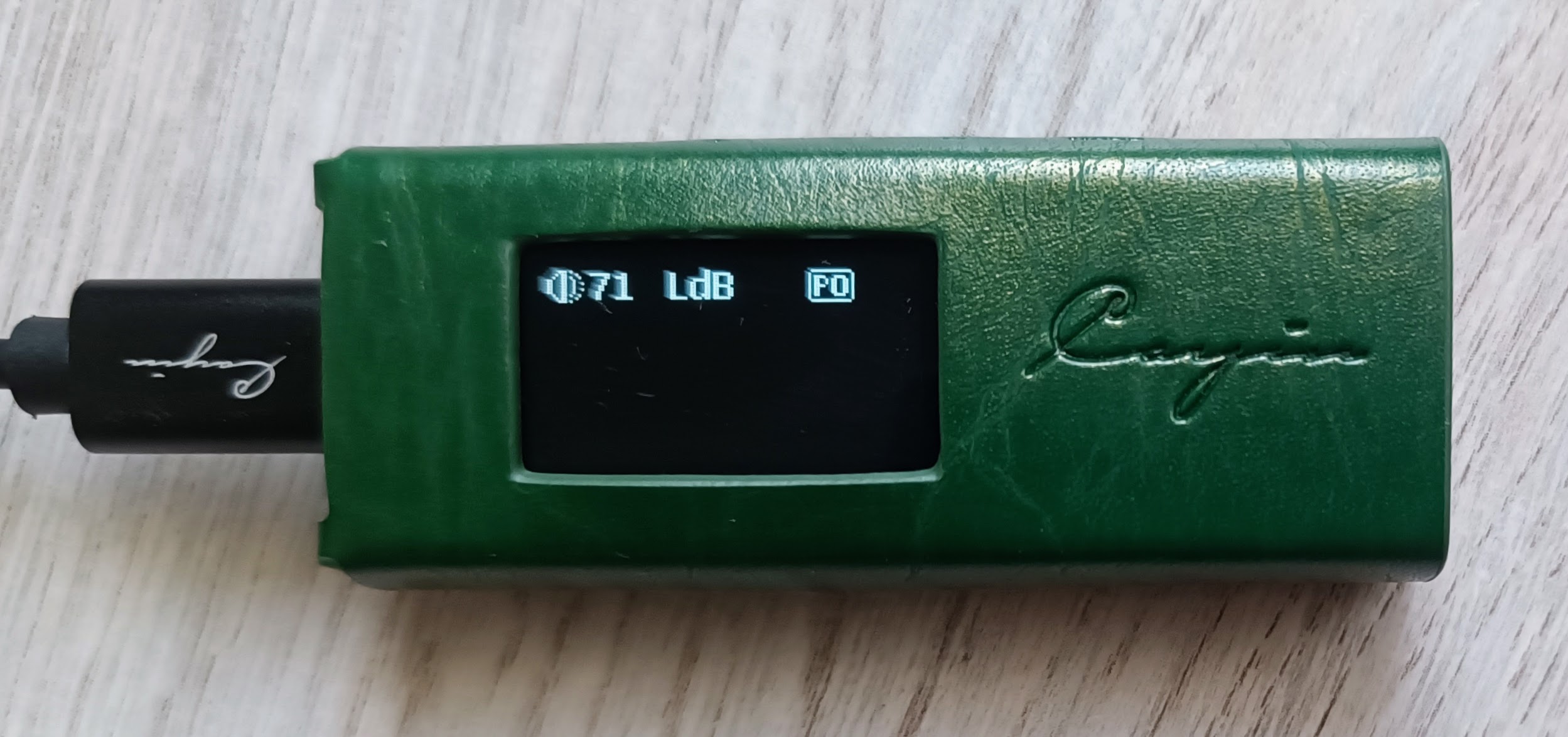
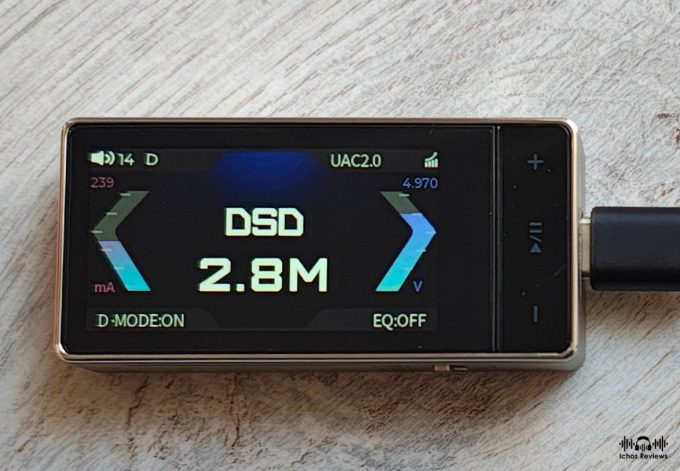
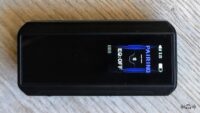
You can hardware control the volume with the two buttons that are located at the side of the chassis while you can use the third button to enter the configuration menu or switch the screen on/off. The screen will display input sampling rate, gain setting, volume level and whether you are using phone or line output.
The menu configuration options are: gain adjustment high or low, screen timeout, phone or line output and DSD up sampling rate between 64, 128 and 256.
Accessories
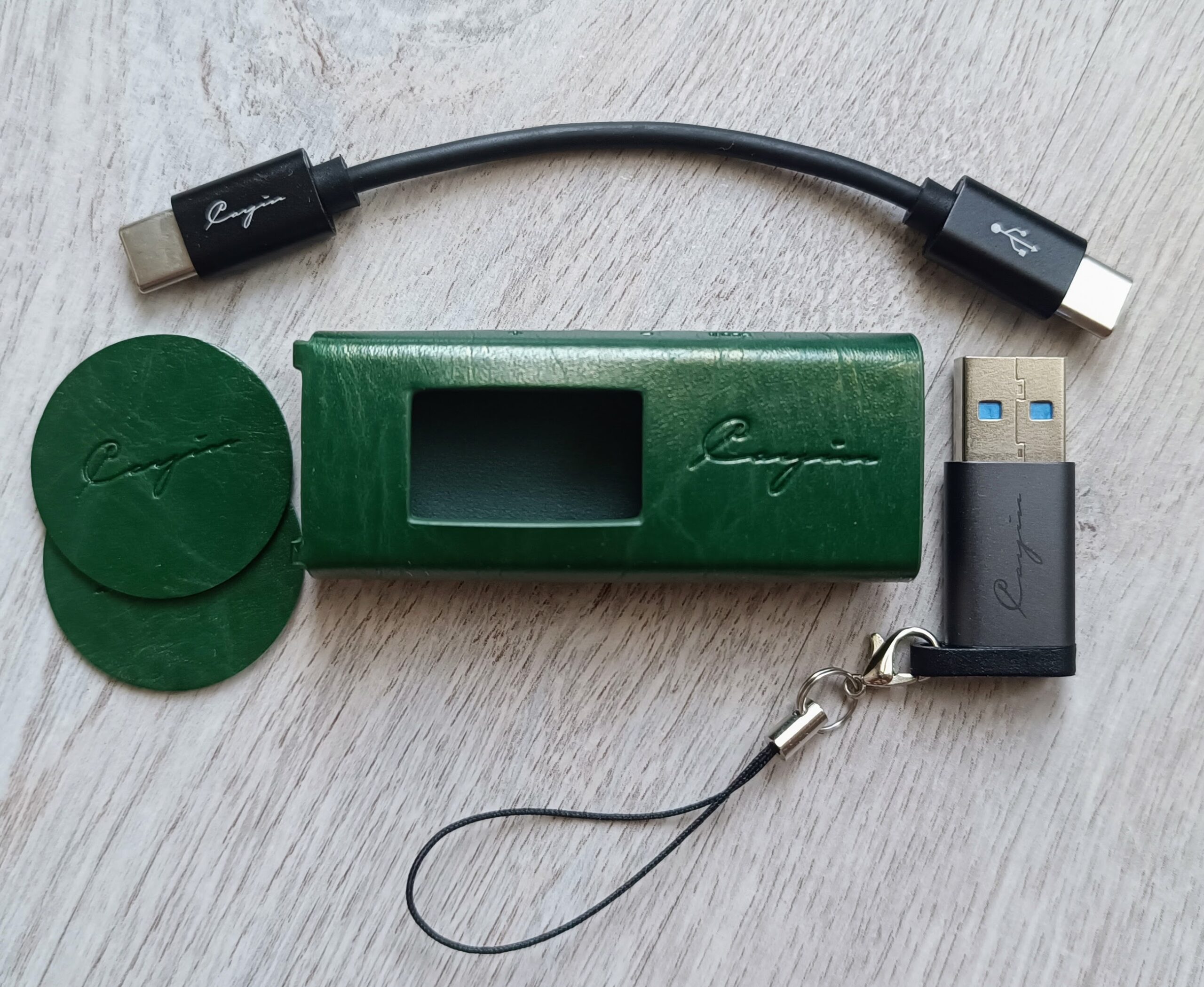
The Cayin RU7 is bundled with a USB type-C cable, a USB A to C adapter and a handy protective case. The lighting cable is available as an extra purchase.
Power output and associated gear
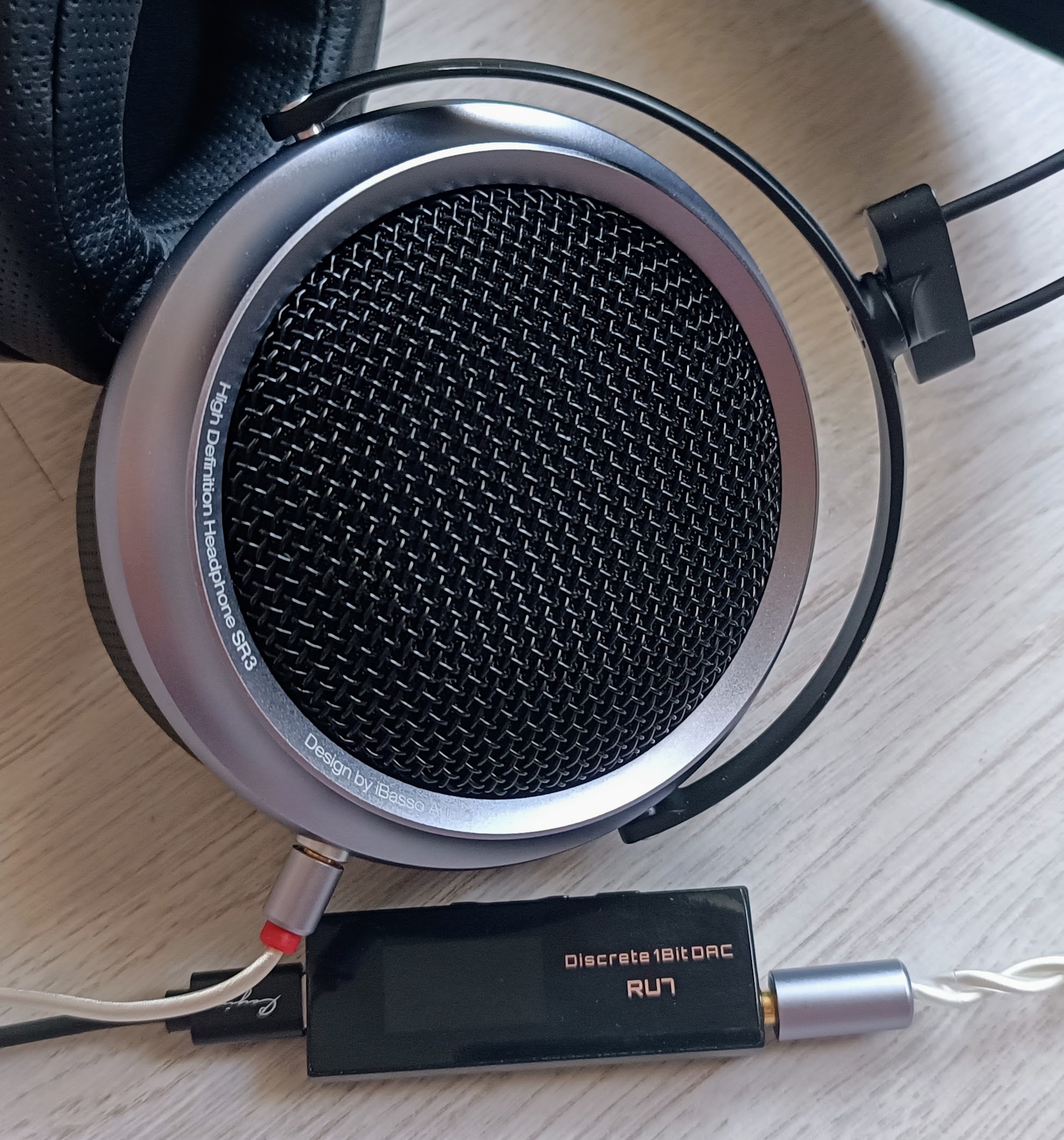
The Cayin RU7 is a USB DAC dongle with a power output higher than the average of the competition. It can do 400mW/32Ω of undistorted power from the balanced output when most USB DAC dongles of the same size can give about 250mW/32Ω with a couple of exceptions like the iFi Go bar which is rated at 475mW/32Ω. So the Cayin RU7 is considerably more powerful than the RU6 and can easily drive full sized headphones like the Focal Clear Mg, iBasso SR3 and Sennheiser HD660S2 that I have mostly used. As a matter of fact, the RU7 is also ideal for more sensitive earphones thanks to low output impedance, the silent background and the precise volume control. As per manufacturer’s suggestion the RU7 was burned about 70-80 hours before listening evaluation.
Power consumption
I have measured the power consumption of the Cayin RU7 from the balanced output with the iBasso SR3 (150Ω) as the load, streaming 24bit/96kHz files from Qobuz. The phone volume was set to maximum and that of the RU7 to 80.
Idle is 0.03A/0.16W and playing music is 0.18A/0.92W with up sampling set to DSD64, 0.20A/1.03W set to DSD128 and 0.23A/1.17W set to DSD256. For comparison the FiiO KA5 will consume 0.12A/0.62W and the iFi Go bar 0.14A/0.71W under the same working conditions and volume level roughly matched by ear so they are more efficient than the Cayin RU7.
The Cayin RU7 gets pretty hot during use but this is something to be expected with so many discrete components mounted in the PCB.
Listening impressions
Not surprisingly, the sound signature of the Cayin RU7 reminds a lot that of the Cayin N7 as they share some common sonic attributes like the richness of the sound, the slightly warm profile, the naturalness of the timbre and the musical presentation.
The Cayin RU7 belongs to the rare breed of audio sources that connect the listener with the music. The input data is translated into pure music that is flowing through your ears straight into your soul in an emotionally expressive way that grabs your attention and will not let you go even after hours of listening sessions.
The organic nature of the sound reminds a lot of a well calibrated analogue source where all instruments sound realistic and voices come alive, with colorful harmonies, plenty of well realized overtones and a complete absence of digital glare or high frequencies ringing.
And just exactly like the Cayin N7, the RU7 stays very competitive at a technical level by offering some great transparency and source fidelity, good clarity and very satisfying definition. The bass is fast, tight and controlled with a full bodied, weighty texture, ample layering and explosive dynamics. The mid-range is balanced, unveiled, resolving and refined with excellent articulation while treble is extended and energetic with plenty of luminosity and clarity but never venturing into brightness territory.
The Cayin RU7 is not that technically advanced as the Cayin N7, they can’t compete in overall transparency, micro – detail retrieval or the purity of the sound but on the other hand, it was greatly surprising to find out that it is slightly more natural and smooth sounding in the upper-mids and lower treble, making for a more relaxed and less sharp reproduction of the music.
The soundstage is a real marvel, not only for its spacious and holographic properties or the excellent positioning accuracy but mostly for its genuinely impressive ability to communicate the ambience of the recording venue and the actual mood of the performers involved.

The Cayin RU7 is music genre and headphones agnostic, it pairs well with almost everything and plays all kinds of music but gathering together all the above described impressions, it doesn’t come as a surprise that it really excels with classical music. Actually it is one of the best portable sources I have ever used for listening to classical music and I remained completely satisfied from the accurate reproduction of the harpsichord timbre to the realistic and glorious presentation of Shostakovich’s 10th symphony.
The Line output
The line output is a well implemented feature and not just an add-on for the sake of convenience. The line output performs exactly as described above without a single loss in sound quality, making the Cayin RU7 an excellent example of a miniature 1-bit DSD DAC that you can buy at the fraction of the N7 cost. I have mostly used it with the Cayin C9 portable headphone amplifier that imbued the already class leading sound with some tube magic.

Compared to the Cayin RU6 ($249)
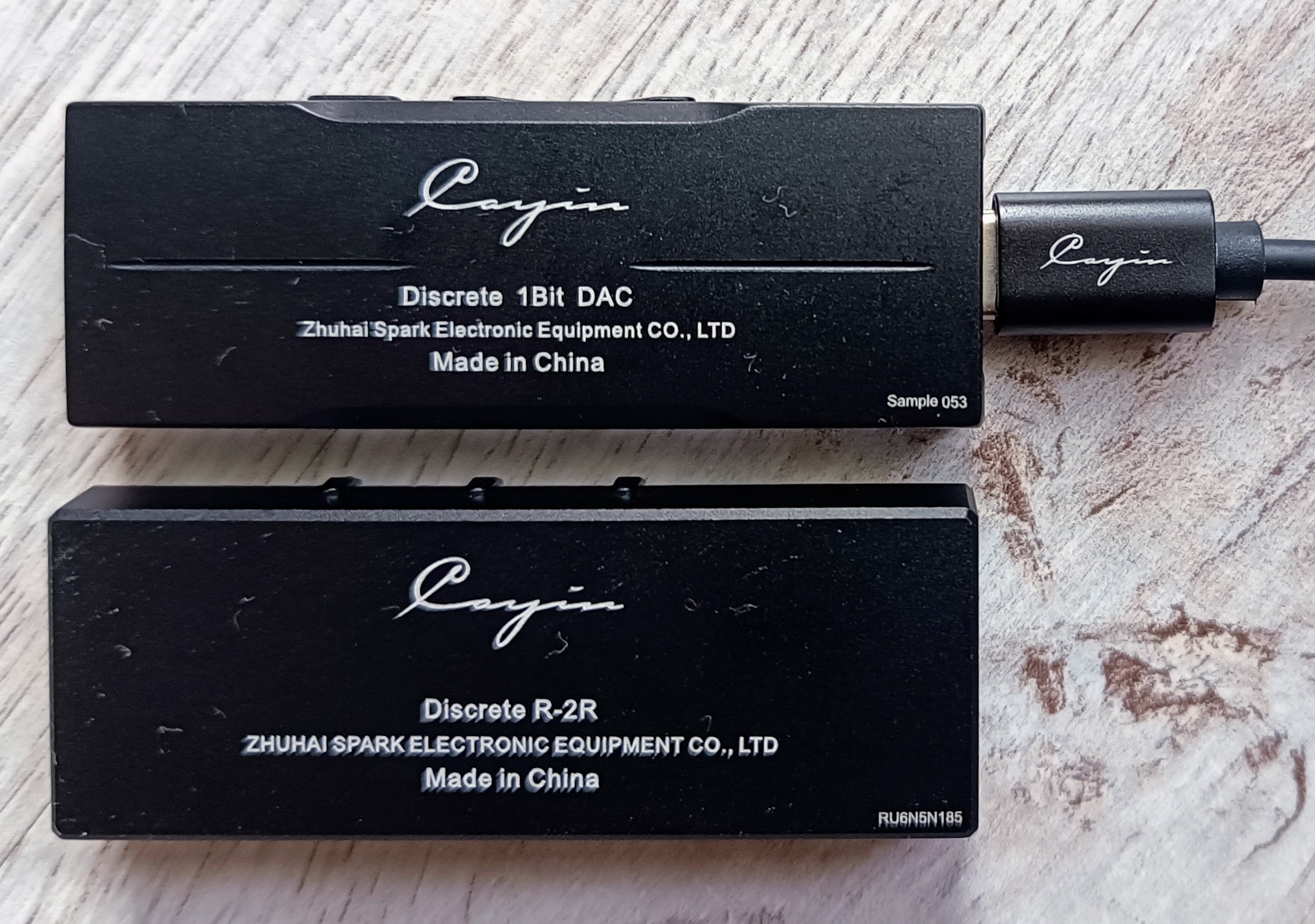
The Cayin RU7 and RU6 look almost identical but they differ not only in the decoding principle but also in their functionality. The RU7 has balanced and unbalanced line outputs that bypass the amplifier stage and is also considerably more powerful (400mW/32Ω vs 213mW/32Ω) so it can drive demanding loads while it is dead silent when the RU6 which has some EMI issues.
The Cayin RU6 is a discrete resistor R2R ladder DAC with a true NOS mode so it is not of a surprise that it sounds warmish and musical with an organic and analogue-like nature, closely resembling that of the RU7. But when comparing both DACs together, the RU6 is like having a tube to the output stage which adds some euphonic distortion and extra weight to the sound but it lacks the transparency and the clarity of the RU7 which has better technicalities. The soundstage of the RU7 is more open with better imaging, albeit a little less holographic, while resolution and refinement are certainly a step above. The RU7 is also more dynamic and impactful and while the bass might not be as visceral and weighty as in the RU6, it is more controlled and tight. The mid range is also more articulated and the treble is more airy and extended but not as smooth and forgiving as in the RU6.
Compared to the iFi Go bar ($329)
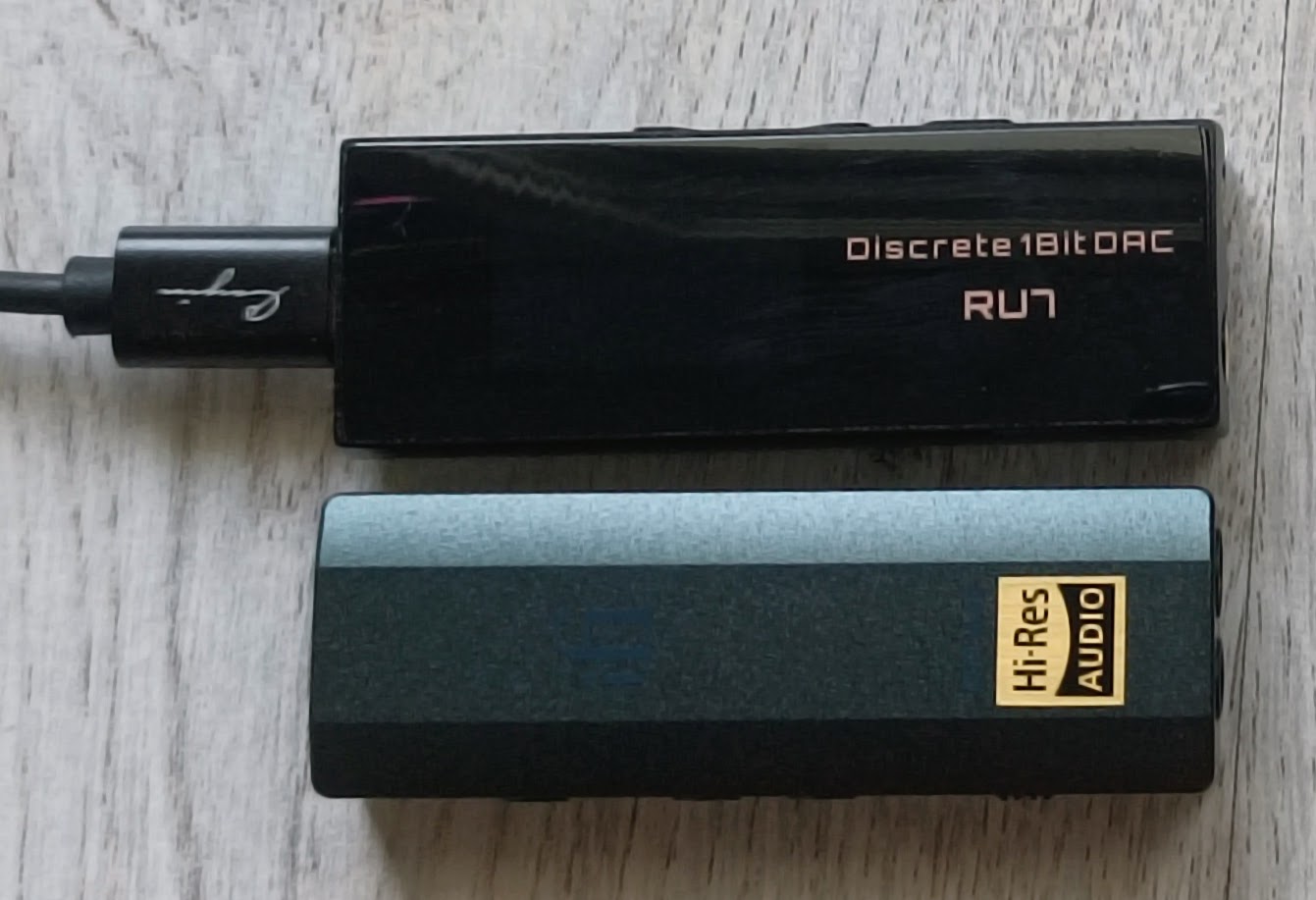
The iFi Go bar is one of my favorite USB DAC dongles that I regularly use because it has great sound quality and plenty of power (475mW/32Ω) to drive full sized headphones. The iFi Go bar is more versatile when it comes to customization because you can choose to install between the four available firmwares that support different types of low pass filtering. It also has two analogue processing modes (XBass and XSpace) and incorporates the iFi self developed technology iEMatch that attenuates power to suit high-sensitivity headphones and IEMs by removing background noise and increasing usable volume range. The delivery package also includes a lighting cable. But let’s not forget that the Cayin RU7 is the only one with two dedicated line outputs.
When it comes to sound, the iFi Go bar with the bit perfect filter is one of the most musical and analogue sounding USB DAC dongles I can think of. Well, until now because the Cayin RU7 offers the same type of analogue-like and organic sound with equal levels of timbre realism and additionally it adds a touch of extra transparency and clarity. The iFi Go bar is still the most vinyl sounding with just a bit more warmness, the texture is fuller and more visceral while it is smoother in the treble and the upper-mids. On the other hand, the Cayin RU7 is cleaner with better definition and layering, it is more dynamic and impactful with tighter and slightly more controlled bass. Both are very powerful and offer a similar grand and holographic soundscape making a buying decision very difficult. It’s a tie and someone would need a high definition photo finish to declare a winner.
In the end
The Cayin RU7 is a USB DAC dongle with a 1-bit DSD decoding principle which translates into a class leading audio performance that combines timbre realism and musicality with great transparency and technicalities. This is a perfect example of how good the USB DAC dongles are becoming, closing the gap with mid-tier DAPs. More compact than similarly performing DAPs and not bigger or heavier than the competition, the Cayin RU7 is also very powerful while staying relatively efficient. So in the end, it is not of a surprise that it is one of the best USB DAC dongles you can buy right now without any serious drawbacks worth mentioning.
Copyright – Petros Laskis 2023.
+ Class leading sound quality
+ Natural and organic timbre
+ Musical and communicative
+ Great transparency and clarity
+ Excellent technicalities
+ Lack of artificiality and digital glare
+ Powerful headphone amplifier
+ Suitable for sensitive earphones
+ Balanced and unbalanced true line outputs
+ Relatively efficient
+ Well shielded against EMI
+ Not bigger or heavier than the competition
+ Excellent build quality
+ A nice protective case is included

- Gets quite hot during use
- Not as efficient as the competition
- The lighting cable is sold separately









Leave a comment