

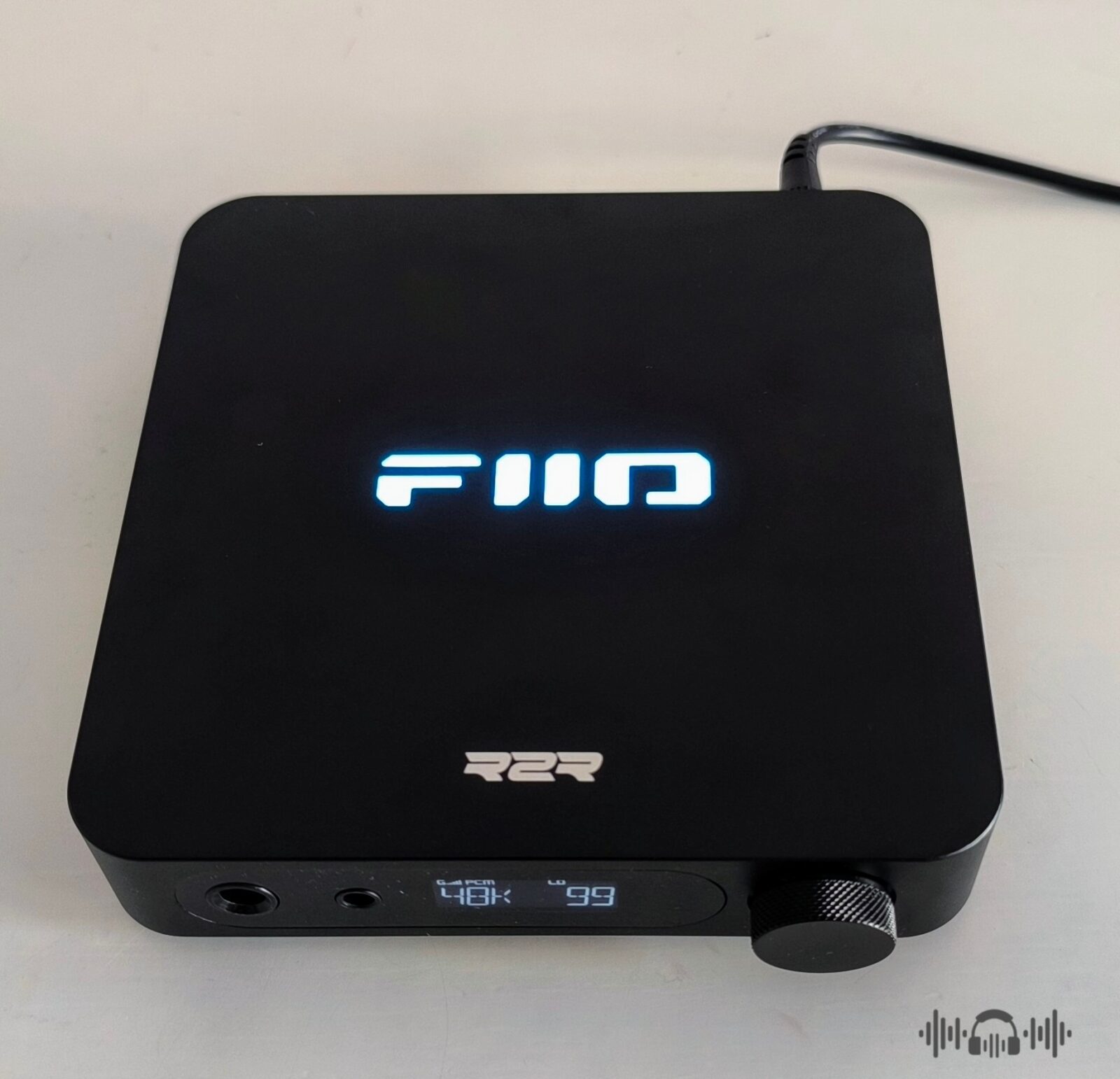

The FiiO K11 R2R was kindly provided free of charge in exchange for an honest review. I didn’t receive monetary or any other kind of compensation and I don’t use affiliate links. The price of the FiiO K11 R2R is $169.99 and you can buy one from here.
FiiO K11 R2R
The K11 represents FiiO’s most compact and cost-effective all-in-one desktop DAC and headphone amplifier. It features a single CS43198 DAC chip along with dual SGM8262 amplifier op-amps, providing a fully balanced headphone output. So, what distinguishes the FiiO K11 R2R?
The FiiO K11 R2R is fundamentally the same as the K11, with one significant distinction. It is the first DAC produced by FiiO that employs a discrete, fully differential true 24-bit resistor array for decoding, as opposed to utilizing a delta sigma D/A converter.
Technical highlights
The FiiO K11 R2R is equipped with an advanced four-channel fully differential 24-bit R2R resistor array, comprising 48 resistors for each channel. This design incorporates a total of 192 high-precision ultra-thin film resistors, each with an accuracy of 0.1% and minimal temperature drift across the four channels. The implementation of a fully differential architecture significantly reduces noise levels and minimizes FFT harmonics when compared to conventional designs.
The amplifier section of the FiiO K11 R2R mirrors that of the K11, featuring dual OPA1642 op-amps for low-pass filtering and dual SGM8262 operational amplifiers dedicated to headphone amplification. However, a notable difference lies in the NJW1195A digital volume chipset, which provides accurate volume control with minimal distortion across both channels.
The device is capable of handling 24bit/384kHz PCM and DSD256 decoding, whereas the FiiO K11 offers support for 32bit/384kHz PCM and native DSD256 decoding.
You can read more about the FiiO K11 R2R here.
Dual operating NOS and OS modes
The K11 R2R features two distinct operating modes. In NOS mode, it preserves the original sampling rate without additional signal processing, whereas OS mode oversamples all input signals to 384kHz. As we will explore further, NOS mode offers a more musical experience, while OS mode enhances technical performance and clarity.
Connectivity
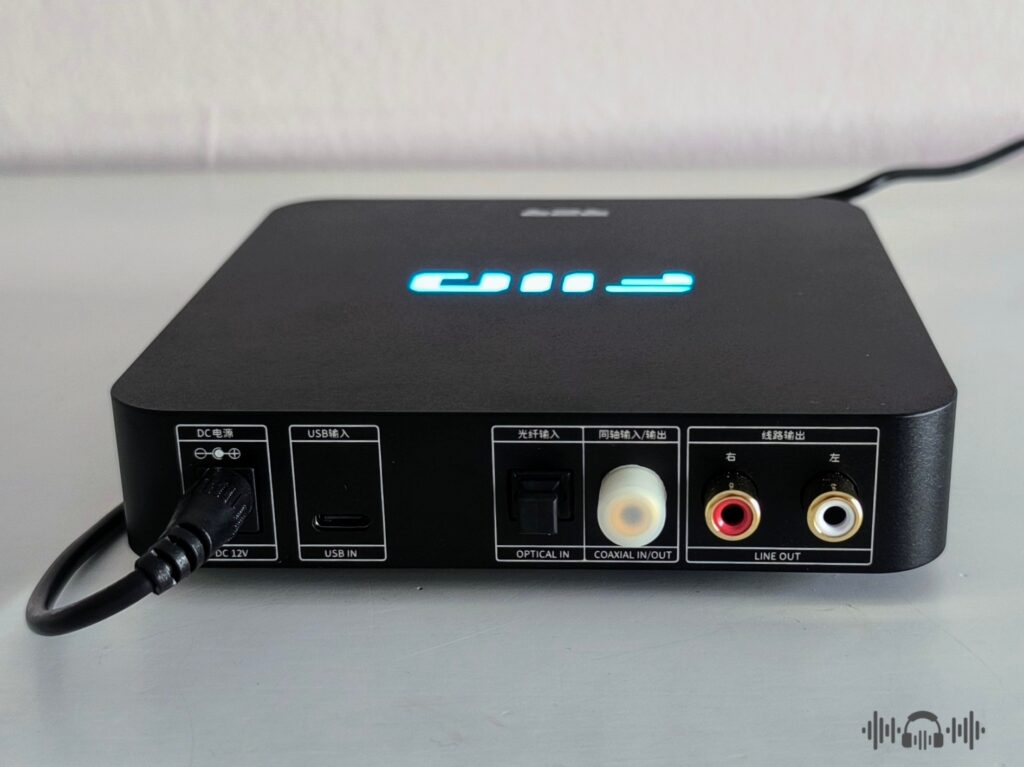
The FiiO K11 R2R retains the same digital inputs and analog outputs as its predecessor. This compact yet well-equipped device includes USB type-C, coaxial, and optical digital inputs, along with RCA line out and dual headphone outputs (6.35mm and 4.4mm). Users can configure the line output as either fixed or variable, making it suitable for driving active monitors like the FiiO SP3. Additionally, the USB input offers OTG functionality for smartphone connectivity, and a USB to coaxial output bridge is also provided.
Design and appearance
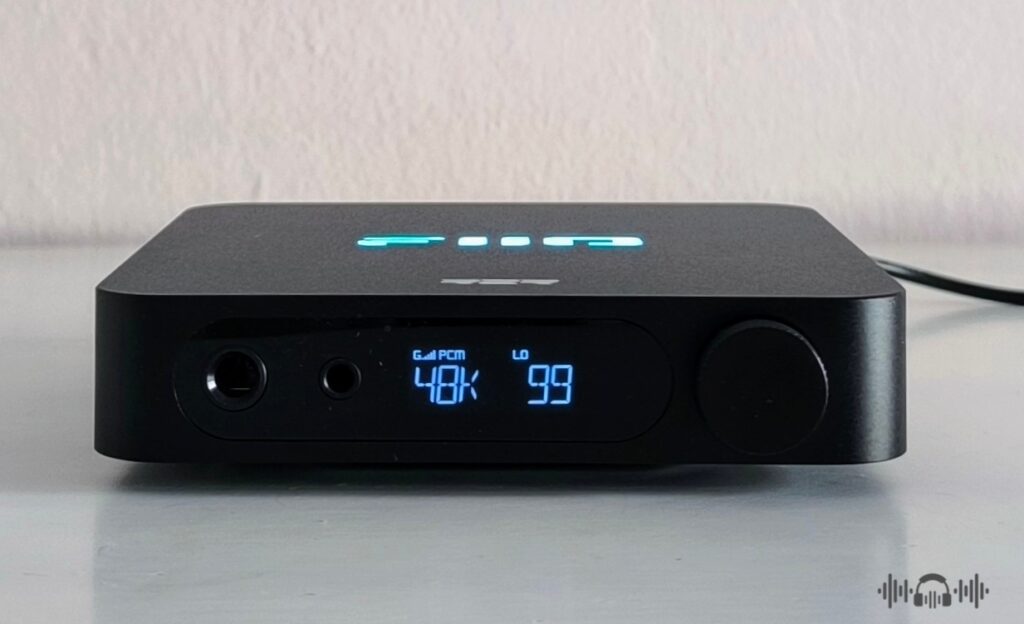
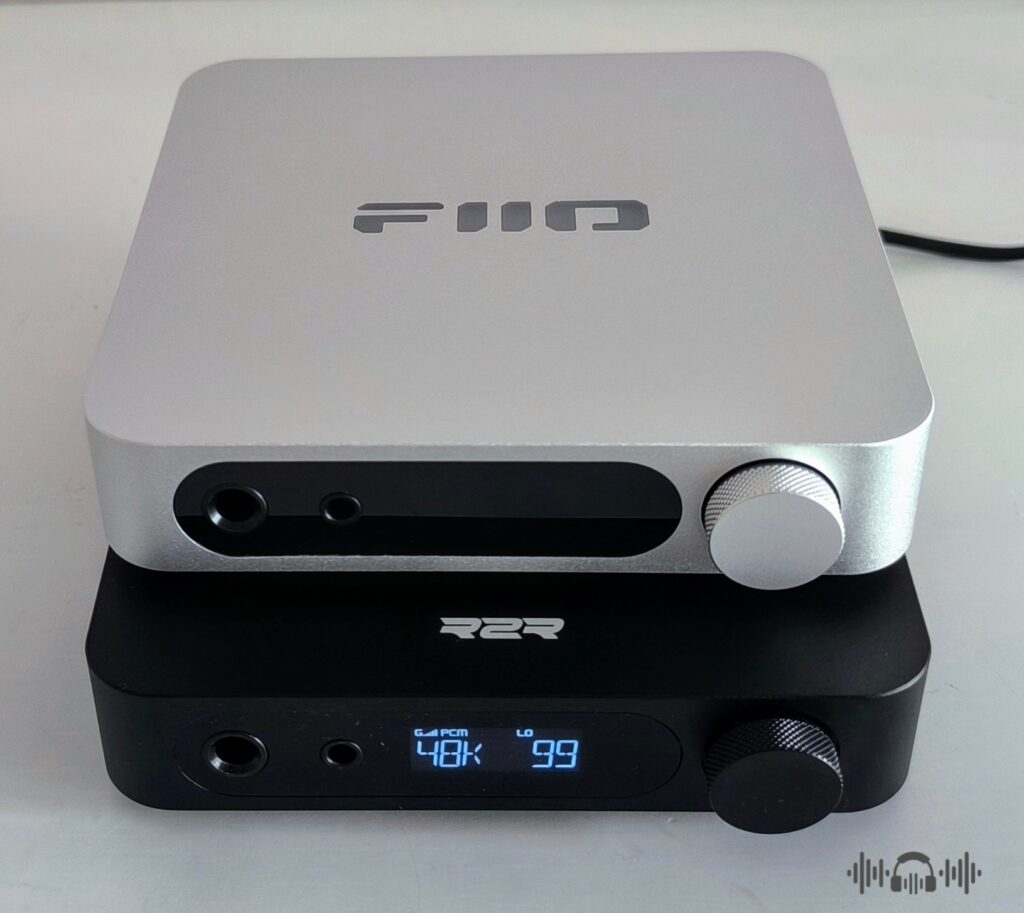
The FiiO K11 R2R shares the same design as the K11, with the sole distinguishing feature being the “R2R” logo engraved in white at the top of the device. Its slim and compact dimensions (147x133x32.3 mm) allow it to fit seamlessly into any space. Constructed from CNC machined aluminum, it is offered in black and silver, with a unique red finish exclusive to the R2R model. The build quality and overall finish are outstanding, exceeding typical expectations for this category.
Similar to the K11, the R2R edition is equipped with a high-contrast LCD screen that presents essential information and facilitates straightforward navigation through the configuration menu. The chassis top incorporates an RGB light featuring the FiiO logo, which changes colors based on the input sampling rate. Additionally, the bottom is fitted with a silicone anti-slip pad to ensure the unit remains securely in place and avoids unintentional movement.
Operation
The device is controlled using a single multifunction knob, which enables users to adjust the volume, choose the desired input, and navigate the configuration menu with ease. The operation is straightforward, allowing users to become proficient quickly, often without the need to consult the manual.
Users can perform various actions, such as selecting the gain level, configuring the line output to be either fixed or variable, toggling between NOS and OS modes, and adjusting the LCD brightness and timeout settings. Additionally, users can modify the RGB light brightness and pulsing status. Switching between LO and PO modes is seamless, achieved by double-pressing the multifunction button. The device retains the last volume settings for both LO and PO modes independently, eliminating the need for readjustment each time the modes are changed.
One drawback is the absence of a dedicated gain button, and the inability to switch between NOS and OS modes on the fly. While a remote control and Bluetooth connectivity would enhance usability, it may be unrealistic to expect these features at this price point.

Accessories
The package includes an external power adapter, a USB data cable and a 6.35mm adapter plus a quick start manual.
About power output
The FiiO K11 R2R delivers a maximum power output of 1300mW at 32Ω, which is a slight reduction from the original model’s 1400mW at the same impedance. Nevertheless, it remains sufficiently powerful to drive a wide range of full-sized headphones, such as the FiiO FT5, while also being quiet enough for use with sensitive in-ear monitors. Although the noise floor is somewhat elevated compared to the K11, this difference is primarily noticeable when using very sensitive earphones.
The FiiO K11 R2R is equipped with three distinct gain settings, each designed with an independent volume curve tailored for various load types. This ensures optimal volume control, whether you are using highly sensitive earphones or more power-hungry over-ear headphones.
Listening impressions
What is the significance of the R2R resistor array DAC in the FiiO K11 R2R? Does it truly differentiate the sound from the original model, or is it merely a marketing strategy?
Certainly not; the FiiO K11 R2R possesses a distinct sound profile that sets it apart from its predecessor. Those familiar with R2R architectures understand that they typically deliver a more natural and authentic sound compared to most delta-sigma (D/S) designs within the same category. Audio engineers must invest considerable effort to optimize a D/S DAC to achieve a sound that approaches the naturalness of R2R designs, and even with such efforts, R2R implementations generally excel in emotional depth and what is often referred to as musicality.
The original FiiO K11 is recognized for its remarkable neutrality, offering an uncolored, crystal-clear, and transparent audio profile that delivers exceptional fidelity within its category, all while avoiding a clinical or sterile sound. In contrast, the K11 R2R willingly trades a slight degree of fidelity and transparency for a significantly more musical and organic sound experience.
The most noticeable change is the total lack of digital artificiality, particularly in the higher frequencies, where the original model often exhibits digital glare and artifacts. The treble is now smoother and more forgiving, offering a relaxed quality without sacrificing extension and energy. The retrieval of detail and resolution remains exceptional, and while the overall technical performance is competitive, the sound is delivered in a distinct way that prioritizes a more holistic and emotional experience over sheer technicality.
The K11 R2R delivers a natural and realistic timbre, particularly evident when listening to vocal performances and symphony orchestra instruments, as it effectively reproduces a rich and diverse harmonic spectrum.

More listening impressions
The K11 R2R produces a sound that is reminiscent of an analog system, distinguishing it from the standard entry-level D/A converters, which often lack a distinct character and sound flat. While the K11 R2R does not add coloration to the audio or compromise fidelity, it effectively captures and conveys the true essence of the music.
The contrasting sonic characteristics between the K11 and the R2R are particularly evident in the low-end frequencies. The K11 delivers a more defined and controlled bass response, showcasing deeper layering and clarity. In contrast, the R2R offers a richer and more impactful sound, featuring broader dynamic ranges. The bass from the R2R is robust and rounded, providing a substantial presence while maintaining a natural reverberation.
Based on my evaluations of R2R DACs, they generally excel beyond their D/S counterparts in terms of soundstage dimensions, and the FiiO K11 R2R is a notable example, despite being an entry-level device. The K11 R2R not only outshines the K11 but also performs significantly better than many other D/S DACs in its class. When I say “better” I mean that it offers a soundstage that is both broader and deeper than most D/S alternatives, with enhanced holographic qualities and a deeper sense of immersion in the recording space. The K11 R2R provides a more authentic and lifelike experience, demonstrating exceptional capabilities in conveying time and spatial relationships.
Individuals who enjoy electronic music or related genres may find the K11’s superior technical features appealing, whereas those who prioritize musicality and the authenticity of timbre are likely to appreciate the R2R. Furthermore, the K11 is more suitable for pairing with warmer, slower headphones, while the R2R excels at smoothing the experience of brighter headphones, such as HIFIMAN models.
OS and NOS modes
The OS mode enlivens the sound plus it provides increased transparency and clarity, resulting in a presentation that is more technical in nature compared to NOS mode. This effectively bridges the differences between the R2R and original versions of FiiO’s K11. Still the K11 and similar D/S DACs excel in technical performance and fidelity, offering a more vibrant and lively listening experience than the R2R model. A side effect of the OS mode is that brings a certain sharpness to the treble of the FiiO K11 R2R and somewhat diminishes its musicality. Nevertheless, this functionality is a valuable addition, enhancing versatility and facilitating compatibility with a wider range of headphones and music genres.
Line vs headphone output
The headphone amplifier in the K11 R2R somewhat restricts the performance by diminishing the distinctive sound qualities of the DAC, which would benefit from a superior amplifier. While you can still enjoy its unique sonic attributes through the headphone output, utilizing the line output is essential to fully experience the capabilities of the R2R DAC. The built-in amplifier introduces a degree of sterility, hindering the musicality, constraining the holographic aspects of the soundstage, and rendering the timbre less authentic.
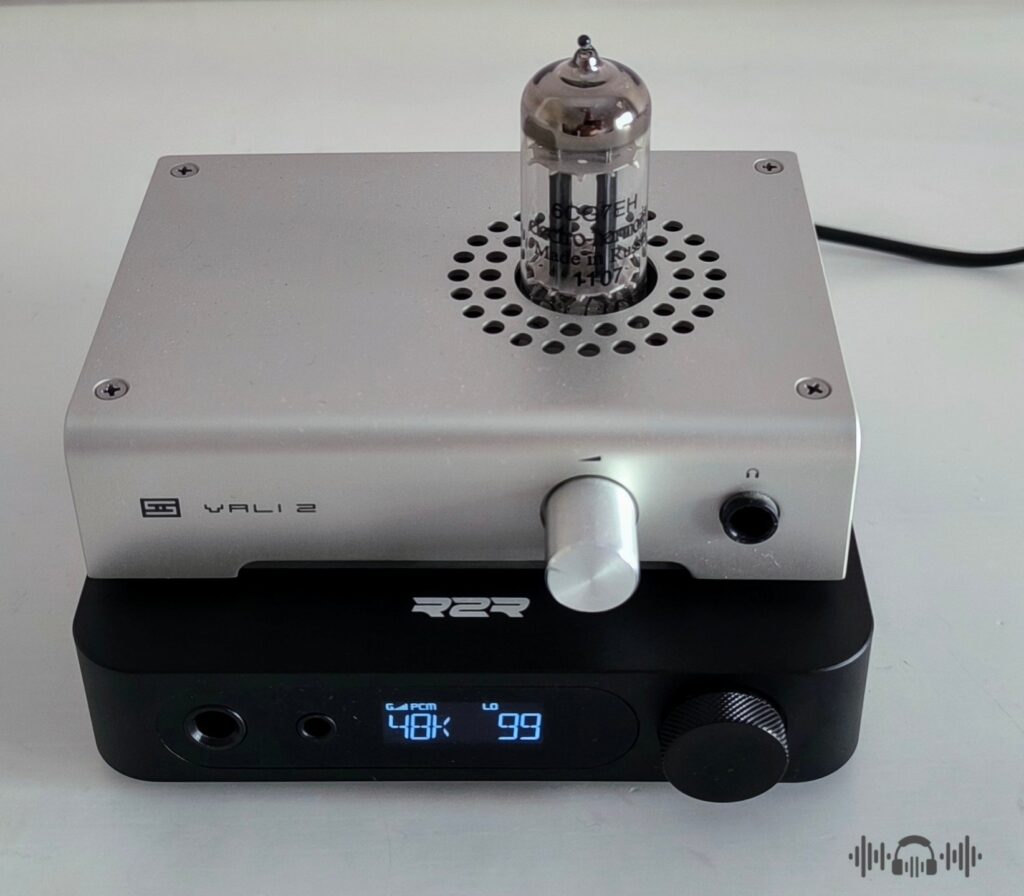
I have combined the FiiO K11 R2R with the Schiit Audio Vali 2+, and the results were truly impressive. For under $500, this headphone setup delivers a remarkably musical and organic sound, characterized by exceptional timbral realism and tonal precision. Therefore, I recommend purchasing the FiiO K11 R2R as a standalone unit, and then consider investing in a high-quality external headphone amplifier or active monitors to fully realize its capabilities.
In the end
Currently, the FiiO K11 R2R stands out as the most affordable option available for those seeking to enjoy the rich, analog sound characteristic of an R2R DAC.
While the headphone output may slightly limit its performance, the line output is truly remarkable. There are only a few D/S DACs within a similar price range that can rival the FiiO K11 R2R’s lifelike and effortless sound quality, but they tend to exhibit some digital glare that this model does not.
In all honesty, this is the most analog and natural-sounding DAC that FiiO has produced to date. It appears to be launched to gauge interest and market response to R2R DAC designs. After completing this review, I am confident that it will achieve significant success and sell rapidly, ideally prompting FiiO to develop a flagship R2R DAC in the future. Until then, the FiiO K11 R2R remains the most competitively priced R2R DAC ever created, offering an unmatched value.
Copyright – Petros Laskis 2024.
+ Well designed R2R DAC at an affordable price
+ Exceptionally musical and engaging
+ Natural and organic timbre without digital artificiality
+ Competitive technicalities and transparency
+ Immersive and holographic soundstage
+ Plenty of power for most loads
+ NOS and OS modes
+ Many inputs and outputs
+ LCD display
+ Excellent build quality
+ Slim and compact chassis
+ Minimalistic appearance
+ Great value for money

- Not as technical and transparent as the FiiO K11 or similar D/S DACs
- Can't switch audio modes on the fly
- No dedicated gain switch
- Slightly less powerful than the FiiO K11
- A bit more expensive than the FiiO K11
- The headphone amplifier is somewhat limiting the DAC performance














Leave a comment