



The Juzear Butterfly 61T was kindly provided free of charge in exchange for an honest review. I didn’t receive monetary or any other kind of compensation and I don’t use affiliate links. The price of the Juzear Butterfly 61T is $219.99 and is available from HiFiGo.
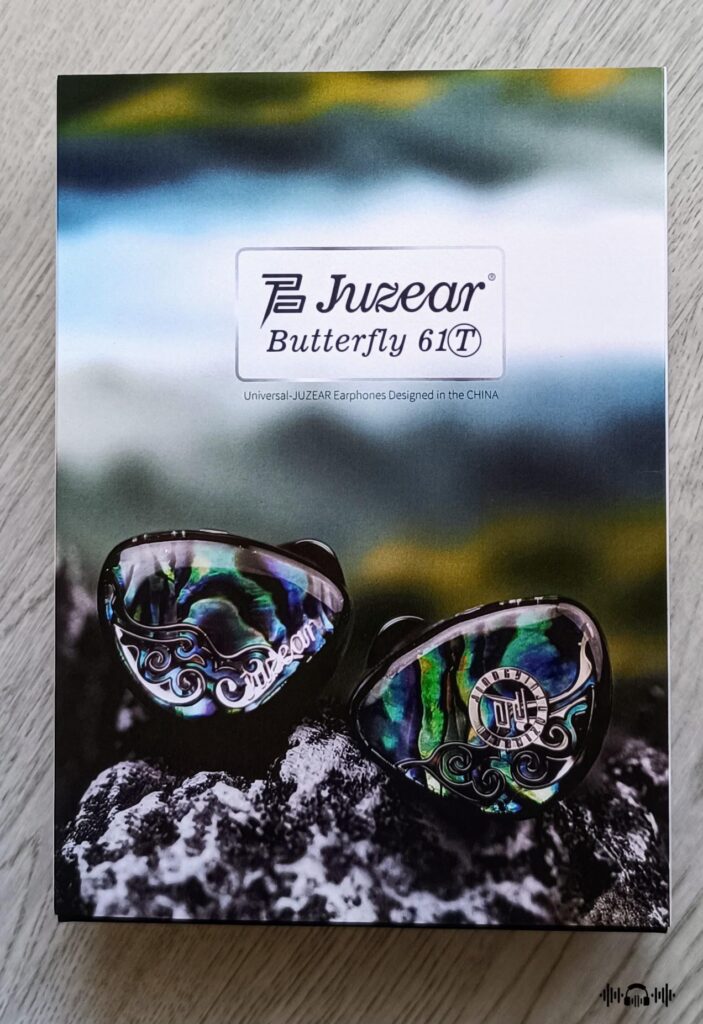
Juzear
Juzear is an emerging Chinese brand with a narrative that sounds very familiar. It is an independently developed label that unites a group of experienced audio engineers and employs state-of-the-art production capabilities. Their goal is to become a favored choice among audio aficionados. They are committed to improving and refining their products in terms of craftsmanship, materials, auditory experience, and cost-effectiveness. Let’s see whether they can offer something unique in a highly competitive market.
Juzear Butterfly 61T
The Juzear Butterfly 61T is a hybrid in-ear monitor (IEM) that incorporates a combination of one dynamic driver and six balanced armature drivers on each side. It utilizes a 10mm dynamic driver with a composite carbon-coated PU folded membrane to deliver bass and mid-bass frequencies. This dynamic driver works in conjunction with several balanced armature drivers from Knowles, along with specially customized 31736 units, to achieve high-resolution reproduction of midrange and treble sounds.
The drivers are integrated with a specially crafted 3D-printed acoustic cavity structure. The shells feature precisely engineered duct tubes that extend directly from the driver’s output to the nozzle, ensuring that each driver unit delivers pristine sound quality without interference from adjacent units. This configuration also contributes to a reduction in overall total harmonic distortion (THD).
Appearance, fit and build quality
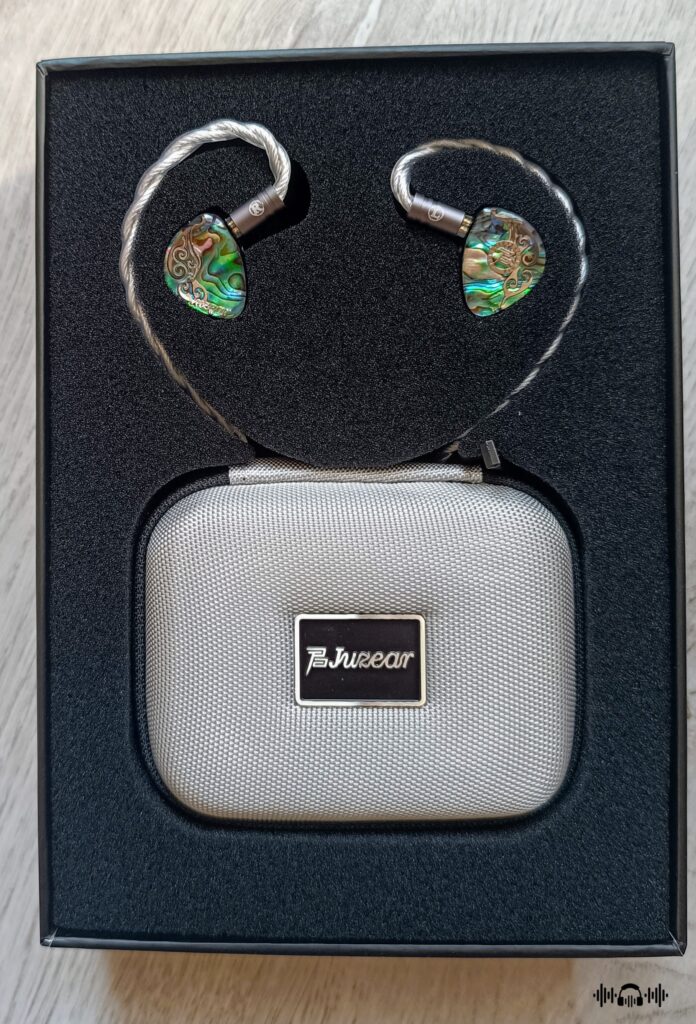
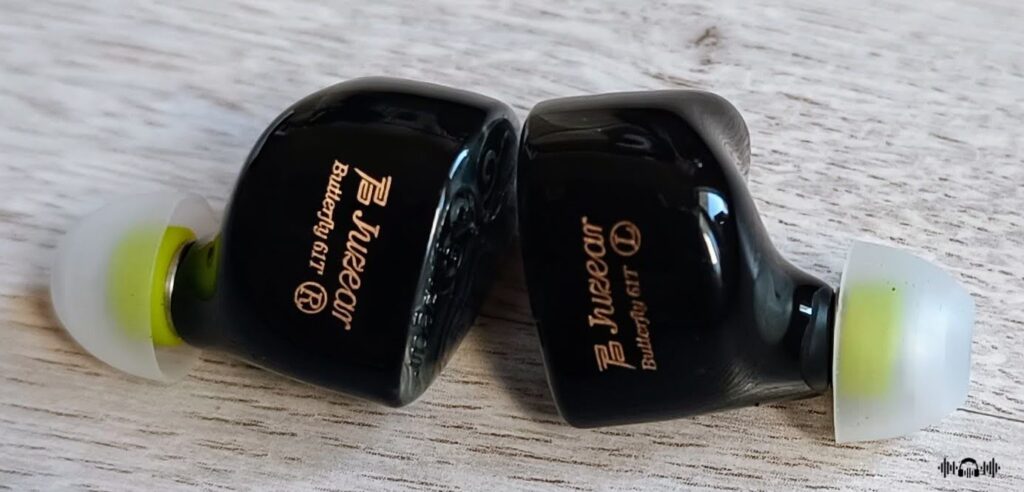
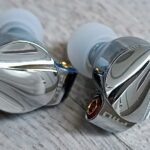
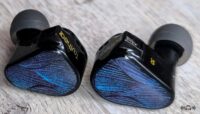
The ear-shells are crafted from black 3D printed resin, enhanced with CNC machined abalone shell faceplates adorned with iridescent butterfly wing designs, creating a visually striking appearance. Their semi-custom design features anatomically contoured curves that align with the natural shape of the human ear. Weighing only 6.6g each, these ear-shells are lightweight and provide a comfortable, secure fit without excessive protrusion. Additionally, they offer excellent passive noise isolation. However, it is important to note that the sound tube has a relatively large diameter, which may present some challenges when fitting the ear-tips.

Stock cable
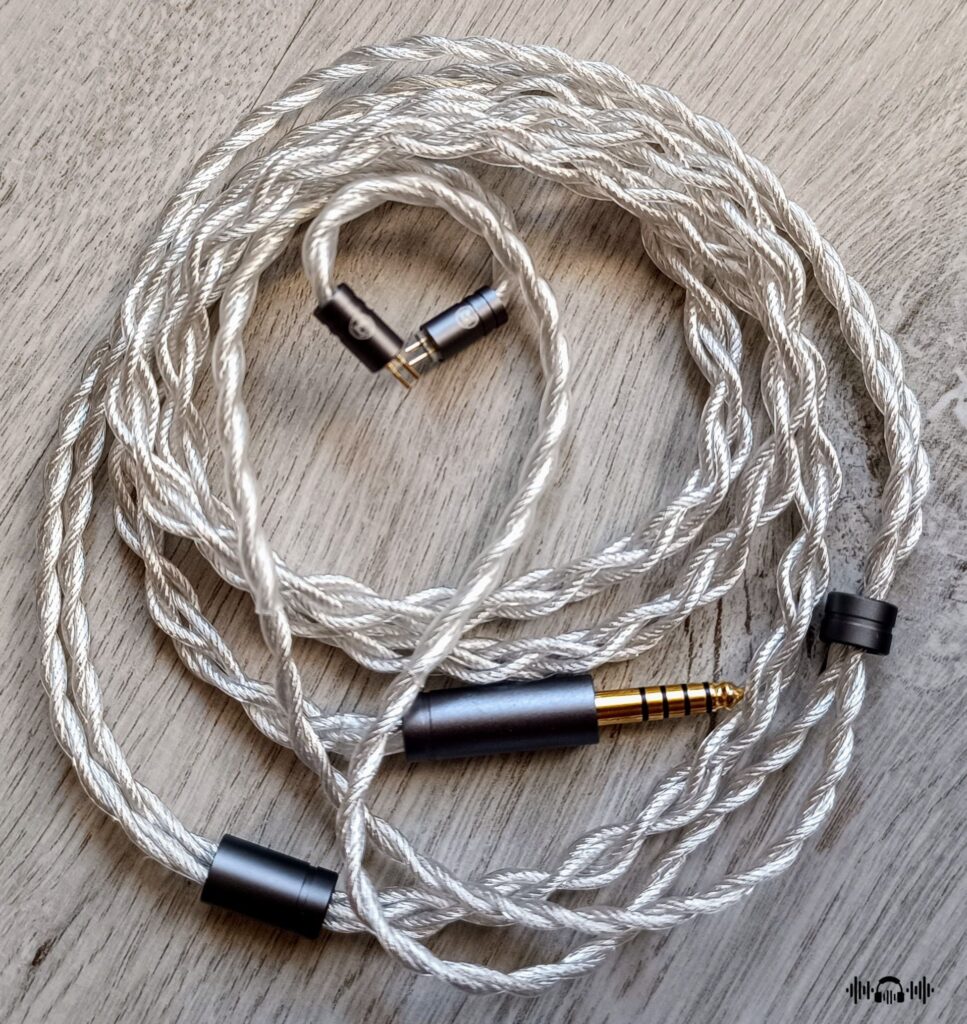
The provided cable is of high quality, featuring a four-core braided construction that incorporates 18AWG 6N silver-plated OFC wires and a 2-pin detachable interface. It is durable, resistant to tangling, and produces minimal microphonic noise. While it lacks a modular plug, you can choose to order it with your preferred plug type.
Accessories
The package features a premium carrying case equipped with a side zipper, three sets of silicone ear tips, one set of memory foam tips, and an additional three sets of ear tips resembling a SpinFit design.

Drivability
The Juzear Butterfly 61T features a 46Ω impedance and a sensitivity rating of 115dB, making them relatively easy to drive while also being resistant to source noise. For this review, I primarily used the iBasso DX180 and the FiiO M23, where the low gain setting proved to be more than adequate for powering the earphones.
A few notes about correct positioning
The Juzear Butterfly 61T necessitates precise placement within your ear to prevent the ear-tips from becoming occluded, as this can diminish sound quality and reduce bass response. It is advisable to experiment with the fit, aiming for a semi-loose rather than a tightly secured position. If you experience muffled audio, it indicates that the fit is too snug, and a readjustment is recommended.
Listening impressions
Upon initial hearing, the Juzear Butterfly 61T may appear to be just another variant of the Harman target, but with time, you will uncover several distinctive features that set its sound apart, making it truly unique in comparison to others.
The sub-bass is impressively deep and well-extended, yet it diverges from the standard Harman target curve, as Juzear has chosen to accentuate both the bass and mid-bass frequencies. While the bass is clearly more pronounced than the mid-range, it does not overwhelm to the point of overshadowing, providing ample space for the mids and treble to resonate. This enhanced but not super excessively boosted bass, makes it suitable for listening to a wide variety of musical genres, delivering a robust, rumbling, and immersive bass experience while maintaining good clarity in the mids and highs.
From a critical and reference perspective, the entire bass range is significantly accentuated beyond a neutral representation, leading to a lack of tonal accuracy. The bass instruments within the symphony orchestra are rendered with greater intensity than what is considered ideal, resulting in a slight dissonance. While this does not render them entirely unrealistic, it is still noticeably incorrect. For instance, in the following track, the two solo cellos appear to be slightly out of pitch, overshadowing the organ, which barely manages to be heard in the basso continuo line.
Vivaldi Concerto for two cellos
The bass of the Juzear Butterfly is powerful and impactful, delivering a rich and full-bodied sound with notable speed and control. However, it falls a little short in transparency and definition, particularly when tasked with intricate bass lines, resulting in a lack of layering. Despite this, it remains technically competent for the category and provides an enjoyable listening experience across various music genres.
More listening impressions
The tuning surprises extends into the mid-range, where Juzear has chosen a balanced and even approach, avoiding any roll-off of the primary mid frequencies and steering clear of excessive emphasis in the upper mid-range. The timbre is both accurate and lifelike, with instruments and vocals presented in a well-balanced manner, showing evenness, equal importance, and impressive coherence.
The sound possesses a mildly warm and inviting quality, enriched with vibrant harmonies. Textures are full-bodied and rounded, exuding a lush character without any lean or dry elements. The mid-range is marked by high resolution and definition, delivering exceptional clarity even with the pronounced bass. The 61T offers a smooth and enjoyable listening experience, appealing to those who value a rich mid-range without the typical harshness and sibilance often found in the upper mid-range.
And more
If you believe we are devoid of surprises, reconsider, as Juzear also deviates from conventional paths in its treble performance. Here, we experience a smooth and well-controlled tuning that skillfully avoids excessive peaks. While one might argue that the treble is somewhat rolled off and lacks extension or brilliance, the highs possess just the right amount of energy to prevent any sense of dullness or darkness. Although these earphones may not be the most vibrant or detailed in terms of airiness, they offer a safe and refined tuning that results in a smooth, forgiving sound, free from brightness or harshness. They are quite musical and enjoyable; however, the only drawback is a somewhat metallic and artificial timbre that can be detected in certain overtones.
It is unexpected for an earphone featuring such a well-regulated upper mid-range and treble to deliver a soundstage that is both open and expansive, accompanied by remarkably accurate imaging. The soundstage extends in both horizontal and vertical dimensions, resulting in a rich, layered, and immersive listening experience that remains free of congestion, even when handling the most complex musical compositions.

Comparisons not
Engaging in extensive comparisons with competing earphones that adhere to the Harman target and its variations is unnecessary, as their sound profiles are well understood. A noteworthy alternative to the Juzear Butterfly 61T, which also embraces a distinctive tuning approach, is the ISN Audio H50 priced at $295. While the H50 offers a different auditory experience, featuring less pronounced bass, a more forward mid-range, and a notably smoother upper mid-range, it serves as an intriguing option for those in search of something unique like the Butterfly.
In the end
The Juzear Butterfly 61T offers a smooth, slightly warm sound profile that is highly engaging, making it an outstanding choice for those who appreciate robust bass paired with alluring mids and well-managed highs. Its unique tuning diverges from conventional designs, introducing a refreshing alternative in a market saturated with earphones that typically adhere to similar target curves, which may not appeal to everyone. Having diverse options is beneficial, and the Juzear Butterfly 61T stands out as a compelling choice that deserves attention.
Copyright – Petros Laskis 2024.
+ Powerful bass that is not overly dominant
+ Mildly warm and forgiving sound profile
+ Natural and realistic mid-range
+ Smooth upper mid-range and treble
+ Competitive resolution and clarity
+ Open and spacious soundstage with decent imaging
+ Well made and attractive
+ Lightweight and comfortable with good passive noise attenuation
+ High quality cable
+ Generously accessorized
+ A unique sound proposition

- Bass could do with more transparency and better definition
- Not ideal for reference or critical listening
- Treble has some timbre issues
- Needs careful positioning inside the ear
- The cable is a little bulky and not modular









Leave a comment