



The FiiO M23 was kindly provided free of charge in exchange for an honest review. I didn’t receive monetary or any other kind of compensation and I don’t use affiliate links. The price of the FiiO M23 is $699 and you can buy it from here.
The FiiO M23 is also available at FiiO’s Amazon store
FiiO M23 Technical highlights
FiiO M23 is a recently released mid-range DAP, succeeding the highly praised FiiO M11 Plus ESS. Initially equipped with dual AKM AK4497EQ DAC chips, the M11 Plus had to transition to dual ES9068AS chips following the unfortunate AKM factory fire. However, for the M23, FiiO has reverted back to AKM and incorporated the flagship AK4191EQ + AK4499EX combo. This new DAC chip design completely separates the digital and analog sections and introduces the “DWA ROUTING Technology” to enhance the signal-to-noise ratio. FiiO has already integrated this DAC chip combination in their portable DAC/amp, the Q15, as well as the FiiO K9 AKM desktop DAC/amp.
The THX AAA 78 headphone amplifiers, initially incorporated in the M11 Plus and M11 Pro models, have now been enhanced to the superior THX AAA 78+ amplifier architecture which enables higher power output alongside improved fidelity. The M23 unit uses a pair of such amplifiers in a fully balanced setup.
The audio architecture comprises several stages, including DAC, I/V, LPF, voltage amplification, and parallel amplification. The I/V and LPF stages are entrusted to 2 OPA1612 op-amps, which are known for their low noise and high precision. Similarly, the voltage amplification stage is managed by 2 OPA1662 op-amps, renowned for their low noise and high bandwidth capabilities.
Various premium components such as high precision film resistors, Panasonic film capacitors, and high capacity polymer capacitors are incorporated into the audio circuit. A power supply consisting of 4 stages and 20 rails with separate analog and digital supplies ensures the M23 receives clean and steady power.
The M23 player can handle local decoding up to 384kHz/32bit PCM and DSD256, USB DAC decoding up to 384kHz/32bit and DSD256, as well as USB Audio up to 768kHz/32bit and DSD512. Additionally, all modes are compatible with complete MQA decoding.
The Desktop mode and dual Type-C ports
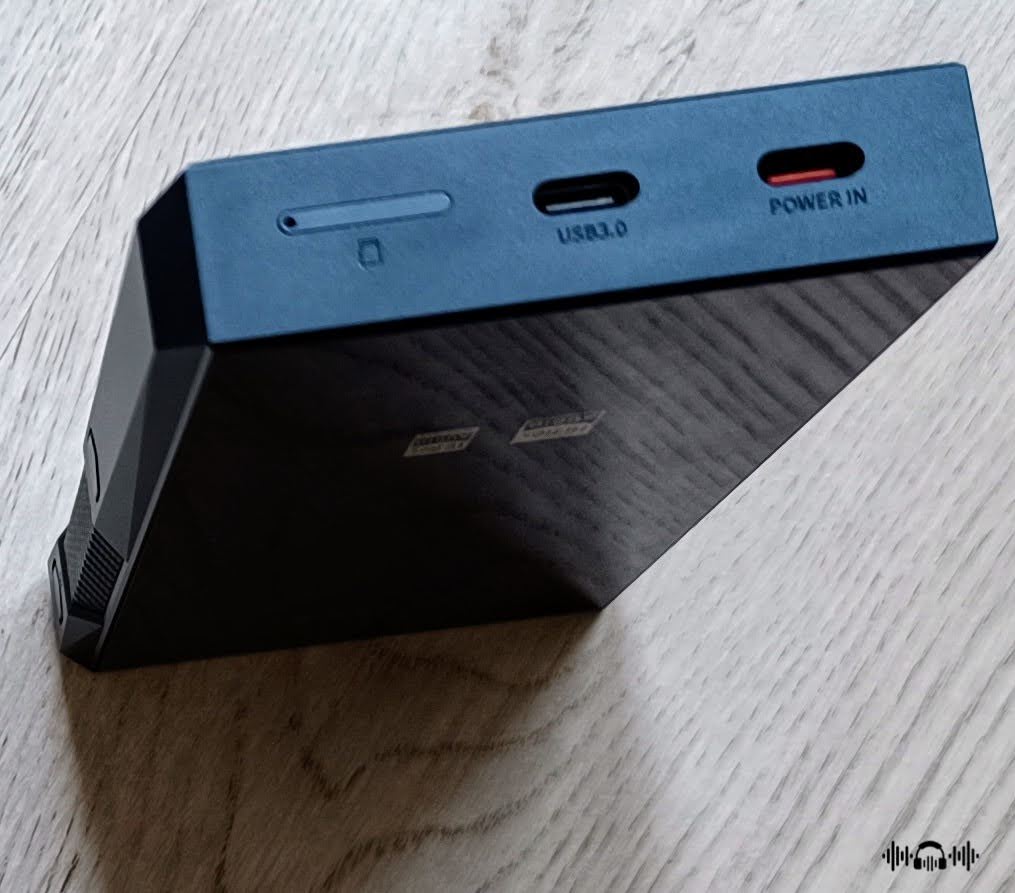
The M23 is FiiO’s first portable player to come equipped with dual type-C ports. One of these ports is exclusively for power input (POWER IN). By connecting this dedicated power type-C port to a fast charger, users can activate the Super High Gain Mode for enhanced gain and output power. In this mode, each channel can deliver up to 1000mW/32Ω of output power. The other Type-C port remains power-free while in this mode, making it suitable for connecting the M23 to a phone for use as a USB DAC.
The M23 is equipped with FiiO’s Desktop mode, which can be easily activated using a dedicated switch. When this mode is turned on, the M23 operates solely on external power, without utilizing its built-in battery. This feature allows the M23 to function as a desktop device without any concerns about battery damage. To activate Desktop mode, simply connect a fast USB charger or any other 5V DC power supply to the power type-C port and toggle the Desktop mode switch. Additionally, activating Desktop mode will unlock the Super High Gain Mode, enabling a higher power output.
Battery duration
The FiiO M23 is equipped with a 5500mAh battery that enables a dual-mode fast-charging system. This system combines extreme fast-charging with normal fast charging. Extreme fast-charging, which supports up to 30W charging speeds, is utilized when the battery is at a lower state of charge. As the battery approaches full capacity, the M23 switches to slightly slower normal fast-charging. This transition helps to improve charging times while also preserving the overall health of the battery. With a balanced output at high gain mode, the battery can last approximately 8-9 hours when streaming high-resolution content from Qobuz.
Other notable features
The player incorporates a low-jitter clock and a HiFi audio core that bypasses the original Android version, ensuring the preservation of the audio stream’s original sampling rate, whether it is PCM or DSD. In any operating mode, you have the option to utilize a 10-band PEQ with FiiO’s exclusive tuning algorithm. This allows you to finely adjust the sound by modifying the EQ’s frequency points, gain, bandwidth, and Q value. Furthermore, you can activate FiiO’s ALL TO DSD function. Personally, I haven’t extensively experimented with the PEQ as I don’t typically use equalization.
The M23 offers support for six different operating modes: Roon Ready, Android, Pure Music, Bluetooth, and AirPlay. Additionally, you have the capability to stream music via DLNA by accessing music from NAS, local networks, and cloud servers through UPNP/SMB.
Bluetooth connectivity is also available, with support for the SBC/AAC/aptX/aptX HD/ LHDC/LDAC codecs during transmission and SBC/AAC/LDAC during reception. The wireless connection is robust and reliable, while the audio quality remains exceptional despite Bluetooth’s lossy protocol.
Appearance and build quality
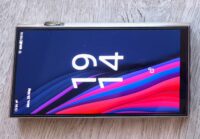
The M23 has a chassis with FiiO’s signature hexagonal honeycomb design, giving it an industrial aesthetic. Although I personally favor the rounded design of the M15S, the M23’s modern and futuristic appearance may appeal to many users.
The deep blue variant of the player is constructed from solid aluminum alloy, with all ports reinforced by custom metal pieces. Additionally, the back features an electroplated tempered glass panel for added durability. The build quality and finish are top-notch, and for those seeking a more premium look, the M23 is also offered in a stainless steel version.
User interface and connectivity
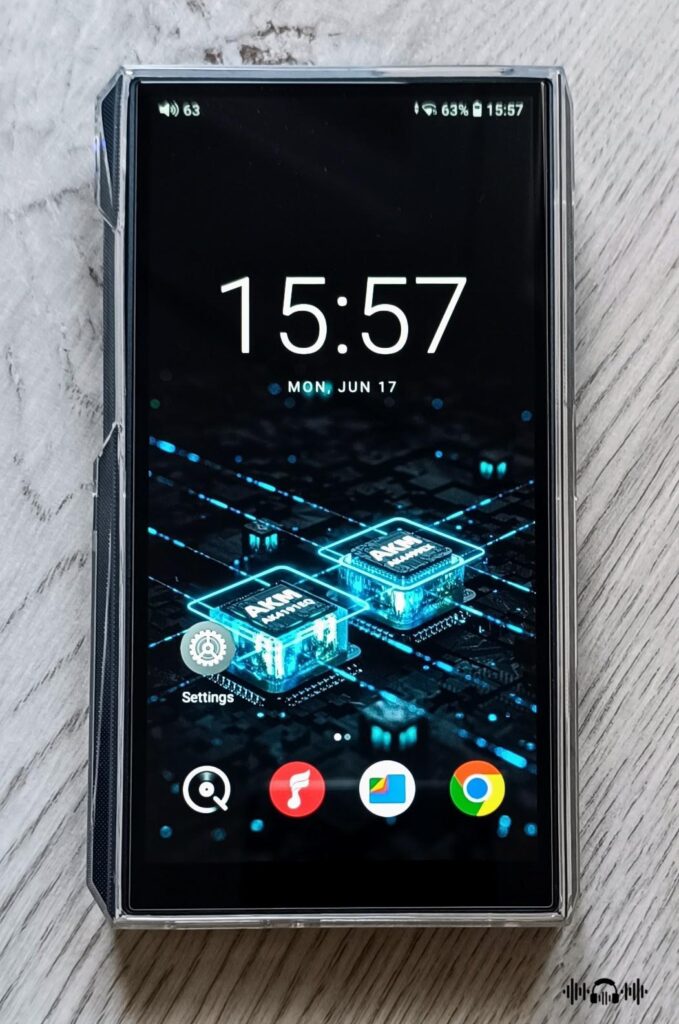
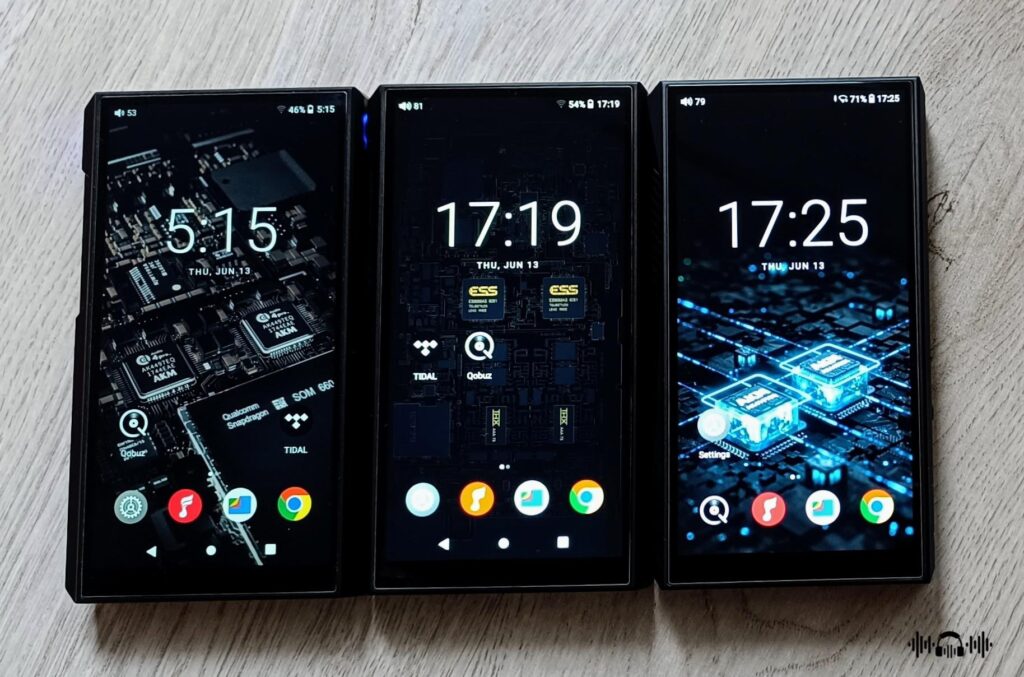
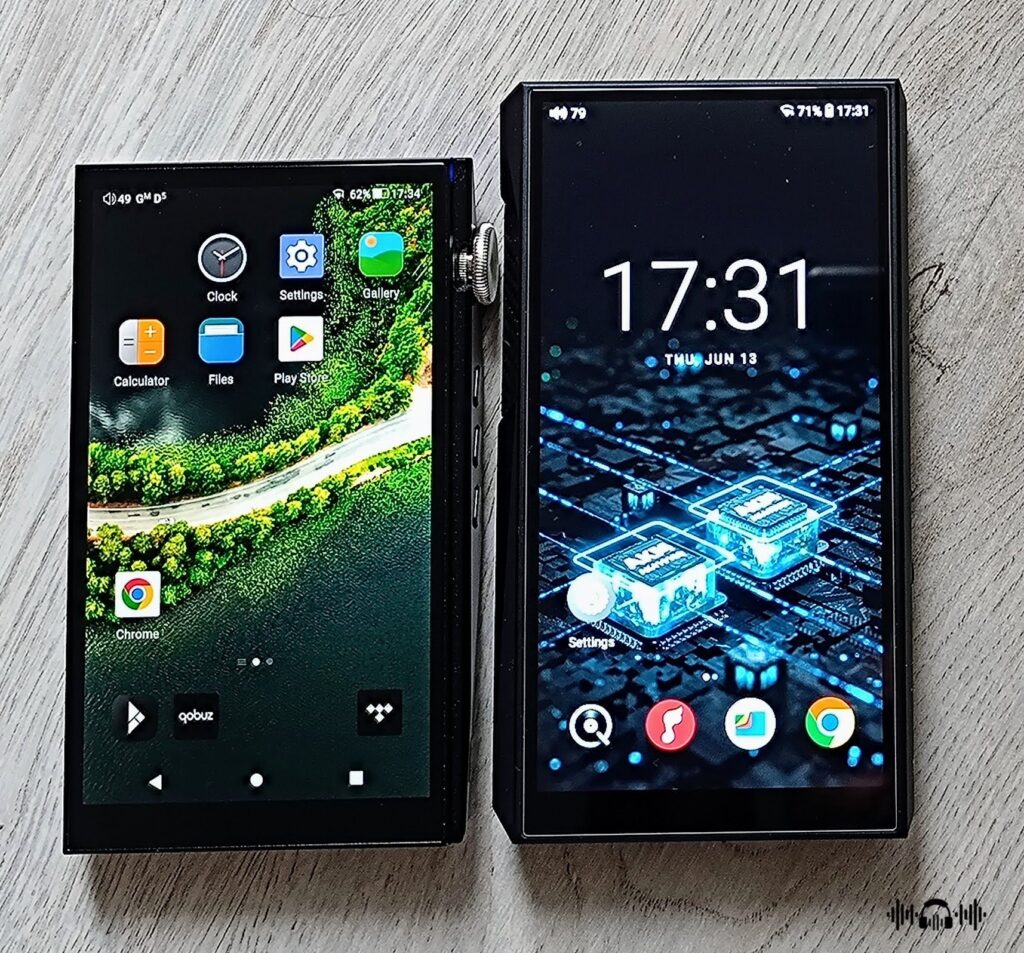
The FiiO M23 features a 5.5″ touch panel that has vibrant and clear colors, also providing a fast and responsive user experience. With dimensions of 75.7×136.5×18.1mm, it is designed to be easily operated with one hand. While it may not be as compact or lightweight as the iBasso DX170 or the Shanling M3 ultra, it is still a portable player that you can conveniently carry around. Additionally, the M23 offers a desktop mode, which sets it apart from other players.
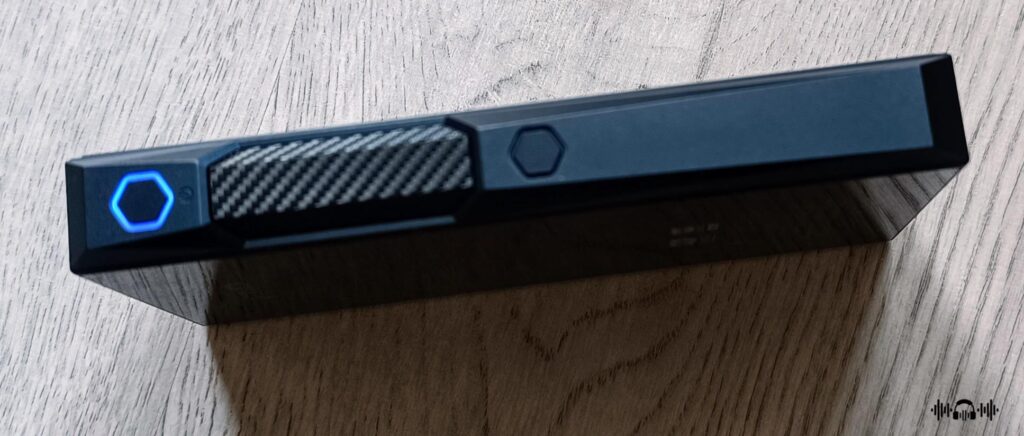
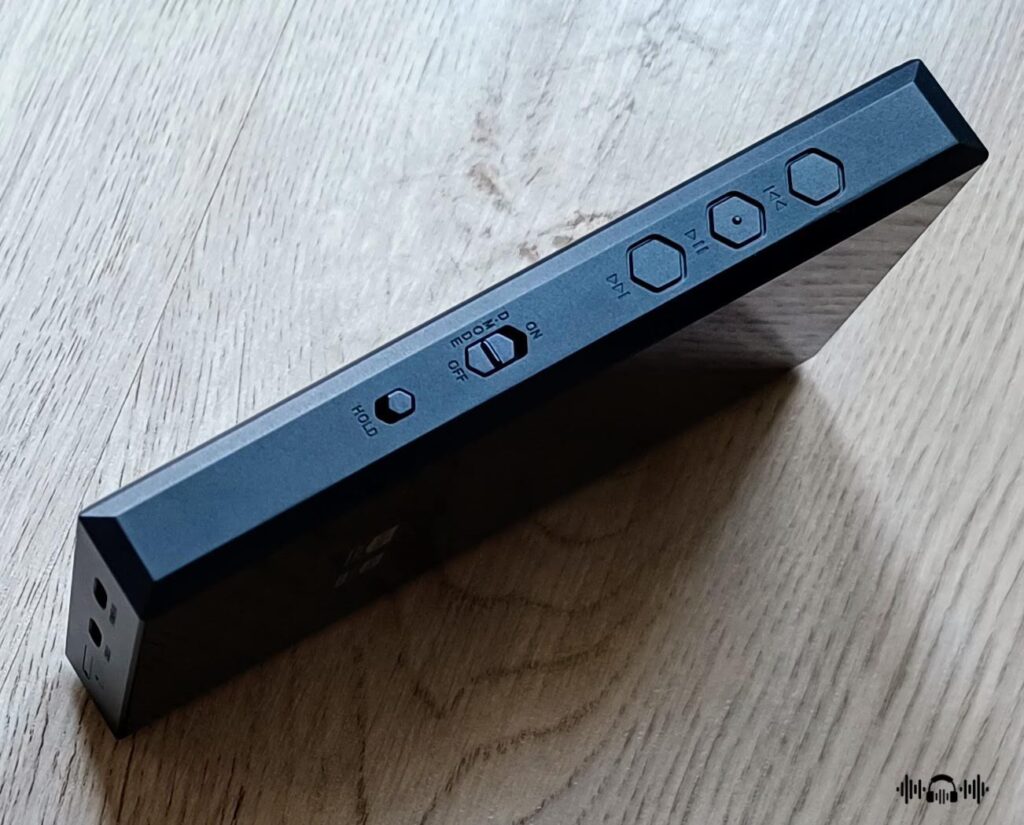
To enhance usability, the M23 is equipped with hardware buttons. On the right side, you will find three buttons for playback control, a toggle switch for the desktop mode, and a hold switch. On the left side, there is a power on/off button, an innovative volume touch panel, and a multifunction button that can be customized by the user. This button can be assigned various functions, such as switching digital filters or entering USB DAC mode. Adjusting the audio volume can be done either by using the touch slide function or by pressing the up and down edges of the touch panel.
The bottom of the chassis houses two USB type-C ports and a micro SD card slot that supports SD cards up to 2TB. At the top of the chassis, you will find two headphone outputs: a 4.4mm balanced output and a 3.5mm single-ended output. Both outputs can be configured as line outputs with a fixed or variable level, and the 3.5mm output also serves as a coaxial output.
Using experience
The FiiO M23 is powered by a Snapdragon 660 SoC and 4GB of RAM, ensuring a seamless and efficient user experience. Its fast and responsive performance allows you to effortlessly browse and listen to music without any lag. With the support of the familiar Android interface and gestures, you can easily download your favorite applications from the pre-installed Google Play store.
Although the M23 runs on the slightly outdated Android 10 OS, I personally didn’t find any drawbacks while using it solely for music listening. Since I don’t utilize my DAPs for gaming or other applications, the Android version compatibility with my preferred music apps is more important to me than having the latest OS. However, considering that Android 10 is no longer supported, it would have been ideal for the M23 to come with a more up-to-date Android version.
For those who prioritize the highest sound quality, the M23 offers a pure music mode option. This mode eliminates unnecessary tasks and exclusively runs the FiiO music player, which not only incorporates numerous functions but also allows for extensive audio customization.
Important Android update
Currently, FiiO is in the process of developing a new firmware update for the M23 that will upgrade it to Android 12. The anticipated release date for this update is approximately one month from now, so please stay updated for further announcements.
Accessories
The package comprises several accessories, including a pre-installed screen protective film, a silicone protective case, a leather case (designed only for the Stainless Steel Version), a USB-A male to Type-C female adapter, a type-C to C data/charging cable, and some accompanying paperwork. It appears that FiiO has made a cost-saving decision by not including the leather case as a standard feature.
Power output and noise
The FiiO M23 offers good power output even without activating the desktop mode. It can deliver 475mWpc/32Ω or 630mWpc/16Ω from the balanced output. However, when the Desktop mode is enabled, the power is boosted to 1Wpc/32Ω from the balanced output, which is sufficient to drive most headphones except for challenging ones. Additionally, the FiiO M23 provides four gain levels to ensure optimal compatibility with different loads. Furthermore, it remains completely silent when used with highly sensitive earphones like the FiiO FX15.
I have tested the FiiO M23 with a variety of headphones, including the FiiO FT5, Sennheiser HD660S2, and HIFIMAN Arya Organic, and the results were highly satisfying. The M23 exhibits ample power to confidently drive these headphones, delivering a strong grip and an impressive dynamic range. As part of my standard evaluation process, the FiiO M23 underwent a 100-hour burn-in period before conducting any listening assessments.
The HiFi boost mode
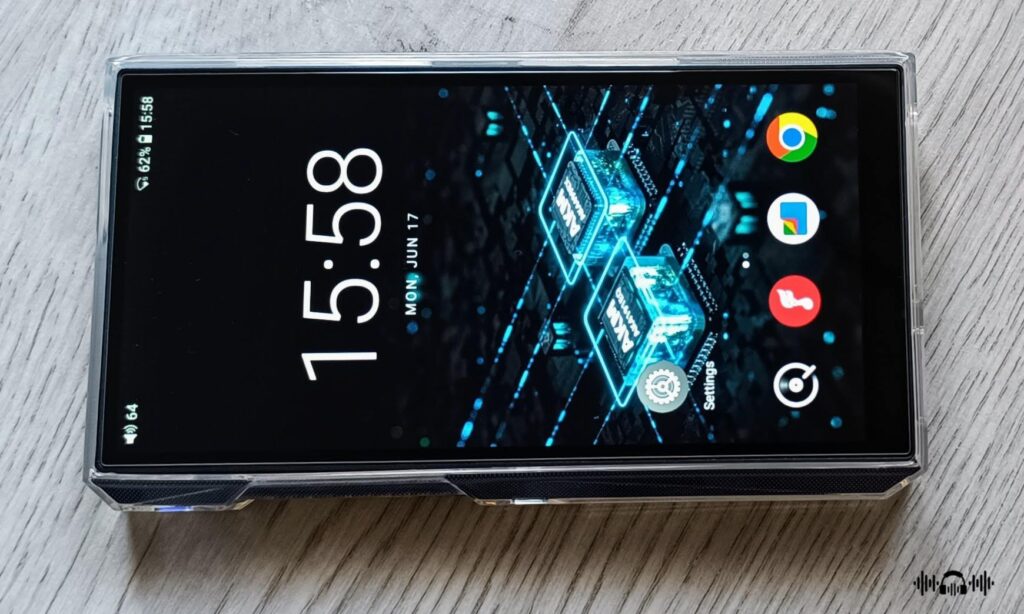
The recent firmware update, version 1.0.1, has brought several new features and sound enhancements to the M23. Among these updates, the most noteworthy is the introduction of the HiFi boost mode. This mode allows for a higher power output when the device is running on battery. By enabling the HiFi boost mode in the audio settings, the power output under battery mode increases from 475mW/32Ω to an impressive 760mW/32Ω. This enhancement makes the M23 more powerful, however there are a few other Digital Audio Players (DAPs) in the same class that offer even greater power. For instance, the Shanling M5 Ultra, priced at $589, can deliver an impressive 1.1W/32Ω without requiring an external power adapter.
The HiFi boost mode is capable of driving a wide range of full-sized headphones but it is worth mentioning that enabling this mode may result in increased battery consumption and heat generation. Nevertheless, during my testing with the HIFIMAN HE1000 SE headphones, I did not observe any significant rise in temperature or noticeable drainage of the battery under normal working conditions.
Listening impressions
(The text includes comparisons with the FiiO M11 Plus ESS and AKM plus the FiiO K9 AKM)
The FiiO M23 offers exceptional audio performance with no notable drawbacks. Its sound combines rich musical tones with impressive technical capabilities, resulting in an immersive and realistic listening experience. The overall sound signature of the FiiO M23 closely resembles that of the highly acclaimed FiiO K9 AKM, making it a portable version of the beloved desktop DAC/amp. With its balanced tonality and seamless integration, this audio player is compatible with a wide range of headphones and can handle various music genres. You can trust that the FiiO M23 will treat your headphones with utmost respect, preserving their frequency response and tuning.
The DAP has a neutral sound with a hint of warmth and natural timbre, making it more musical and engaging than the M11 Plus ESS. The M23 is technically competitive, very transparent, and offers great fidelity and precision without sacrificing musicality. While the previous ESS version was slightly more technically proficient and clean, it was also a bit more clinical and sterile compared to the improved M23. The M23 is also a significant upgrade from the legendary M11 Plus AKM, which used to be my favorite DAP.
I cannot avoid the resemblance between my FiiO K9 AKM review and the following sections, as both devices exhibit similar sound performance, particularly when the desktop mode of the FiiO M23 is enabled.
More listening impressions
The FiiO M23 delivers a deep bass that is characterized by its speed, tightness, and controlled nature, all while maintaining exceptional clarity, layering, and definition. Although it may be slightly lean and dry in terms of its textures, this can be attributed to the THX module limitation. However, it still outperforms the M11 Plus ESS and remains a better option. On the other hand, the FiiO K9 AKM has a more robust power supply and superior THX modules, allowing for greater dynamic swings and a more impactful experience. Nevertheless, the M23 is not that lacking in this aspect, especially when utilizing the desktop or HiFi boost modes.
The M23 utilizes the AKM DAC chip, which is a superior choice for the THX modules compared to similar ESS chips. This is because it effectively reduces their clinical and sterile sound, resulting in a more natural and harmonious audio output. The mid-range of the M23 is particularly noteworthy, as it delivers a vibrant, captivating, and immersive sound experience. The timbre is incredibly realistic and organic, surpassing the M11 Plus ESS in terms of analog sound quality while maintaining exceptional clarity, separation, and articulation. The FiiO M23 exhibits remarkable resolution across the entire frequency range, exceeding expectations for its category. Although it may not match the refinement and resolution of the FiiO M15S or FiiO M17, it offers comparable performance at a significantly lower price point.
And more
The FiiO M23 exhibits impressive speed, surpassing even the M15S, while also possessing the same level of energy and liveliness as the M17. However, it distinguishes itself by offering a smoother and more polite sound signature. The treble is exceptionally clear and extended, showcasing transparency and precise definition without being overly bright or sharp. In terms of treble smoothness, timbre realism, and the absence of artificiality, the M23 outperforms the M11 Plus ESS. Furthermore, it maintains an equally resolving and refined sound with remarkable detail retrieval, all without sounding overly analytical or monotonous.
The soundstage of the M23 is expansive and open, providing excellent accuracy in positioning and a solid stereo image. The depth layering is also highly satisfying, resulting in a grand and immersive listening experience. However, the THX modules do have some limitations when it comes to conveying a sense of atmosphere and effectively communicating time and space information. Nevertheless, the M23 will elevate the performance of your favorite headphones, enabling them to handle even the most demanding large-scale symphonic and choral works.
Vs the iBasso DX260
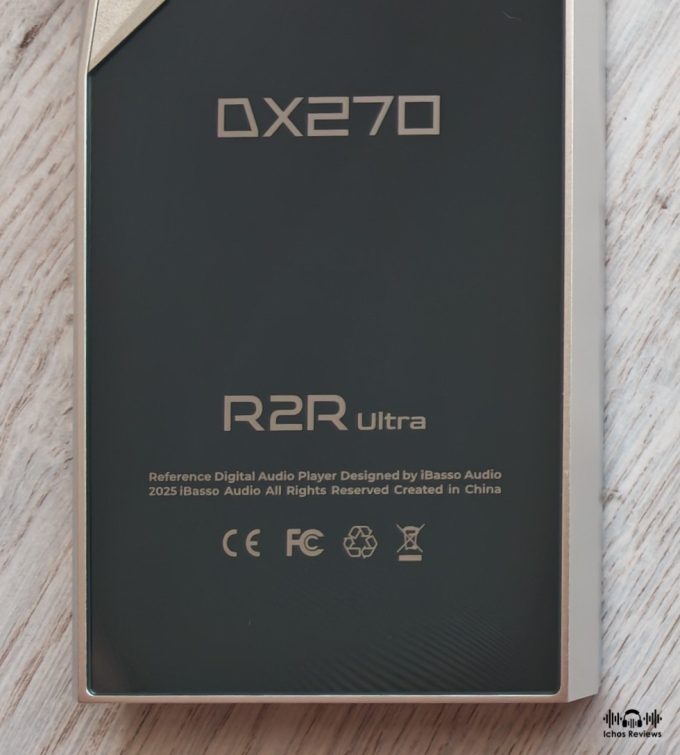
The iBasso DX260 ($950), which costs an additional $250, stands out as the first player to integrate an octa-DAC chip matrix. This innovative design incorporates eight CS43198 flagship DAC chips, with four dedicated to each channel. Both players share the same SoC and RAM, but the DX260 has the advantage of running on the newer Android 11 version. Additionally, the iBasso DX260 offers the convenience of a user replaceable battery, setting it apart from other players. However, it lacks the unique desktop mode found in the FiiO M23. Despite this, the DX260 remains a powerful device, delivering an impressive 1015mWpc/32Ω without requiring an external power adapter. It’s worth noting that the internal battery cannot be bypassed for pure desktop use. The DX260 features a 5″ screen, slightly smaller than the M23’s 5.5″ display but this trade-off results in a more compact and lightweight player.
The iBasso DX260 stands out as the epitome of transparency and neutrality among all digital audio players, boasting exceptional clarity, layering, and separation. Its technical prowess is truly unparalleled, while still managing to deliver a natural, musical, and captivating listening experience. On the other hand, the FiiO M23 may not quite match the DX260’s technical performance and class-leading transparency, but it offers a distinct sound shaping that will undoubtedly appeal to many. With a more visceral and weighty low-end, it delivers a fuller and more impactful bass response. The overall timbre exudes an organic and analog quality, with a warmer sound temperature. The treble, smoother and slightly laid back, it also maintains a polite and less energetic character on the M23. While the DX260 excels in imaging, separation, and layering, the M23 offers a slightly more expanded and holographic soundstage.
In the end
The FiiO M23 represents a significant upgrade from the M11 Plus ESS and stands out as an exceptional audio player with top-notch sound quality and minimal drawbacks. Not only does it excel in sonic performance, but it also incorporates innovative features like desktop mode and dual USB type-C ports. With its impressive audio capabilities and versatile functionalities, the FiiO M23 offers unbeatable value at its price range. While it may not outperform flagship devices, it delivers performance close to flagship standards at a fraction of the cost, making it a highly recommended purchase and an absolute bargain.
Copyright – Petros Laskis 2024.
+ Stellar audio performance
+ Balanced and neutral sound signature
+ Competitive technicalities and transparency
+ Realistic timbre without artificiality
+ Desktop mode with dedicated USB port
+ Powerful headphone amplifier
+ Noise free background
+ Fast and responsive user interface
+ Relatively compact and lightweight
+ Various connectivity options
+ Excellent build quality
+ Stunning value for money

- Average battery duration
- Older Android version (but FiiO is preparing an Android 12 update)
- The leather case is not included
- Not as powerful as some of the competition
- Not that portable as other options
- Slightly lean textures










Leave a comment