


The Shanling M1 Plus was kindly provided free of charge in exchange for an honest review. I didn’t receive monetary or any other kind of compensation and I don’t use affiliate links. The price of the M1 Plus is $209 for the DAP alone and $215 for the DAP together with its matching protective case. You can buy them directly from the Shanling official store.
Shanling M1 Plus
Shanling has been crafting portable and desktop audio gear for more than 30 years. Their earphones, portable audio players (like the M0 Pro) USB DAC dongles (like the UA1 Plus) and desktop devices are admired by professional reviewers and hobbyists alike.
One of the latest additions to their extensive catalogue of products is the Shanling M1 Plus, a compact sized DAP with basic functionality and wireless connectivity that is an upgraded version of the M1S. This DAP is positioned between the entry level M0 Pro and the M3 Ultra. These three players feature Shanling’s own developed MTouch interface instead of the popular Android OS.
Technical highlights
The audio circuit of the Shanling M1 Plus is based around the ESS ES9069Q DAC chip and is accompanied by a pair of SGM8262 amplifiers for a fully balanced output which provides up to 660mW/32Ω of power.
The M1 Plus might be entry level but it doesn’t skip on advanced features as it uses Shanling’s own developed FPGA signal processing technology with dual independent clocks by the Japanese brand KDS, while a bunch of premium electronic components, like ELNA Silmic II capacitors, are used in the circuit board.
Outer appearance and build quality
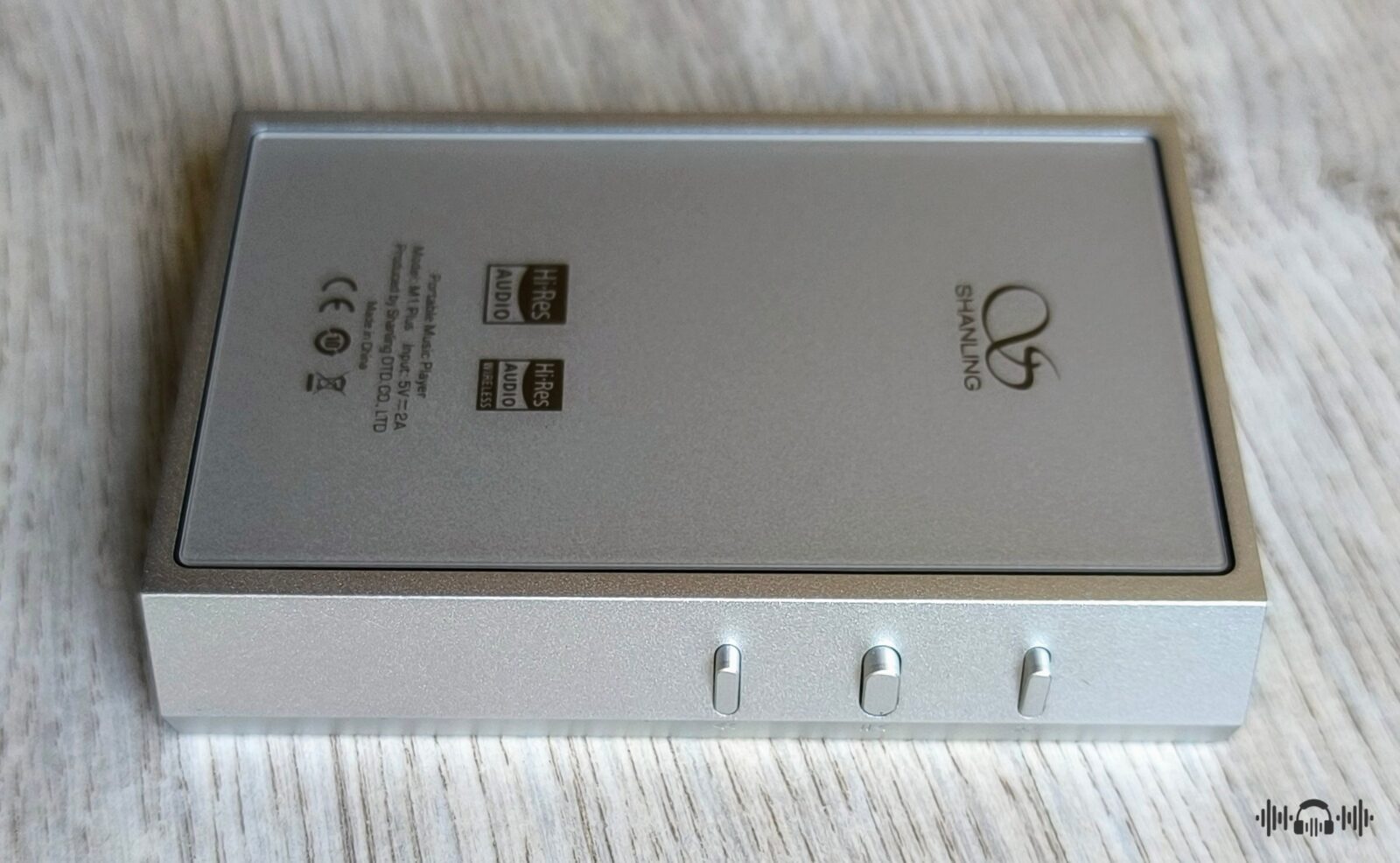
The chassis of the Shanling M1 Plus is made of aluminium alloy with tempered glass panels at the front and the back. The unit measures 86x61x17mm and weighs 116 grams only so it is compact sized and lightweight making it ideal for portable use. Some people might find it a little thick but it still is palm sized.
The chassis has a minimalistic yet modern looking appearance with an asymmetrical shape that is ergonomic and offers good grip. There are three buttons for playback control and an illuminated volume wheel that also doubles as a power on/off button.
Build quality is outstanding, the M1 Plus is exceptionally well made and finished, it looks like a premium and much more expensive DAP.
I/O interface
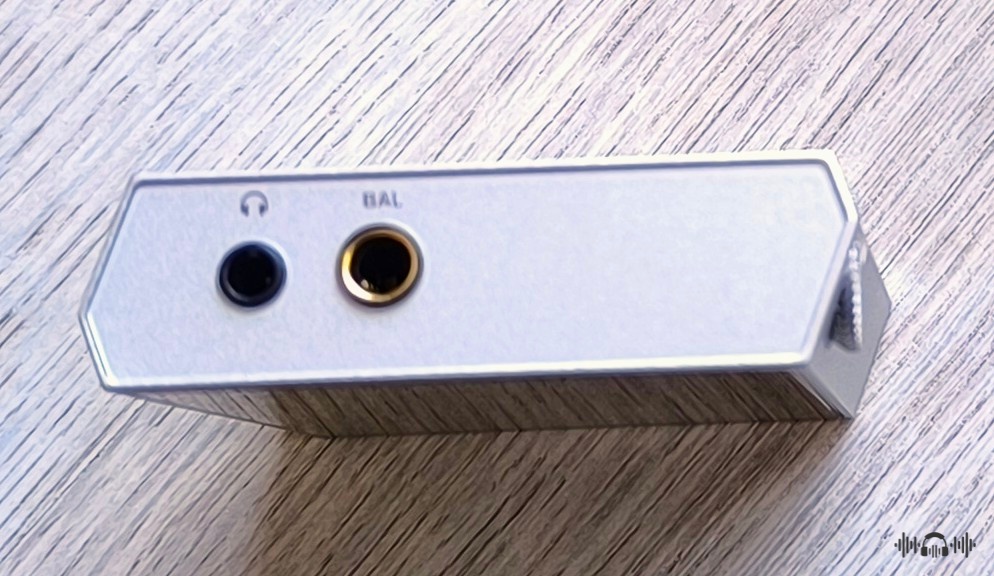
The M1 Plus might be compact sized but it offers a plethora of inputs and outputs. The unit supports bi-directional Bluetooth V5.2, two-way USB connection, 3.5mm coaxial SPDIF out, Wi-Fi connectivity for DLNA/Airplay and local playback through the micro SD card. The M1 Plus has two headphone outputs (3.5mm single ended and 4.4mm balanced), a USB type-C input and a micro SD card slot.
You can use the M1 Plus as a DAP, as a USB DAC or as a USB/SPDIF digital transport to an external DAC. The USB DAC mode supports PCM decoding up to 384kHz/32bit and DSD256 while for local playback the numbers rise to 768kHz/32bit DSD512. A useful feature of the USB mode is that you can enable or disable battery charging depending on the usage scenario.
Bluetooth connectivity
The Bluetooth supports the LDAC, aptX HD, aptX, AAC and SBC codecs in both directions, it has good working distance and stable performance within the same room. The Bluetooth will automatically enter receiver mode when earphones are plugged into the unit and transmitter mode when they are unplugged.

Wireless steaming
You can use DLNA and Airplay to access music libraries attached to your home network or stream music from various streaming applications. The best way to do it is to open the BubbleUPnP application and select the M1 Plus as the music renderer. I have tried with Qobuz which worked flawlessly albeit with some lag when skipping tracks.
Operation and user experience
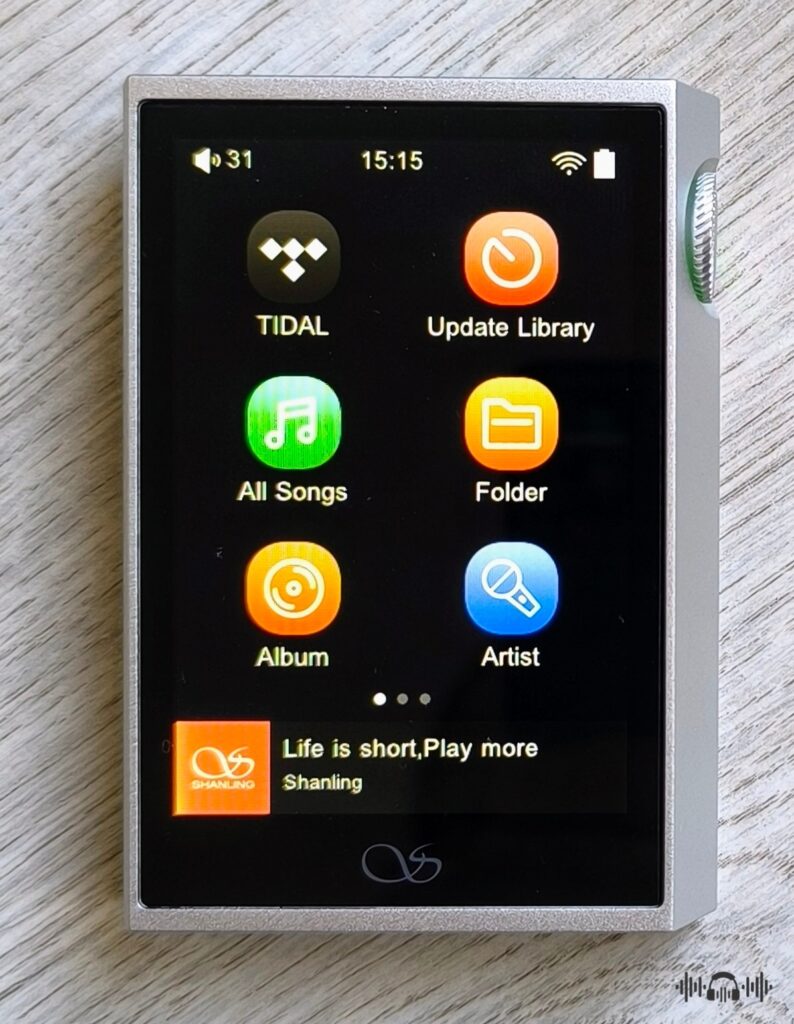
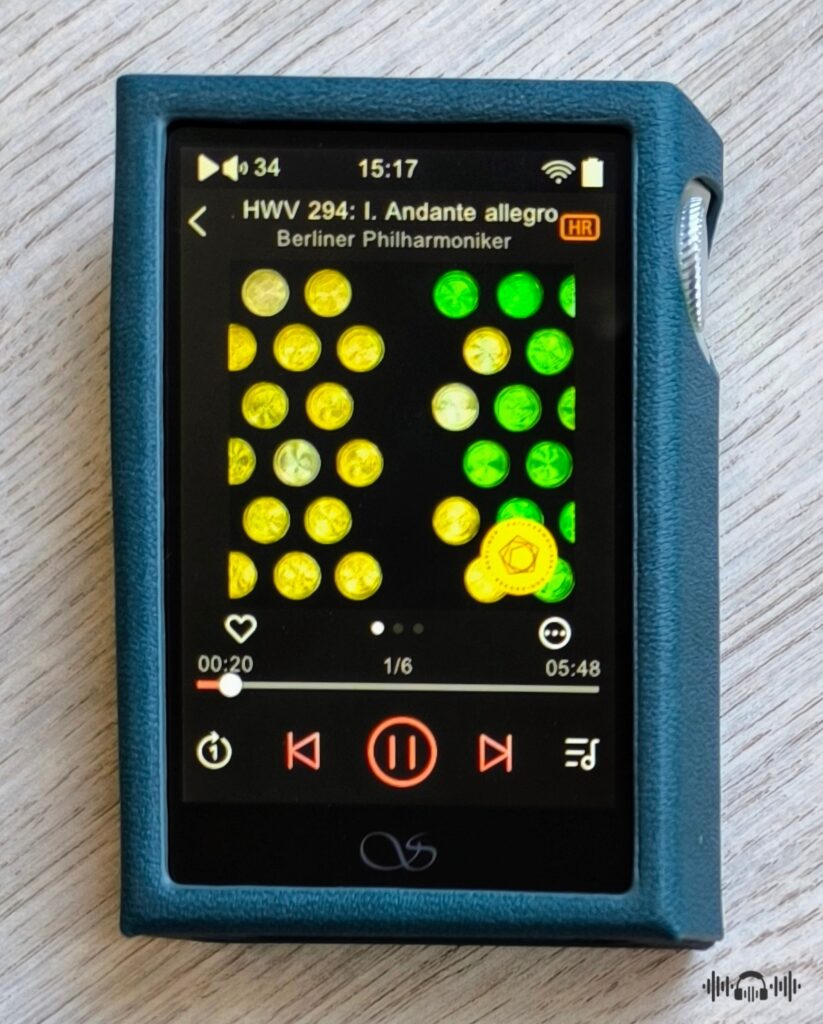
The device runs the Ingenic X2000 platform with Shanling’s latest generation of MTouch OS, which is a simple and fast system focused on pure audio playback. You can browse and playback music files that are stored in the SD card or stream music through the embedded Tidal application. The M1 Plus doesn’t support other streaming services and you can’t install other applications.
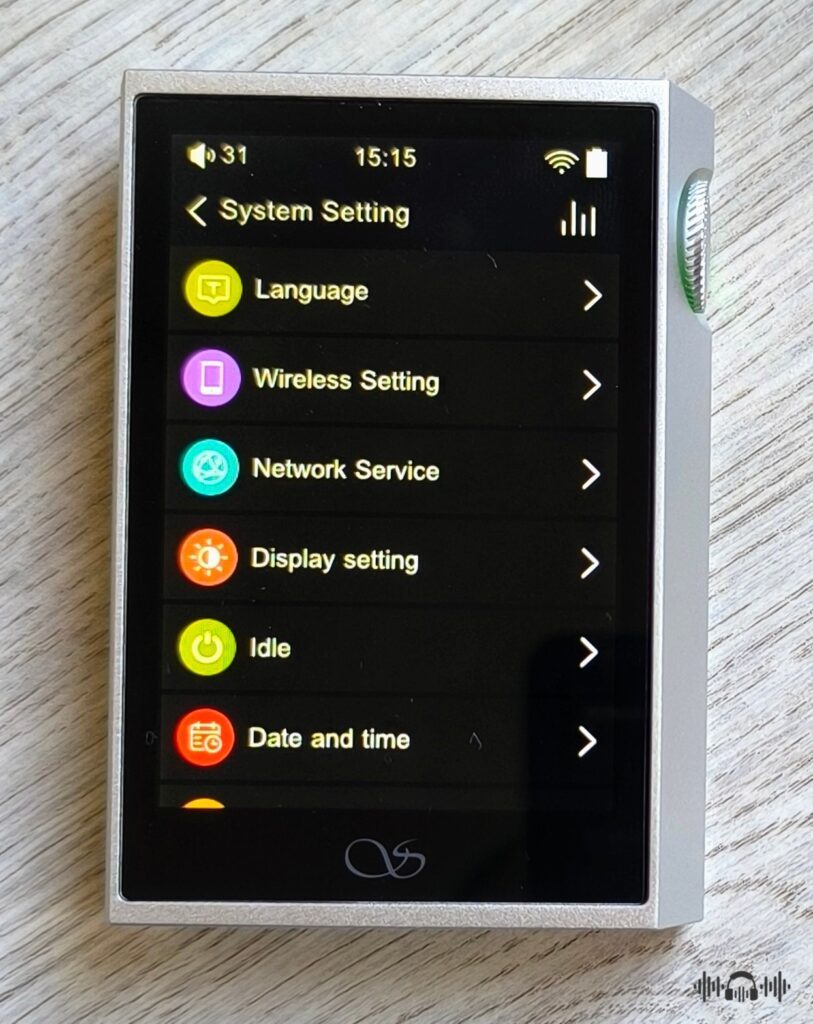
The MTouch interface has all the usual library search options and offers a lot of customization just like any other Android player. The available options include home screen and playback settings, eighth digital filters, display and idle settings, in-vehicle mode, parametric EQ etc. It even has a drop down menu with shortcuts to frequently used functions like amplifier gain, direct access to playback or system settings etc. Please download the manual to find out more about the player functions.
The MTouch OS boots almost instantly and offers a smooth and lag free user experience which is somewhat hampered by the small 3.2” and low resolution 320*480 screen. The truth is that browsing is done well, cover art is displayed correctly and the screen supports double tap to wake. The only real issues are the limited maximum brightness, the size of the fonts that are too small and can’t be enlarged as well as the virtual keyboard which is old-school keypad style.
The player supports online firmware updates as long as you have an SD card installed and is also compatible with Shanling’s Eddict player app.
Tidal support
The only streaming service natively supported by the M1 Plus is the Tidal app which grants access to its full library and your stored favorites but no offline content. The log-in procedure is pretty easy, the only thing you have to do is to use a phone with the Tidal application installed and scan the QR code that appears at the M1 Plus display.
The application runs smoothly with lag-free playback and search functions. The only negative is that gapless playback is not working despite the M1 Plus supporting it in local playback mode. This is a glitch that needs to be fixed in a future firmware update.

Battery size and duration
The advantage of using the power efficient Ingenic X2000 processor is that the lowish 2100mAh capacity battery of the M1 Plus can provide about 8-9 hours of playtime from the balanced output streaming music from Tidal. Not an outstanding number but still good duration for the size of the player with the added benefit that the battery supports fast 15W charging. You can stretch the battery even more if you do local playback.
Accessories
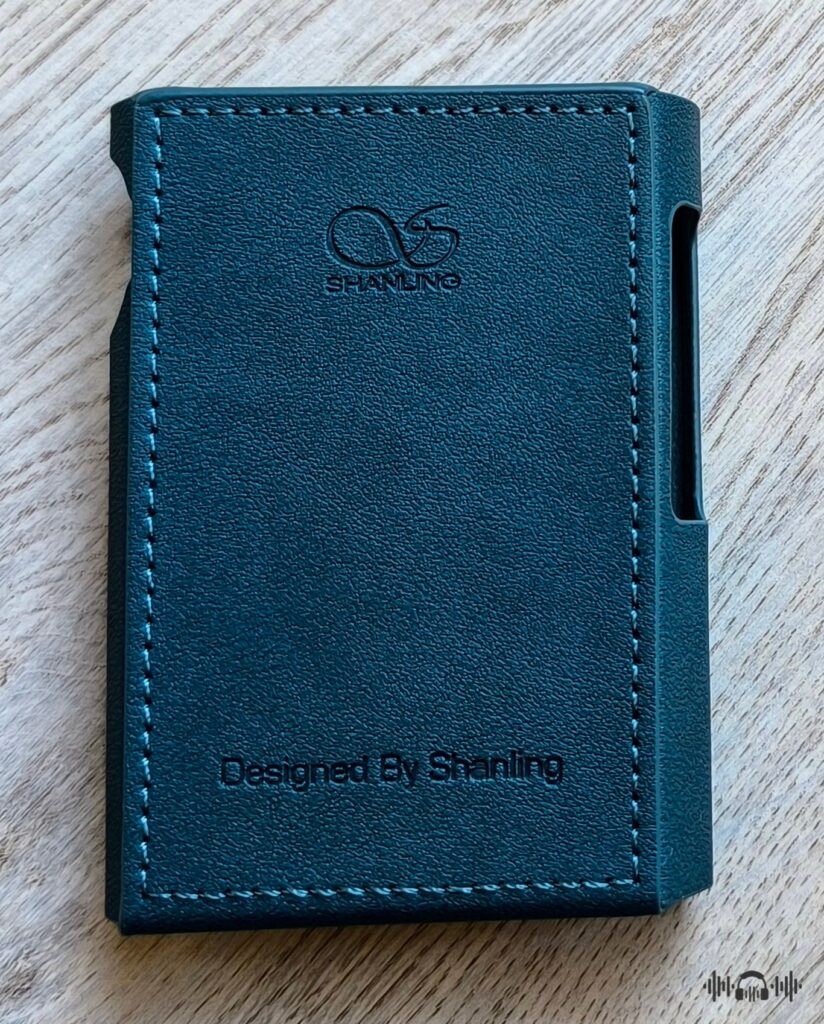
The package includes a USB type-C to A cable, a screen protector and some documentation. A protective case is available for an extra small fee. This case is of high quality and fits the player like a glove but it limits a little bit the functionality of the volume wheel.
Power output and noise
The M1 Plus is quite powerful for the size with 661mW/32Ω from the balanced output and 195mW/32Ω from the single ended. Plenty of power that exceeds the capabilities of most USB DAC dongles and makes it suitable for driving a great variety of earphones and many full sized headphones. The M1 Plus hadn’t no issues powering headphones like the Aune SR7000 while it remained absolutely silent and noise free with sensitive earphones like the Juzear Dragonfly 81T.
Listening impressions
The sound performance of the Shanling M1 Plus is stellar and comparable with more expensive DAPs, like the Shanling M3 Ultra or the FiiO M11S, while it easily outperforms most USB DAC dongles in terms of power output and background noise. Its sound signature is a combination of transparency and fidelity with a musical and engaging character.
The M1 Plus offers neutrality and competitive technical performance all while maintaining a rather natural timbre without much annoying artificiality or digital glare. The bass is deep and quite weighty without dryness or too lean textures. It is punchy and impactful with tightness, pace and control while staying satisfyingly defined and layered for the category.
The mid-range is rich, harmonious and colorful with realistic timbre and natural tonal colors. Voices and instruments have a lifelike quality to them while the player manages to stay exemplary linear and transparent.
The treble is sparkling and energetic with plenty of luminosity, as someone would expect from an ESS DAC chip, but the engineers have managed to keep brightness and sharpness under control. Micro detail retrieval is more than good and without clinical elements, the M1 Plus is exceptionally resolving and refined for the category. The timbre stays natural enough but not entirely devoid of digital artificiality while the textures have good continuity with some minor loss in weight compared to the lower frequencies.
The soundstage from the balanced output is naturally wide with good depth layering, plenty of inner space and precise imaging. Not as holographic and immersive as other higher-end DAPs but still grand and convincing enough with large scale works. Use a good pair of earphones and you will be surprised with its communicative and extraversion nature.
Vs the FiiO JM21
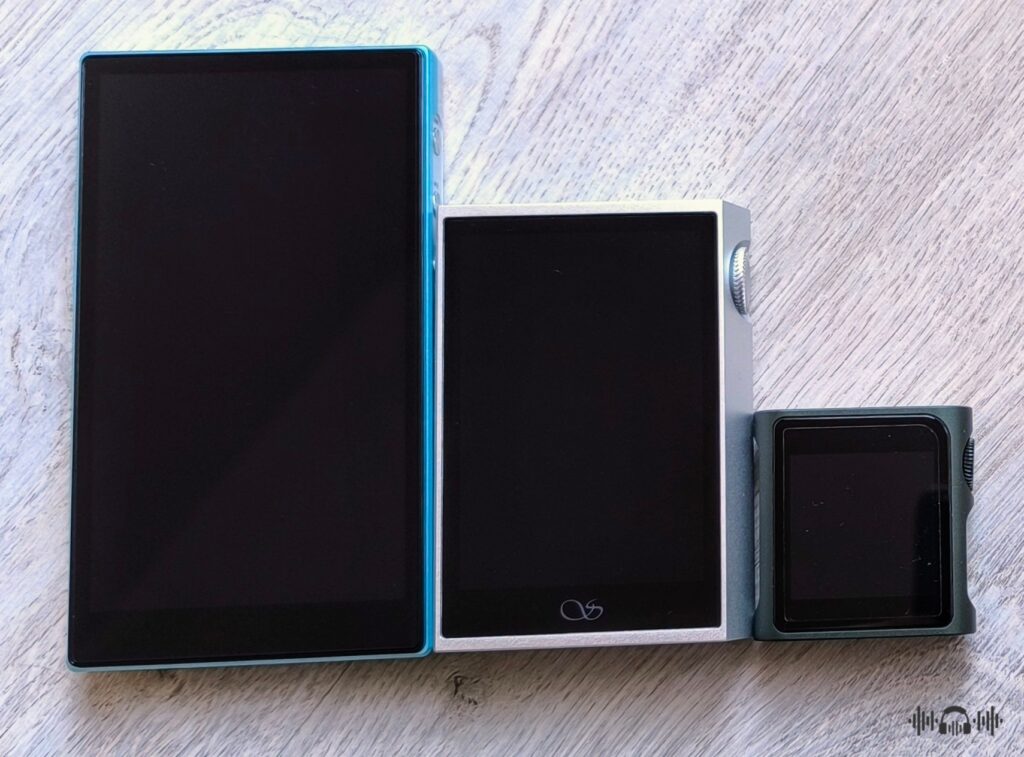
The $199 JM21 is FiiO’s (or Jade Audio if you prefer) recently released DAP in the entry level category that was previously abandoned by the brand. This is a player that offers a full Android 13 experience and its audio circuit is based around dual CS43198 DAC chips and dual SGM8262 amplifiers for a fully balanced output. The JM21 is just slightly more powerful than the M1 Plus (700mW vs 660mW) while its battery duration is just slightly extended. (The battery duration was tested steaming Tidal)
The JM21 has a bigger 4.7” screen and is ultra thin but not as compact or lightweight as the M1 Plus (156g vs 116g) which is also better made because the FiiO has a plastic back cover to save weight. Connectivity options are more or less the same, the JM21 has true line outputs that bypass the amplifier stage, while sound performance is equally great in both players with some minor different sound characteristics as someone would expect.
The choice comes down to size and weight, people who need the most compact and lightweight player, and don’t mind the lack of some features, will opt for the Shanling M1 Plus while others might prefer the more feature packed but slightly larger and heavier FiiO JM21.
In the end
The Shanling M1 Plus is an affordable, compact sized and lightweight digital audio player that is exceptionally well made and offers great sonic performance for the price. It has all the basics covered, and some more, the only thing really missing is the support for a couple of streaming services like Spotify.
It is nice to see that several audio manufactures have not abandoned the entry-level DAP category because there are still hobbyists who prefer the freedom of a DAP, instead of using USB DAC dongles, but they don’t have the money to buy a higher-end DAP.
There are numerous benefits in using a DAP and the Shanling M1 Plus is an exceptional choice for anyone looking for something really affordable and portable without sacrificing much sound quality and functionality. While there are even more portable options, like the Shanling M0 Pro, or more featured packed ones, like the FiiO JM21, the M1 Plus represents the sweet spot between form and functionality.
Copyright – Petros Laskis 2025.
+ Neutral and balanced tuning
+ Competitive technicalities
+ Open and spacious soundstage
+ Digital artificiality is kept low
+ Plenty of power for the size
+ Silent background
+ Snappy and lag-free user interface
+ Double tap to wake the screen
+ DLNA and Airplay
+ Native Tidal support
+ WiFi and bidirectional Bluetooth
+ Compact sized and lightweight
+ Ease of use
+ Excellent build quality
+ Very affordable

- Average battery duration
- Doesn't support other streaming services except Tidal
- A little thick body
- Small and low resolution screen
- Can't enlarge the fonts
- Tidal application doesn't support gapless playback
- The protective case is not included as a standard








Leave a comment