


The SMSL R1 was kindly provided free of charge in exchange for an honest review. I didn’t receive monetary or any other kind of compensation and I don’t use affiliate links.
The price of the SMSL R1 is $71.99 and is available from Aoshida Audio.
Aoshida Audio was kind enough to offer a 2% discount if you use the code “ichosrev-R1”.
SMSL R1
SMSL Audio is a renowned manufacturer of high-performance DACs, amplifiers and audio gear, known for combining advanced technology with exceptional value and class-leading measured performance. You can read past SMSL reviews by clicking here.
The SMSL R1 is a very affordable desktop DAC and headphone amplifier combo unit with extra gaming features, like an adjustable level microphone input and independent treble/bass adjustment.
Design and layout
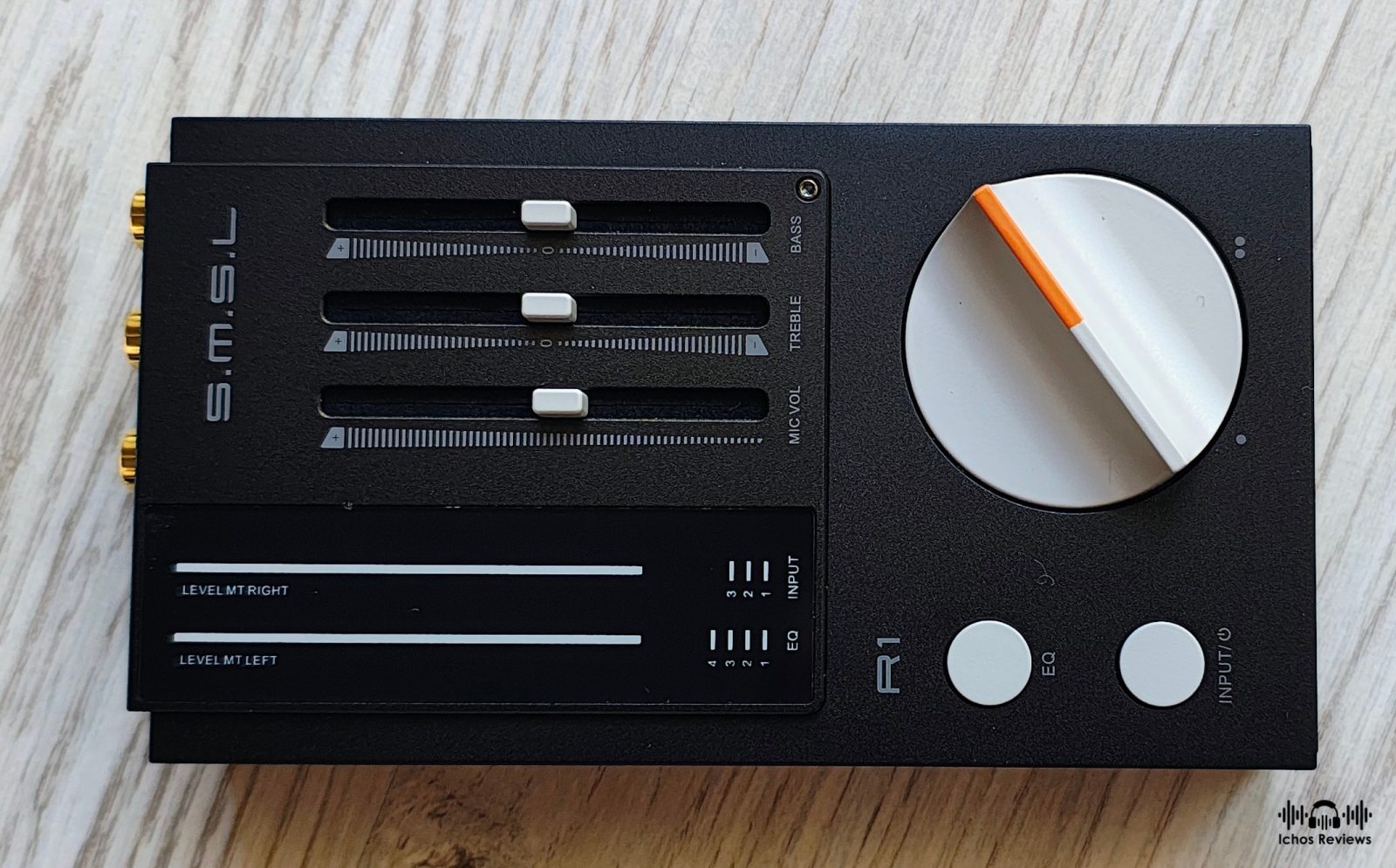
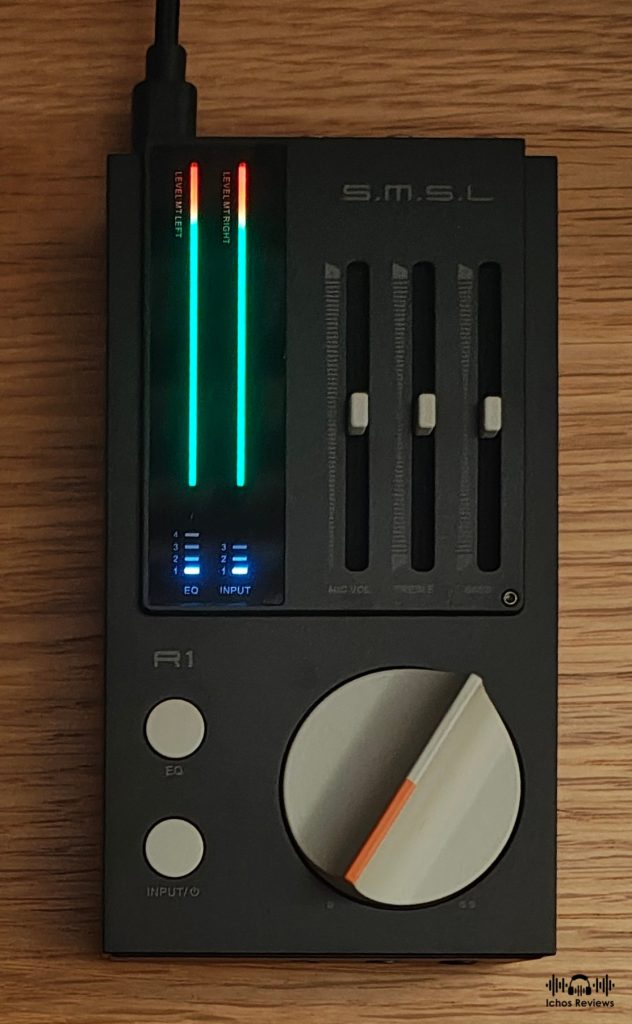
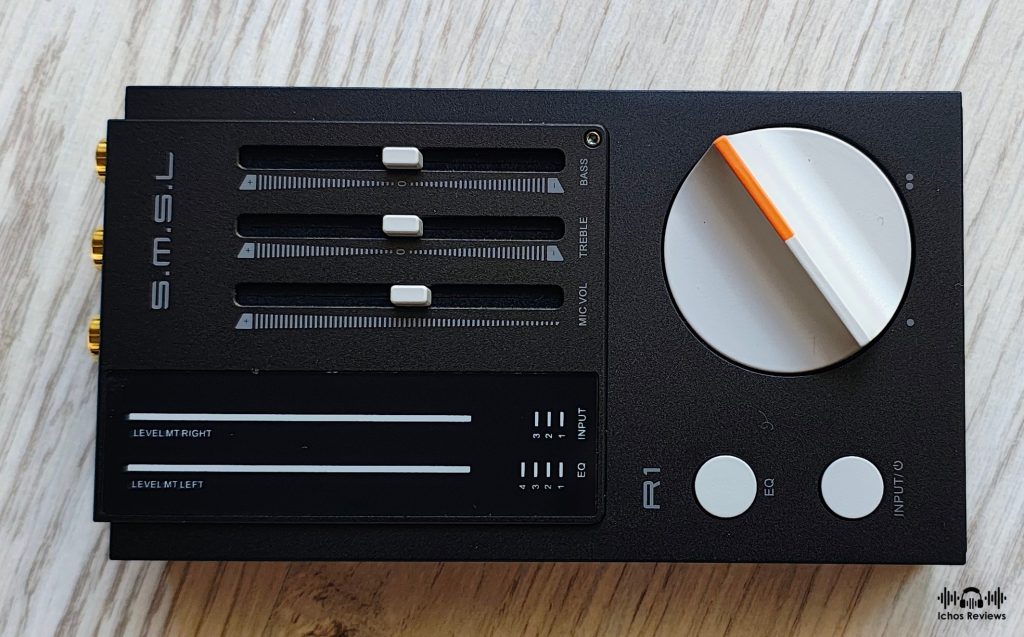
The SMSL R1 is a small sized device (measuring 76×34.6×143.8mm) with a rectangularly shaped chassis made from aluminum alloy that is available in either black or silver finishes. The R1 is very well made and finished, while it has an ‘80s retro looking appearance that is not too flashy.
The rotary volume control knob, the two press buttons and the three sliders are all made of high quality plastic. They operate smoothly with the right amount of friction that allows fine adjustments.
The R1 is designed for horizontal desktop use, featuring four small, slip-resistant rubber feet that keep it securely in place. Weighing just 316.4g, it’s light enough to take with you easily, making it a convenient companion for travel.
At the left side of the top of the device there is a black frame with two RGB volume level meters and two sets of LEDs that indicate the selected input and EQ mode. At the right side there are the three sliders (faders) for adjusting the mic volume and bass/treble level.
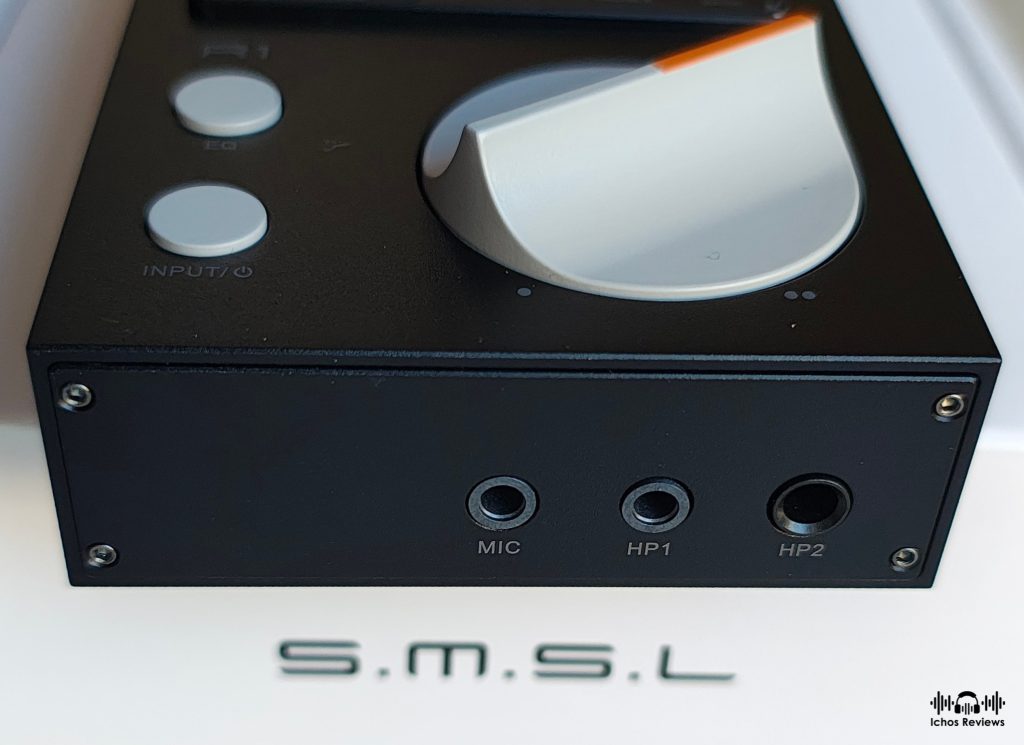
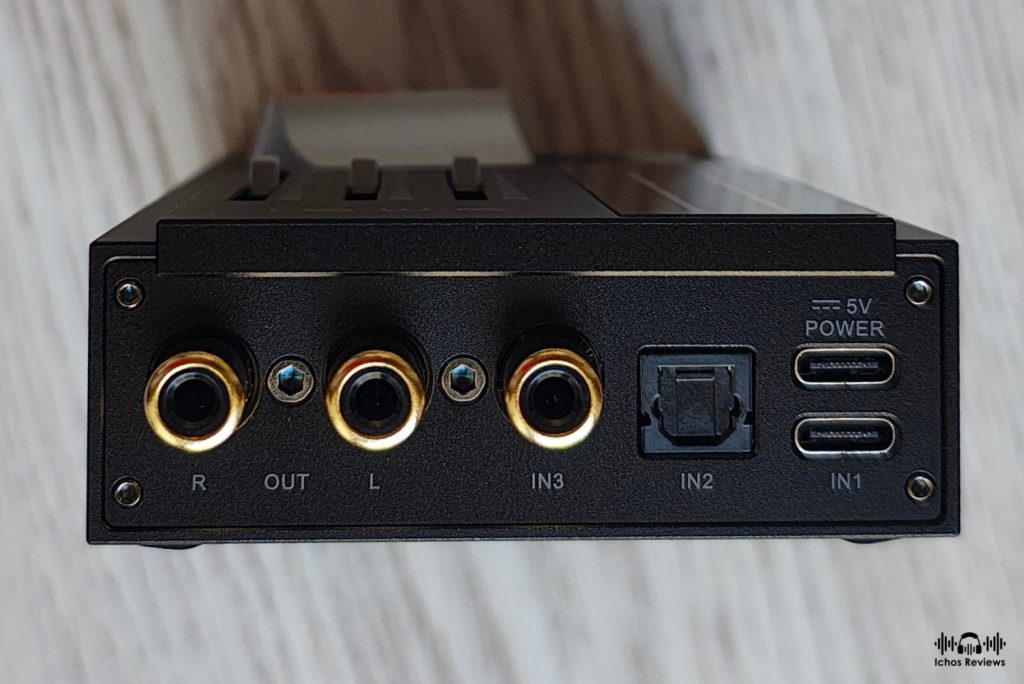
The bottom part of the device houses two headphone outputs (3.5mm and 4.4mm, both unbalanced) and the microphone input. At the upper part there are stereo RCA line outputs, coaxial and optical SPDIF digital inputs, USB type-C data input and auxiliary power input through a USB type-C port.
The package includes a USB type C-C cable with an adapter and a headphone/microphone combo cable.
Operating the device
The device is equipped with three digital inputs that can be used to connect various sources like a PC, an Android phone, a CD transport or a gaming console without the need to install drivers. SMSL doesn’t specify the supported sampling rates and bit-depth.
The auxiliary power input is necessary to power the R1 when using the optical and coaxial digital inputs and useful in USB DAC mode as it will stop the unit from draining power from the host device. As an example you can use your phone as the source and utilize the auxiliary power input to reserve its battery life.
The headphone amplifier of the R1 is single-ended but is equipped with both 4.4mm and 3.5mm connectors for added convenience. A handy function is that when headphones are plugged in, the line output is automatically turned off.
The R1 has three built-in EQ presets, as well as, independent treble and bass adjustments within a range of -9dB to +9dB so you can customize the sound to meet your personal preferences. The number one setting is essentially a bypass mode so you don’t have to reset the treble and bass levers every time you don’t want to apply EQ.
Two things are missing, a dedicated mute button or the option to mute the volume by long pressing either the EQ or input selection buttons, and a sampling rate indicator.
Power output and noise
The power output of the SMSL R1 is rather disappointing for a desktop sized device as it is as low as 120mW/32Ω, much less than an entry level USB DAC dongle.
The R1 is not ideal for driving full sized headphones, except some efficient ones like the Aune AR5000, and works much better with earphones. A faint background noise that is pretty audible is prohibiting of using very sensitive earphones.
The line-out performance is excellent though, noticeably quieter and delivers a solid 1.5Vrms output, making it a great match for a wide range of active monitors and external amplifiers.
Listening impressions
The SMSL R1 is tuned to sound neutral and flat with a touch of treble brilliance that is not annoying or too fatiguing as long as you don’t use bright earphones. The technical performance is very good for such an affordable device, the R1 has respectable clarity and transparency throughout the whole frequency range.
The bass is fast, tight and controlled but not that punchy or full bodied. Its textures are rather lean and dry without much weight or elasticity but it has good definition and timing. The mid-range is crystal clear with satisfying separation and articulation but don’t expect any harmonic richness worth noting or much timbre realism. The well extended treble is energetic and luminous, however not piercing bright or fatiguing. The resolution is satisfying for the category but the textures are somewhat lacking in refinement and the timbre is not devoid of some digital artificiality.
The soundstage is wide and spacious with excellent imaging and precision to satisfy intensive gaming and sound uncongested with all kinds of music.
Treble and Bass adjustment
The treble and bass adjustment faders work well and can help add a personal touch to the tuning as long as you use them sparingly and avoid their upper limits that cause heavy distortion. Also note that these are simple adjustments focused in a narrow band around a certain frequency. I don’t have tools to measure but I guess that the bass must be focused around 80-150Hz and the treble around 4-6KHz.
The ready-made EQ profiles are not that well implemented except maybe option two that seems to boost both bass and treble in moderate levels without overdoing it too much. EQ3 is a mess, it sounds like both bass and treble have been boosted to their upper limits. The EQ4 is even worse because it boosts the bass to its upper limit without counterbalancing it with some treble so it sounds overemphasized and out of control.
(Author’s note: I haven’t tested the microphone input)
In the end
The SMSL R1 is a well made and youthful looking device but with a sonic performance that leaves some things to be desired. It can sound satisfying only when certain circumstances are met together as you can’t use most headphones because they sound underpowered and you should avoid too sensitive earphones because they pick background noise.
If you have the right earphones, then the audio quality is fine enough for both casual listening and gaming with the added benefit that you can adjust the bass and treble to meet your personal preferences, as long as you don’t overdo it to avoid distortion.
Another field of application is to use its line output which performs much better and can match well with a lot of entry-level active monitors, where you can use the bass/treble adjustments to help them integrate better in your space.
The R1 is generally speaking a good sounding device for the asking price but the truth is that it would be much better if SMSL had spent some more attention and effort during the designing process.
Copyright – Petros Laskis 2025.
+ Neutral and flat sonic profile
+ Good technical performance and transparency for the category
+ Satisfying resolution and clarity
+ Spacious soundstage with precise imaging
+ Bass and treble adjustments
+ Mic input with independent volume control
+ ‘80s retro appearance and good build quality
+ Auxiliary USB type-C power input and 4.4mm connector
+ Travel friendly size and weight
+ Very affordable

- Too flat and uninspiring for serious music listening
- Underpowered headphone amplifier
- Faint background noise
- Not ideal for full sized headphones or too sensitive earphones
- Simple tone controls focused around a narrow frequency band
- Preset EQ modes are not that good sounding
- Tone controls add distortion too early
- No mute button and sampling rate indicator




Leave a comment