



The Sivga Peng was kindly provided free of charge in exchange for an honest review. I didn’t receive monetary or any other kind of compensation and I don’t use affiliate links.
The price of the Peng is $449 and it can be bought from Sivga’s official Amazon or AliExpress stores.
SIVGA
Sivga is a brand from China that specializes in making headphones and earphones with wooden enclosures. Their products combine premium materials and aesthetics with excellent sonic performance at very reasonable prices. Sivga has established a strong reputation in the portable audio community and their headphones have earned many press awards.
The brand has been extensively covered by Ichos Reviews, click here to read other Sivga reviews.
SIVGA Peng
The Peng is a brand new closed-back headphone, a model that is larger in size and more expensive than the entry-level and portable Sivga Oriole.
It is equipped with 50mm dynamic drivers that have a surround made from LCP material (Liquid Crystal Polymer) that balances lightness with rigidity. A diamond-like cut skeleton forms micron-level acoustic channels that are paired with a sapphire composite diaphragm.
The drivers are housed inside aluminium chambers that are lightweight but also rigid enough to block out unwanted resonances. A special, copper ring stabilization system is integrated into the diaphragm to help minimize distortion.
Design and build quality
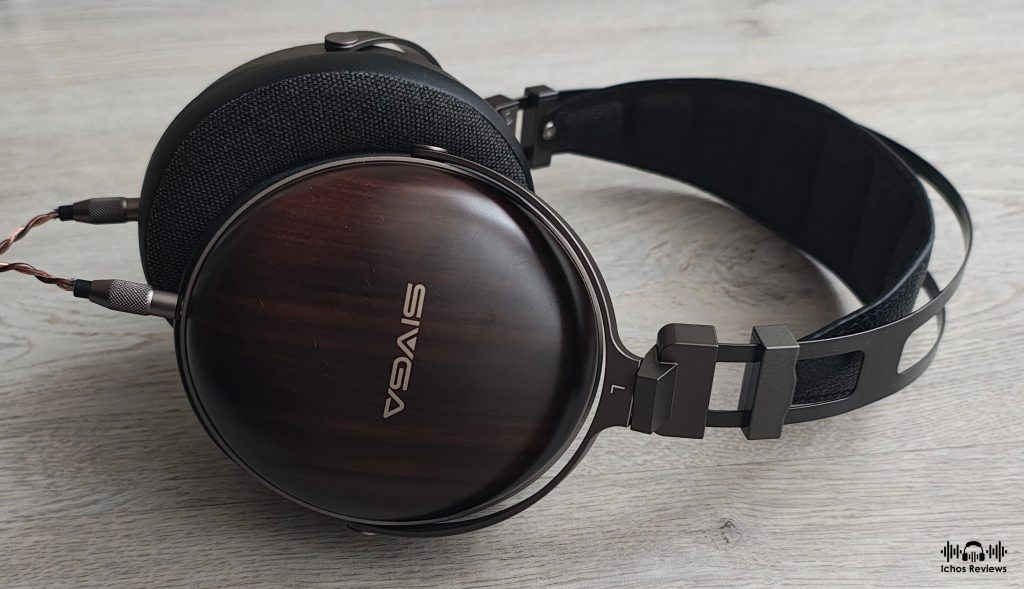
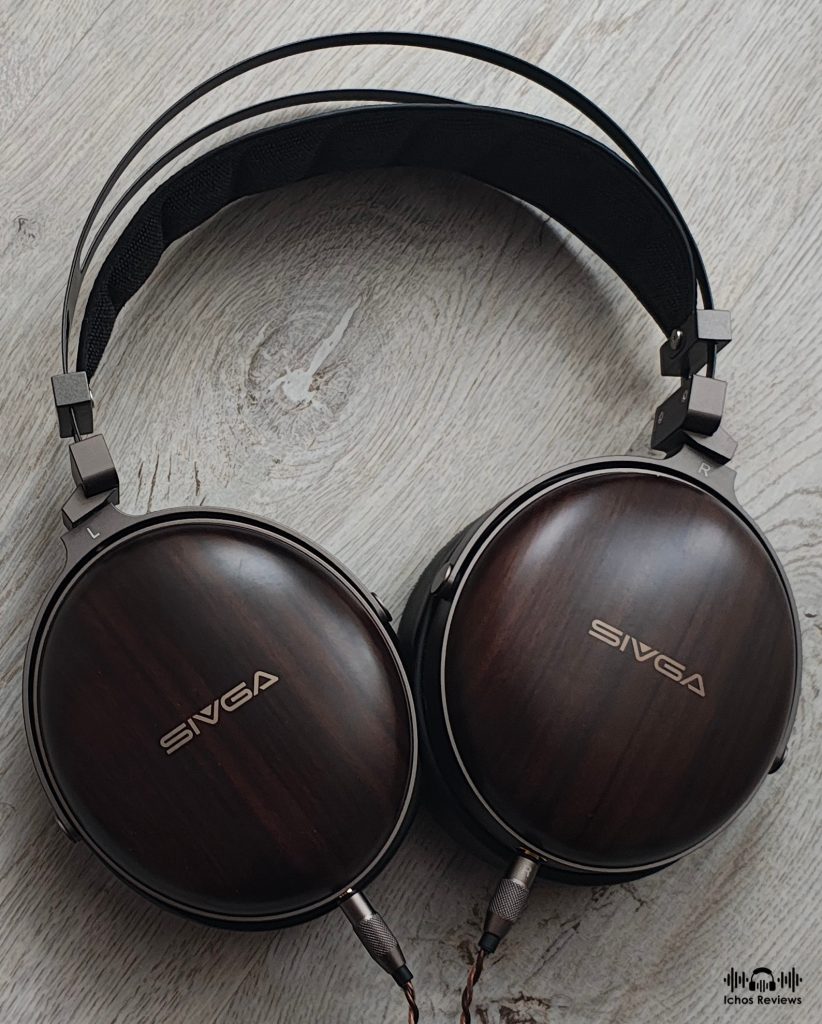
The ear cups of the Peng are made from high density African Zebrawood that is hand polished and stained to reveal its natural textures. It has an attractive, dark brown color with grain patterns that are unique to each set of headphones.
The main frame, the bracket and the metal components are all made from aviation grade aluminum that is CNC-machined and finished with a gunmetal anodizing colour that matches that of ear cups, creating an eye-catching and harmonious visual effect.
Wearing comfort
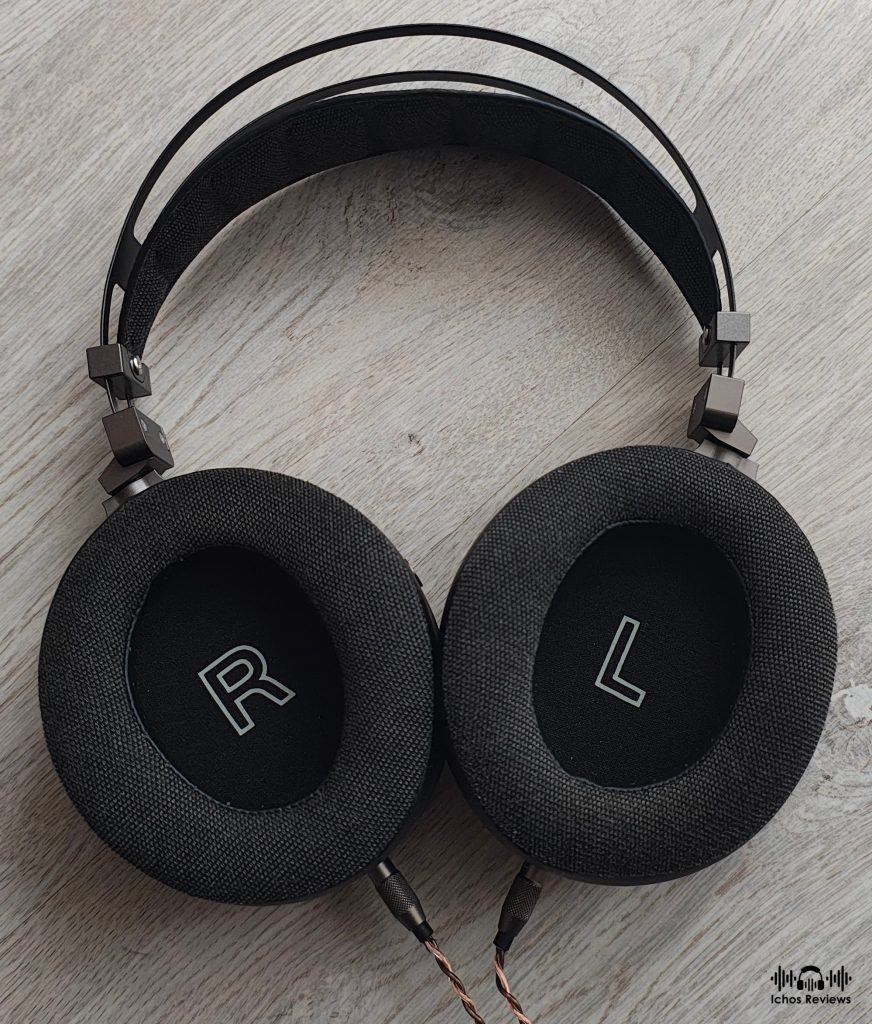
The two-part, self-adjusting headband consists of an external steel frame and an inner leather strap that is stuffed with soft material to make it sit comfortably at the head. The headband helps with the even distribution of the weight that is only 341g. The clamping force is medium so the headphones stay at place without exercising much pressure to the head.
The 180° rotating ear cups are equipped with angled ear pads that have a hybrid construction with textile material at the face side and synthetic leather at both the exterior and inner surfaces. Their inner diameter and depth are sufficient enough to marginally surround larger ears without letting them touch the mesh or cause friction spots.
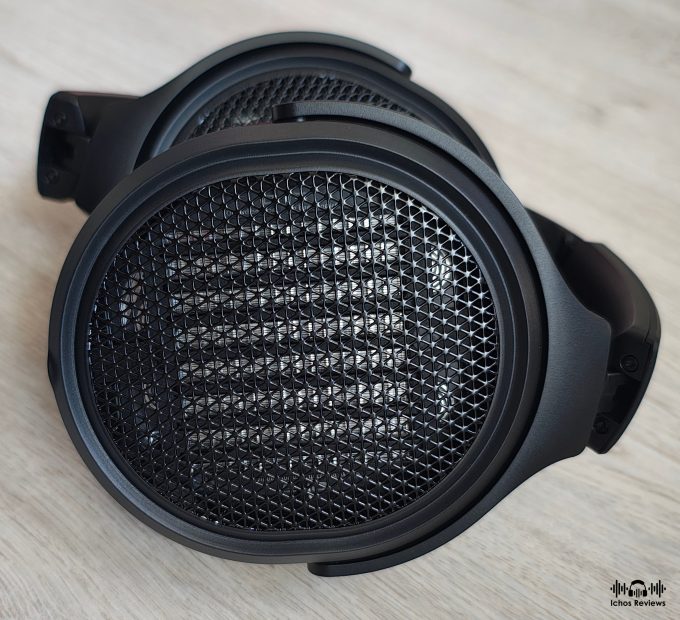
The upper part of each ear cup houses a venting grill that helps relieve acoustic pressure and enhance breathability. The ears will eventually sweat after a while but not as fast as it happens with most other closed-back headphones.
The overall user experience and feeling are that of a premium and beautiful looking headphone that is exceptionally comfortable to wear and offers good passive noise isolation.
Cable and accessories
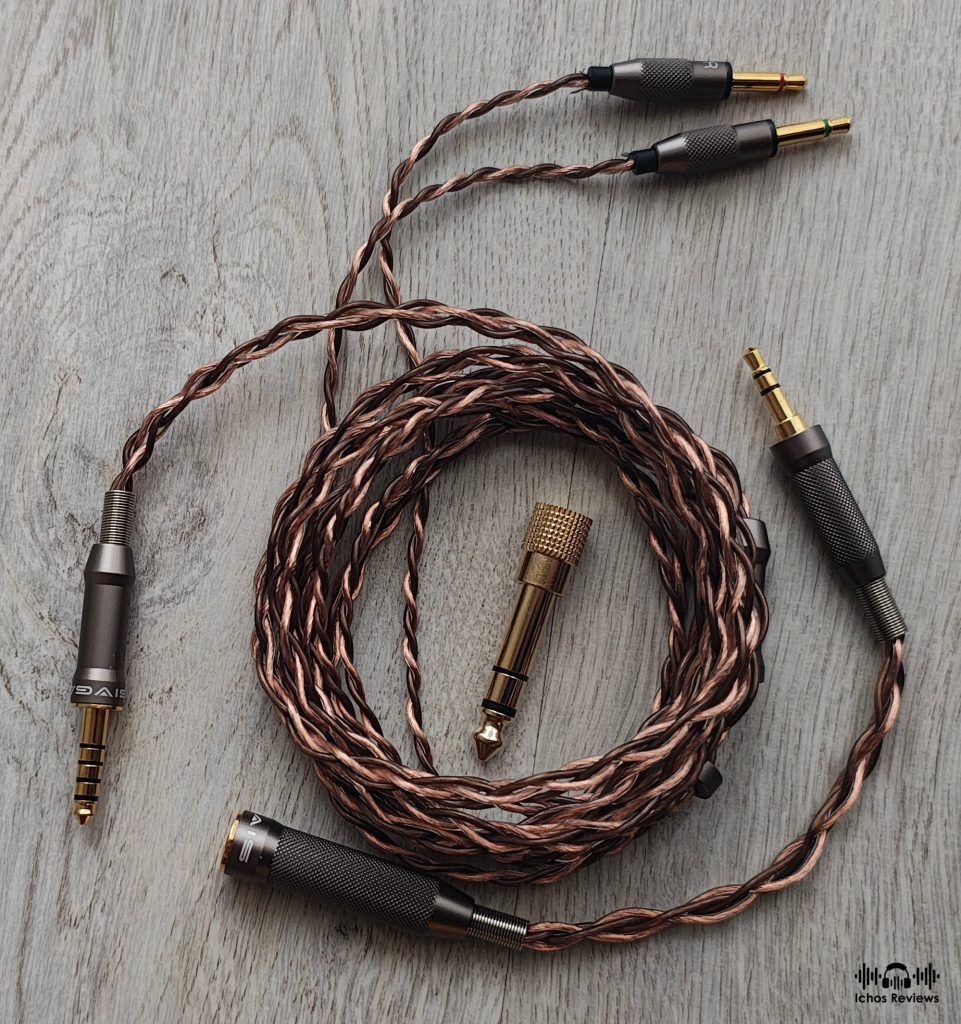
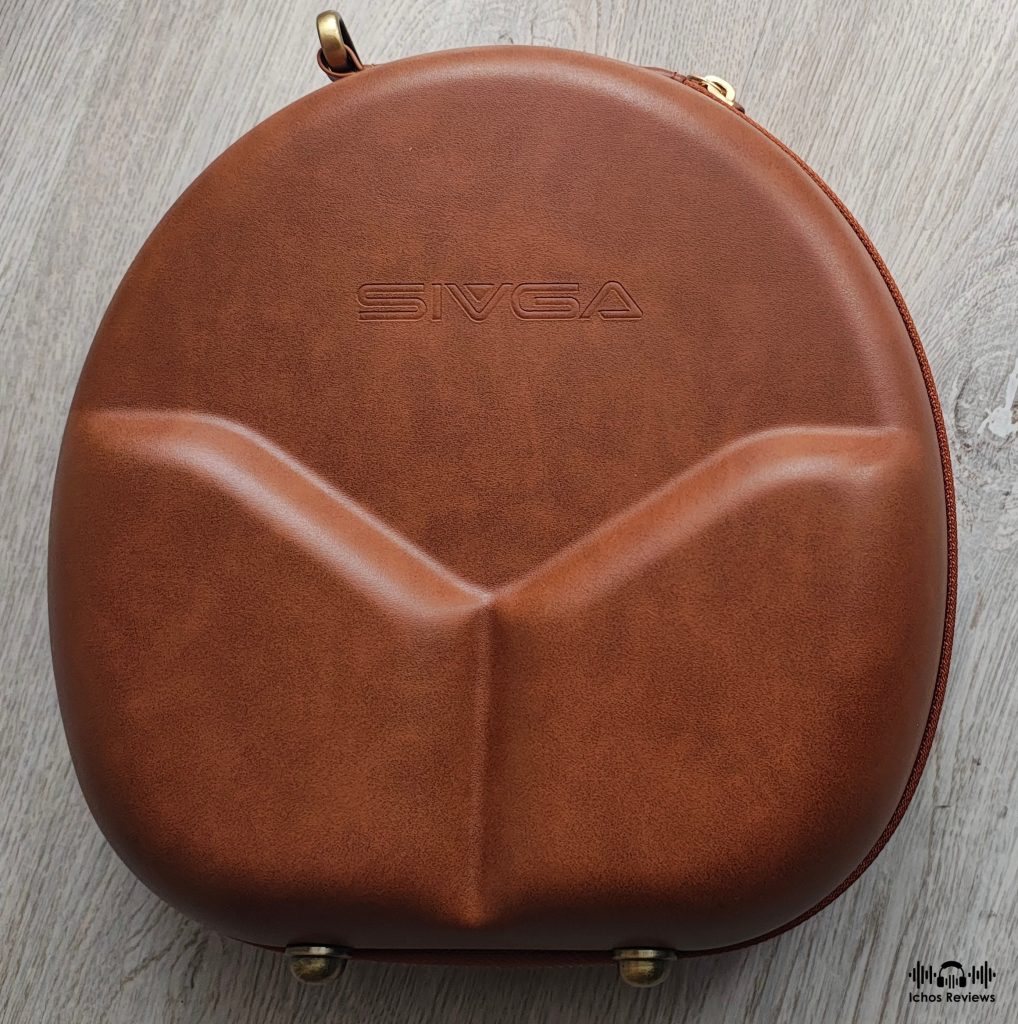
The Sivga Peng is generously accessorised, the package includes a high quality hard carrying case, a detachable cable, a shorter 4.4mm female to 3.5mm male adapter cable, a 6.35mm hard adapter and a storage pouch.
The detachable cable uses the dual 3.5mm interface and is made from 6N OCC copper wires in four twisted strands. It is terminated with a high quality 4.4mm plug, it is soft, flexible and doesn’t induce microphonic noise. A high quality cable that is a little long for portable use.
Driving efficiency
High impedance headphones have become a rarity these days, which makes Sivga’s decision to equip the Peng with 340Ω drivers a welcomed surprise. The headphone is ideal for use with vacuum tube OTL amplifiers, like the xDuoo TA-84, but it will also play well from a lot of other desktop DAC/amps thanks to its 102dB high sensitivity. Most USB DAC dongles will not cut it through but more powerful portable sources, like the FiiO QX13 or the iBasso DX180, will make it happy on the go.
Listening impressions
The Peng has a surprisingly neutral and balanced tuning, not commonly found in similar headphones where most brands usually take advantage of the closed ear cups to boost the bass.
The low-end of the Peng has sufficient sub-bass extension and then follows a rather flat tuning without much emphasis at any particular part of the bass region. This least colored tuning is ideal for critical listening. All the low-pitched instruments of the symphony orchestra are reproduced with tonal precision and timbral realism rarely found in most similar closed-back headphones. The only other example I can think of, at least in this price point, is the Aune SR7000 that is $150 more expensive than the Peng.
The bass has enough dynamic impact and punch to sound enjoyable with electronic tunes but honestly speaking this is not one of Peng’s strengths. Its real strengths are to be found elsewhere and mainly in its excellent technical performance. The bass is fast, tight and controlled with very good definition and layering for the category, while having surprisingly weighty and elastic textures.
What is also admirable from a technical point of view, is the complete absence of droning reverb and echoing effects that are often present in closed-back headphones and spoil the overall bass experience. This natural behavior must have something to do with the strategically positioned venting grills that help relieve the inner pressure from the acoustic chamber and control cup reflections.
More listening impressions
The mid-range is evenly tuned without cutting back the lower mids and boosting up the upper mid-range. A commonly used practice which adds artificial presence that might work well and sound spectacular at first listen but it usually ends fatiguing and fake sounding in the long run. The Peng remains true to source and reproduces the mid-range with precision and transparency. Instruments and voices are placed in the exact order and locations as they were recorded and not as dictated by the headphone.
The mids sound full bodied and weighty, rather than flat or dry, but they are not lacking in clarity and definition. The Peng’s sonic character can range from expressive and melodic to more distanced and lifeless, depending on the upstream gear and the recording. It is a headphone that excels in capturing and slightly augmenting the harmonic richness and the organic elements of the music when present, and additionally it never becomes too clinical even with notoriously sterile sources. The tuning of the Peng is suitable for listening to all kinds of music but it is especially enjoyable with acoustic genres like jazz or even classical where it has the technical competency to stay composed and resolving even under stress conditions.
The treble strikes a balance between transparency and restrained liveliness, carrying a gentle sparkle without venturing into sharpness. The Peng avoids attenuating the upper register, yet it refrains from artificially elevating it, resulting in a presentation that is resolving and energetic enough while maintaining a polite and easy going nature.
And some more…
The Sivga Peng is a mildly forgiving headphone that is suitable for listening to lower quality recordings but it can also do full justice to higher quality material and upstream gear. High pitched instruments don’t sound thin or dry but there is a certain lack of texture refinement. The timbre is quite natural and realistic but not entirely devoid of some metallic artificiality. Still, I would rate the overall performance as very satisfying for a closed-back headphone at this price point.
Equally satisfying for a closed-back headphone is the soundstage which is surprisingly wide and open. It might not exactly reach out of the head or offer much depth layering but it is spacious and expansive enough with good imaging. The Peng doesn’t have problem handling large scale symphonic works, like Mahler’s 6th, where it allows the listener to experience a great deal of the orchestra’s size and allocation in the stage.
Vs the Aune SR7000
The Aune SR7000 ($599) is my favorite closed-back headphone up to a certain price point, not only for its neutral-reference tuning but also because it is super comfortable and recreates an immersive soundscape that surpasses many open-back headphones.
The SR7000 is slightly heavier than the Peng (380g vs 349g) but it has a bit larger and more spacious ear pads. Both headphones are exceptionally comfortable to wear and use. The SR7000 is a well made headphone but it has too much plastic that doesn’t inspire confidence for long term durability. Objectively speaking, the Peng is a higher quality headphone that is better made with more premium materials. Both are generously accessorised with carrying cases and cables that will cover both balanced and unbalanced use.
With a rated 50Ω impedance and 106dB of sensitivity, the SR7000 is much easier to drive than the Peng that requires more voltage and power from the source. The SR7000 is portable friendly but the Peng scales very well with tube OTL amplifiers, if this is your favorite cup of tea.
The sonic differences
The Aune SR7000 offers deeper sub-bass extension than the Peng and its bass is a little more technically accomplished and better defined but the latter sounds warmer and more weighty. The SR7000 has even better tonal precision and is a little more suitable for critical listening but the Peng sounds more organic and fuller with mainstream music.
The mids sound equally transparent and tonally balanced in both headphones except the upper mid-range portion which is more emphasized and accentuated on the Aune SR7000. Its treble presentation is more vivid and brilliant, delivering greater detail and clarity. Its overall tuning leans toward a more analytical character, prioritizing resolution and transparency over warmth. In contrast, the Peng adopts a gentler, smoother approach, offering a more relaxed and forgiving sound signature that is easier on the ears.
The Aune SR7000 is admittedly one of the most open sounding closed-back headphones, no matter the asking price. So it doesn’t come as a surprise that it outperforms the Peng both in spaciousness and in imaging precision, offering a more immersive and wide presentation.
In the end
In Chinese mythology, the Peng is a giant mythical bird that symbolizes power, grandeur, great ambition and the spirit of freedom. The creation of the Sivga’s Peng was successfully inspired after this legend because it is not only a visually striking headphone but it also carries the ambition to liberate the music from its bonds by establishing a strong emotional connection with the listener.
Super comfortable and beautiful looking, exceptionally well made and sonically potent, the Sivga Peng is an outstanding, yet affordable, closed-back headphone that can easily find a permanent place in your collection.
Copyright – 2026.
Authored by Petros Laskis for Ichos Reviews. All content is original and copyrighted. Republishing full reviews or substantial portions without written permission is prohibited. Excerpts up to 100 words are allowed with a direct link.
+ Excellent tonal balance and sonic performance
+ Clean, tight and controlled bass
+ Expressive mid-range and smooth treble
+ Not lacking in overall transparency and fidelity
+ Open and spacious soundstage for a closed headphone
+ Pairs and scales well with tube OTL amplifiers
+ Lightweight and comfortable
+ Superior build quality and appearance
+ High quality cable and carrying case
+ Very good price to performance ratio

- Limited sub-bass extension
- Mild treble artificiality and lack of refinement
- The bass could use some more punch
- Not for those that like analytical headphones
- High impedance requires more voltage and power from the source




Leave a comment