

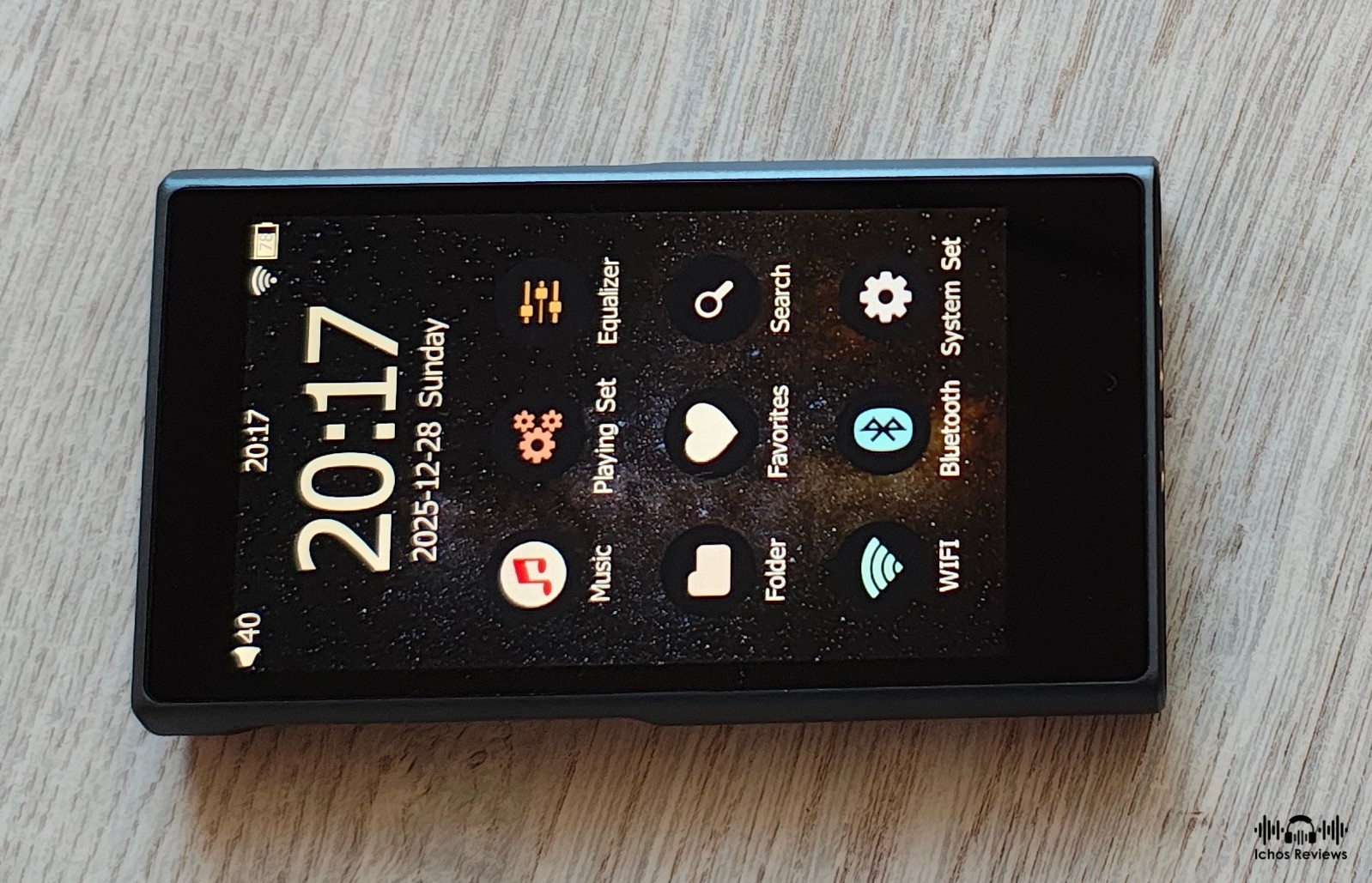

The xDuoo X5 was kindly provided free of charge in exchange for an honest review. I didn’t receive monetary or any other kind of compensation and I don’t use affiliate links.
The price of the xDuoo X5 is $209 and you can buy it from Shenzhen Audio.
xDuoo
xDuoo is an audio brand from China mainly known for their vacuum tube headphone amplifiers. xDuoo makes both tube OTL and tube-hybrid amplifiers with or without DACs, but not only as their extensive catalogue also includes USB DAC dongles, portable DAC/amps and various other audio devices. Some popular models are the TA-10R, the TA-20, the XD05 bal and the TA-84 which was jointly developed with Drop.
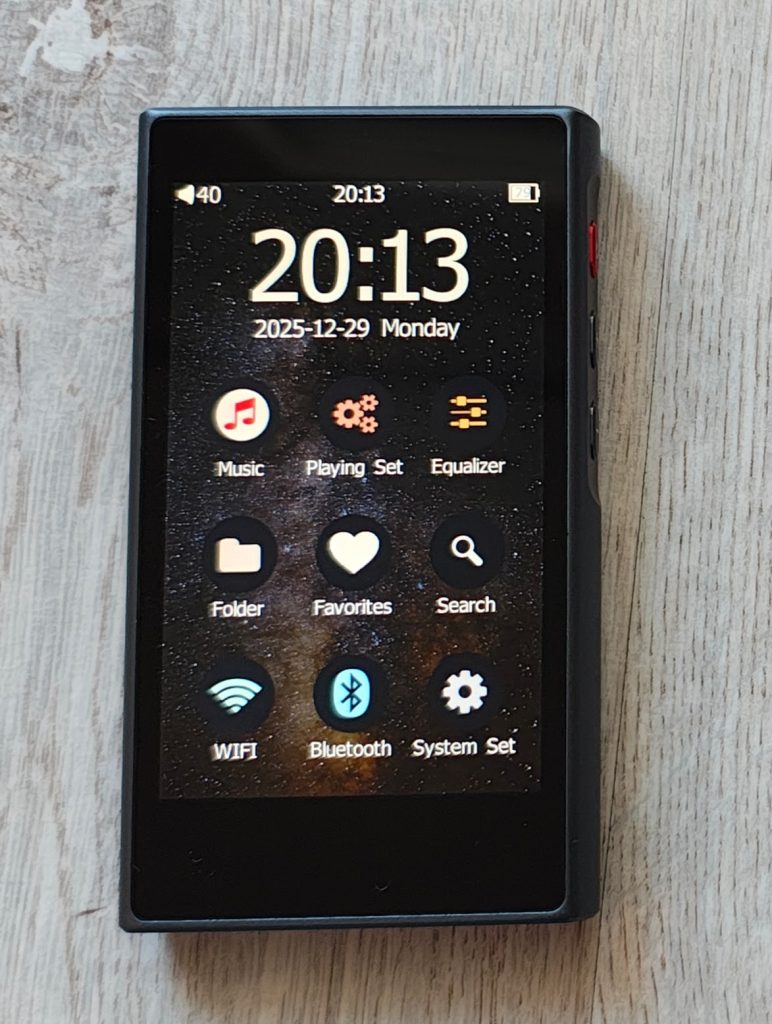
Do you remember xDuoo X3?
Old timers should be familiar with the xDuoo X3, an old-school and primitive by modern standards Digital Audio Player with a simple user interface and support for local file playback. I still have mine, it was one of my first DAPs together with the Cowon iAudio 7.
The xDuoo X3 was very affordable and pretty innovative for its time because it was one of the few DAPs to come with dual microSD slots up to 128GB each, and you could also install the open source Rockbox firmware to improve user experience.
xDuoo X5
For some strange reason, xDuoo didn’t bother making another similar DAP, until now that they have released the X5 which is the spiritual successor of the X3.
The xDuoo X5 is essentially an upgraded X3 with many new features but its core philosophy remains the same: it is still focused on local file playback and does not support streaming services.
Technical overview
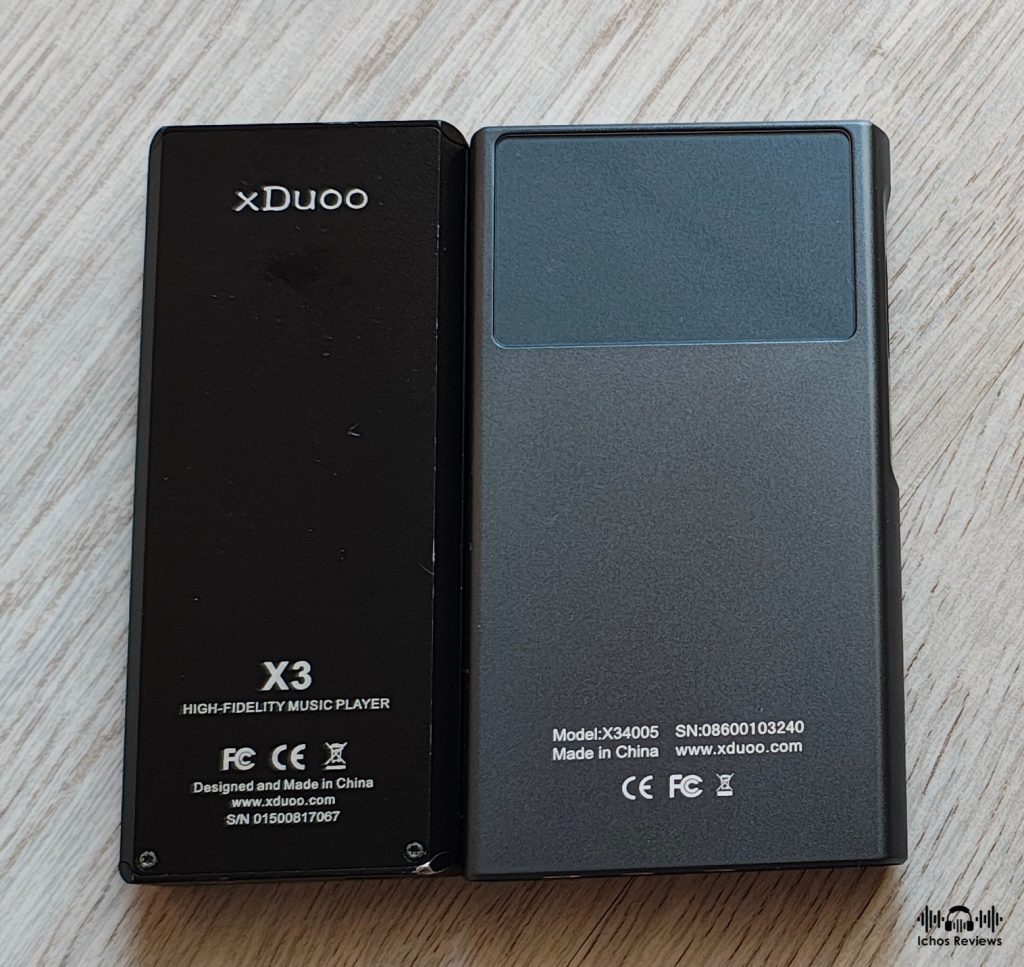
The xDuoo X5 is equipped with two CS43131 DAC chips that handle both audio decoding and headphone amplification duties. The lack of a separate amplifier limits its power output to 270mW*2/32Ω, quite low for its size.
The X5 has a single micro SD card slot that supports large memory cards up to 1TB. It can playback all major audio file formats: DSD64-256 (DSF,DFF,ISO), WAV, AIFF, FLAC, APE, MP3, WMA, OGG, M4A and AAC with sampling rates up to 32bit/384kHz PCM.
The DAP supports USB DAC function and file transfer through a PC, as well as a handy in-car mode. There is the option to use the USB DAC function and charge the battery at the same time. The X5 can also connect to 2.4GHz WiFi networks but only for OTA firmware updates and to enable the voice command search function. I was able to connect to the xDuoo server and update the device to the latest 3.80.7 firmware.
Bluetooth connectivity
The xDuoo X5 supports two-way Bluetooth communication with the SBC, AAC and LDAC codecs. Both ways function well within a reasonable distance with good sound quality considering the Bluetooth’s inherent limitations. Please note that if your phone or wireless earphones don’t support LDAC, then you are limited to the SBC or AAC codecs.
Design and layout
The xDuoo X5 has a plain, rectangularly shaped chassis that is made from high quality aluminum in a gray anodized finish. It measures 105x55x10mm and weighs 143g, so it is compact and lightweight enough for portable use and everyday carry.
The X5 is equipped with a 3.5” IPS multitouch screen that is reinforced with a tempered glass surface. Its resolution is rather limited (480×800) and the colors are a little washed out but it has good visibility, it is quite responsive and the fonts are big enough to read them without glasses. The overall design is a little outdated because the screen has large bezels on its outer perimeter instead of being fitted edge to edge to the front fascia as it now happens with most DAPs.
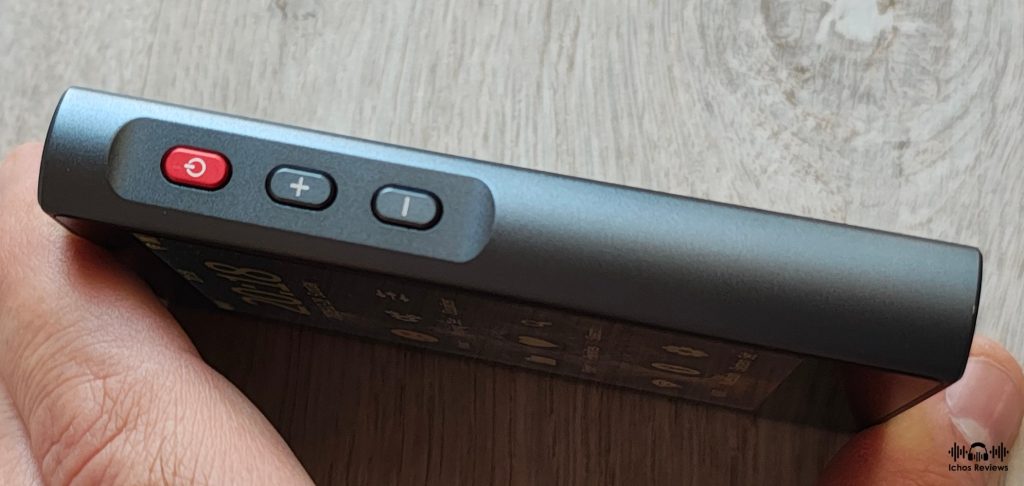
At the right side of the unit there are three control buttons (on/off and volume up/down) while the left side houses the micro SD card slot. Oddly enough, you can’t customize the buttons to control music playback, there is only one option to play/pause with the volume (+) button and skip track with the volume (-).
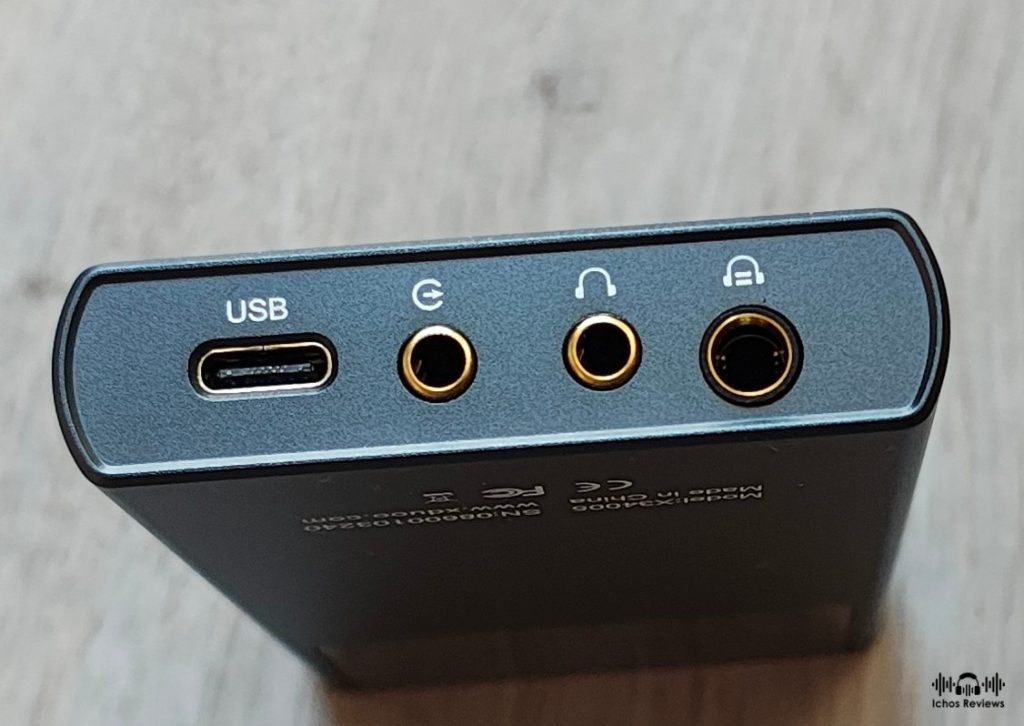
The bottom edge of the device includes the USB-C port, a dedicated 3.5mm line-out, and both the 3.5mm and 4.4mm headphone outputs.
Software and UI
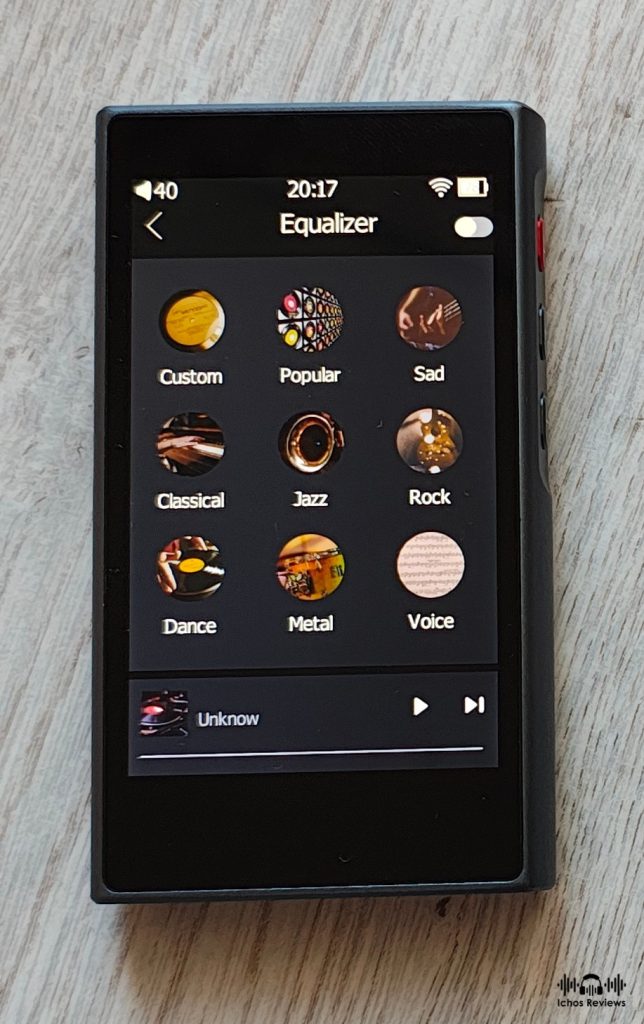
The xDuoo X5 runs a custom OS that is essentially a music player that supports tag and folder browsers as well as all the usual playback functions. The cover art is generously displayed on the large screen but certain files can make the player freeze. The search function becomes really sluggish within large music libraries but you can connect to a WiFi network to enable voice search that helps a lot. The software has various bugs that I am not going to mention in detail.
The user can adjust audio parameters, like amp gain and digital filters, and customize the user interface. The player also supports a 10-band EQ that lets you adjust the frequencies within a ±12dB range to create your own target curves or choose one of the 8 preset options.
The OS of the X5 is outdated, slow and buggy by modern standards thus limiting the overall user experience.
Battery duration
The battery needs 3 hours to get a full charge and lasts about 9 hours using the player from its balanced output in high gain mode. Not that bad and plenty of juice to keep the user happy for a couple of days.
Power output and noise
With 270mW*2/32Ω, the X5’s power output is similar to that of a portable USB DAC dongle, only enough for driving earphones and maybe some sensitive headphones. The amp is surprisingly silent though, the X5 doesn’t produce any audible background noise even with sensitive earphones like the FiiO FA19.
Listening impressions
(Note: due to the buggy nature of the xDuoo X5 OS, I did most of the listening in USB DAC mode without encountering any issues)
Assuming that you are using easy to drive earphones, like the LETSHUOER S08 then the sound quality of the X5 is really good and on par with what is to be expected from the time proven CS43131 DAC chip.
The overall sound signature is neutral – flat with a touch of warmth that a lot of competitive devices don’t have. The tuning reminds a lot of the Penon Tail but the X5 manages to combine this warmth with much better clarity and transparency, without sounding muddy or dark. The X5 is a tonally balanced source that sounds realistic enough across the whole frequency band.
The bass is well extended, punchy and impactful, with good control and timing. It is firm but not dry, and well defined with sufficient note weight. The mid-range is typical xDuoo, very engaging and expressive but not lacking in purity of tones and clarity. It has rich textures and can make your music resonate melodically and alive.
The treble is energetic and luminous but it stays rather smooth, with surprisingly low digital artificially. It offers good separation and satisfying detail retrieval but it is not as resolving or refined as the class-leaders. The sound is not clinical or sterile, the X5’s forgiving nature can match well with brighter earphones and sound enjoyable with lesser quality recordings. The soundstage is spacious and expansive enough with good imaging and air around the performers.
Vs the Shanling M1 Plus, Hidizs AP80 PRO MAX and FiiO JM21
The Shanling M1 Plus ($209) and the Hidizs AP80 PRO MAX ($159) easily spring to mind when it comes to non Android players while the FiiO JM21 ($199) is the obvious recommendation for an entry-level Android DAP.
People usually buy non-Android DAPs and are willing to sacrifice functionality when they need a compact and lightweight player. However, weighing 156g and measuring 120.7x68x13mm, the FiiO JM21 is not bigger or heavier than the X5. For almost the same footprint you get a full featured Android DAP that is also considerably more powerful, while its battery duration is the same as the X5. So I can’t see any specific reason why someone would prefer the X5 instead of the JM21, except for its slightly more forgiving and warmer tuning.
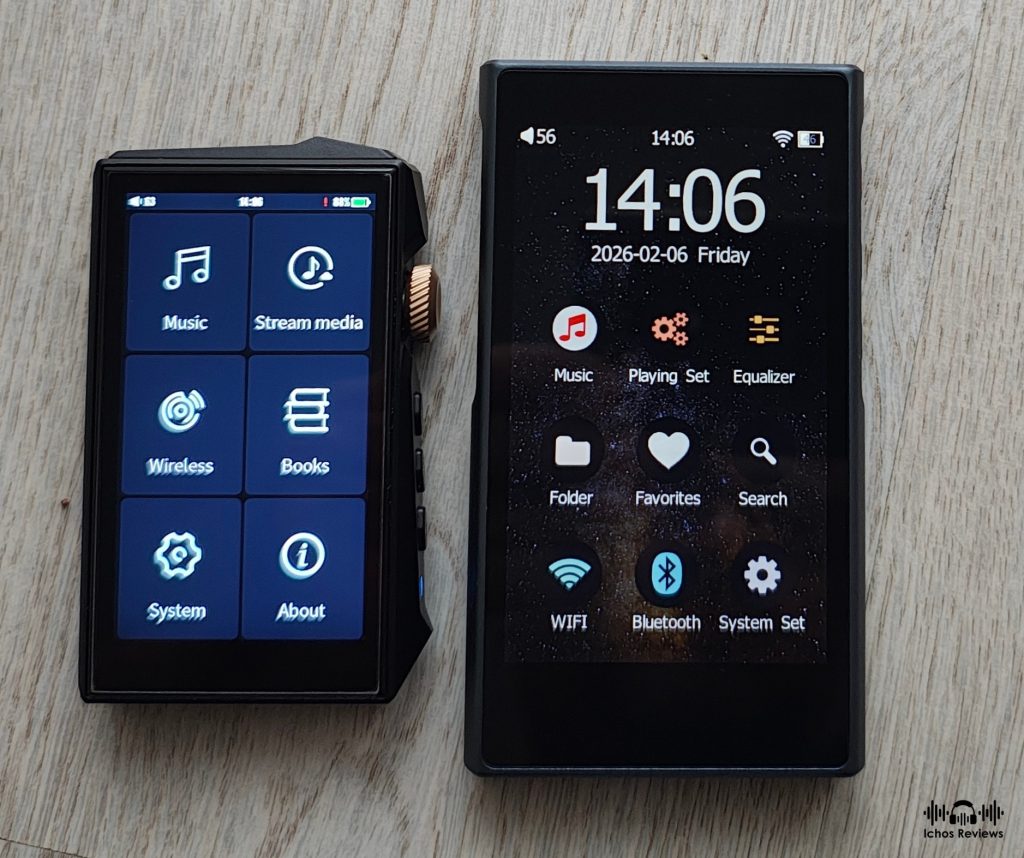
Let’s assume that you are a purist and you don’t want an Android DAP. Then you can also consider the Hidizs AP80 PRO MAX or the Shanling M1 Plus that cost the same amount of money or even less than the X5.
The AP80 PRO MAX might be less powerful than the X5 but it is much smaller and lightweight with snappier software, while it also supports Qobuz and Tidal streaming. So if power is the goal then the X5 wins but if size and better functionality are your aim then the AP80 PRO MAX is the way to go.
On the other hand, the M1 Plus is two times more powerful than the X5 without being bigger or heavier and its battery lasts barely one hour less than the X5. The M1 Plus has a much faster and polished software, and it also supports Tidal streaming. So objectively speaking, I can’t see why someone would buy the X5 over the M1 Plus unless he is a fan of xDuoo’s house sound.
In the end
Honestly speaking, I had great expectations for the xDuoo X5 but unfortunately the overall user experience ended up feeling like a missed opportunity for the brand. The X3 was pretty innovative and special for its time, but given all the modern technical advancements and the current competition, I don’t see how I can realistically recommend buying xDuoo X5, unless you are a die hard fan of xDuoo’s house sound or you plan to use it exclusively as a USB DAC where it performs admirably good.
Copyright – 2026.
Authored by Petros Laskis for Ichos Reviews. All content is original and copyrighted. Republishing full reviews or substantial portions without written permission is prohibited. Excerpts up to 100 words are allowed with a direct link.
+ Stellar sound quality
+ Balanced and mildly warm tuning
+ Good clarity and transparency
+ Exceptionally low noise floor
+ 10-band EQ and WiFi voice search
+ Bidirectional Bluetooth and USB DAC function
+ High quality construction and assembly

- Low power output
- Doesn't support streaming services or DLNA
- Very buggy and sluggish software
- Uninspiring design and outdated OS
- Severely outperformed by the competition
- The price is too high and not realistically competitive





Leave a comment