


The Cayin RU3 was kindly provided free of charge in exchange for an honest review. I didn’t receive monetary or any other kind of compensation and I don’t use affiliate links.
The price of the RU3 is $99.99 and you can buy it from Cayin’s official AliExpress store.
The usual introduction
Cayin is a premium audio brand from China that was established in 1993 and since then has earned widespread popularity and numerous awards for its audio equipment. Cayin makes both traditional desktop audio components, like vacuum tube integrated amplifiers, and portable audio equipment such as digital audio players (DAPs) and USB DACs.
The brand specializes in vacuum tube circuits but also embraces solid-state technologies, blending modern engineering with a musical tuning philosophy. The result is audio gear that excels both in raw technical specifications and in creating an immersive and emotionally compelling listening experience.
Click here to read past reviews and discover more Cayin products.
Cayin RU3
Cayin’s lineup of portable USB DAC/amps consists of the RU6, the RU7 and the flagship RU9. The first uses an R2R resistor array decoder, the second utilizes 1-bit decoding technology and the third combines two AK4493SEQ DAC chips with a dual 6P1 Nutube vacuum output stage.
The latest addition to the series is the Cayin RU3, the brand’s entry-level and most affordable USB DAC/amp.
Technical overview
After experimenting with a range of “special” circuit designs in the previous models, Cayin decided to take a more conventional approach with the RU3.
The Cayin RU3 features a single ES9069Q DAC chip by ESS in a dual-channel, fully balanced quad-drive design that employs two TI OPA1602 op-amps for I/V conversion and line driving, paired with dual SGM8262 op-amps for headphone amplification.
The system also uses an independent LDO power system and a low-phase crystal oscillator to further enhance its sonic performance.
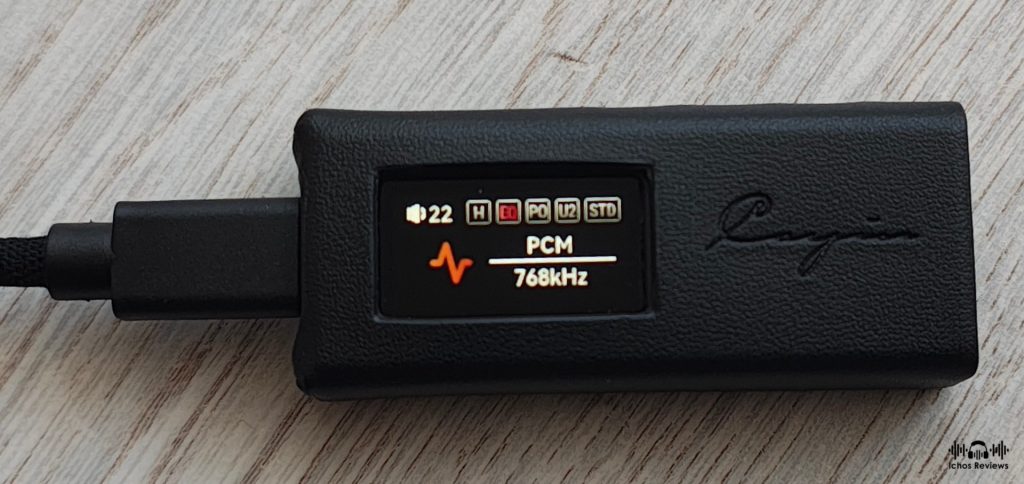
The RU3 has a USB type-C input that supports sampling rates up to 768kHz/32bit PCM and native DSD512, and is equipped with two headphone outputs, 3.5mm and 4.4mm balanced, that can also double as line outputs.
The Dual power modes
Cayin has equipped the RU3 with an intelligent power management system that offers high power output while maintaining optimal efficiency.
The user can easily switch between the hyper mode that delivers up to 560mW*2/32Ω or the standard mode that is designed to reduce power load on mobile devices. These two modes are independent of the amplifier’s high/low gain settings.
The power consumption in standard mode was measured at 200mA, and 230mA in Hyper mode. Changing modes doesn’t affect loudness as switching from low to high gain does, so I guess that what these modes actually do is to adjust the maximum current delivery to the input load.
Design and build quality
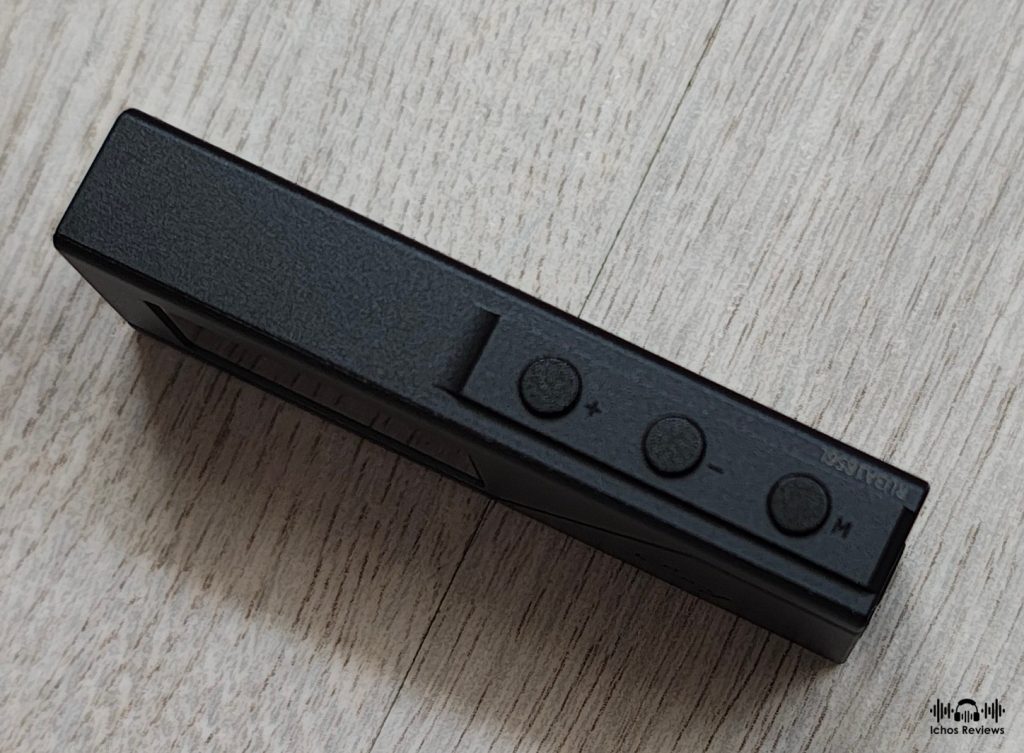
The Cayin RU3 is a rectangularly shaped device that is equipped with a 0.96” IPS color display and three hardware buttons. It measures 25.4x60x11mm and weighs 24g, so it is ultra portable and very lightweight.
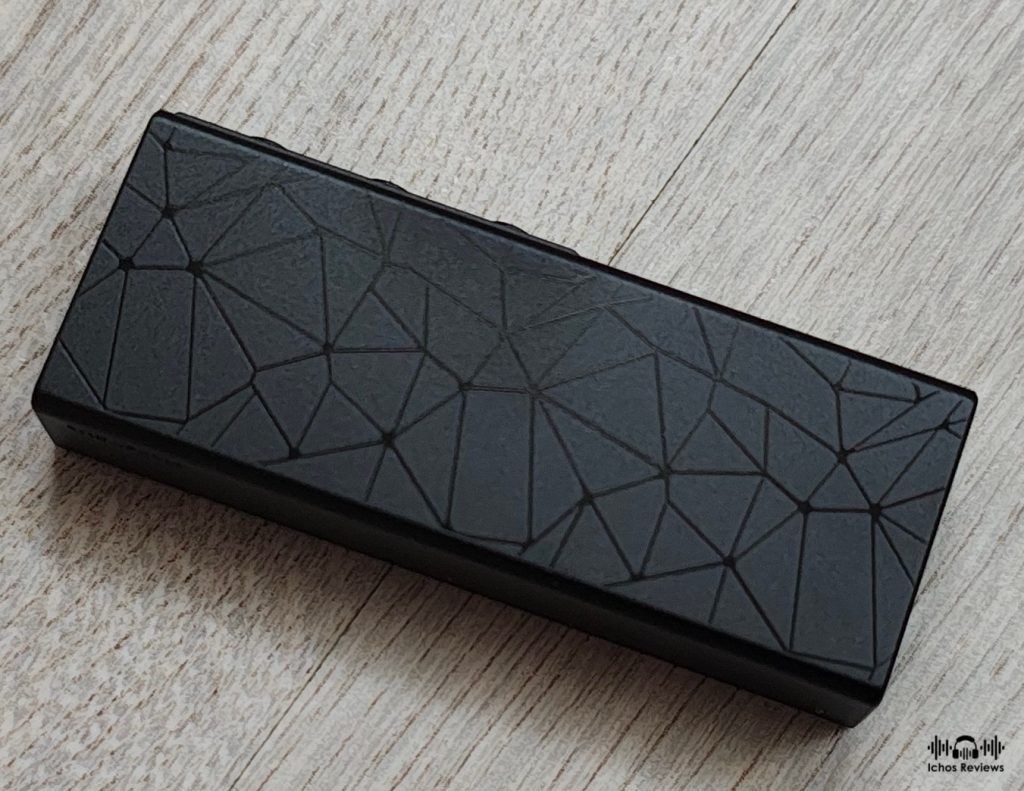
The chassis is made from CNC-milled aluminum alloy with an anodized finish that enhances durability and adds a unique metallic texture. It has rounded corners and edges that make it a pleasure to handle and use. The rear panel has laser-engraved patterns that reflect under light and the front is engraved with Cayin’s calligraphic logo.
The RU3 has a rather plain and conventional design but for some unexplained reason it looks really attractive. It is available in three colors to choose from, black, light cyan and purple.
User interface, EQ and the Cayin Control application
Most of the RU3 features are available through its onboard menu without the need to connect with the Cayin Control application. The user can enter the configuration menu and easily adjust output mode, channel balance, power mode, amp gain, screen timeout and brightness, enable the EQ and load curves, change UI themes, set UAC mode and select one of the 5 digital filters.
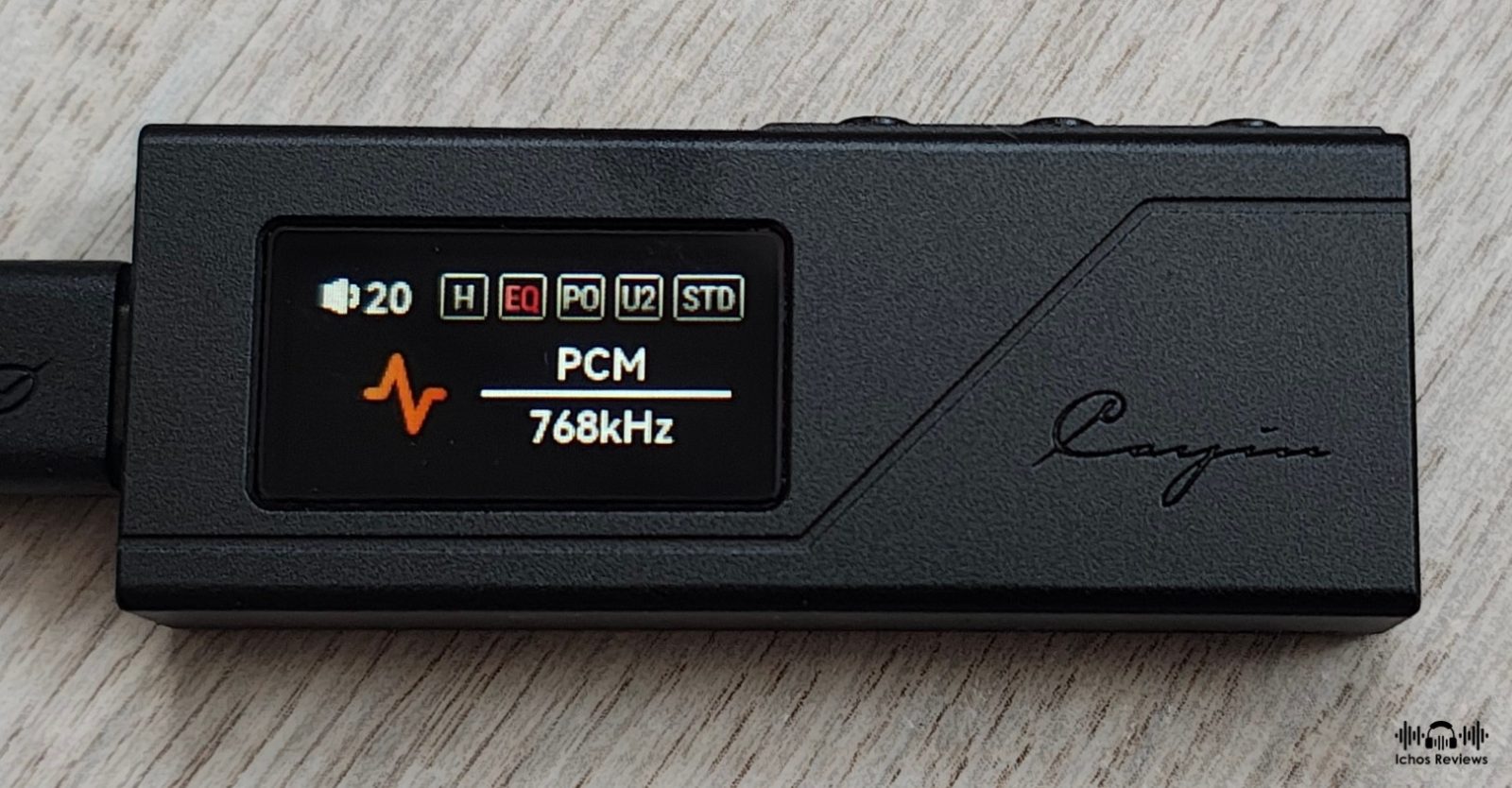
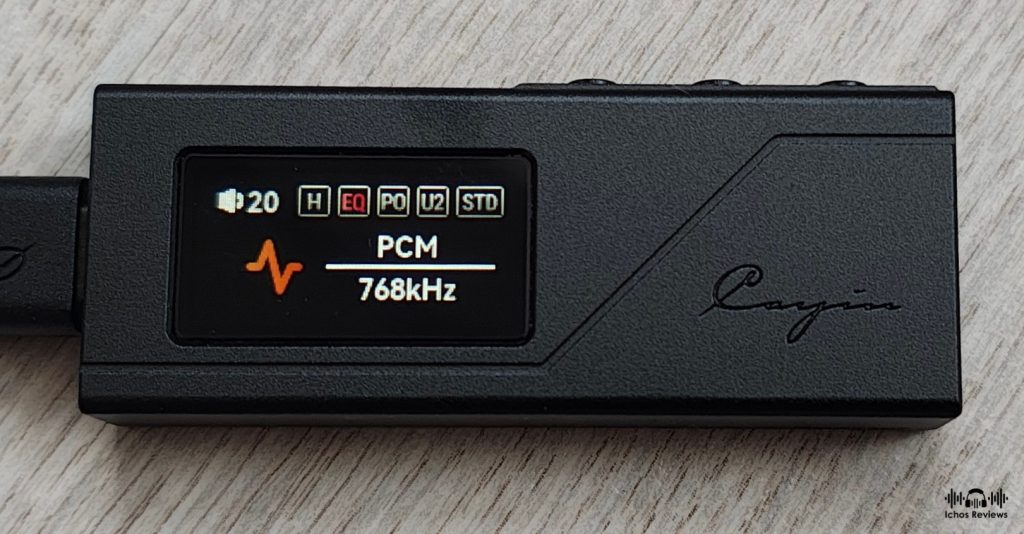
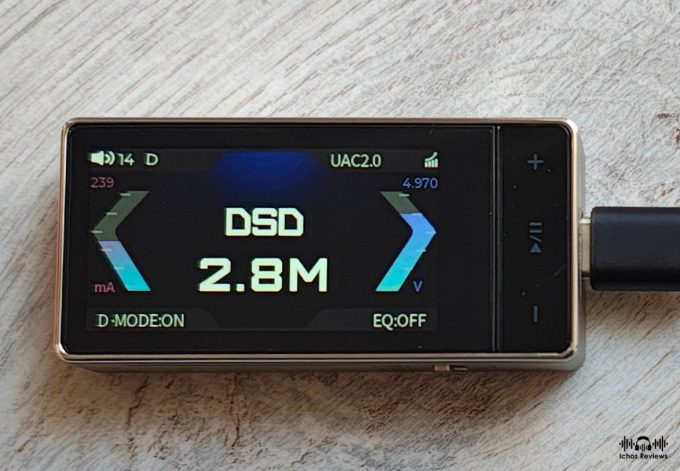
The 0.96” IPS screen is tiny but useful as it displays at glance the input sampling rate, the volume level and other useful information. You can use the side buttons to control music playback (skip previous/next track and play/pause) and adjust the volume in 100 independent steps. The letters and symbols in both UI themes are very small so you may have a hard time reading them.
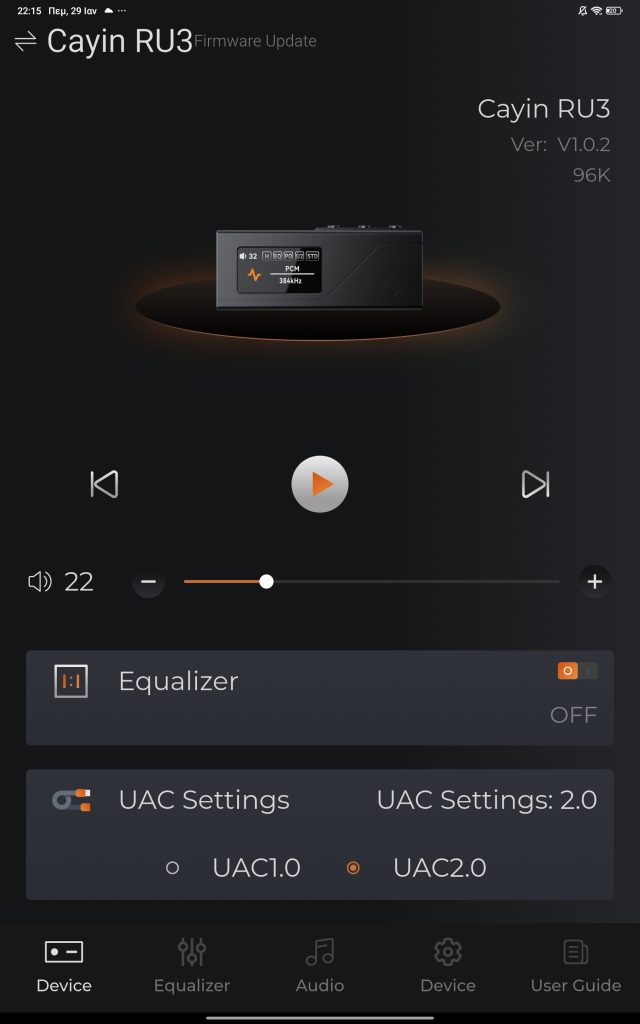
All the above features are also available through the Cayin Control application that additionally grants access to the user customizable 10-band lossless EQ and allows for easy firmware updates without the need of a PC.
However, at the time of writing this review and under the latest 1.0.2 firmware, the EQ doesn’t yet allow the user to create and save personalized curves, the only option is to select one of the 7 presets. Cayin has also promised 4 different UI themes but only two of them are currently available.
Accessories
The package includes a high quality and well shielded USB type-C cable with its matching USB A adapter.
A high quality protective case with a magnetic attachment is available as a $9.99 optional accessory.
Power output and noise
The RU3’s maximum power output is 560mW*2/32Ω, plenty to drive most earphones and many efficient headphones, like the Aune SR7000. The RU3 is one of the most powerful USB DAC dongles on the market that draws power exclusively from the host device.
The noise floor is also exceptionally low making the RU3 an ideal partner for sensitive earphones that also benefit from the fine volume adjustments. I tested the RU3 with two smartphones and I wasn’t able to detect any audible EMI noise. The RU3 runs cool in standard mode and a bit warmer in hyper.
Listening impressions
Plain and simple, the Cayin RU3 is one of the best sounding USB DAC dongles in its respective category with a reference, neutral tuning that is devoid of any clinical or sterile characteristics. The RU3 is a tonally balanced and very transparent DAC that pairs well with a lot of earphones. Bright or warm, it doesn’t really matter as long as they are your favorite ones, because the RU3 doesn’t add any sonic character of its own.
The RU3 might look small and humble but it produces bass that is hard to believe. It is deep and impactful with great dynamics and excellent control. It is also fast, tight and defined with balanced textures that are not too visceral or too lean either. The RU3 does very well with bass heavy tracks and at the same time it doesn’t lose composure or pace with complex bass lines.
The mid-range is clean and precisely articulated with satisfying harmonic richness and plenty of melodic expression. The RU3 is not the most organic or analog sounding DAC but it is not dry or artificial either, like some similar DAC/amps that use the same ESS chip. It balances technical precision with musicality, making it ideal for listening to all kinds of music.
More listening impressions
The treble is crisp, extended and energetic but not bright or sharp. The RU3 is surprisingly resolving and refined for the category, but it doesn’t sound too analytical or revealing. The high frequencies have a lot of the typical ESS luminosity and sparkle but they stay controlled and smooth with a surprisingly low digital glare. The RU3 can be used for hours long as it never causes listening fatigue.
The soundstage is big and spacious with a rather limited depth but it compensates with its class-leading imaging precision. The RU3 is doesn’t have the most holographic and immersive soundstage but it produces sound grand enough to do justice to large scale music and will never bottleneck your big sounding earphones.
The line outputs
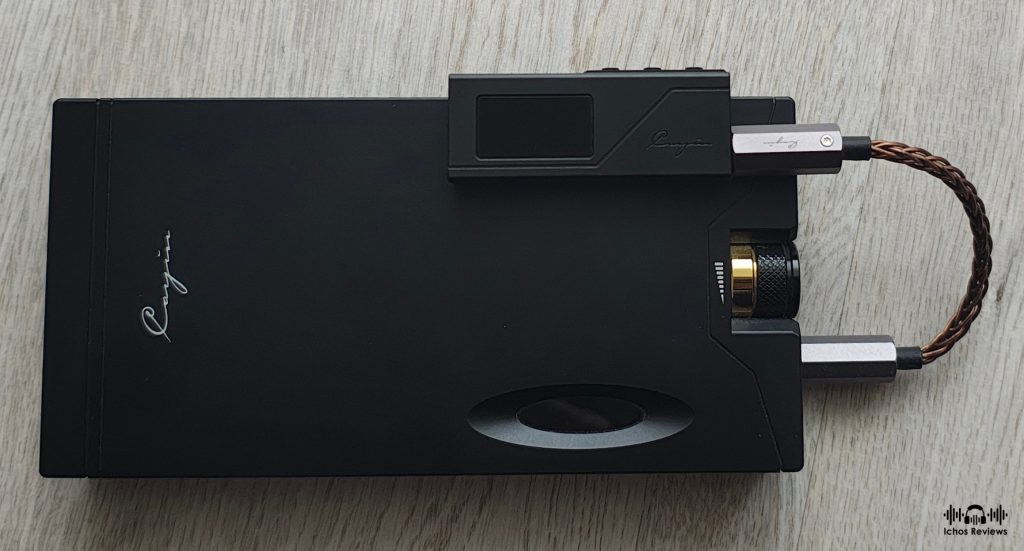
The RU3 offers both 3.5mm and 4.4mm clean line outputs that bypass the headphone amplification stage, making it ideal for use with external amplifiers. Just don’t forget to select the line output function from the internal menu.
I have tested the balanced line output with the Cayin C9 portable headphone amplifier and I remained very satisfied with the performance. The line output is clean and transparent, carrying all the above mentioned tonal characteristics without the side effects of double amping.
Vs the FiiO KA17
I usually don’t write comparisons because there are so many USB DAC dongles to choose from that it gets very confusing to decide which one to compare. You can click here to read the review of your favourite device and then compare it with the RU3 to reach your own conclusions.
However, this time it was tempting to write a brief comparison with the FiiO KA17 because it uses two pieces of the same ES9069Q DAC chip.
The FiiO KA17 is $50 more expensive than the Cayin RU3 and its most notable feature is the innovative desktop mode that is activated by connecting an external 5V power supply to the dedicated USB type-C port. The desktop mode produces 650mW*2/32Ω without consuming power from the host device.
This option makes the KA17 more powerful than the RU3 but only in desktop mode. In regular host connection, the RU3 outperforms the KA17 as it produces 560mW/32Ω instead of 300mW/32Ω, making it a more powerful option for true portable use.
Another handy feature is that FiiO makes an optional side mounting battery for the KA17 that transforms it into a battery powered USB DAC but it nearly doubles its size and weight.
Sound-wise the FiiO KA17 is more neutral and flat sounding than the RU3, with a little advanced technical performance and better transparency but also a bit brighter, a touch more clinical and with less controlled digital glare.
In the end
The RU3 is Cayin’s most affordable USB DAC/amp that despite using more conventional decoding techniques than its advanced models, it still manages to deliver a great portion of the brand’s famous house sound and sonic quality.
At $99, the Cayin RU3 is the most affordable and compact sized USB DAC dongle on the market that is so powerful and feature packed, while also sounding incredibly good. FiiO has been the leader at this segment for many years now but it seems that Cayin has taken the lead.
Nothing much left to add, the Cayin RU3 is an option hard to pass, the only reason to choose something else is if you are after a slightly different sonic flavor. Otherwise, the RU3 is arguably the best affordable USB DAC dongle in the market right now, assuming that Cayin is going to implement the missing features.
Copyright 2026.
Authored by Petros Laskis for Ichos Reviews. All content is original and copyrighted. Republishing full reviews or substantial portions without written permission is prohibited. Excerpts up to 100 words are allowed with a direct link.
+ Stellar sound quality
+ Neutral tuning but not clinical or sterile
+ Excellent transparency and fidelity
+ Not that lacking in harmonic richness
+ Mostly natural timbre with minimum digital artifacts
+ Powerful without the need of an external power supply
+ Dual power modes and two gain settings
+ True line outputs
+ User customizable 10-band EQ through application
+ Minimalistic appearance and excellent build quality
+ Lightweight and compact design
+ Very affordable and great value for money

- Not that power efficient
- User defined EQ and UI themes are not yet implemented (firmware version 1.0.2)
- No SPDIF output
- Small size screen











Leave a comment