


The iBasso D17 was kindly provided free of charge in exchange for an honest review. I didn’t receive monetary or any other kind of compensation and I don’t use affiliate links.
The price of the iBasso D17 is $1699 and you can buy it from here.
iBasso Audio
iBasso is a brand known for producing high-end audio devices for portable use, though they have recently expanded into making desktop components as well. They are famous for their DAPs, like the DX260 and DX340, but not only as they also make high quality DAC/amps, USB DAC dongles, earphones and headphones.
Their products have received numerous prestigious press awards and have a strong reputation in the audiophile community. Not without a reason though as they combine stellar sonic performance with premium craftsmanship at very reasonable prices
You can read more iBasso reviews here.
iBasso D17 “Atheris”
The iBasso D17 is a transportable battery powered DAC and headphone amplifier, the successor of the award winning iBasso D16. The D17 has a similar form factor with the D16 but a completely different circuitry.
It is an innovative device that fuses discrete R2R Ultra and 1-bit DAC technologies with dual Nutube tube-hybrid headphone amplification.
R2R and 1-bit string DACs
The iBasso D17 is the first transportable R2R DAC Ultra that adopts a core architecture of 24-bit, 4-channel differential R2R decoder plus a 1-bit string DAC with a custom developed FPGA algorithm and a complex hardware resistor compensation network.
The combination of all these technologies effectively address the main negative points of traditional R2R decoding, not only solving zero crossing distortion and achieving excellent linearity but also reaching industry leading performance metrics.
Industry standards often measure R2R DAC “value” by the number of resistors, though this is not always correct. The iBasso D17 has a significant advantage here as the 24-bit R2R section uses 284 resistors.
iBasso uses ultra-precise resistors with 0.01% tolerance plus twin Accusilicon femtosecond oscillators and custom-made film and vintage SPRAGUE capacitors among many other high quality components.
Thanks to the extensive resistor network in the 4-channel R2R DAC, the extra string 1-bit DAC, the custom FPGA algorithms and the hardware resistor compensation network, the D17 achieves impressive measured performance with a dynamic range that exceeds 120dB and a THD+N far better than -95dB.
Three DAC decoding modes
The R2R DAC decoder and the 1-bit DAC paths are user-selectable and offer three distinctive sonic profiles to choose from.
There are three modes available:
In NOS mode PCM signals are automatically routed through the R2R DAC and DSD through the 1-bit DAC. This is a Non oversampling mode for both PCM and DSD material.
OS mode is oversampling for both PCM and DSD material which is additionally converted into PCM in order to be processed together with native PCM by the R2R DAC.
Last, there is the SD mode where PCM is upsampled to DSD and is routed through the 1-bit DAC together with native DSD.
The 1-bit DAC has a technical disadvantage in comparison to the R2R DAC as it outputs a lower level signal. It is 2.4Vrms instead of 4Vrms for the balanced line output or 340mW/32Ω vs 1200mW/32Ω for the balanced headphone output.
Tube-hybrid headphone amplifier
The iBasso D17 is not only an industry leading R2R DAC but it is also equipped with a sophisticated tube-hybrid amplification circuit so you can enjoy tube sound with headphones and earphones.
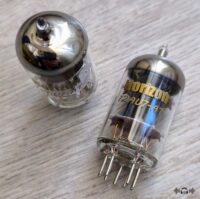
The amplifier uses dual Korg 6P1 Nutubes for voltage gain, backed by a powerful TI BUF634A buffer amp that delivers 1200mW*2/32Ω from its balanced 4.4mm output. The tube’s anodes are powered by a high voltage 24V power supply and are placed on a second PCB layer using specially designed damping materials.
The D17 is slightly more powerful than the D16 but unlike the iBasso DX340 it doesn’t support an external 12V DC power supply for the amplifier. This option would make the D17 even more powerful and suitable for driving a greater variety of full sized headphones but I guess that iBasso had good reasons for not employing it. Maybe the already heavily populated PCB could not accommodate the extra circuitry.
The tube stage is only effective for the phone outputs and can’t be bypassed for a pure solid-state operation of the headphone amplifier, like you can do in the AMP16 of the DX340.
Furthermore the tubes, while not affecting the line output, always stay ON and can’t be switched OFF, thus lowering their expected lifespan without a reason. Nutubes usually last more than 30,000 hours, but still it would be great if they could be switched OFF when not in use.
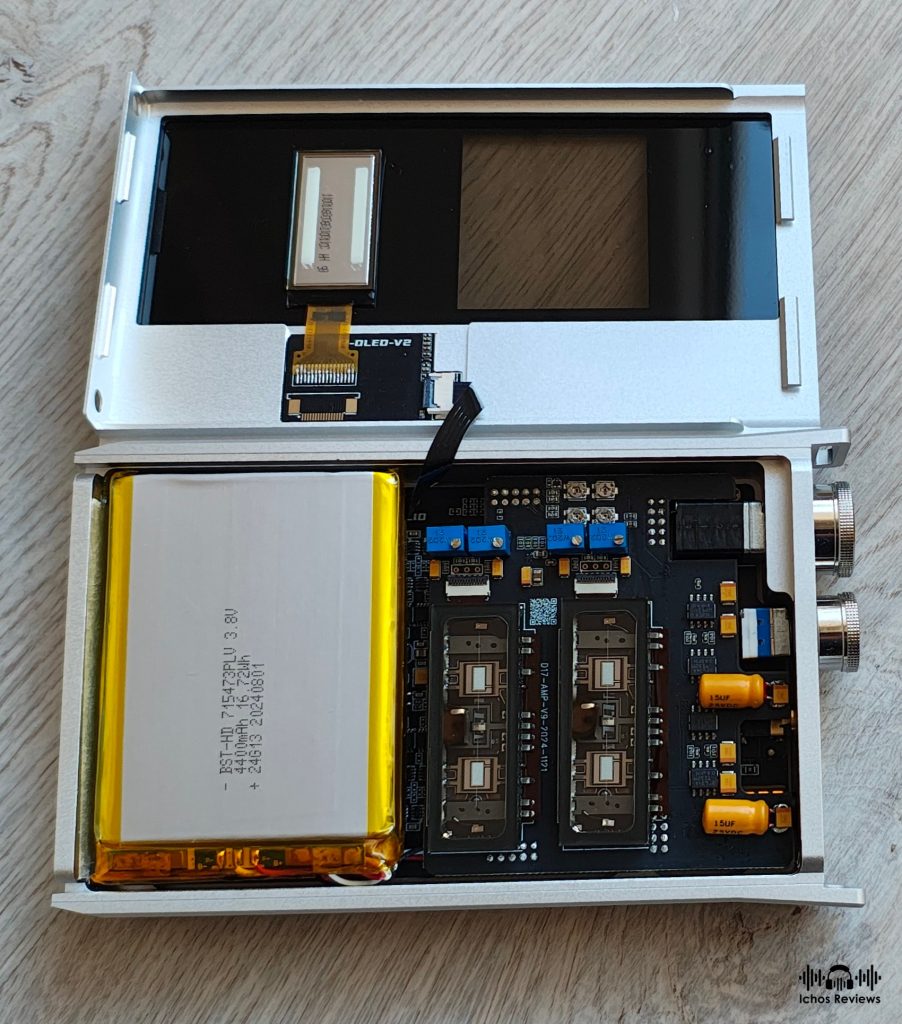
Thus said, iBasso has made sure that the tube board is connected to the main board with pins like a regular tube to a socket. This makes it easy to change out the board if the tubes go out over time without the need to send the player for repair in a service center.
Resistor stepped attenuator
Except for the 100-steps master digital volume control, the amp section of the D17 is equipped with iBasso’s custom made 24-position stepped attenuator that works in the analog domain and offers the purest possible signal path.
It is a 4-channel resistor attenuator with ultra-precise ±0.1dB channel matching that allows for accurate and flexible volume adjustments no matter the input load.
Such stepped attenuators are usually used in high-end desktop devices and it is almost impossible to find a ready-made one that is small enough to fit the chassis of the D17, so iBasso had to develop their own.

Power output, noise and heat
1200mW*2/32Ω from the balanced phone output is serious power that allows the D17 to drive a great variety of headphones. It had no difficulty powering models like the Meze Audio Elite, the Hifiman HE1000 Stealth and the Focal Clear Mg, although it would be great if it had some spare power reserves.
Both the amplifier and the DAC offer two gain settings (low and high) while the digital volume control and the analog stepped attenuator can be adjusted simultaneously, making it easy to find the perfect balance for various input loads, even sensitive ones.
The noise floor is exceptionally low, the tubes generate a faint background hissing noise that is only audible with very sensitive earphones and doesn’t affect actual music listening. The tubes don’t produce any microphonic noise, even if you tap them, and the device runs totally cool. As for the line output it is absolutely dead silent in both R2R and 1-bit DAC modes.
Dual battery power supply
The iBasso D17 is equipped with a dual battery ultra-low-noise power supply where the DAC and the amplifier sections are powered separately. This design ensures stable current supply for the headphone amplifier while effectively isolating interference from affecting the sensitive digital board.
Both batteries get charged through the same USB type-C input, each one having its own charging indicator LED. Furthermore, the D17 has full battery bypass mode that is automatically enabled when both batteries get fully charged. Additionally, the batteries are easily accessible and user replaceable, you can order them from iBasso that always stocks batteries for all their devices no matter how old they are.
The battery system supports 5V/3A QC3.0 quick charging that lets them charge in about 3 hours. The actual playtime is very close to the advertised 15 hours, I was able to get about 13 hours of continuous playback using both the balanced line and phone outputs.
Design and appearance
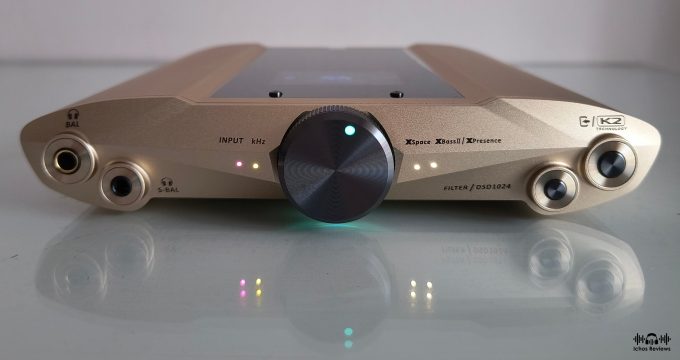
The iBasso D17 has a rectangularly shaped, brick-like chassis that is made from high quality CNC machined aluminum. It measures 145mm x 86.3mm x 31.6mm and weighs 470g so you can easily carry it inside a backpack but is better used stationary, placed at a flat surface.
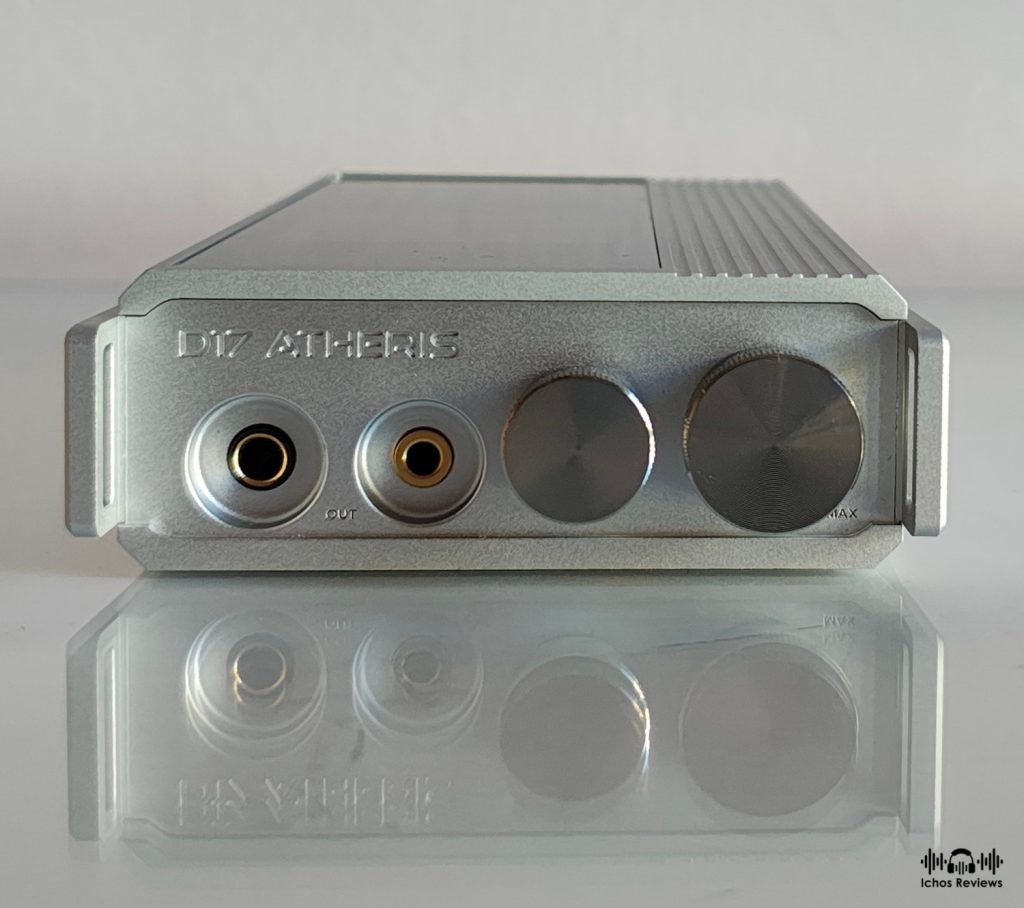
The exceptionally well made and finished chassis has a plain industrial design that resembles studio audio gear thanks to the two small rack handles at the front. They add uniqueness and protect the dials from accidental drops but the right handle makes using the stepped attenuator a little tricky, especially if you try to rotate it from an upwards position. Personally speaking, I much prefer the plainer chassis of the D16 without the handles.
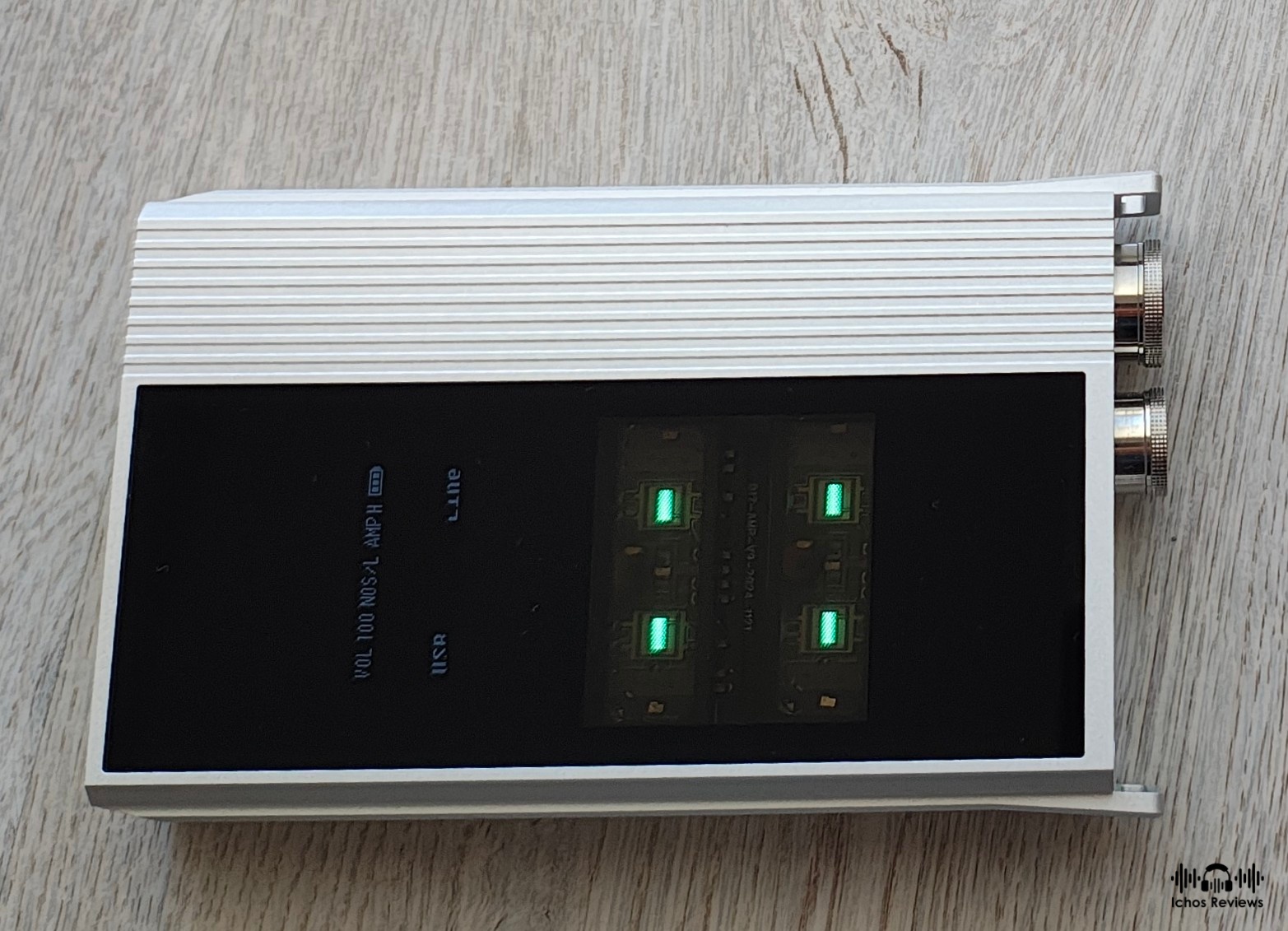
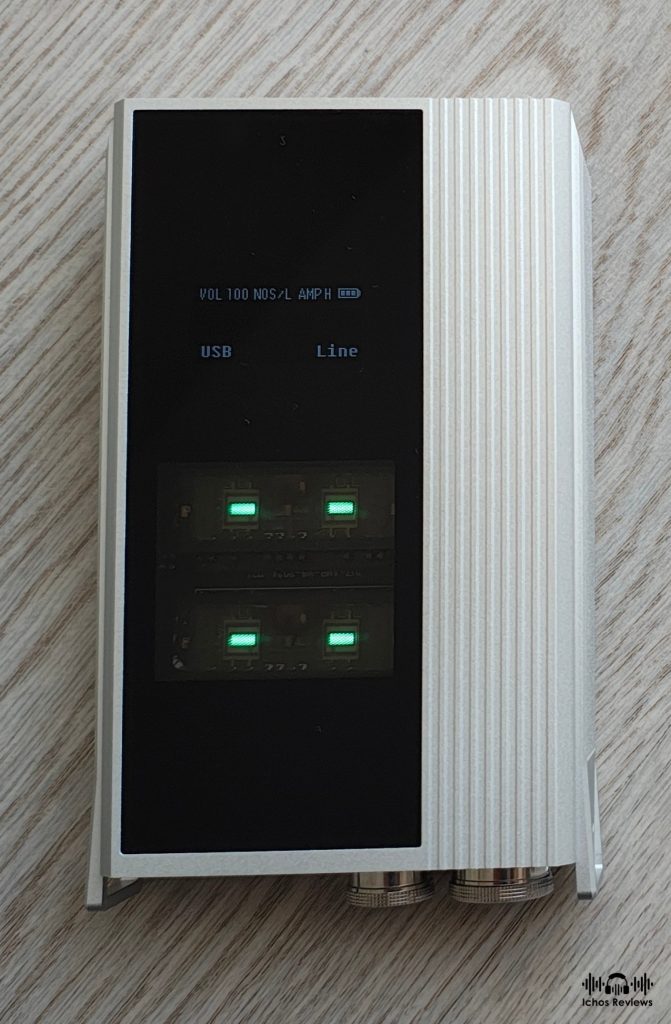
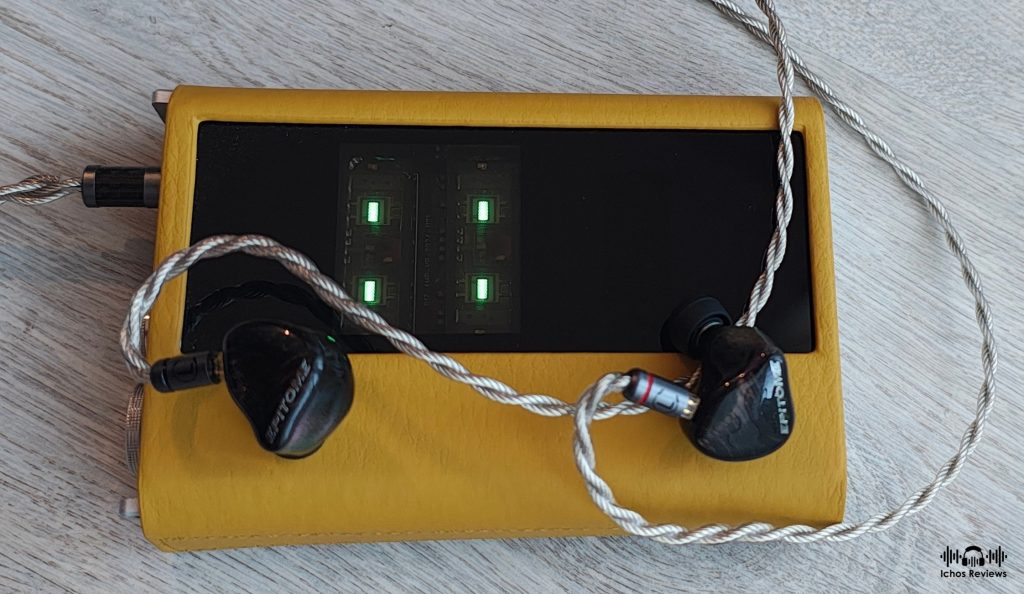
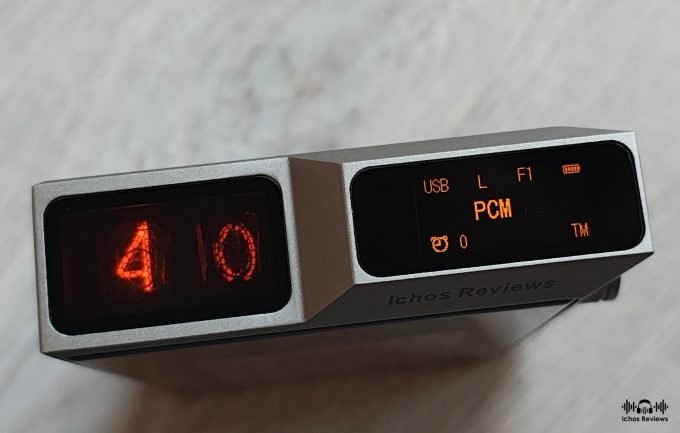
The top lid is easily removable but wobbles a little when you shake the device. The two-thirds of its surface is occupied with a tempered glass panel that has two lightly tinted windows. The larger one reveals the glowing Nutubes and the other one is a 1.3” monochrome OLED screen that displays useful information and the configuration menu options.
I/O Layout
The front panel houses 3.5mm and 4.4mm connectors, together with the digital volume control knob and the stepped attenuator which is of a slightly larger diameter. Both knobs are made from high quality aluminum alloy and rotate with a snappy, clicking action. The first knob also doubles as a press button that is used to enter the menu and register the selected values. Both analog outputs have a recessed design so they might not accommodate plugs of too large diameters.
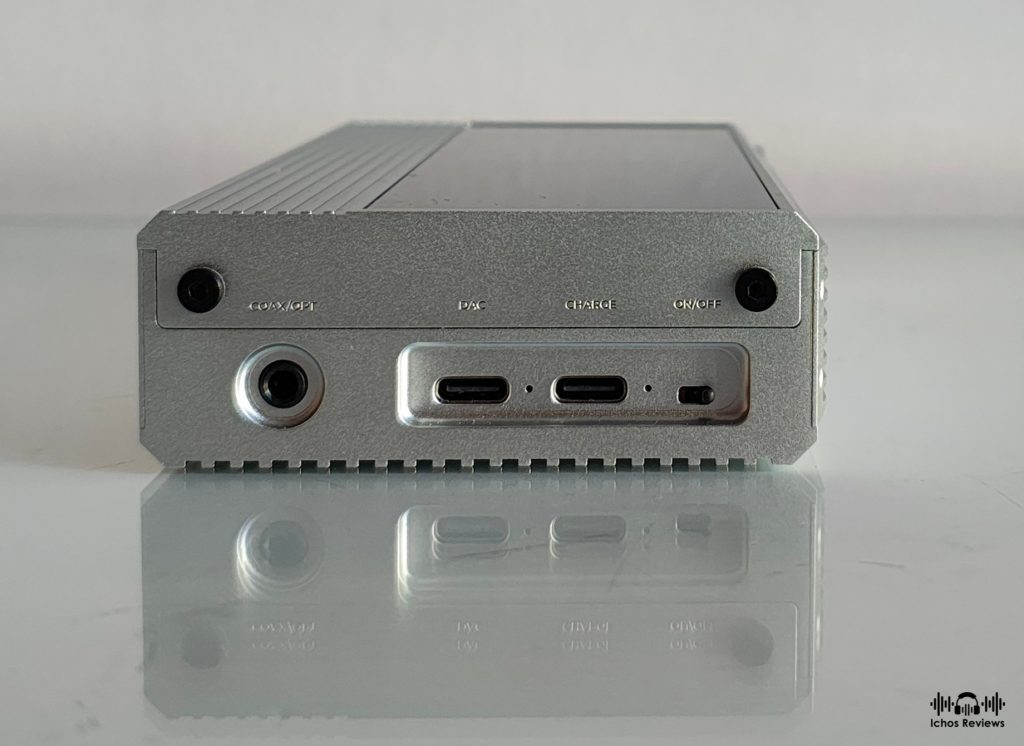
At the back there is a small on/off switch, separate power and data USB type-C inputs and a 3.5mm SPDIF jack. Two tiny LEDs at the sides of the power input indicate the charging status of each battery.
Operation and UI
The D17 has a simple configuration menu where you can adjust amp and DAC gains independently, select the DAC decoding mode (NOS, OS, SD), the digital input (USB, coaxial, optical) and analog output (line or phone), adjust channel balance and set the screen timer (10s, 20s, 30s, always On).
Accessories
The iBasso D17 comes inside a high quality, wooden storage box that has black leather exterior surfaces and brown suede interiors. The package also includes a leather carrying pouch, a yellow colored leather protective case similar to that of the iBasso Nunchaku and six high quality cables stored in their own velour pouch.
They are a full length USB A to C charging cable, shorter USB C to C and USB C to Lightning cables, along with dual 3.5mm analog, optical, and coaxial interconnects. iBasso has equipped the D17 with a generous selection of high quality accessories, with the only notable omission being a 4.4mm to 4.4mm analog interconnect.
Listening impressions
The D17’s line output was tested in a high-end 2-channel speaker system, as well as with the Flux Lab Acoustics Mentor headphone amplifier. The balanced phone output was mainly assessed with the Meze Audio Elite headphones and the iBasso Epitome earphones. (The listening tests were done with PCM material alone). The headphone and earphone cables are generously provided by Lavricables .
The line output
The best way to assess the pure audio quality of the D17 is to use its line outputs in order to avoid the tube coloration that is introduced by the embedded headphone amplifier. It is only with the two line outputs, and especially the balanced one, that the user can actually hear the raw sonic performance of the iBasso D17.
In R2R OS decoding mode, the D17 stands out as one of the most natural sounding sources I have ever tested and iBasso’s most natural DAC thus far. Its class-leading analog presentation delivers an impressively organic tonality with exceptionally lifelike timbre and a deep sense of realism.
These special qualities become especially obvious when listening to symphonic or acoustic music where every single instrument and voice, from the double bass to the piccolo flute and the bass to coloratura soprano, sound vibrant, colorful and extremely realistic.
The D17’s rich harmonic palette and its profoundly musical character invite the listener for extended listening sessions without inducing ear fatigue even after many hours. The D17 is the opposite from sounding clinical or sterile, it is a digital source that impresses with its complete absence of digital artificiality and treble glare. This is something that no competitive D/S DAC can achieve no matter how well it is designed.
More line output impressions
Sometimes all R2R DACs are wrongly judged as lacking in technicalities, clarity, transparency and overall fidelity. This can happen with some entry level models but is far from the truth with high quality R2R decoders. The D17’s core sonic character might be that of a natural, slightly warm and organic sounding source but at the same time it does with impressive transparency and fidelity, along with class-leading technical performance.
Technicalities and musicality are ideally combined in the D17 to form the perfect sonic balance. The bass is exceptionally well defined, fast, tight and controlled but also visceral and elastic. The mids sound melodic and expressive with very rich textures but also especially precise and articulate. The treble is clean,extended and energetic but then smooth and weighty with a mildly relaxed decay.
High quality R2R DACs are usually very resolving and refined without venturing into magnifying analysis and this is exactly what happens with the D17. Resolution is not always about obsessively pinpointing every single detail at the expense of the music itself but more about extracting the finest nuances in a way that serves the music and helps it become more alive and realistic. With the D17 the listener can easily focus on the beauty of individual trees but not miss the glory of the whole forest.
The special soundstage
The soundstage should not be judged by its excellent depth layering, its spaciousness and precise imaging alone, but mostly for its ability to make the loudspeakers disappear. This implies of course that you should experience the D17 in a high quality 2-channel listening system otherwise you will not be able to see how effective is in helping the amplifier produce sound that transcends the speakers and fills the room with pure music. Bold and grand in size, the soundstage produced by the D17 is holographic, immersive and always realistic no matter if you are listening to a solo singer or a large symphony orchestra.
Headphone amplifier listening impressions
The headphone amplifier of the D17 takes advantage of the tube circuitry to imbue the sound with a touch of extra warmth, more analog seduction and pleasant harmonic distortion.
The overall tonality remains pretty much intact minus a shy bass boost and a bit of treble smoothening, without the tubes handicapping much of the D17’s technical behavior and transparency.
The bass loses some firmness and control in favor of extra weight and elasticity while the soundstage appears to be more holographic at the mild expense of positioning accuracy. The mid-range sounds slightly warmer and harmoniously richer in comparison with the line output. The treble calms and relaxes a bit but the technical takeaways are minimal, the well implemented tube stage spreads some magic dust over the music without degrading the sound quality.
NOS vs OS vs SD
The three DAC decoding options offer three slightly different sonic profiles to choose from.
Taking the OS mode described above as the basis, the NOS mode (with PCM material routed through the R2R DAC) feels slightly more energetic, raw and dynamic sounding. The timbre qualities and the overall sonic character remain more or less the same but the NOS mode sounds just a bit more neutral, technical and transparent in comparison.
Switching to the SD mode (PCM converted to DSD and routed through the 1-bit DAC) takes transparency, clarity and resolution an extra notch up. The overall sonic character of D17’s SD mode resembles that of the iBasso DX340 with the AMP15, the sound is snappier, more neutral and technically proficient but also a little drier and less weighty in comparison with the OS mode.
Three very inspired variations of the same theme that add great versatility to the D17 and unlock many matching options with different headphones and amplifiers.
USB vs Coaxial vs Optical
The D17 supports three different digital inputs, USB (PCM 768kHz – DSD512), coaxial (PCM 768kHz – DOP256) and optical (192kHz – DOP128).
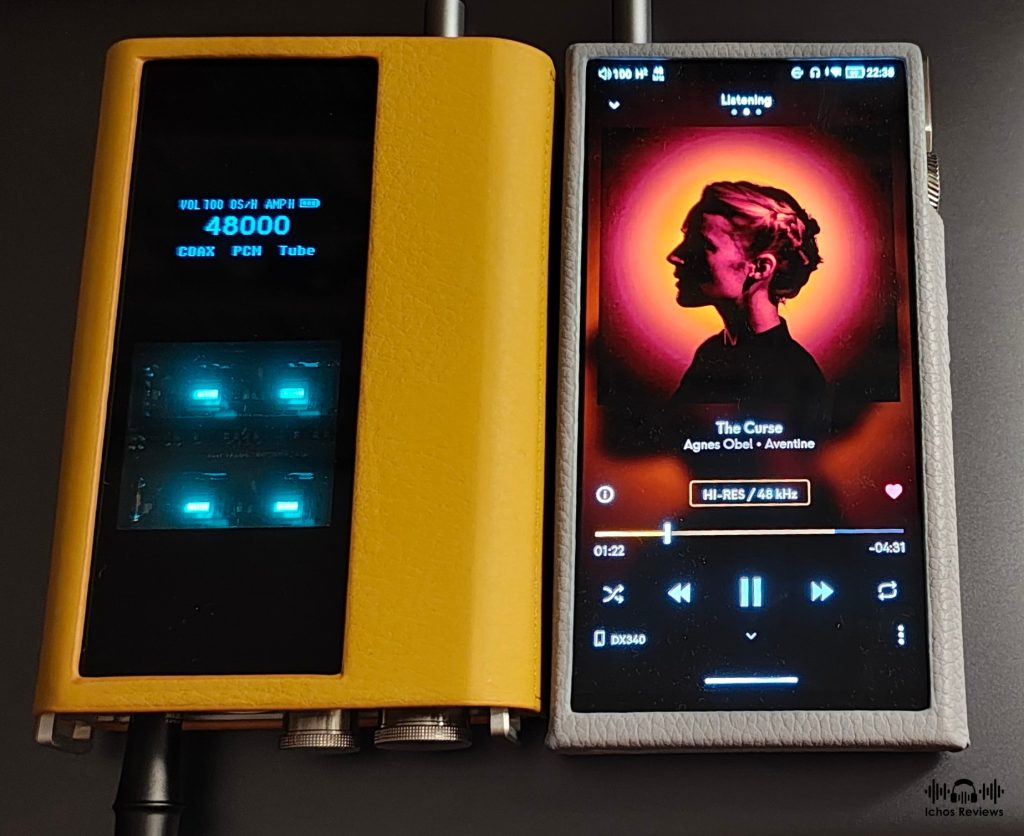
It goes without saying that the quality of the digital transport is essential to make the D17 perform at its best. It is strongly suggested to avoid using a PC or portable sources like phones, and use only a high quality dedicated streamer, like the Volumio Rivo Plus, or turn a DAP (like the DX340) into a transport.
Theoretically speaking, all digital inputs ought to sound the same but we all know that audio is full of surprises. In the case of the D17, the coaxial input sounds more natural and realistic than the other two by a fair margin.
The USB input is a little brighter, more resolving and energetic with marginally cleaner textures and bolder dynamics than the coaxial, but not as organic and natural.
The sound of the optical input resembles that of the coaxial but it is a bit less refined and not as smooth. The optical input also has limited sampling rate support, so I would use this one only if I had no other options.
A DAC that rivals desktop components
The amplifier section of the D17 is a really good one and a nice feature to have, especially for people that love tubes, but honestly speaking it is not transparent and technical enough to do full justice to the class-leading sonic performance of the line output.
In my opinion, the D17 should not be judged as an all-in-one DAC/amp alone but more as a premium R2R DAC that can easily rival desktop components.
There is no way to get the full experience by limiting your listening time to the headphone amplifier alone. Owners of the D17 that have not utilized its line output are practically not aware of what is capable of sounding.
Don’t judge it by its size, the D17 is an extremely competitive R2R DAC that can put to shame not only entry level desktop R2R DACs, like the excellent sounding FiiO WARMER, but also much more expensive offerings like the Denafrips Pontus II and the Gustard DAC R26 that are considered as benchmarks in their price points.
I have used the D17 in a 2-channel speaker system in direct comparison with the Lab12 Dac1 reference, the Denafrips Pontus II and the Gustard DAC R26, to be shocked by how well it performed.
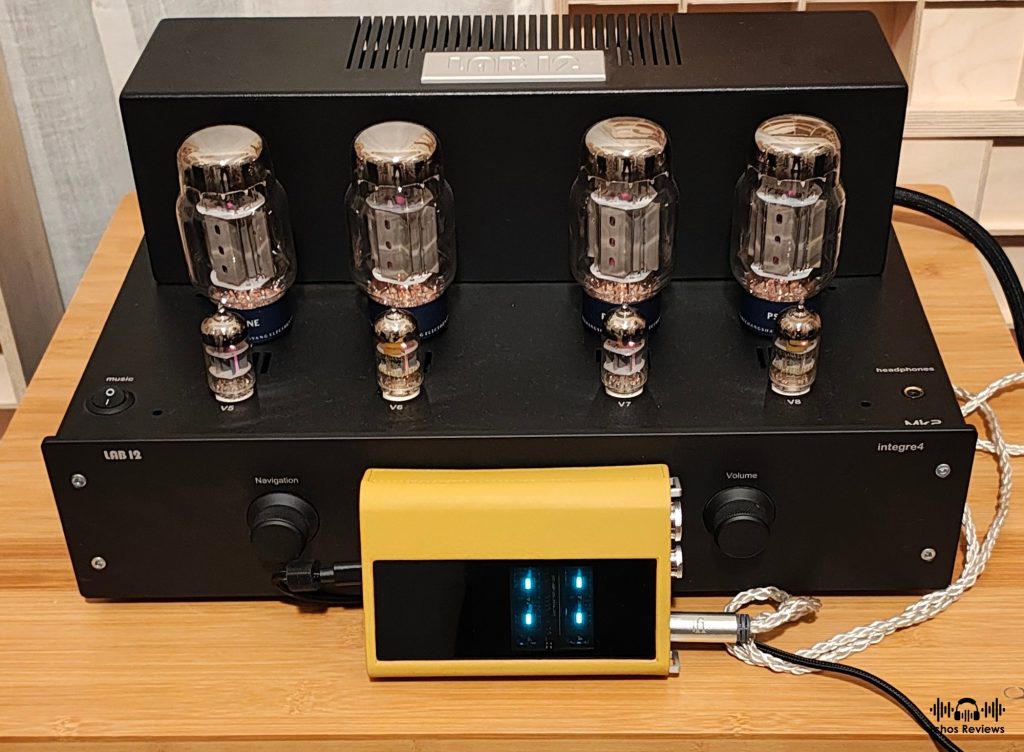
Another eye opening listening experience was using the D17’s line output to feed the Flux Lab Acoustics Mentor headphone amplifier. A perfect sounding couple that can be recommended as an end game setup for headphone listening.
Vs the iFi iDSD Valkyrie
The iDSD Valkyrie is iFi’s flagship battery powered USB DAC/amp with four Burr Brown DAC chips in a differential implementation. A device that is much bigger and heavier than the D17 but it has greater battery duration, a more powerful headphone amplifier, Bluetooth connectivity and many sound customization options to compensate the extra bulkiness.
The Valkyrie has the edge when it comes to driving more demanding headphones while its solid-state amplifier is absolutely silent with very sensitive earphones, however it doesn’t have tubes.
The iFi iDSD Valkyrie is a musical sounding source that has a rather natural timbre with minimal digital artificiality, backed by very strong technicalities and transparency. However it can’t match the D17’s ultimate sonic realism and complete absence of digital glare or its deeply melodic and expressive character. The D17 has a much richer harmonic structure and a more organic timbre without lacking that much in resolution and transparency.
In the end
This was a very long review to read and now time has come to reach the final conclusion that is a bit obvious if you have gone through the whole text.
The iBasso D17 is not only one of the most natural and organic sounding transportable sources ever made, but also a very competitive R2R DAC that can easily rival similar desktop components. A great achievement from iBasso that have put hundreds of hours into designing and creating the D17.
At first glance it might seem that it has some limitations, like the not too powerful headphone amplifier or the inability to utilize the tube stage in its line output. But these are not actual disadvantages because in my opinion the D17 is primarily a class-leading R2R DAC and all other features should be treated as an extra bonus.
The D17 is a reference sounding R2R DAC that can easily serve premium 2-channel and headphone systems as their main source component while it can also offer many hours of pure musical bliss as a transportable DAC/amp, successfully bridging the gap between desktop and portable gear.
Copyright 2026.
Authored by Petros Laskis for Ichos Reviews. All content is original and copyrighted. Republishing full reviews or substantial portions without written permission is prohibited. Excerpts up to 100 words are allowed with a direct link.
+ Class-leading sonic performance
+ Excellent fidelity and transparency
+ Absolutely analog and natural timbre
+ Complete absence of digital artificiality and treble glare
+ Line output is dead silent
+ Easily rivals similar desktop DACs
+ Impressively holographic and immersive soundstage
+ User selectable R2R and 1-bit DAC modes with OS and NOS options
+ Tube-hybrid headphone amplifier
+ Good battery duration and desktop bypass mode
+ User replaceable batteries
+ Comes with plenty of high quality accessories and a luxurious storage box
+ Excellent build quality with premium materials

- The tubes can't be switched OFF
- No solid-state option for the headphone amplifier or tube option for the line output
- Not the most powerful headphone amplifier in its class
- The 1-bit DAC mode has limited power output










Leave a comment