

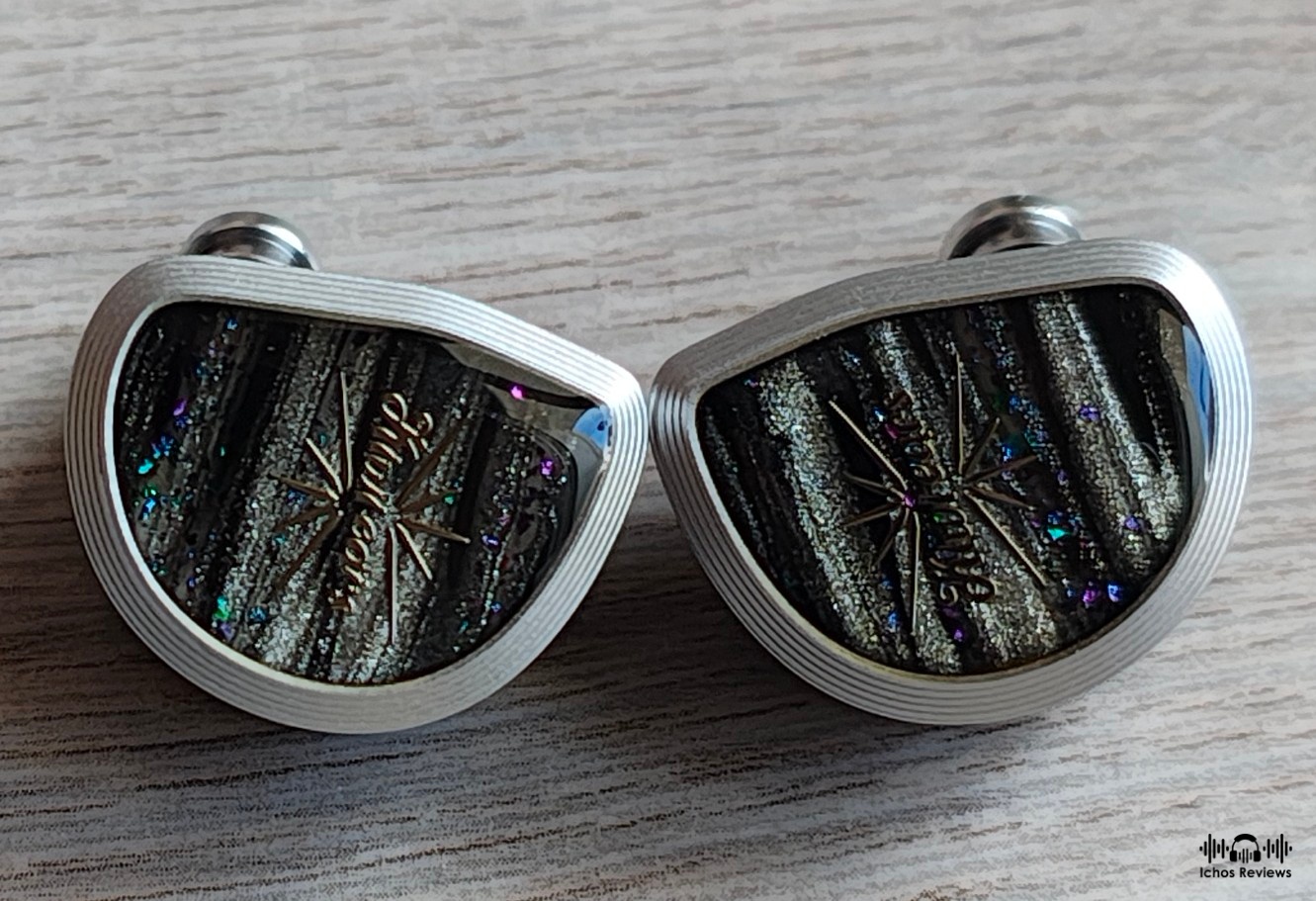

Today’s review is about the Kiwi Ears Aether, an earphone with a larger than average planar magnetic driver and an affordable price.
The Kiwi Ears Aether was kindly provided free of charge in exchange for an honest review. I didn’t receive monetary or any other kind of compensation and I don’t use affiliate links.
The price of the Kiwi Ears Aether is $169.99 and is available from Linsoul Audio.
Kiwi Ears
Kiwi Ears is a brand from China that is known for producing high value, yet affordable, earphones and portable USB DACs. Some very popular models, like the Kiwi Ears Quintet and the Orchestra Lite, have helped the company to gain strong recognition among audio enthusiasts.
Click here to read more Kiwi Ears reviews.
Kiwi Ears Aether
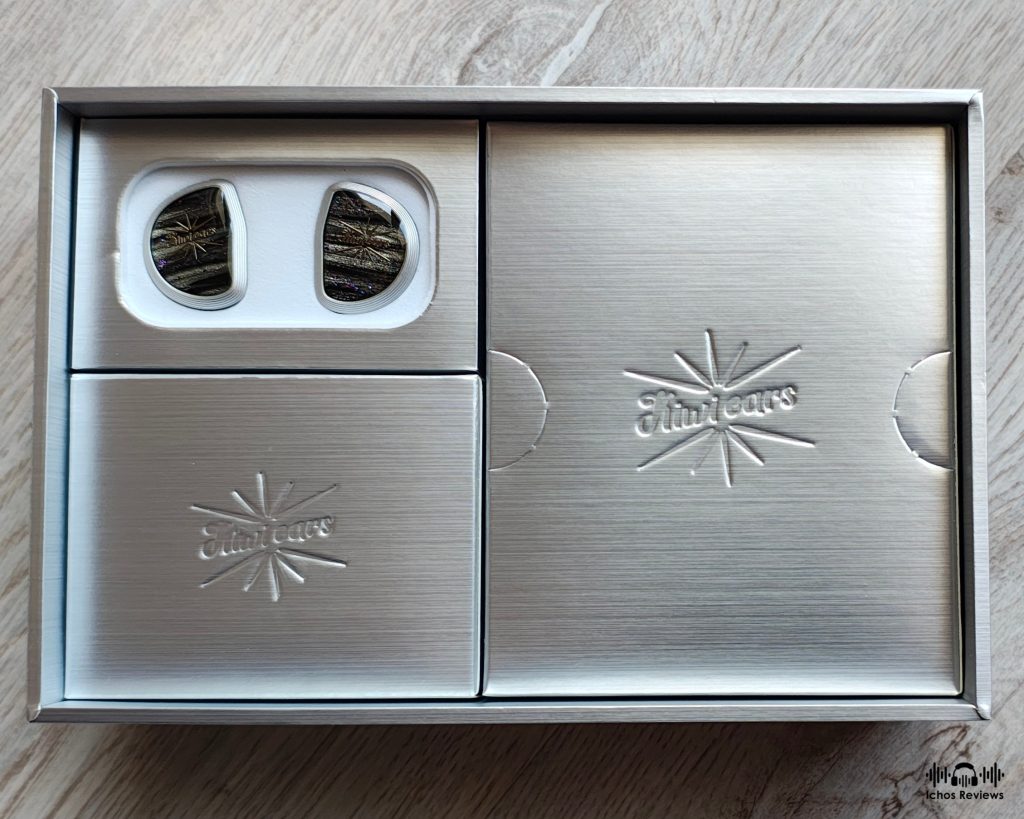
One of the brand’s latest models is the Kiwi Ears Aether, an earphone equipped with a groundbreaking 15.3mm planar magnetic driver and multi-layered N52 neodymium magnets.
This larger driver surpasses the standard 12mm or 14mm planar diaphragms found in most competitive IEMs. The Aether is designed with a large chamber that offers improved ventilation to support and take advantage of this oversized driver.
Technical Details
Sensitivity: 105dB SPL/mW @ 1kHz
Frequency Range: 20Hz-20kHz
Impedance: 14Ω @ 1kHz
Driver: 15.3mm Planar x1
Connectors: 0.78mm 2-pin
Design and appearance
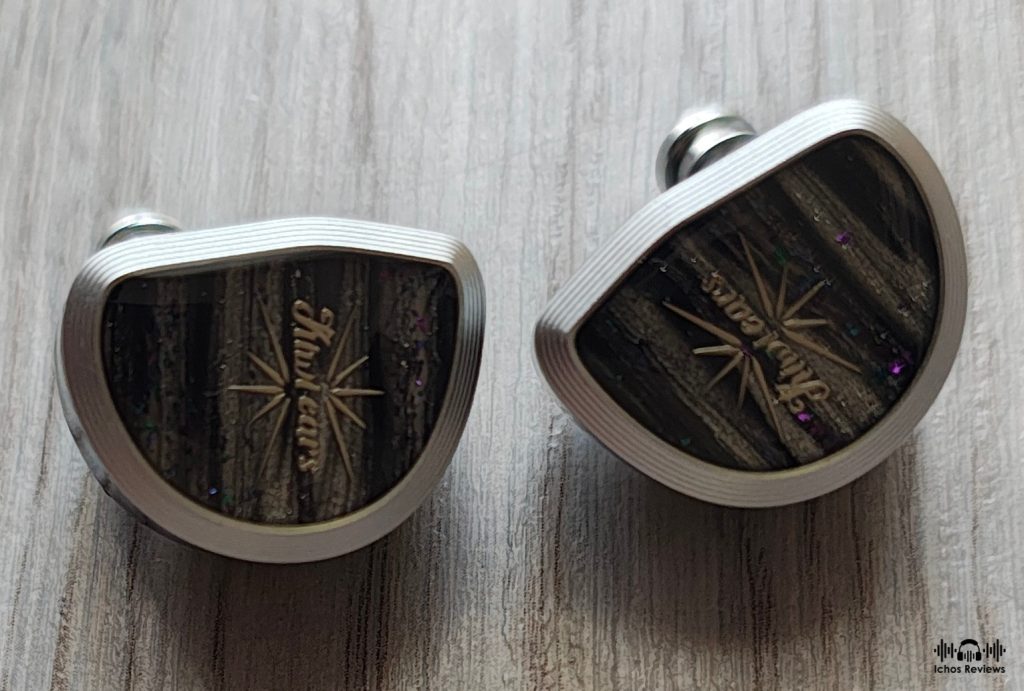
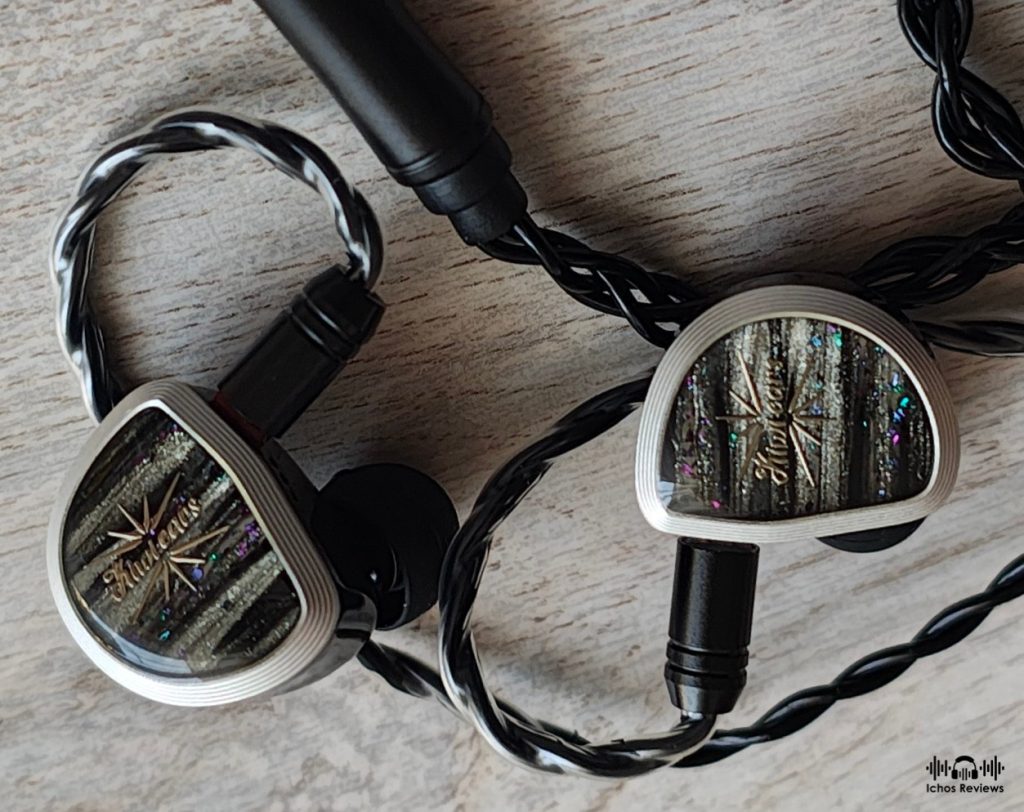
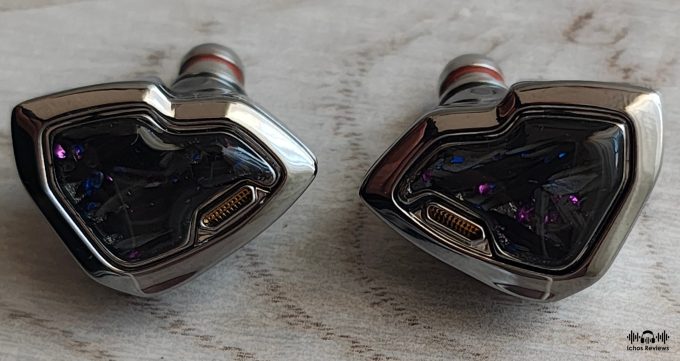
The Aether are large size earphones but they have ergonomically shaped shells that follow the natural curves of the ear. Their main body is made from high quality resin compound in a black finish and the faceplates have a glossy surface adorned with patterns and small iridescent flecks that reflect pink and purple under the light.
At the center part of each shell sits the Kiwi Ears logo while the faceplates are surrounded by contrasting aluminum frames with concentrically engraved rings. The Aether is a beautiful looking and very well made earphone, far more premium than the price would suggest.
Wearing comfort and isolation
The large shells combined with short length nozzles result in a fit that is too shallow, so some users might not have a good seal, even with large size ear tips. The nozzles can’t be inserted deeply enough but double or triple flange ear tips can help a lot for a tight fit, otherwise there is no bass at all. If you happen to have an ear anatomy that aligns with the shape and the design of the shells, then the fit is actually comfortable and suitable for extended listening sessions.
A small venting hole is positioned underneath each sound tube and another three are to be found near the cable connectors that sit flush to the shells. Despite so many venting holes, the noise isolation is above average, allowing the use of the Aether in noisy surroundings.
Cable and accessories
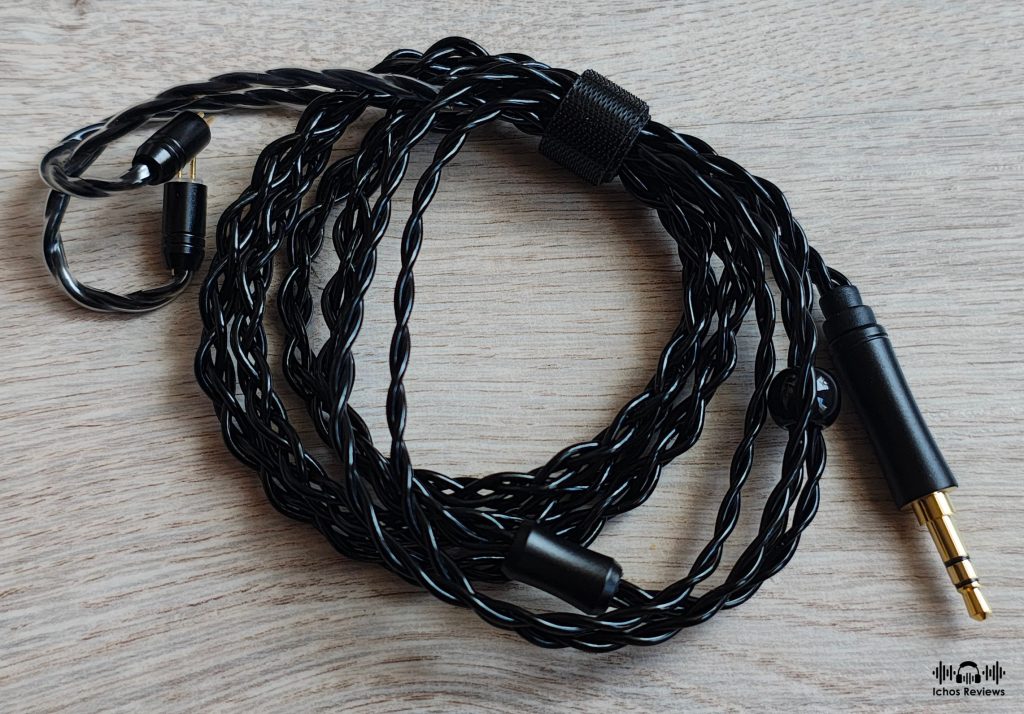
The Aether is equipped with a 2-pin detachable cable that is terminated with a 3.5mm plug. It is a thin cable that is soft and easy to handle without much microphonic noise.
Also included in the package are a hard carrying case together with three sets of silicone ear tips. Good but not great since a lot of competitive earphones are equipped with modular cables and a greater variety of ear tips.
Sensitivity and associated equipment
With an impedance rating of 14Ω and 105dB SPL/mW of sensitivity, the Kiwi Ears Aether is not a difficult load or too sensitive to background noise. High quality and relatively powerful USB DAC dongles, like the FiiO KA15 or the Kiwi Ears Allegro Pro can do the job but some extra juice is beneficial to the overall control and the dynamics of the low-end.
Listening evaluation
Kiwi Ears is a brand with a professional monitoring background and most of their earphones feature relatively neutral and balanced tunings. The Aether is not an exception as it sounds evenly tuned without too much bass or treble at the expense of mid-range presence.
The low-end
The low-end is tuned to be mildly prominent in order to sound full and engaging with all kinds of music without much compromises in overall tonal precision. The sub bass is extended enough to ground the music with authority but it doesn’t overpower the other frequencies. Low pitched instruments are rendered with convincing precision and natural timbre, making the Aether suitable for critical listening, while still retaining the ability to inject plenty of energy and fun when the music calls for it.
The bass on the Aether is mainly technical, it is focused around clarity and definition rather than trying to produce visceral and weighty textures. The extra-large planar driver produces unbelievably impactful bass, closing the gap with dynamic drivers, but it is a little bit dry and inelastic in comparison. However, it is exceptionally tight and controlled with great timing, skilled enough to handle the most difficult music without losing composure.
The mid-range
The mids are evenly tuned with a gentle upper mid-range emphasis that makes music come alive without tipping into artificial sharpness. The Aether might have a monitoring attitude in the way that it handles the music but it doesn’t end up as sounding sentimentality detached or sterile. It is a very transparent earphone that doesn’t add much sonic character of its own and can easily become melodic and expressive with the right source combination.
The treble
Surprisingly enough, the treble is rather smooth and polite, but not that excessively bright or too much emphasized as it usually happens in other monitoring style earphones. The presence area is more upfront than the lower treble, adding plenty of vividness and clarity to the music without becoming tiresome, even with notoriously piercing instruments like the harpsichord or the valveless trumpet.
The Aether is very resolving for the category but it doesn’t sound too analytical or unforgiving with lesser quality recordings or bright sources. Its textures might not be that refined or polished but the timbre is quite natural and realistic, except for some traces of metallic artificiality in the very high frequencies. What sets the Aether apart from other competitive multi-driver earphones is its excellent sonic coherency throughout the whole frequency range.
The soundstage
The soundstage is impressively open and spacious with extended width and very good lateral positioning. The depth is a little limited but the presentation is large and grand enough with plenty of ambient queues and a convincing scale that easily adapts to the size of the ensemble.
In the end
So why should someone buy the Kiwi Ears Aether instead of another competitive earphone of the too many that already exist?
The short answer is mainly for its unique bass that combines impressive planar precision and technicalities with great physical impact and punch, previously found only in large dynamic drivers. Then, there are its balanced tuning, the impressively open soundstage and its monitoring transparency, attributes that when combined all together make for a very interesting and compelling sonic presentation that many people will appreciate.
The only thing that someone should consider before buying is the relatively strange fit that might not suit all people alike. Beyond that, the Kiwi Ears Aether offers great sound and strong value that secure its place in an increasingly competitive market.
Copyright – 2026.
Authored by Petros Laskis for Ichos Reviews. All content is original and copyrighted. Republishing full reviews or substantial portions without written permission is prohibited. Excerpts up to 100 words are allowed with a direct link.
+ Large planar driver that produces big and impactful bass
+ Relatively balanced and coherent tuning
+ Excellent technical performance and transparency
+ Present mids and polite treble
+ Open and spacious soundstage with strong lateral imaging
+ Very good resolution for the category
+ Easy to drive and not sensitive to background noise
+ Beautiful looking and well made
+ Good value for money

- Big shells with shallow fit might not suit everyone
- The cable is too thin and not modular
- Traces of metallic artificiality and lack of refinement
- Dry and lean textures









Leave a comment