


The Celest Phoenixcall was kindly provided free of charge in exchange for an honest review. I didn’t receive monetary or any other kind of compensation and I don’t use affiliate links. The price of the Celest Phoenixcall is $129.99 and you can buy it from HiFiGo.

Celest Phoenixcall
Celest is a sub-brand of Kinera Audio that focuses on producing budget friendly earphones with increased value for money. Their first IEM was the Gumiho, then followed the Pandamon and now they have resealed the Phoenixcall.
Why did they name it Phoenixcall? It’s all about a Chinese myth; A hundred birds flock to Phoenixcall was a legendary scene inspired by the ancient Chinese myth “The Legends of Mountains and Seas”. Heaven and earth stood solemnly, day and night interchange, seasons reincarnate. Mountains, rivers, lakes, seas, winds, blizzards, rain and snow, a destined force lurks in the dark, calling for the families of divine birds, appearing out of nowhere together filling the skies, filling with birds singing, flocks and flocks of them throwing themselves into the deep forest, meeting each other, depicting a harmonic grand scene of a hundred of birds flocking back to their southern home.
Driver configuration
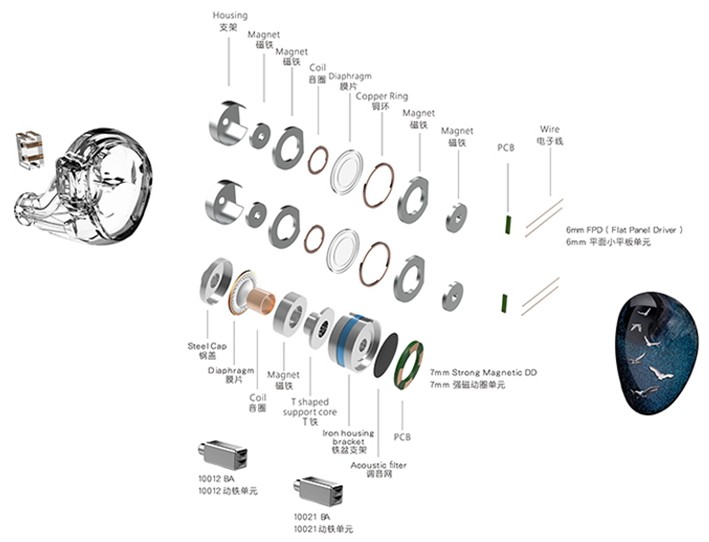
The Phoenixcall is a hybrid, five drivers earphone that uses a 7mm strong magnetic coil for the low frequencies, a customized BA driver for the mid frequencies, another customized BA driver for the mid-high frequencies, and two Micro planar drivers (Flat panel drivers) for the ultra-high frequencies.
Design concept
Phoenixcall uses the phoenix pattern, which has traditional significance, as the main element for the design. The phoenix pattern is combined with other bird and flower patterns, and the wild and bold lines of the phoenix pattern are refined and transformed with geometric elements, using a painting style to give it a full and unique shape. The design combines traditional patterns with modern design, showcasing people’s vision for a happy, prosperous, and peaceful life, as well as the moral of carrying great virtues and embracing all rivers.

Appearance and fit
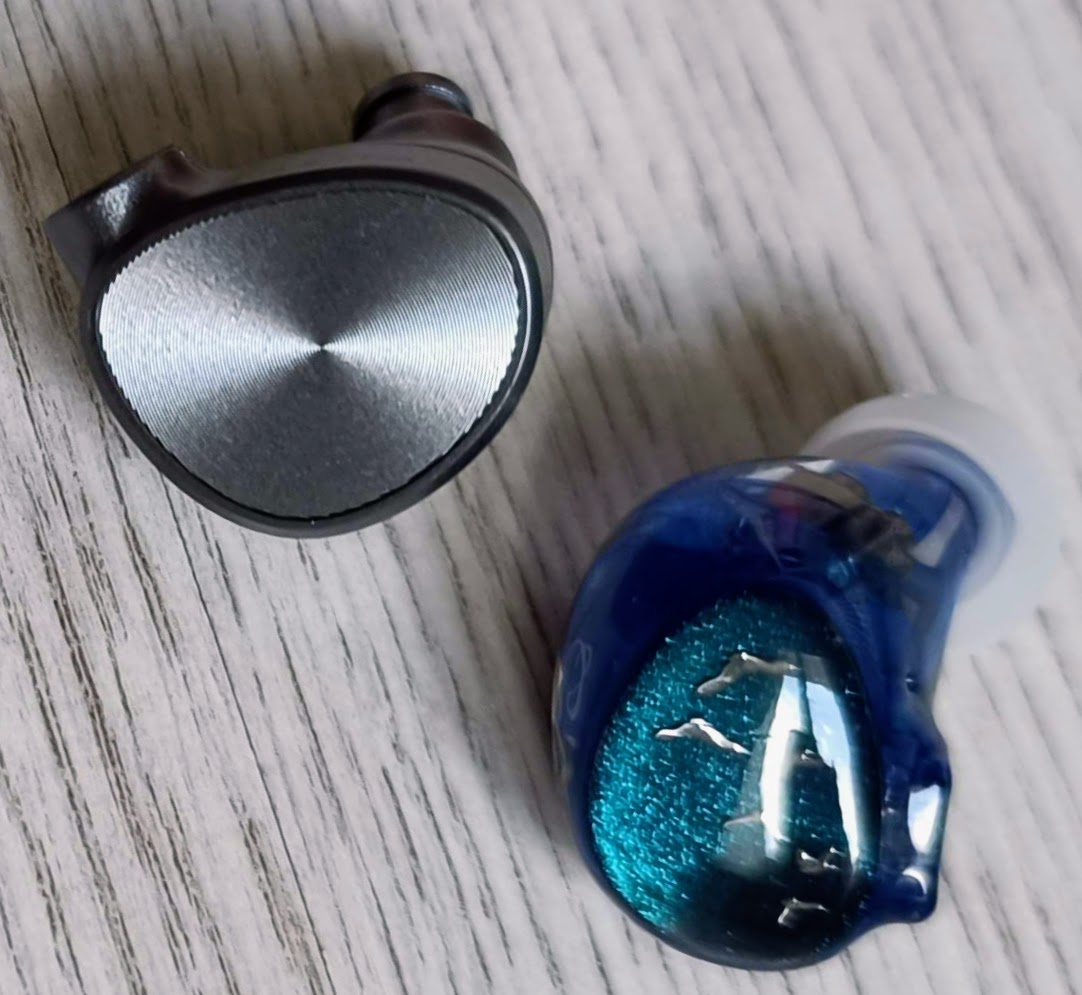
The design elements at the faceplates are really unique and beautiful looking, the Celest Phoenixcall is available in two versions, one with transparent ear-shells and another with purple for the right side and blue for the left.
The ergonomically shaped ear-shells are made from a skin friendly, resin compound and they are compact and lightweight with a moderately long sound tube, thus offering great wearing experience that combines stability with comfort and good passive noise attenuation. Build quality is very good and the material looks hard enough to withstand scratches.

Cable
The detachable cable uses the 2-pin, 0.78mm interface and is an 8-core braided design made with 5N silver-plated copper. The plugs are made from aluminum and you have the option to order the cable with either a 3.5mm or 4.4mm plug. The cable is really well made, it is sturdy, tangle resistant and free of microphonic noise but a little stiff and rather heavy.

Accessories
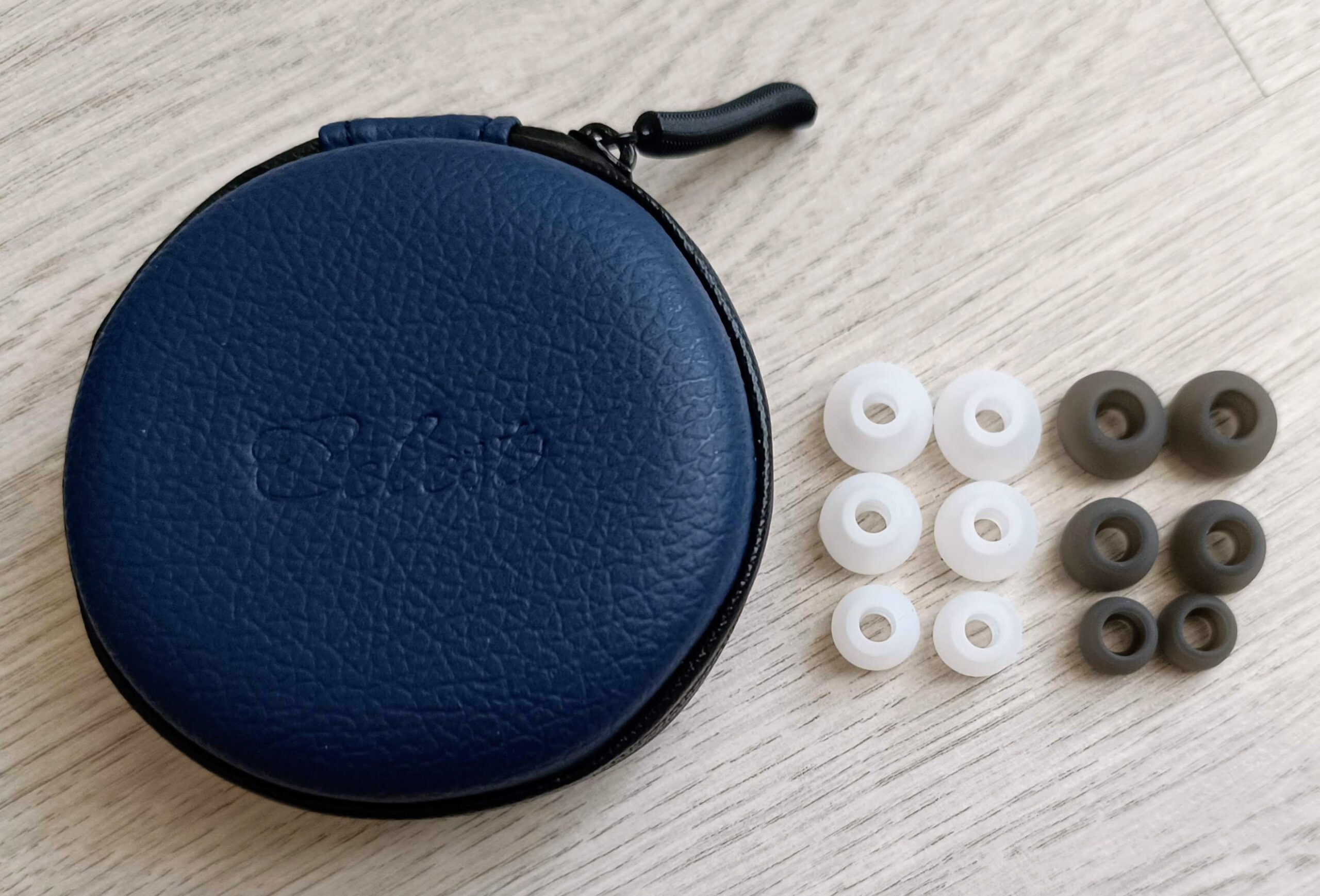
The Celest Phoenixcall comes with two types of ear-tips in three sizes each: The Celest 221 vocal and Celest C-07 balanced ear-tips. A compact carrying case and a metallic amulet are also included.
Power requirements and associated gear
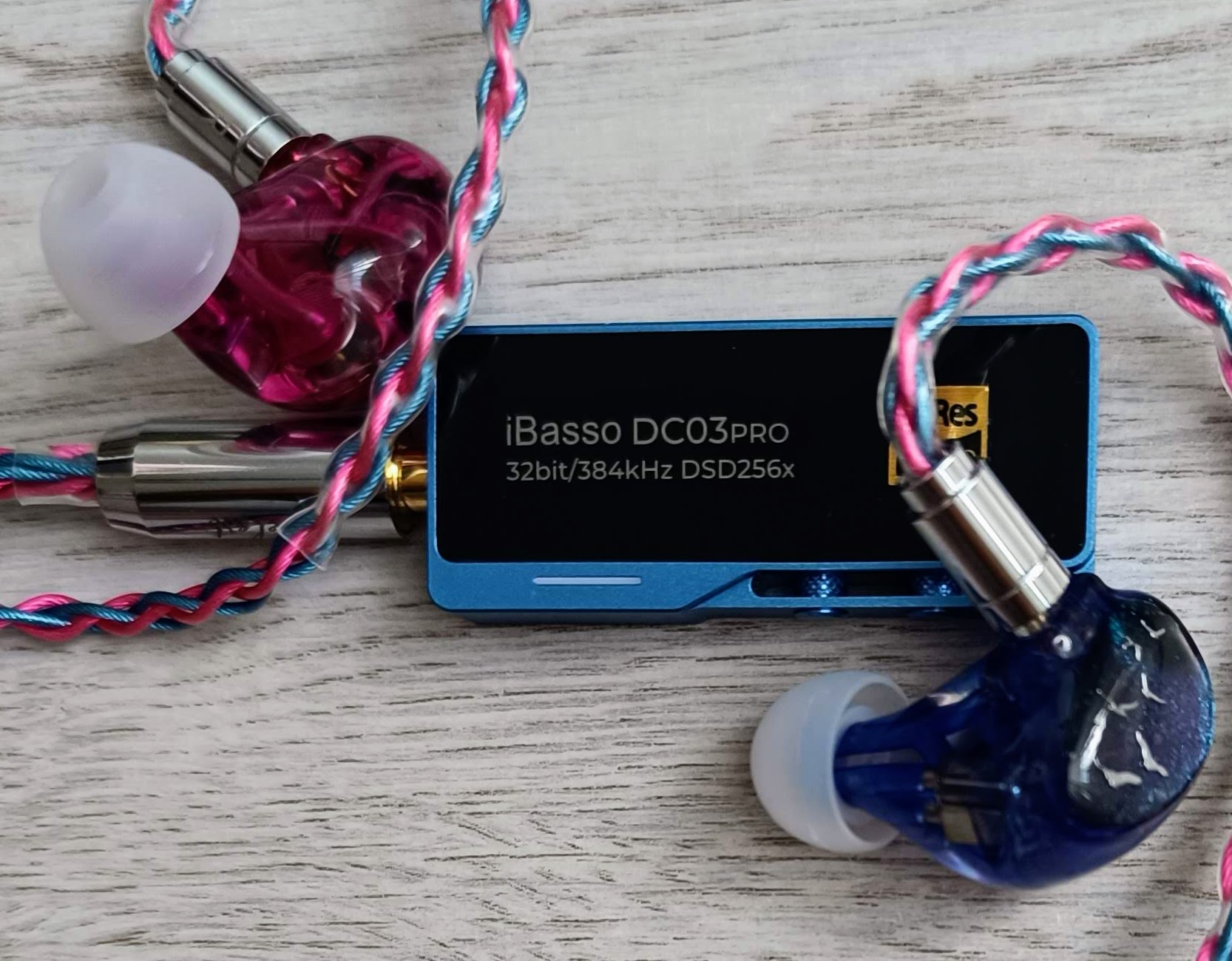
The impedance of the Phoenixcall is 32Ω with 103dB of sensitivity so it is not that difficult to drive. You can use your phone’s 3.5mm jack but a high quality USB DAC is strongly recommended for the best results. I have mostly used the iBasso DC03 Pro and the EarMen Eagle. As per usual practice the earphone was left playing music for about 100 hours before listening evaluation.
Listening impressions
The Phoenixcall has a strong V-shaped tuning with plenty of mid-bass emphasis, good sub-bass extension, a mid-range that is more prominent in its upper portion and a boosted treble that is sharp and extended but not too bright. Nothing wrong with this kind of tuning as long as you are not going to use the Celest Phoenixcall for critical listening or any other application where tonal accuracy is the top priority. This is a casual tuning made for partying and having fun with your favorite tunes.
What is really good about the Celest Phoenixcall is that despite the generous low-end emphasis, the bass doesn’t sound overpowering, neither it bleeds into the mids. The bass is weighty and punchy, quite tight and controlled with good clarity and definition, dynamic and impactful but with a touch of reverberating echo.
The mid-range is kind of a mixed bag with a rather uneven tuning where the lower portion is more recessed than the upper so there is a touch of unevenness to the presentation and some instruments or voices will sound more pronounced than the others, like sopranos. The mid-range is full bodied and resolving with plenty of clarity and definition. You can listen to modern tracks where usually a voice is accompanied by a heavy bass line, like in Billie Eilish’s songs, without the lyrics getting clouded. With certain recordings the upper mids can sound a little emphatic and aggressive but not that piercing or fatiguing.
The treble is vivid, extended and airy with plenty of clarity and definition, it is energetic, sharp and luminous without becoming too bright or fatiguing. There is a good amount of sparkle and excitement, the treble nicely counterbalances the bass region by shedding some light into the mix and allowing for good detail retrieval. The treble is resolving but not that refined while it sounds a little dry and thin with a touch of metallic timbre.
The soundstage is moderately wide, nothing too spectacular but despite the average size, positioning accuracy is very satisfying and there is also plenty of space and air around the performers to avoid congestion even during heavily populated tracks.

Compared to the 7Hz Legato
These two sets follow the same kind of bass-emphasized tuning but the 7Hz Legato is not that aggressively V-shaped. It has a more present and balanced mid-range than the Celest Phoenixcall but is also more muted and not that brilliant in the treble. As a result it sounds more bassy, warmer and more organic in the mid-range but also darker, a touch slower and not that airy and sparkling in the treble.
In the end
Despite some oddities in its tuning, the Celest Phoenixcall is a very fun and enjoyable set of earphones that is going to get you into a partying mood without remorses. It does more things right than wrong, it has plenty of high quality bass without compromising in the rest of the frequency range, technicalities are strong for the category and is also unique looking and very comfortable thus making it an excellent choice if you are looking for a modern and youthful tuning.
Copyright – Petros Laskis 2023.
+ Youthful and modern tuning
+ Fun and exciting without messing too much with balance
+ Plenty of high quality bass that is not too dominant
+ Punchy and impactful with good technicalities
+ Resolving mids
+ Sparkling and energetic treble
+ Good imaging
+ Lightweight and comfortable
+ Excellent build quality
+ High quality cable
+ Accessories

- Doesn't aim for tonal and timbral accuracy
- Uneven mid-range tuning
- A bit of echo in the bass
- Slightly metallic timbre
- Not the most refined treble
- Average soundstage without much depth
- The cable is a little stiff and heavy













Leave a comment