

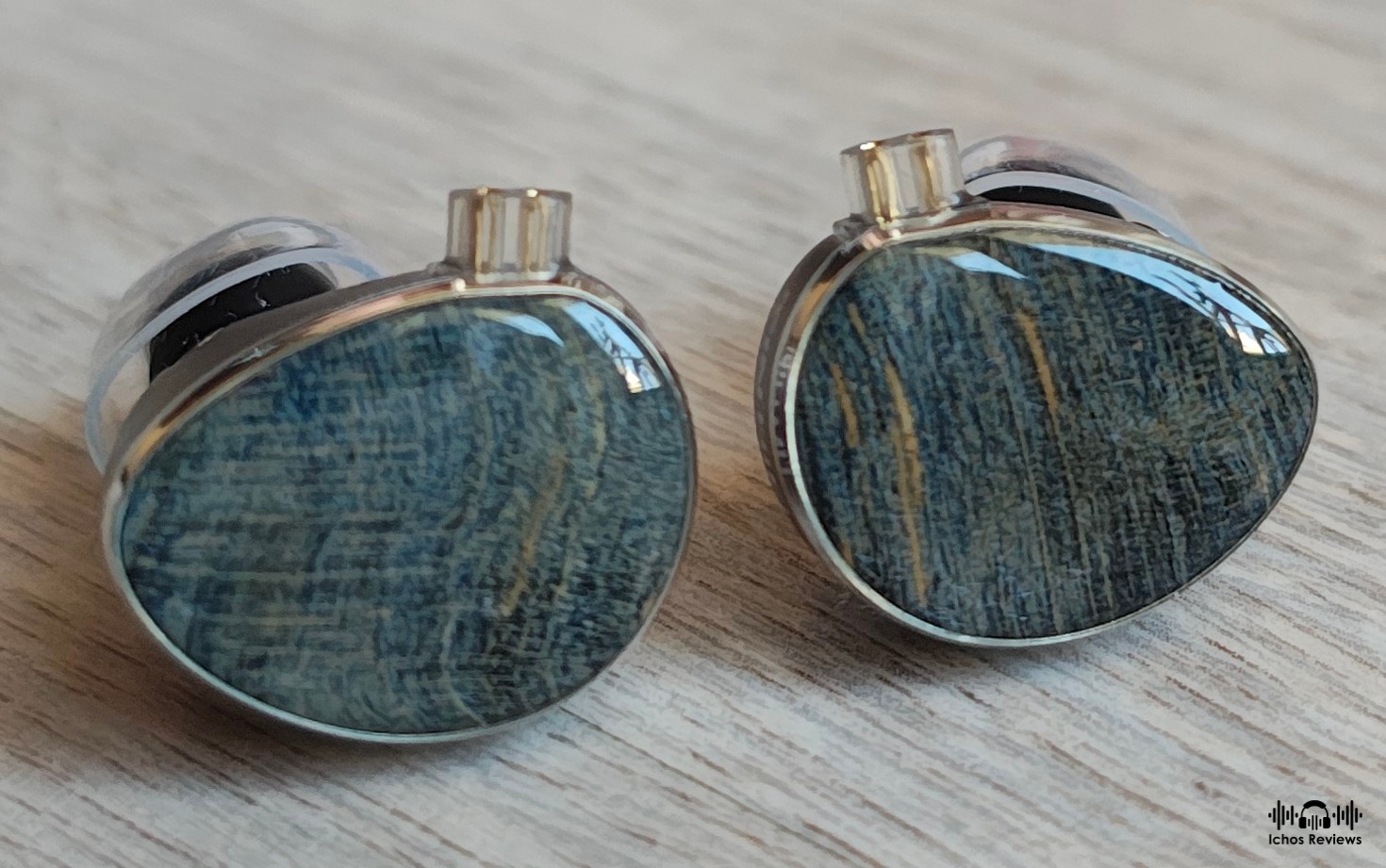

Today’s review is about the TinHiFi T6, an affordable hybrid in-ear monitor with a dual driver configuration that combines one dynamic with one planar driver and comes along with three interchangeable nozzles for fine-tuning.
The TinHiFi T6 was kindly provided free of charge in exchange for an honest review. I didn’t receive monetary or any other kind of compensation and I don’t use affiliate links.
The price of the T6 is $139 but it usually sells for $119 and you can buy it directly from TinHiFi.
About TinHiFi
To learn more about the TinHiFi brand you can visit their website or read the brief introduction below.
TinHiFi is a Chinese IEM manufacturer known for offering high quality sound at affordable prices. TinHiFi emerged around 2017 after working as an OEM for many known brands and quickly became popular thanks to some well regarded models like the T2, the T3 Plus, the P1 and the C3 MKII.
This is not the first time that Ichos Reviews features a TinHiFi review. Click here to read past reviews and discover the brand.
TinHiFi T6 – Overview
The T6 is the latest addition to TinHiFi’s extensive catalogue. A hybrid in-ear monitor featuring a flagship dynamic driver paired with a high-performance micro-planar driver. TinHiFi believes that the lesser the driver count, the better the sound coherency and the more natural the listening experience.
The TinHiFi T6 incorporates a carefully engineered airflow channel within the nozzle vent, designed to manage how air and sound waves move through the acoustic path. By fine-tuning airflow behavior and damping, this system helps regulate pressure variations and the release of sound energy, directly shaping both the frequency response and transient performance.
Interchangeable Acoustic Nozzles
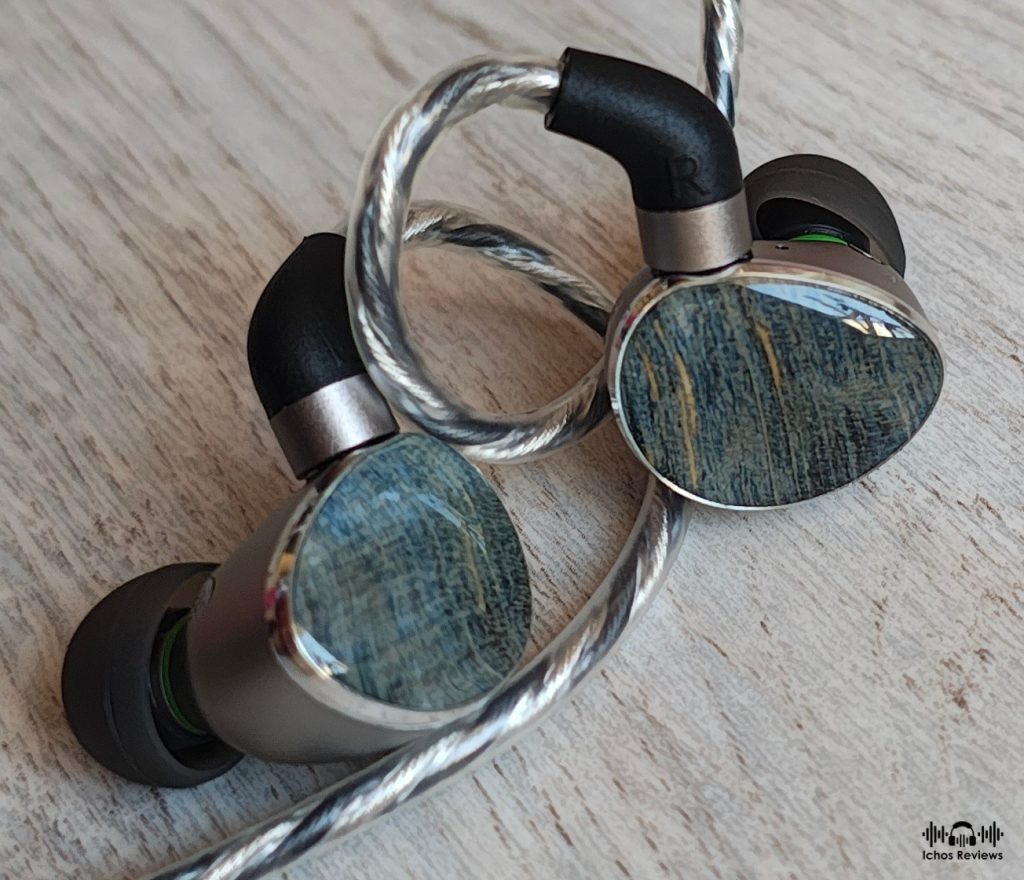
TinHiFi has designed the T6 with interchangeable acoustic nozzles that are used to fine-tune the sound. There are three nozzles available, each one offering a different tuning style. The black one has a reference HiFi tuning, the green follows the Harman target curve and the pink is tuned specifically for gaming.
Design and Wearing Experience
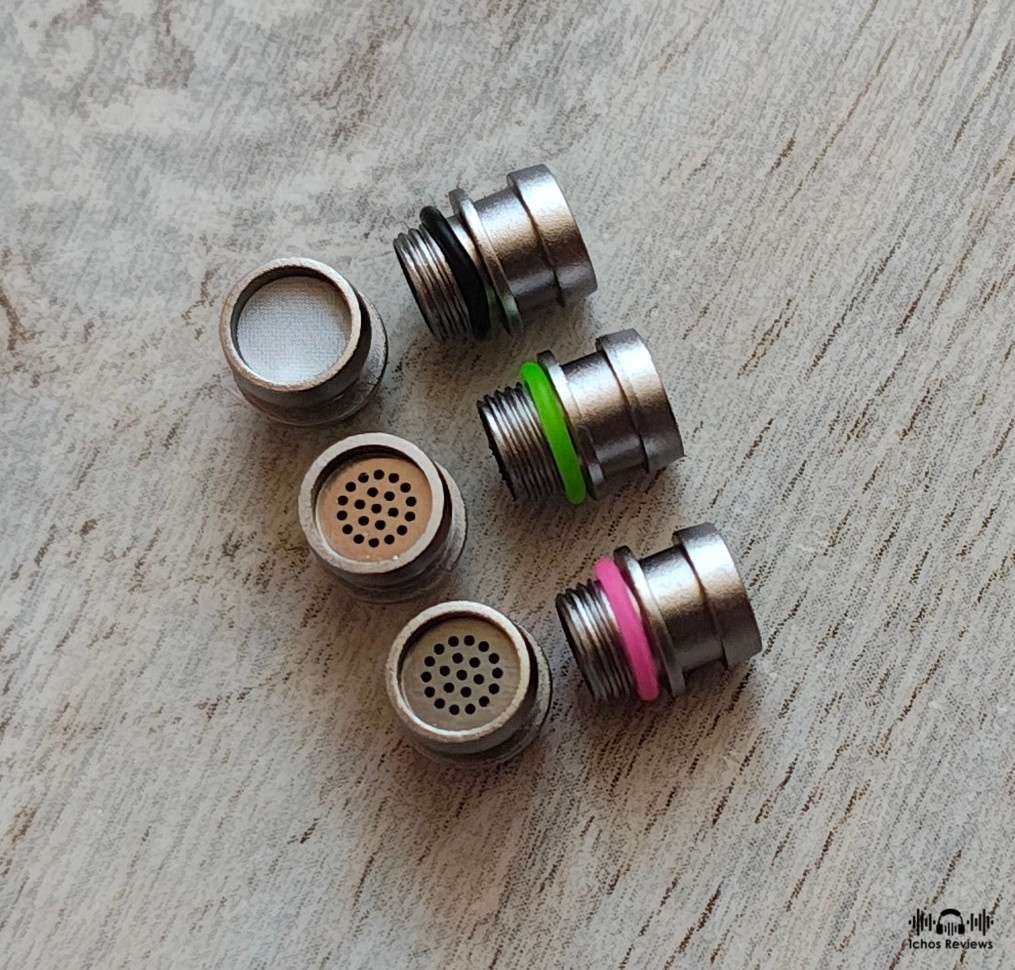
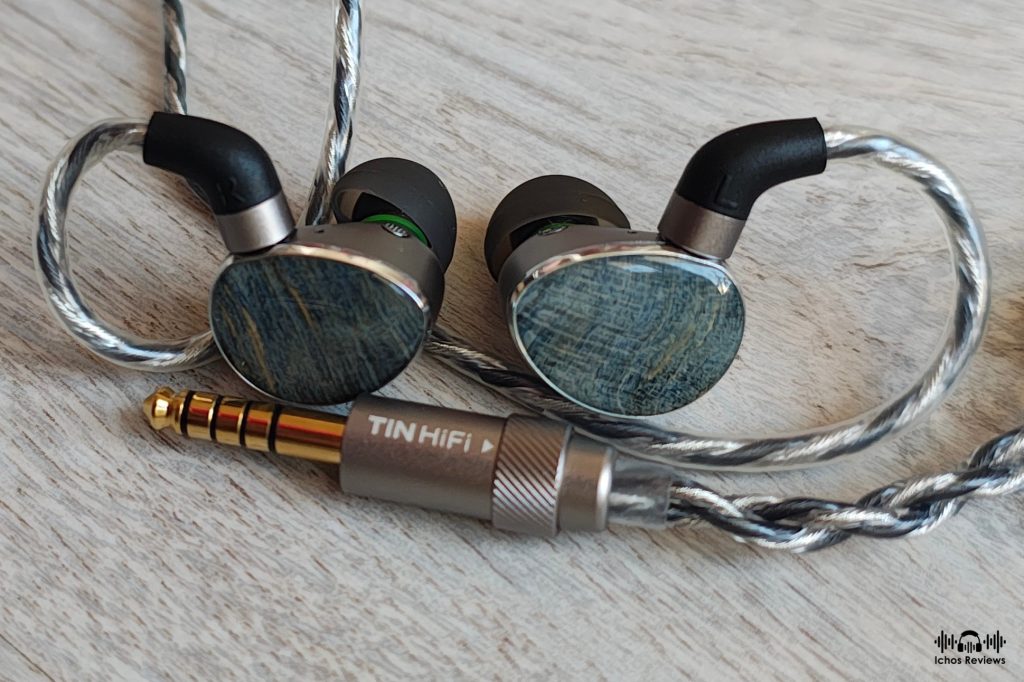
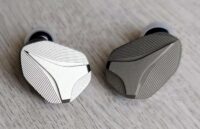
The earphone shells are made from CNC-machined aluminum and come along with natural wood faceplates that have unique color and grain patterns. The shells stand out for their high quality finish and the faceplates look very beautiful under various lighting angles. The TinHiFi T6 are exceptionally well made earphones that feel much more premium than their price would suggest.
The lightweight (just 6g each) and small sized shells have an ergonomic shape that makes them easy to wear and feel comfortable even after prolonged use. The overall fit is slightly shallow and the nozzles are relatively short, so users with larger ear cavities might need to experiment with double-flange ear tips or push the earphones against the ear to achieve a firm and stable fit.
Each shell has two venting holes that don’t compromise noise isolation which is quite good when playing music.
Accessories
TinHiFi spared no expenses and equipped the T6 with a lot of high quality and useful accessories.
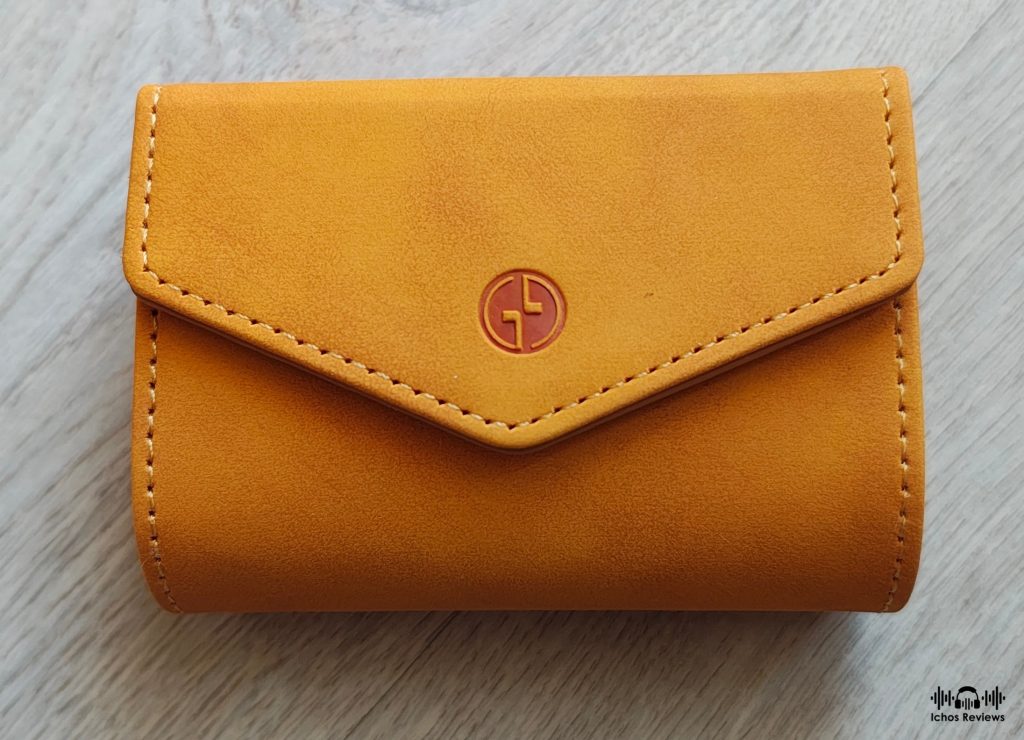
The centerpiece is the luxurious carrying case which is made from genuine leather that is dyed in a deep yellow color. The case has enough space to hold the earphones together with your favorite USB DAC.
Other accessories include two types of silicone ear tips in three sizes each and two pairs of memory foam ear tips, all of them tidy stored in a handy plastic box. There are also four extra APC acoustic filters, plus a lot of spare sponges and meshes for the tuning nozzles.
The Stock Cable
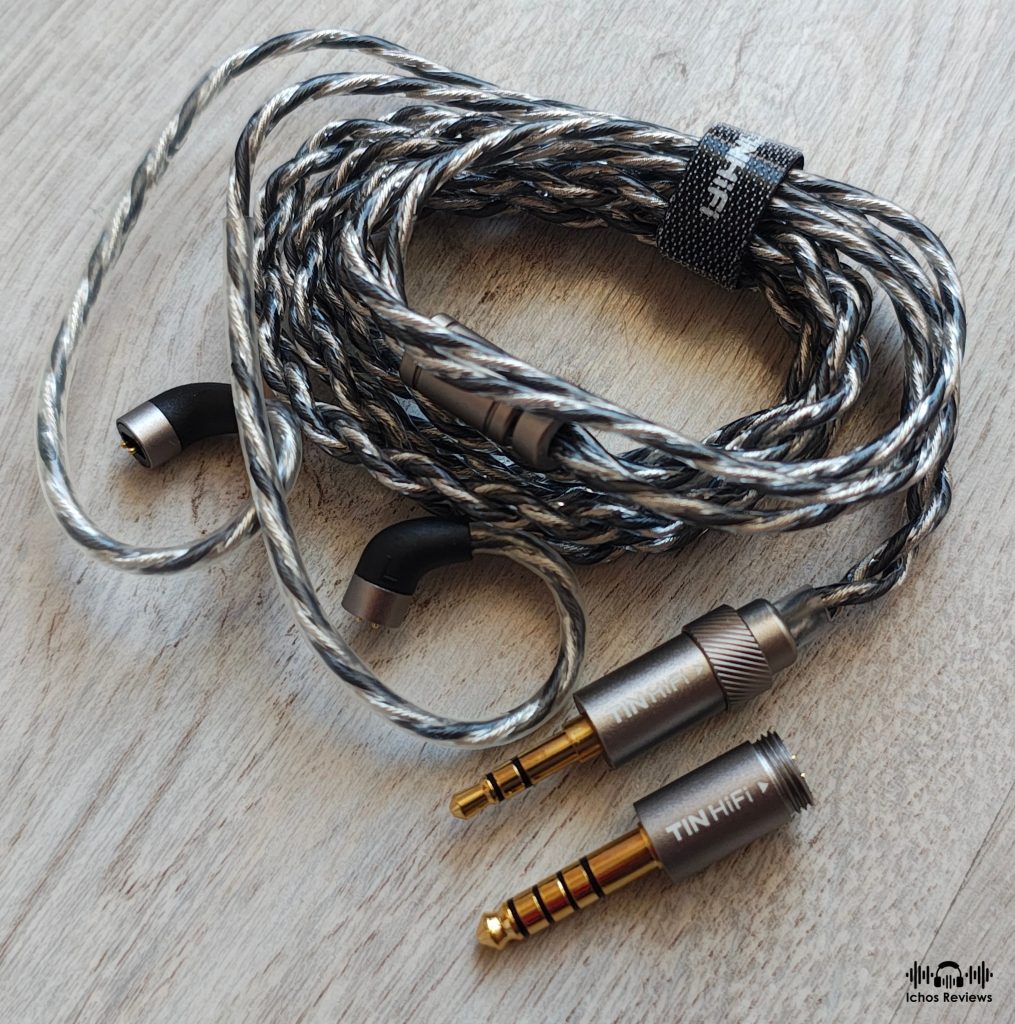
The high quality modular cable is designed with QDC instead of plain 2-pin connectors, which are more secure and reliable for long term use. The package includes both 3.5mm & 4.4mm plugs that are easy to swap.
This is a well made cable with high-purity oxygen-free copper conductors and silver-plated twisted cores in a four-strand design. It gets a little tangled but it is not too heavy, it looks durable and produces low minimal friction noise.
TinHiFi T6 – The Gaming Edition
The TinHiFi T6 is also available in a gaming edition that includes an extra cable with a USB type-C connector and a noise cancelling microphone. The cable is equipped with an onboard DAC and DSP engine that connects with the WALKPLAY application, allowing the user to adjust a fully customizable PEQ.
Sensitivity
Actual impedance and sensitivity ratings are not disclosed in TinHiFi’s webpage or the printed manual that comes along with the earphones, however real world usage dictates that the T6 are quite easy to drive and not too picky about source noise.
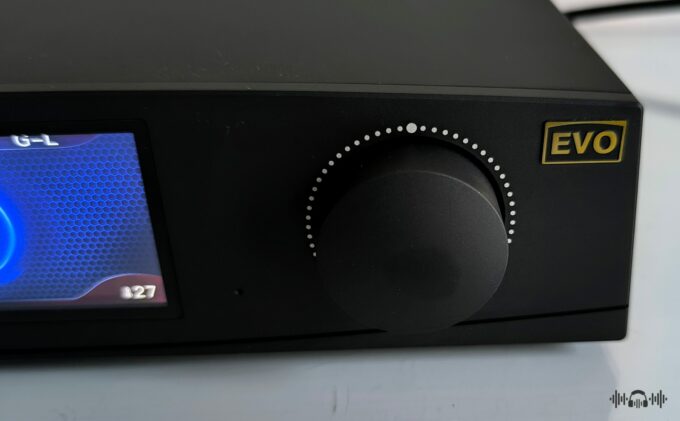
To get a rough idea about how sensitive they are, the FiiO M21 DAP can get them extremely loud at ¾ of its volume range at the low gain setting from the balanced output. Various other high quality USB DAC dongles, like the NICEHCK Octave, can also drive the T6 to their full potential.
Listening evaluation
The overall sound signature of the T6 remains pretty much the same across all three tuning nozzles with some notable differences that are going to be discussed later on. I decided to use the black nozzles as the basis for the listening evaluation since they are supposed to offer the most reference tuning.
The TinHiFi T6 is tuned with a relatively balanced, non too aggressive V-shaped sonic profile, featuring a tasteful emphasis in the bass and treble while keeping the midrange sufficiently present and natural. This kind of tuning gives the earphones a versatile character that adapts well to a wide variety of music genres.
The sub-bass is deep enough to reproduce the lowest octave with satisfying authority, while the mid-bass has a generous boost that adds plenty of weight and impact without masking the mids or overshadowing the higher frequencies.
The low-end never comes across as overpowering, however its tonal accuracy remains questionable, even with the “reference HiFi” nozzles. The bass of the T6 is tuned for fun and excitement rather than strict, reference tonal precision. It has the ideal amount of prominence to sound fresh, enjoyable and impressive with modern electronic or classic rock music but some tonal shifts should be expected when listening to classical.
From a technical point of view, the bass is surprisingly punchy and impactful but also a little bit dry and lean. It is fast enough and clean/defined but it tends to lose composure and control when things start to get more busy than usual. The dynamic driver seems to work better with plain and repetitive bass notes where it manages to hold its pace and timing.
More to know
The mid-range is present, balanced and tonally correct but it tends to sound more forward in the upper mids, which can sound a little bit edgy and shrill with the black nozzles. Swapping for one of the other two options, and especially the pink, alleviates this issue and makes it much smoother and pleasant to the ear. The T6 can sound melodic, realistic and expressive with the right source, offering plenty of excitement and sentimental depth with both instrumental and vocal music.
The black nozzles add plenty of brilliance and energy to the treble, counterbalancing the emphasized bass, without resorting into much brightness. They sound more balanced and offer the best resolution than the other two options but they might be perceived as a little hot from treble sensitive people.
The green nozzles make things a little smoother and more pleasant, without cutting out much detail and sparkle, while the pink sound considerably less fatiguing and more relaxed but also a bit darker and muted. Frequency response measurements might show otherwise but these two nozzles also give the acoustic impression of a more prominent and fun sounding low-end at the expense of tonal accuracy.
And some more
The two drivers are very well integrated from a frequency point of view where you cannot hear the transition point, however there are subtle differences in their texture quality. The upper mid-range and the treble are conceived as a bit less refined and a touch more artificial in comparison to the lower frequencies. That said, the planar driver of the T6 produces more natural and realistic timbre than if it had used a Balanced Armature driver for the same frequency group.
The sound scape is spacious and open enough with stellar imaging, especially with the black nozzles. The T6 might not be able to compete with the class-leaders and offer an out-of-the-head listening experience, but it never sounds congested or boxy, even with very demanding music.
In the end
The TinHiFi T6 might be yet another earphone, of the almost hundreds that surface every month, but it definitely has its own appeal. It has a well thought, all-rounder tuning that can handle a wide range of music styles, it is designed with tuning nozzles that offer three distinct sound profiles, and the use of a planar driver is an added bonus for people that dislike the infamous BA timbre.
The T6 is also exceptionally well made and comfortable to wear, it comes equipped with plenty of accessories and a high quality modular cable, all that at a price that is hard to beat. So yes, it easily earns a place among the competition and it is highly recommended as an affordable and good value dual-driver earphone.
Copyright – 2026.
Authored by Petros Laskis for Ichos Reviews. All content is original and copyrighted. Republishing full reviews or substantial portions without written permission is prohibited. Excerpts up to 100 words are allowed with a direct link.
+ Unique dynamic and planar driver design
+ Casual and enjoyable tuning across all music styles
+ Big and impactful bass that is not dominant
+ Expressive mids and brilliant treble
+ Very good clarity and resolution for the category
+ Not difficult to drive and unfussy of source pairing
+ Three distinct sonic profiles
+ Lightweight and comfortable to wear
+ Beautiful looking and well made
+ High quality modular cable and accessories
+ Affordable with very good value

- The bass is lacking in tonal accuracy and tends to lose composure with busy tracks
- Some artificial timbre in the higher frequencies
- All three nozzles have some sonic trade-offs
- Can be bettered by the competition in soundstage openness and layering










Leave a comment