



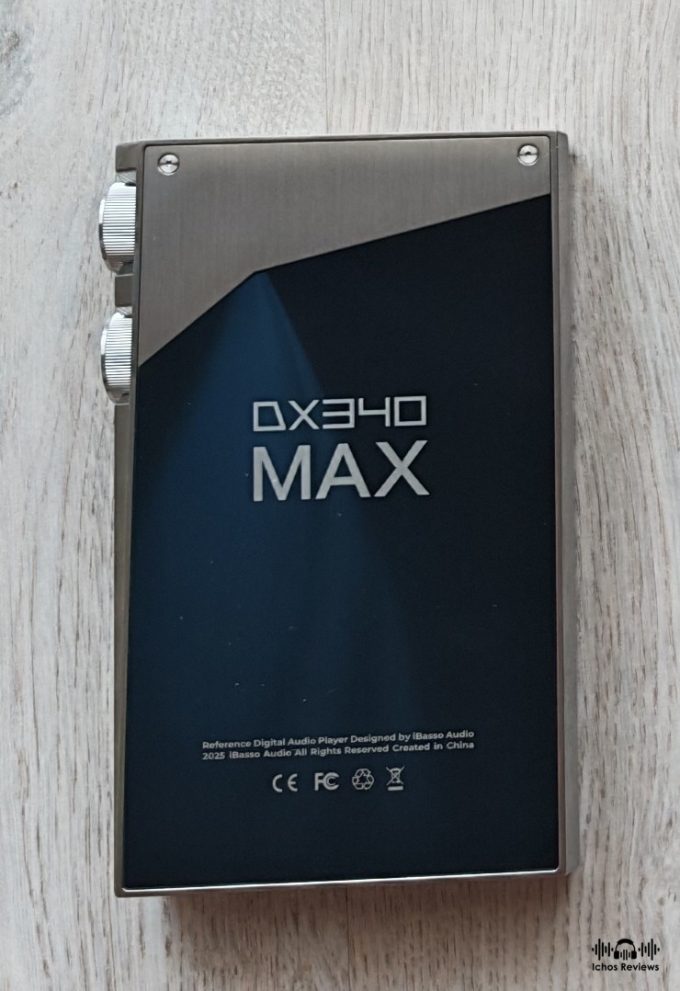
Today’s review is about the iBasso AMP18, an amplifier card designed for iBasso’s latest flagship digital audio player, the DX340. It is also backward compatible with the previous DX320 and DX300 models.
The review sample was kindly provided free of charge in exchange for an honest review. I didn’t receive monetary or any other kind of compensation and I don’t use affiliate links.
The price of the iBasso AMP18 is $279 and you can buy it from here.
iBasso Audio
Founded in 2006, iBasso Audio has been active for two decades now, researching and designing portable audio devices. The company has built its reputation through their own engineering, making Digital Audio Players, DAC/amps and earphones that combine technical innovation with a mature tuning philosophy. Moreover, iBasso is known for their reasonable pricing policy and the great price to performance ratio of their products.
Ichos Reviews has published numerous iBasso reviews that you can explore here.
iBasso AMP18
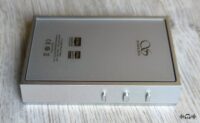
iBasso’s AMP18 is a balanced amplifier card for the DX340, DX320, and DX300 digital audio players. It features a discrete, two-stage amplification architecture with forty dual transistors in a cascaded feedback circuit.
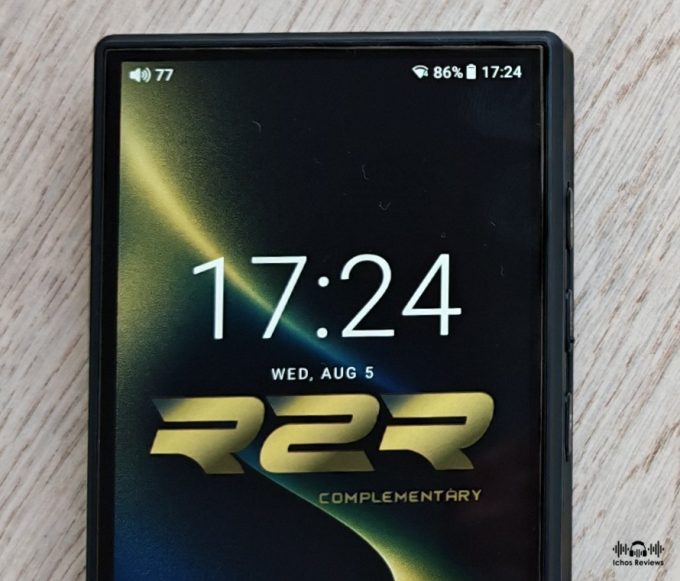
For readers unfamiliar with iBasso Audio’s ecosystem, the DX340, DX320, and DX300 are flagship digital audio players (DAPs) featuring a modular design that allows users to easily swap the amplification card located at the bottom of the player, opening up additional tuning possibilities.
The iBasso DX340 comes with the AMP15 as standard, but users have the option to purchase and install other available amplifier cards, such as the AMP16 and AMP17. It is also backward compatible with some amplifier cards originally designed for the DX320, including the AMP13 and AMP14.

iBasso AMP18 – Technical Overview
iBasso’s amplifier cards are small with limited board space so engineers are not free to do whatever they want and must tailor their creativity accordingly. This time they have really surpassed themselves as they managed to design a sophisticated amplification circuit with as many as 40 dual transistors in an 80-transistor matrix. This design allows AMP18 to produce significantly higher output current and have better low-impedance headphone compatibility,
Engineers have adopted a cascaded current feedback circuit, effectively avoiding transient distortion caused by large-loop deep negative feedback while preserving dynamic range and transient response. A complementary output circuit, significantly reduces the asymmetrical distortion typical of conventional transistor output stages. Symmetrical amplification of positive and negative half-waves allows a complete reproduction of the audio waveform, avoiding signal clipping that causes sonic distortion in low bass and high-frequency extension.
The AMP18 uses an innovative two-stage amplification circuit. The first stage utilizes operational amplifiers combined with transistors to accurately restore audio source details, while transistors boost the signal’s drive capability to prevent initial signal attenuation. The second stage utilizes current mirror amplification with complementary outputs for current output. This circuit structure ensures linear amplification, completely eliminating signal distortion.
Installation Procedure
Swapping amplifier cards is as easy as unscrewing the two tiny screws at the bottom of the DX340. Carefully remove the stock card, then install AMP18 by sliding it along the side rails until it clicks into place, and finally tighten the screws again. Throughout the whole procedure, make sure that the DAP is switched off. The package includes the necessary torx screwdriver and some spare screws.
Installing the AMP18 into the DX320 and DX300 models is a little more complicated, as you must first remove the card’s DC power supply module, which is not compatible and will not fit inside these two DAPs. Additionally, you also need to swap the AMP18’s faceplate with one from the legacy AMP cards so that it matches the DX320/DX300 chassis. For this procedure, you will need an additional Phillips screwdriver, which is not included in the package but is easy to source.

Output Power and Noise
Just like all the amplifier cards that are specifically designed for the DX340, the AMP18 supports external DC 12V power supply that enables the super gain mode, raising output power from 1170mW+1170mW@32Ω in battery mode, to a whole 1740mW+1740mW@32Ω.
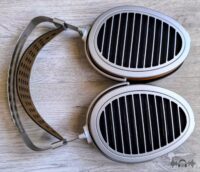
The iBasso AMP18 has plenty of power to drive a great variety of earphones and headphones, like the Meze Audio Elite or the Hifiman HE1000 Stealth. The device is already powerful enough in battery mode but it is always recommended to experiment with the DC mode, even if you don’t need the extra power, because it can make the sound more dynamic and offer better low-end control.
To get a rough idea of the AMP18’s driving power, the Meze Audio Elite can reach very loud listening levels at around half of the available volume range in high gain and battery mode.
The noise floor is exceptionally low and only audible with highly sensitive earphones like the iBasso Epitome. Even then, the AMP18 is quieter than the AMP17 and does not produce the oscillating noise that the latter exhibits with certain earphones.
Impact on Battery Duration
The AMP18 doesn’t appear to consume more power than the AMP17 and allows the iBasso DX340 to achieve around 7–8 hours of battery life, depending on usage.
The Line Output
One of the AMP18’s strengths is that it features a dedicated balanced line output that bypasses all the amplification stages, offering clean sound directly from the DX340’s DAC.
I don’t currently own iBasso’s PB6 or Kunlun headphone amplifiers so I have tested the line output performance with the Cayin C9 and Flux Lab Acoustics Mentor headphone amplifiers. Using the AMP18’s line output is the best way for anyone looking to connect the DX340 with an external amplifier without any sound quality degradation. All AMP cards sound really good, but you will be surprised to find out how well the DX340 scales with a high-end headphone amplifier or connected as a source to a 2-channel speaker system.
One minor downside is that AMP18 lacks 3.5mm phone or line outputs so your gear must be balanced.

Listening Evaluation
If you are reading this review, I assume that you either own or are at least familiar with the iBasso Audio DX340, so you probably already know how it sounds with the AMP15. For readers not familiar with the DX340, it is recommended to read its review first before proceeding.
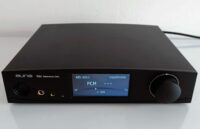
Switching from the AMP15 to the AMP18 is like moving from a dead-neutral, linear sounding headphone amplifier, such as most models by Topping and SMSL, to a discretely designed and far more sophisticated transistor amplifier like the Aune S17 Pro Evo. The iBasso Audio AMP18 is probably the closest you can get to such a presentation without using an external amplifier.
The DX340’s overall sound signature remains pretty much the same but AMP18 adds a touch of its own sonic flavor. It enhances the harmonic structure of the music, making it sound richer, more expressive and slightly warmer without attenuating the higher frequencies.
It produces full bodied and impactful bass that is fast, tight, clear and exceptionally well defined. It might lose some transparency and speed in comparison to the AMP15 but it significantly gains in weight, punch and elasticity, sounding less dry and far more atmospheric.
This AMP card feels at home with all kinds of music but some users might prefer the more technical presentation of the AMP15 that may find it more exciting for their liking.
More Listening Impressions
The mid-range is rich and organic with a distinctly analog timbre. The presentation is highly realistic and lifelike, while instruments and voices sound convincing and tonally balanced. The AMP18 is not that lacking in transparency and clarity in comparison to the AMP15 and additionally it adds more body and weight to the mids while also staying articulate and precise. Where it pulls ahead is in its deep expressiveness and its unique way to make the music sound alive and enrich its harmonic structure without compromising the DX340’s renowned fidelity.
Contrary to what might be expected, the treble does not sound rolled-off or muted. The AMP18 may not match the AMP15 in ultimate extension and speed, but it still is vivid and energetic enough while avoiding any excessive brightness. The AMP18 doesn’t smoothen out the treble, transient speed and attack are fast, this is an agile amplifier that makes music resonate and sound alive.
The main difference compared to the AMP15 is that its timbre is considerably more natural, textures have greater weight, and there are no traces of metallic artificiality or any sense of higher-pitched instruments sounding thinned out.
The iBasso DX340 is one of the least “digital” sounding DAPs currently available, and the AMP18 further eliminates any traces of digital artificiality that might still remain. The DX340 might not sound as organic and analog-like as iBasso’s D17 phone output in R2R mode, but the AMP18 – especially when paired with the H3 harmonic filter – comes remarkably close while also bringing superior control and dynamics to the table.
Technical Performance
The AMP15 is the benchmark when it comes to detail retrieval and resolution but the AMP18 is not that less resolving and at the same time it sounds less analytical and maybe more refined. The AMP18 lets the user decide when to focus on the details, when the AMP15 tends to push them to the foreground. The AMP18 is also a touch more forgiving than the ruthlessly transparent AMP15 that will not do any favors to lesser quality recordings.
The Immersive Soundstage
The soundstage is where the AMP18 pulls ahead from any other AMP card, even the tube based ones, or my long time favorite AMP17. It is not about how open and spacious it is, or how well it images both horizontally and vertically. It is mostly about how immersive and holographic it sounds.
The AMP18 draws the listener deep into the recording, creating the sensation of actually being present at the concert (or the studio) rather than just listening to the music. The AMP15 or AMP17 might image with surgical precision and sound more focused but only the AMP18 can make you feel and breathe the actual atmosphere of the recording.

Comparison with the iBasso AMP17
Going into detailed comparisons with all the other AMP cards that are compatible with the DX340 is out of the scope of this review because it is very difficult to go back and forth between them with only one device at hand. I have briefly described the sonic differences with the AMP15 in the main part of this review and now I am going to add some brief comments regarding the iBasso AMP17.
Both AMPs share a lot of common traits and they tend to sound more identical than the AMP18 does with the AMP15. To use an audio example, it is like switching from Class AB to Class A mode on the same amplifier, where the AMP17 stands for the Class AB and the AMP18 for Class A. Readers familiar with the Cayin C9 portable headphone amplifier or some Cayin DAPs that support this function might understand better what I mean.
Similar DNA – Different Personalities
These two AMP cards share the same overall sonic profile but they differ in their technical behavior and their timbre characteristics.
They sound especially natural and realistic, with almost zero digital artificiality, but the AMP18 is the one with the most analog-like and organic timbre. It is also the one with the fuller and more weighty textures, especially in the bass. Speaking of bass, the AMP18 sounds less dry and more elastic but the AMP17 punches harder, it is faster with sharper attacks and better overall control.
The AMP17’s impressive speed also extends to the treble where it offers faster transients and sounds a bit more energetic, but it also tends to thin out the textures a little bit. To my surprise, the AMP17 is slightly less bright on the treble than the AMP18, but not as natural because when comparing the two, you can’t fail to notice some traces of metallic sharpness that are not present on the AMP18.
It is more transparent and technical sounding than the AMP18 but not as expressive or harmoniously rich. The AMP18 sounds more immersive and holographic than the AMP17, which has left me amazed in these regards before the arrival of the AMP18. Still, I can’t decide which one is my favorite because the AMP17 might lose a little in dimensionality and holography, however it images sharper and more focused.
AMP18 or AMP17 – That is the Question
Back when I reviewed the AMP17, I thought that it was the AMP card that unlocked the full potential of the iBasso DX340 and made it sound really great. I still think the same but now this impression also extends to the AMP18 which is definitely in the same league with the AMP17, if not even better.
I would choose the latter for its slightly advanced technical performance and reference neutral tuning, while the former for its analog, organic timbre and slightly warmer tuning. Ideally, I would own both and swap between them depending on the mood, the music and the phones.

In the End
The iBasso AMP18 is a great amplifier card that is ideal for anyone looking to extract the most analog and organic timbre out of the iBasso DX340. It is very powerful, even without the external power supply, but also silent with sensitive loads, and also backwards compatible with the DX320 and DX300 models.
Variety is what makes the audio hobby so addictive and iBasso flagship DAPs are celebrated for their modular design, allowing users to explore uncharted sonic paths by simply swapping amplifier cards.
The AMP18 stands among the finest AMP cards available, particularly for listeners who favor an analog-like sound signature without any compromises in technical performance and fidelity.
Copyright – 2026.
Authored by Petros Laskis for Ichos Reviews. All content is original and copyrighted. Republishing full reviews or substantial portions without written permission is prohibited. Excerpts up to 100 words are allowed with a direct link.
+ Analog-like and organic sonic presentation
+ Natural and realistic timbre
+ Excellent technical performance and transparency
+ Dynamic and impactful bass
+ Expressive mids and refined treble
+ Full bodied and weighty textures
+ Immersive and holographic soundstage
+ Very low background noise
+ High output power both in battery and DC modes
+ Balanced line output direct out of the DAC
+ Easy to install and backwards compatible with the DX320/DX300

- No single-ended outputs
- Installation on the iBasso DX320/DX300 requires a bit more technical skill





Leave a comment