

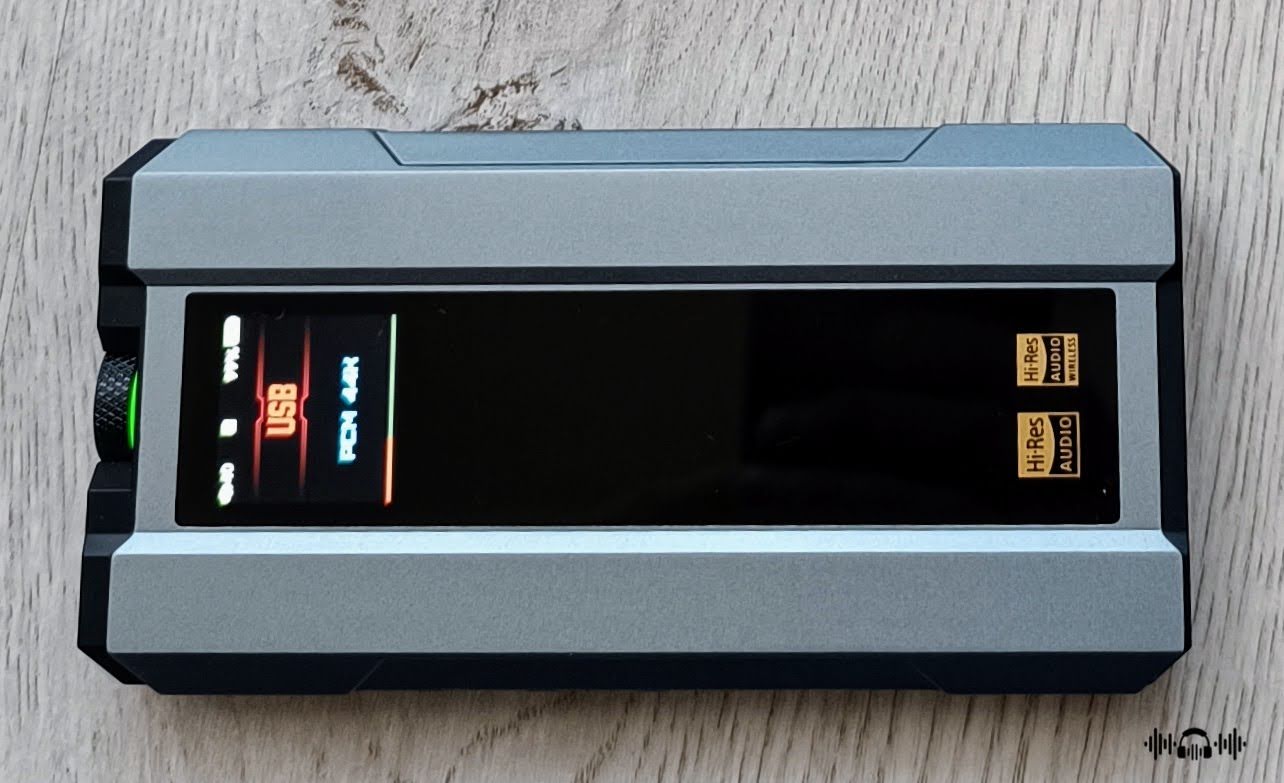

The FiiO Q15 was kindly provided free of charge in exchange for an honest review. I didn’t receive monetary or any other kind of compensation and I don’t use affiliate links. The price of the FiiO Q15 is $399 and you can buy it from FiiO.eu.
FiiO Q15 Review
The brand new FiiO Q15 is an advanced DAC and headphone amplifier designed to enhance your audio experience. Combining portability with versatility, this battery-powered device is perfect for on-the-go use, while also offering a desktop working mode for a seamless transition between environments. Positioned as a mid-range option, the Q15 follows in the footsteps of FiiO’s flagship model, the Q7, while also succeeding the renowned FiiO Q5S Type-C.
Technical highlights
FiiO has returned to utilizing AKM DAC chips in their latest model, the Q15. This device features the flagship DAC combo AK4191EQ+AK4499EX, which is the same setup found in the FiiO K9 AKM. Unlike other models that use THX modules, the fully balanced headphone amplifier in the FiiO Q15 is designed with op-amps. The audio circuit in the FiiO Q15 is meticulously crafted, incorporating DAC-IV-LPF-gain and headphone amplifier stages. The variable gain and variable voltage design of this device ensures optimal performance of the audio circuit. Additionally, there are separate low-voltage, low-gain and high-voltage, high-gain modes, catering to both IEMs and full-size headphones.
The Q15 is equipped with advanced digital components comparable to the FiiO Q7, including an XMOS 16-core XU316 USB receiver that can handle up to 768kHz/32bit PCM, DSD512, and MQA full decoding. With a TI Cortex M4 processor, it guarantees reliable and effective performance across different systems, complemented by dual audio crystal oscillators for asynchronous/self-adaptive dual mode management.
Full technical specifications are available here.
External appearance
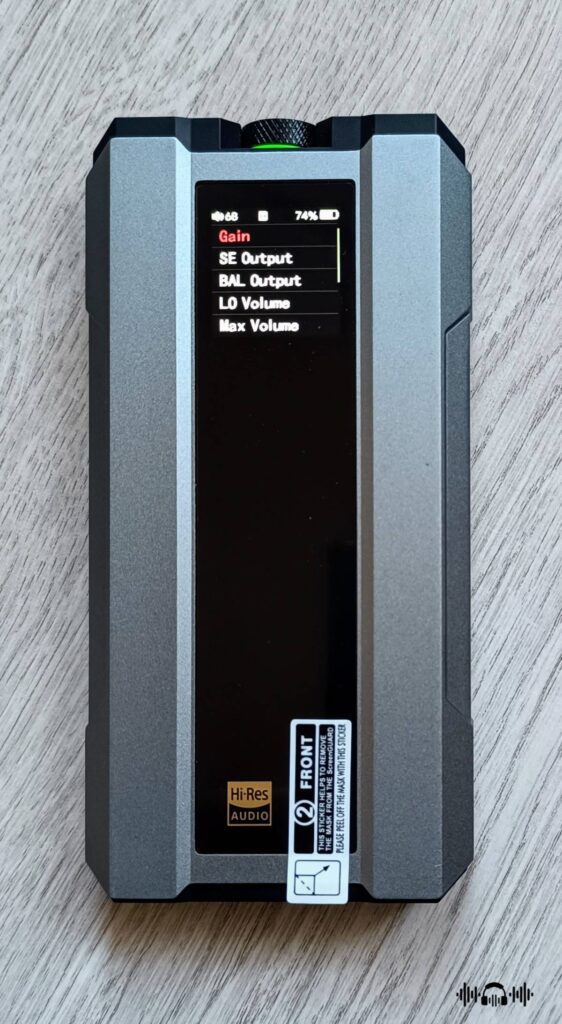
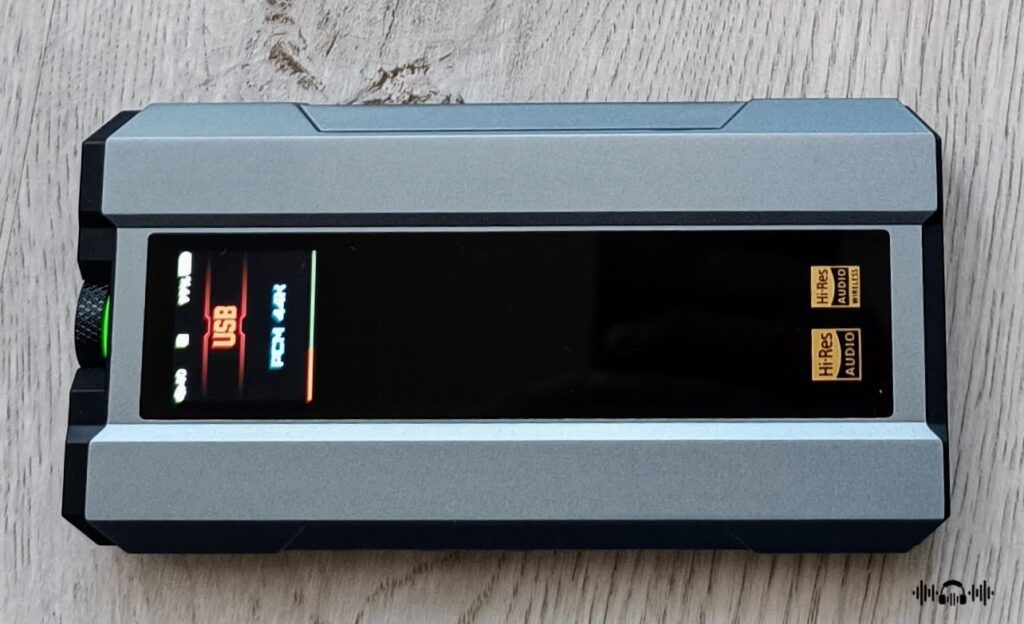
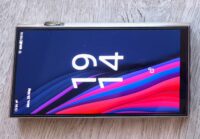
The FiiO Q15 has a sleek rectangular chassis that perfectly follows the golden size ratio of 18:9 and is also distinguished by a modern and futuristic look. However, unlike its predecessor, the FiiO Q7, it features smoother edges and corners. Surrounding the volume knob is an RGB indicator LED that dynamically changes colors based on the input sampling rate. Both the front and back panels of the device are reinforced with AG glass, known for its anti-scratch and anti-fingerprint properties. With the use of top-notch materials, the FiiO Q15 is impeccably crafted and exudes exceptional quality and finish.
The Q15 offers a balance between size and weight, being larger and heavier than the FiiO Q11 but smaller and lighter than the Q7. It is rather transportable than truly portable but it comfortably fits in your hand for one-handed operation. To pair it with a phone, the package includes silicone pad and rings for added convenience.
Connectivity
The FiiO Q15 is equipped with a variety of input and output interfaces to accommodate different usage situations. It features USB type-C and RCA coaxial digital inputs, along with Bluetooth connectivity powered by the QCC5125 chipset. This chipset enables support for high resolution codecs like aptX HD and LDAC. The Bluetooth connectivity offers a reliable signal with good range, and the sound quality is nearly on par with wired connections. While not quite as superior, it is extremely convenient in situations where cables are not feasible.
The device features two headphone outputs (balanced 4.4mm and unbalanced 3.5mm) that can be set up as line outputs with either a fixed or variable level. Digital inputs are situated at the bottom of the unit, while analog inputs are positioned at the top alongside the multifunction volume control knob/button.
Hardware buttons and LCD display
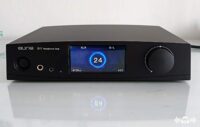
The FiiO Q15, similar to the FiiO Q7, comes equipped with a vibrant full-color IPS display measuring 1.3 inches. Despite its compact size, this display effectively showcases valuable information and facilitates seamless navigation through different settings.
In addition to the multifunction volume knob, the FiiO Q15 has four extra buttons to enhance user experience. These include a power on/off button and three buttons dedicated to playback control. However, what is missing, is a customizable multifunction button, a feature commonly seen in FiiO’s digital audio players.
Global PEQ and other notable features
The Q15 is equipped with a global equalizer featuring 7 EQ presets and 3 customizable PEQ presets. The PEQ functionality is operational in both Bluetooth and USB DAC modes. Users can fine-tune the PEQ settings using the FiiO control app, while the preset configurations are stored in the device’s internal memory for easy access via the internal menu, eliminating the necessity to use the app after the final configuration. I do not utilize EQ, so I have not extensively adjusted the settings. Therefore, I am unable to provide a detailed analysis of its functionality or confirm if it performs as advertised.
Some of the other noteworthy features encompass 7 pre-installed digital filters, automatic power-saving modes, screen orientation adjustment, and automatic transition to ultra high gain, among others.
The desktop mode
The Q15, similar to other recent FiiO devices, features a desktop mode that allows you to bypass the internal battery. To activate this mode, simply connect a 5V external power adapter to the dedicated USB type-C port (colored orange) and switch to desktop mode using the corresponding switch located on the right side at the bottom. For optimal sound quality with minimal background noise, consider using a high-quality power adapter such as the iFi iPower2 instead of a phone PD charger.
The desktop mode grants access to the Ultra high gain feature, which amplifies the power output to 1610mW/32Ω when using the balanced output. It is important to note that there is a setting in the menu that allows the user to choose whether the Ultra high gain will be automatically activated when the power adapter is plugged in. I recommend keeping this setting on “manual” to prevent any sudden increases in volume that could potentially harm delicate earphones.
Battery duration
The Q15 has a 5500mAh battery with fast charging capabilities, offering around 7 hours of playback time in Super high gain mode. When using more sensitive earphones, I managed to get approximately 9 hours of playback. Additionally, the Q15 features a phone mode which can be activated using a dedicated switch, allowing it to operate independently from the host device’s power source. Remember to disable this mode in order to charge the FiiO Q15.
Accessories
The FiiO Q15 comes with an array of accessories, such as a dual Type-C fast charging data cable, a dual Type-C short data cable, a USB type A to C adapter, a storage bag, a silicone pad, PE film pre-applied to the front face, and two silicone rings. However, it does not include a silicone protective case.
Power output and associated gear
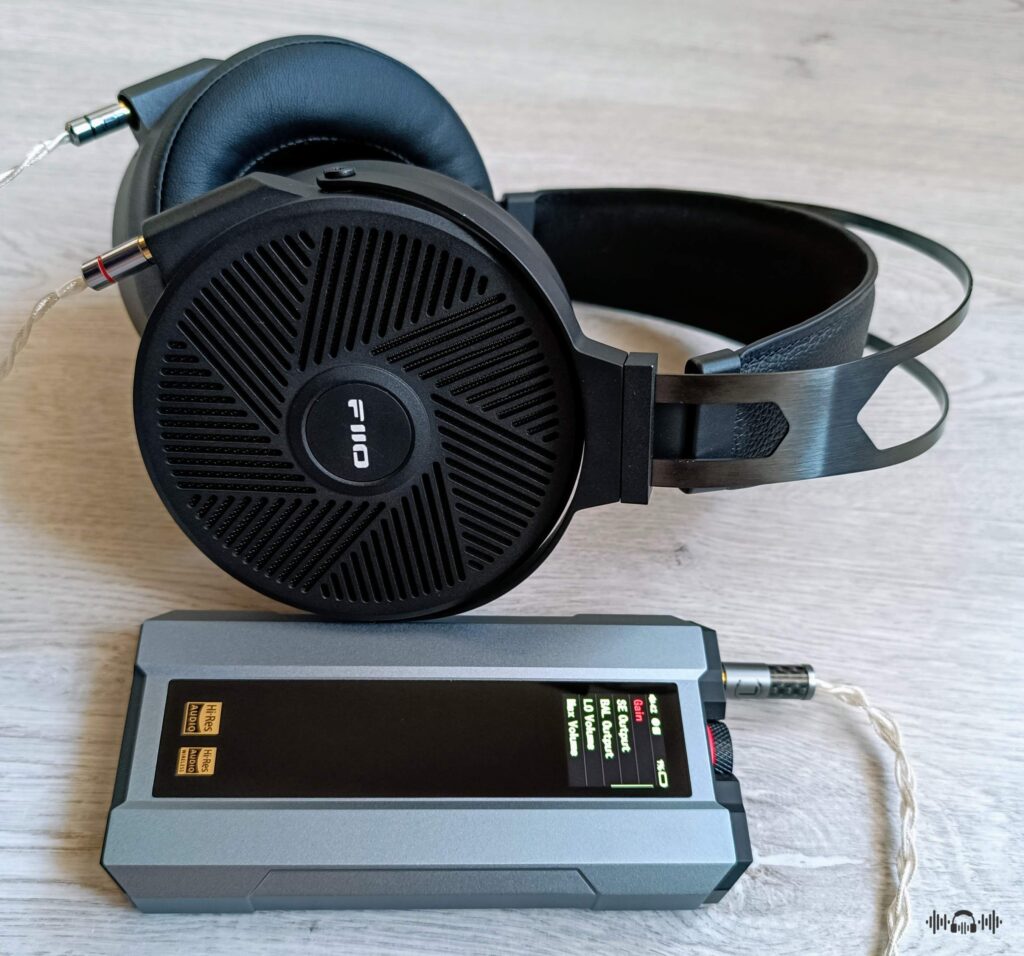
The FiiO Q15 has a maximum power output of 1060mWpc/32Ω in battery mode, which increases to 1610mWpc/32Ω in desktop mode. This provides ample power to drive a variety of full-sized headphones in battery mode, and even more when using an external power adapter. With the ability to easily power headphones such as the FiiO FT5, Sennheiser HD660S2 and HIFIMAN Arya Organic, the FiiO Q15 delivers exceptional performance with great dynamic range. Additionally, the background noise is minimal, allowing for the use of highly sensitive earphones without any issues. The five gain settings further enhance the ability to match the Q15 with different loads.
The FiiO Q15 may not offer the same level of power as the FiiO Q7, which is capable of achieving true desktop performance. However, it’s important to remember that the Q7 is significantly larger and heavier, requiring an external 9V switching power supply to access its desktop mode.
The FiiO Q15 underwent its standard burn-in period of 100 hours before the listening evaluation. For the review, pure silver cables from Lavricables were utilized to guarantee optimal transparency.

Listening impressions
The text includes concise comparisons between the FiiO Q15 and the FiiO Q7.
The FiiO Q15 can be seen as a compact counterpart to the FiiO K9 AKM, featuring similar traits in terms of audio quality and performance. With its outstanding tonal balance, transparency, and fidelity, the Q15 delivers a clear and accurate sound signature, showcasing impressive technical capabilities and ample driving power for its small size to provide an immersive audio journey.
The sound profile is predominantly neutral but with a touch of warmth, a characteristic commonly associated with the AKM DAC chip used in this device. It offers a slightly warmer and more natural sound compared to the FiiO K9 AKM, likely due to the absence of THX modules in the amplification process. The overall sound signature of the Q15 falls somewhere between the FiiO M15S and the K9 AKM, leaning towards an analog feel with vibrant harmonies and rich overtones that maintain fidelity and transparency without veering into overly sweet or dark tones.
The Q15 delivers a rich and powerful bass that is clear, tight and controlled, providing a satisfying listening experience. While it may not have the same level of dynamic contrast and punchiness as the FiiO Q7, it still manages to make your headphones resonate with thundering bass. When transitioning to desktop mode, the low-end becomes even more dynamic and impactful, particularly with headphones that require more power to drive. Although it may not match the technical prowess of the Q7, the Q15 offers a fuller and weightier bass experience.
More listening impressions
The mid-range offers impressive natural fluidity and a lush sound, making it musical and engaging with realistic timbre and full-bodied textures. The mids exhibit resolution and refinement, along with colourful harmonies and captivating overtones, in contrast to the more dry and academically sterile sound of the Q7.
The high frequencies are expansive, lively, and radiant without coming across as harsh, sharp, or aggressive. It offers a smoother and gentler sound compared to the Q7, although it may not be as technically impressive or inherently energetic. The Q15 will appeal to individuals who prefer a more laid-back sound signature and a less critical or detailed presentation. The tonality is slightly more natural with fewer artificial elements than the Q7, while the Q15 is a bit more forgiving although it lacks the transparency and accuracy of its larger counterpart.
The Q15 offers an expansive and airy soundstage, with a touch of holographic quality that sets it apart from the Q7. The THX amplifiers in the Q7 can sometimes restrict the sense of space. The stereo field is vast and immersive, with precise positioning of instruments and vocals in both width and depth. While the Q7 may have a slight edge in imaging and separation, the Q15 delivers exceptional overall performance and realism that surpasses expectations for its category. It is a versatile option that pairs well with various genres of music and a wide range of headphones.
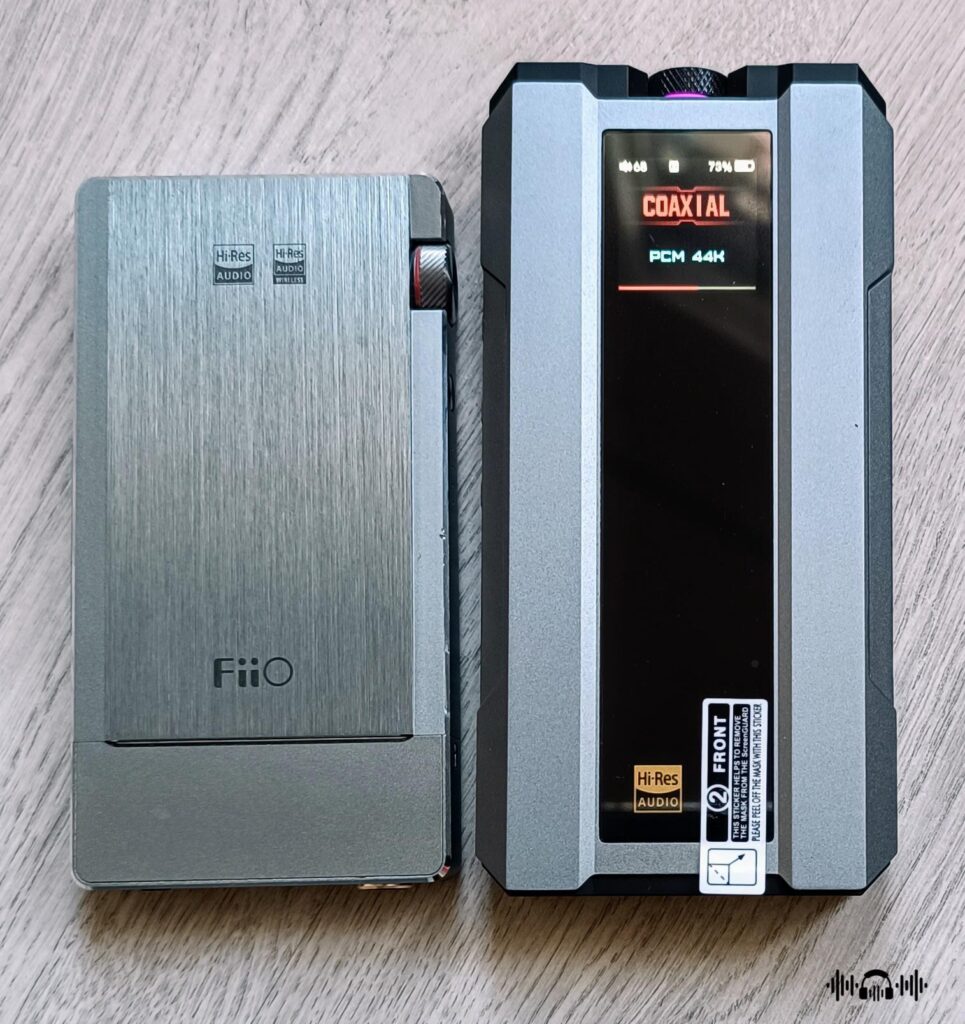
Vs the FiiO Q5S TC
The venerable FiiO Q5S TC quickly became my go-to portable DAC/amp due to its exceptional sound quality and sleek design. I was particularly impressed by the innovative interchangeable amp-card system, which was quite groundbreaking at the time. When comparing the Q5S TC to the latest Q15 model, it’s evident that FiiO has made significant advancements in engineering, design, and craftsmanship over the years.
The FiiO Q15 not only offers significantly improved sound quality, but also a wider range of features and superior craftsmanship. For current owners of the Q5S TC, the Q15 serves as the ideal upgrade option. While transitioning to the Q15, the only aspects I would miss from the older device are its portability and the sleek, minimalist design that has always been a personal favorite of mine.
Vs the Questyle CMA18 Portable
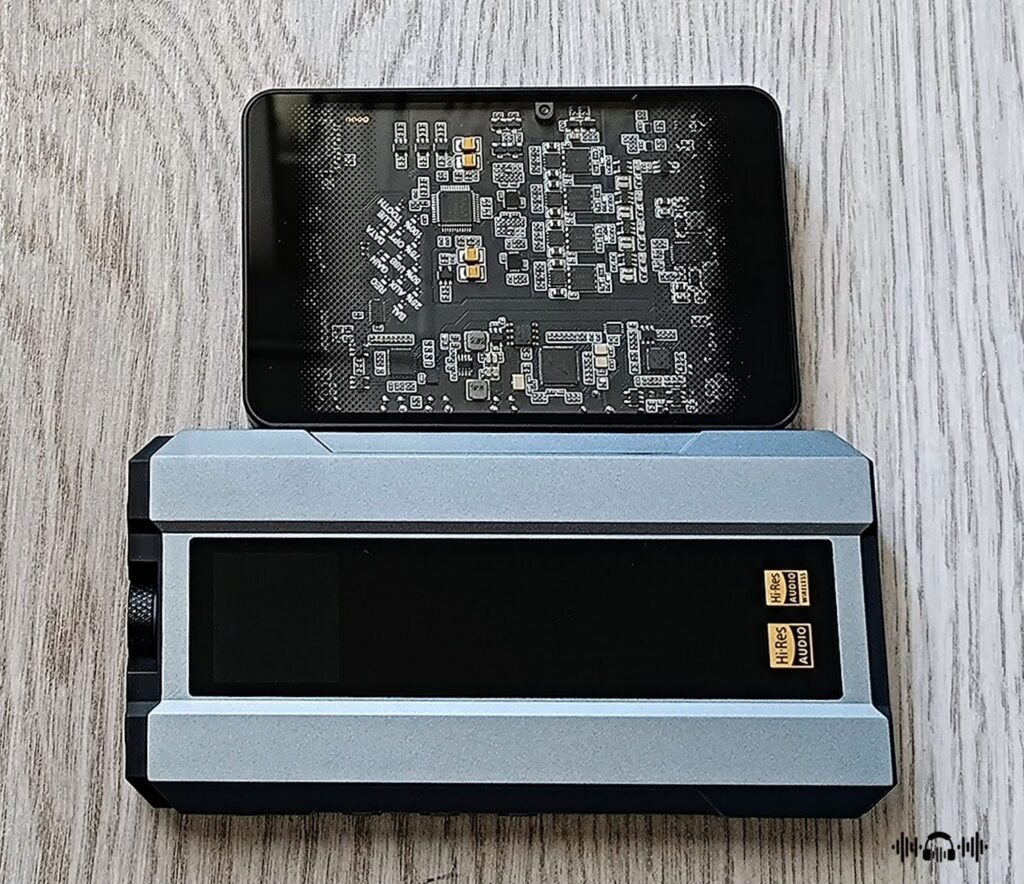
The Questyle CMA18 Portable comes at a price nearly twice that of the FiiO Q15. It boasts the AK4493 DAC chip along with Questyle’s innovative current-mode SiP amplification modules in a balanced setup. While the CMA18 Portable offers a distinctive analog input ADC recording feature, it lacks support for desktop mode as well as coaxial RCA input or an LCD screen. Despite these limitations, it is notably slimmer and more compact than the Q15, yet delivers equivalent power output in battery mode.
In terms of sound, they possess numerous common traits, including a natural and organic tone, smooth mid-range, impactful bass, and controlled treble. Their sound signatures are more similar than dissimilar. However, the Q15 exhibits slightly more dynamism with a heavier emphasis on low frequencies and superior technical performance overall. On the other hand, the CMA18 Portable offers a slightly more organic and analog sound, creating a more immersive and holographic soundstage.
Both devices offer exceptional sound quality, but ultimately, you’ll need to decide between the feature-rich yet affordable FiiO Q15 and the compact and portable yet equally powerful Questyle CMA18 Portable.
In the end
The FiiO Q15 stands out as one of FiiO’s most triumphant audio devices. It stands out for its exceptional sonic capabilities, ample power, the distinctive desktop mode, and a variety of other features within a compact design. Crafted with precision and innovation, the FiiO Q15 offers great value for its price, positioning it as a top contender in the realm of portable, battery-powered USB DAC/amps.
Copyright – Petros Laskis 2024.
+ Exceptional sound quality
+ Excellent technicalities
+ Dynamic and impactful bass
+ Natural and organic timbre
+ Musical and engaging
+ Resolving and refined
+ Silent background
+ Immersive and holographic
+ Powerful amplifier
+ Desktop working mode
+ Connectivity and features
+ Global PEQ
+ Well made and designed
+ Value for money

- Average battery duration
- Rather heavy and bulky for portable use
- No protective case




Hello.
Does Q15 sound better than K9 AKM for someone who only use IEMs? I care about timbre and “R2R-like” sound.
Hi, they sound more or less the same but the Q15 is a touch warmer. Not exactly R2R but still quite organic without much digital artifacts. A great option for iems.
Hello,
I’m going to invest in the Q15 and an open headphone.
On the paper I would tend to go with a Meze 109 Pro.
Based on your listening experiences, what would be the best opened headphones to pair with?
Is it worth/reasonable to put more thant 800$?
Many thanks for your feedbacks.
Warm regards,
Arnaud
Hello Arnaud,
The Q15 can pair well with a great variety of headphones, even more expensive ones. So the question is whether you like the tuning of the 109 pro or not. There is no need to pay more money although the Q15 can support more expensive headphones. From a technical point of view, the 109 Pro can do full justice to the Q15. Just remember to go balanced.
Thank you so much for your quick answer.
This will help me to narrow my research to find dealers with models available for testing.
I had a good experience listening the Meze 109, but it was 1 year ago.
So this will be my starting point for new listening sessions and I will not lose too much time if I like it again ;)
I think that you are going to be very satisfying with the combination and the overall value of the set.
I’ve just received the Meze 109 Pro, starting the running-in ;)
I’m wondering if the M15S could bring something compared to the Q15.
Better technicalities with the same kind of slightly warm and musical sound without significant digital glare. Plus the ease of use.
As I fear losing the usage od a DAP because of an OS version deprecated (i.e. unable to update streaming apps like Qobuz…) I thing I would like to go with the Q5 + a dedicated cheap SmartPhone as input.
Not sure if a Samsung A15 (roughly 160€) or a Google Pixel 5 or even Xiaomi Poco M6 can make it.
Is there advices/feebacks somewhere about recommnded smartphone to use with a portable DAC?
Is it a good idea compare to the M15S?
Thanks again for sharing your experience!
I wouldn’t be worried about OS compatibility because all these streaming applications support very old Android versions. Anyway, the Q15 can be used with a variety of Android phones from past models, like an old Motorola that I have, or newer ones like my Xiaomi Redmi Note 12 pro.
Thanks Petros, I will test a couple of dap and box tomorrow at the dealer.
Let see how it helps, and which route I will take ;)
Splendid!!
Hi ;)
I’m a little disapointed, unable to test the Q15, nor M23… a FiiO R7, SR35 and iFi Gryphon were available :(
I had my 109 Pro, Qobuz listening (Iphone 13 on the Gryphon).
I started with the R7, it was just ok to me but far from my temporary setup at home (Devialet D200 pre-out, with Roon AIR and Qobuz) which is very detailed.
SR35 and Gryphon were better.
I do prefer SR35 sound, Gryphon impressed me at the begining, but after some comparison I think they achieved the same level of bass n the Meze 109, but I find the SR35 more detailed, more subtile, I tried xBass+ on the Gryphon… awfull :)
Note sure how is the Q15 compared to a SR35, I like the form factor (but the non removable battery is a no go for me).
Acctually I think I like also having only 1 device… so maybe iBasso DX260 could be a good option if I wnt to put more money than the Q15 (I really like the desktop mode feature).
So now Q15 or DX260… :)
The Q15 is warmer than the DX260 which is one of ultimate transparency and separation.
Thanks again Petros for your feedbacks.
One last question as I was not paying attention to DAP, ans as I’m also new in the android world. I mainly use Qobuz to stream hires, is it really bit perfect on the DX260 (or 180) when using the Qobuz application? I guess using Mango OS or Mango app there is no way to use streaming services?
Hi Arnaud, streaming Qobuz with DX260/180 or any FiiO DAP is absolutely bit perfect. Mango OS is a pure player that doesn’t support streaming.
Always a pleasure to read your reviews and to have reactive feedbacks!
Whereas information about system bypass for the D180 was written in commercial specs (my nad…) I have read, it was less obvious for the D260 ;)
Hello
I would like to ask about Fiio Q7 with Dan Clark E3 headphone.
Could Q7 bring the Max. potential of this DCE3 headphone? Or is even the Q15 enough?
I would appreciate IT for the advice.
best Regards,
Song
Hello,
I don’t have them to test personally but reading the specs they are 27ohms~90dB/mW so pretty inefficient. I would choose the most powerful source to have the piece of my mind.