


Today’s review is about the FiiO M21, an affordable digital audio player (DAP) featuring four CS43198 DAC chips, fully balanced 2-stage amplification and a desktop power supply mode that provides 950mW of output power.
The FiiO M21 was kindly provided free of charge in exchange for an honest review. I didn’t receive monetary or any other kind of compensation and I don’t use affiliate links.
The price of the FiiO M21 is $339.99 and you can buy it from here.
About FiiO
FiiO is a brand so well known among audio enthusiasts that there is no need for lengthy introductions. Their extensive catalogue spans from entry level USB DAC dongles and earphones, to flagship desktop audio components and full sized headphones. Click the link to read one of the many FiiO reviews that are featured in Ichos Reviews website.
FiiO M21
The FiiO M21 is an affordable Android based DAP, and the brand’s second least expensive option after the entry-level JM21. It is basically an advanced version of the JM21 with four CS43198 DAC chips instead of two, a more sophisticated amplification stage, an innovative desktop mode with higher output power and a larger capacity battery.
FiiO M21 Technical Features
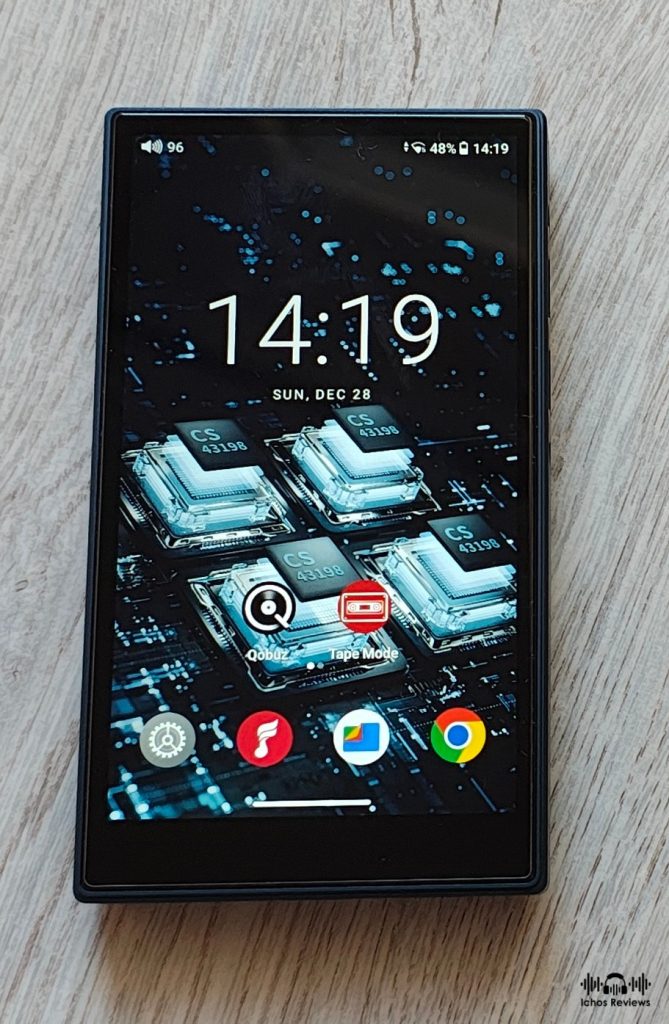
At the heart of the FiiO M21 beats Qualcomm’s Snapdragon 680 SoC with 4GB of RAM that runs the Android 13 OS with SRC bypass for bit-perfect playback. The device is equipped with 64GB of onboard memory and accepts SD cards up to 1TB for memory expansion.
Four CS43198 DAC chips form an eighth-channel differential output path, followed by a fully balanced two-stage voltage (OPA1692) and current (SGM8262) headphone amplification circuit. The digital and analog sections exist in separate partitions with independent shielding covers for optimal isolation.
There are separate power supply paths for the digital and analog circuits, which effectively reduce crosstalk between the two. The analog circuit is further subdivided into multiple independent power supplies.
High quality audio components, like high-precision thin-film resistors and low- temperature-drift capacitors, are used to ensure the best possible audio performance. Additionally, fine circuits such as the DAC and headphone amplifier are equipped with over 10 low-impedance high-capacity tantalum capacitors that provide ample energy under all circumstances.
FiiO’s patented Desktop Mode
The M21 features FiiO’s patented desktop mode that completely bypasses its internal battery, which will neither charge nor discharge. This feature becomes available by plugging an external 5V DC power supply to the dedicated USB type-C port and toggling the Desktop mode switch to the ON position.
Please note that if the USB power supply is insufficient, then the battery will be required to supply additional power. When the battery level is below 15%, inserting USB will forcibly charge the battery even if it is in Desktop Mode (charging until the battery is full).
The Super High Gain mode
M21’s Super High Gain is a gain mode that when turned on it will provide more power and greater voltage swing. In order to enable it, a fast charging adapter that supports PD3.0 or PD2.0 must be connected to the secondary USB type-C port.
The Super High Gain raises output power to a desktop-level 950mW*2@32Ω or 21Vpp@300Ω and is independent of the desktop mode, you can have it enabled and still run the device from its internal battery, no need to switch to desktop mode.
Design and Layout
If you have read the FiiO JM21 review then you will know that it is designed with a plastic back cover to reduce weight and manufacturing costs. On the contrary, the M21 features a full aluminum alloy chassis with an AG frosted glass back that feels and looks much more premium. The screen has an oleophobic coating that reduces fingerprints and smudges making it easier to read and use.
The device has a classic, rectangularly shaped form factor that is quite ergonomic and allows for easy one-hand operation. The 4.7” display is mounted edge to edge without gaps, keeping footprint as low as possible.
The M21 measures 121x68x17mm and weighs 193g so it is compact, slim and lightweight. The M21 is only 4mm thicker and 37g heavier than the JM21, despite housing a more sophisticated circuitry and a larger capacity battery.
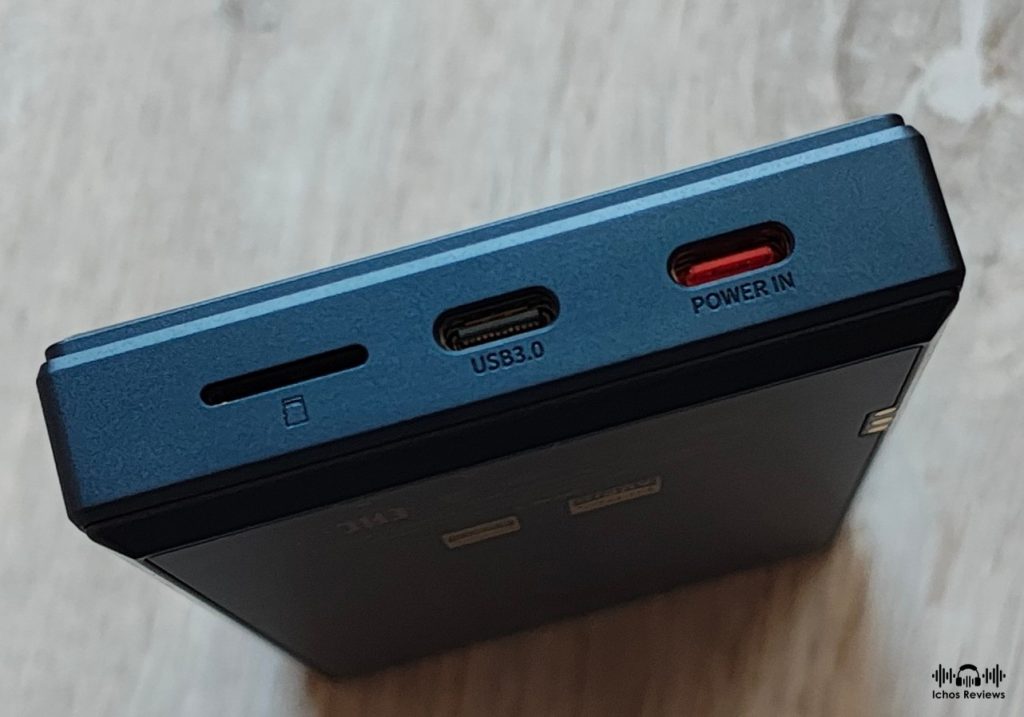
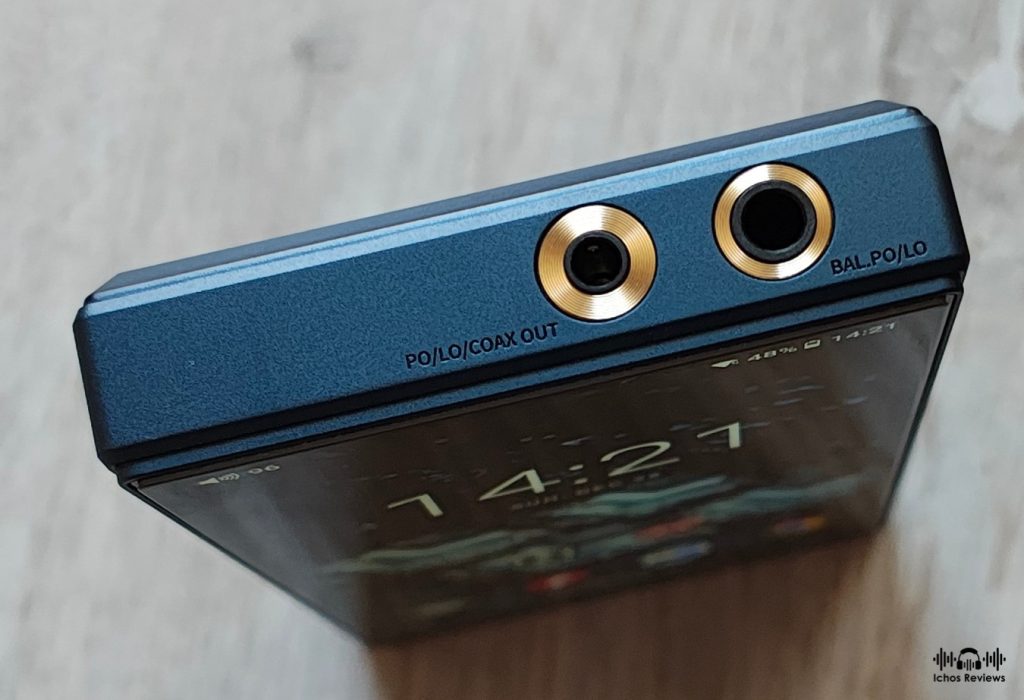
As per usual FiiO practice, the two headphone/line outputs (4.4mm & 3.5mm) are positioned at the upper top of the device, while the two USB type-C inputs and the micro SD card slot are located at the bottom.
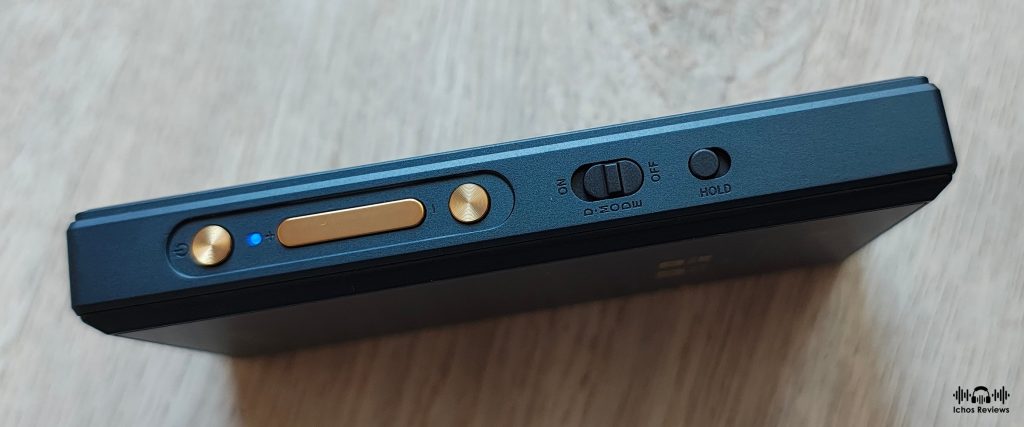
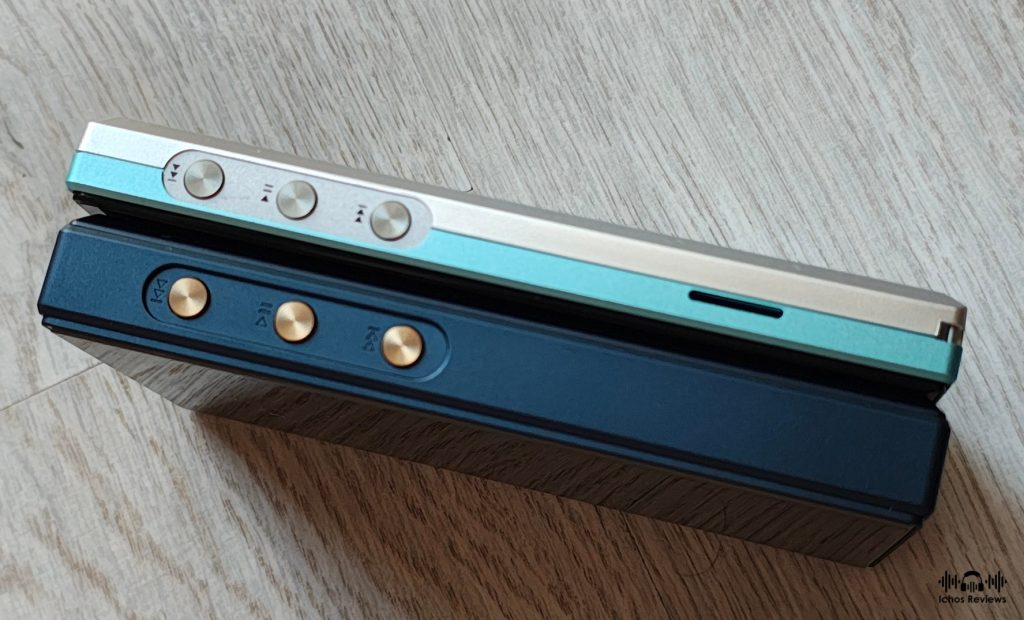
The right side houses three buttons that are used to control music playback. At the left side there are the power/lock, volume up/down and the multifunction buttons, together with the Desktop Mode and Hold switches. The multifunction button can be assigned one of several available operations through the internal menu. A tiny RGB led light changes colors in accordance with the input sampling rate.
Build quality and assembly are simply excellent without any visible flaws or imperfections. The M21 is available in titanium gold, dark blue and black finishes.
User Experience
The M21 operates on an Android 13 OS that has been carefully optimized for audio performance and bit-perfect playback. It comes with full access to the Google Play Store, allowing easy installation of streaming services, music players and other third-party applications.
Its 4.7” display is bright and vibrant, while also supporting double-tap to wake. The M21 is a fast and responsive DAP, offering a smooth and lag free user experience just like a good smartphone. You can even do multitasking, like listening to music and surfing the web at the same time.
Except for the Android mode, the M21 also supports FiiO’s pure music mode, AirPlay, DLNA, two-way USB DAC mode and bidirectional Bluetooth connectivity. There is also a low jitter coaxial output shared with the 3.5mm jack. Both headphone outputs can be used as dedicated line outputs with a fixed or variable level.
Special Audio Features
There are many user-adjustable audio parameters like amplifier gain, low pass filter mode, line output, you can enable or disable the SPDIF out etc.
The FiiO M21 also features a user-configurable 10-band PEQ with global effect, the all to DSD function that converts all incoming data to DSD and a special function called DRE or Dynamic Range Enhancement. This is something related to the CS43198 chip and you can read more about it here.
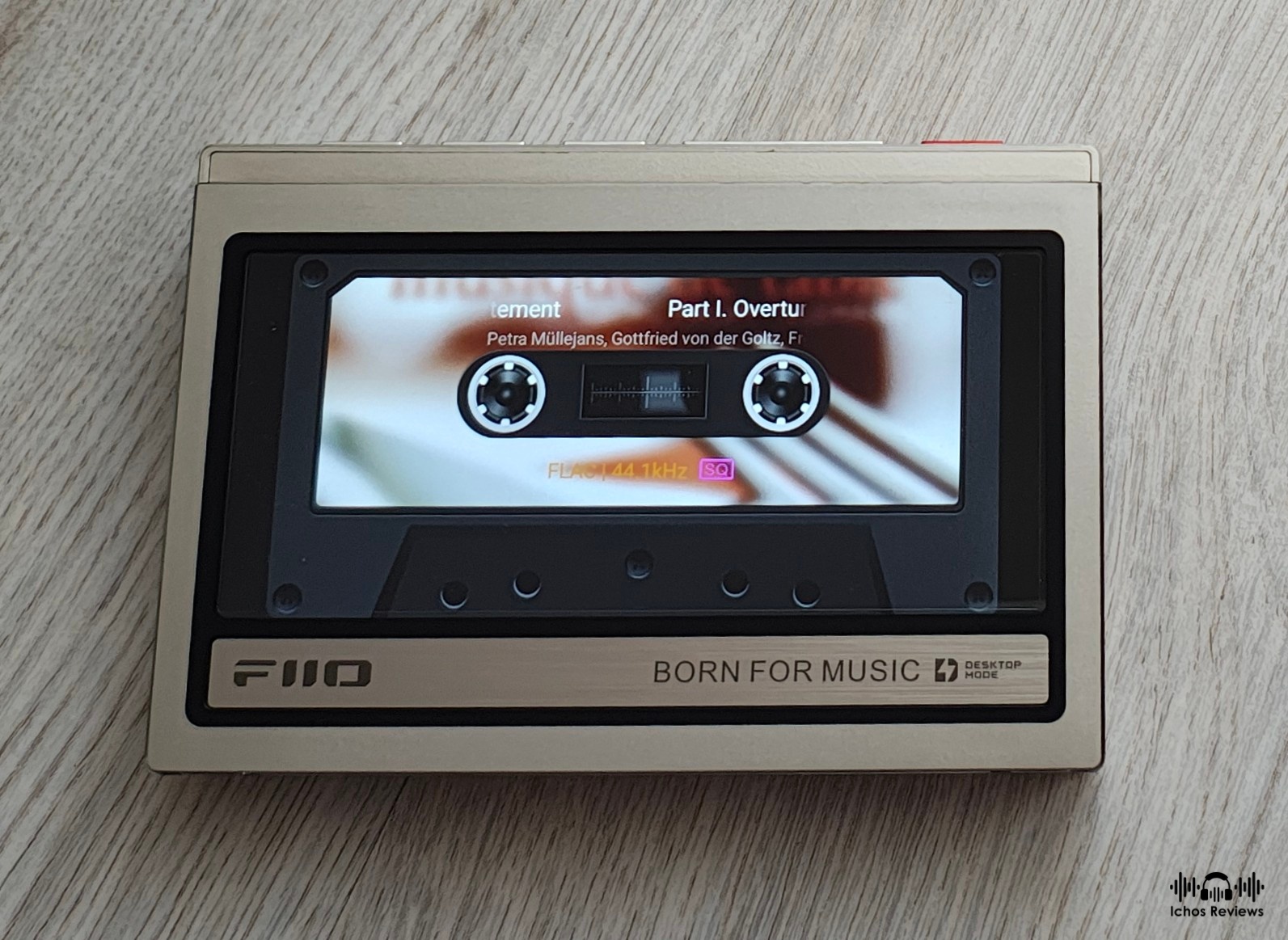
The Walkman Cassette Player case
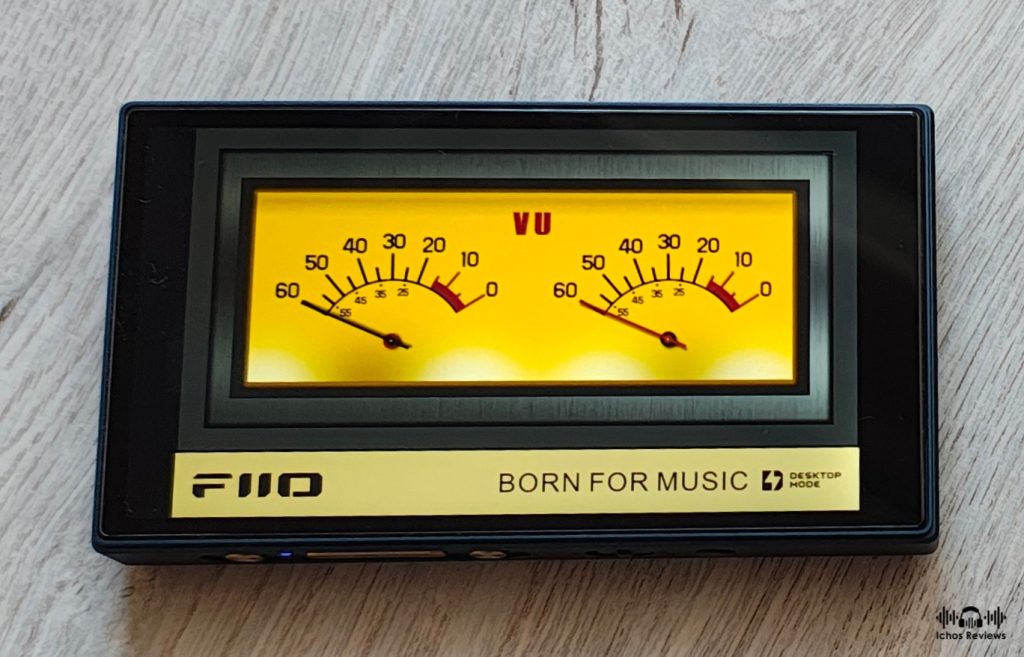
All FiiO’s latest DAPs feature a retro-inspired UI where the user can enable various vintage themes, like analog VU-meters or a display mimicking Sony’s Walkman cassette player.
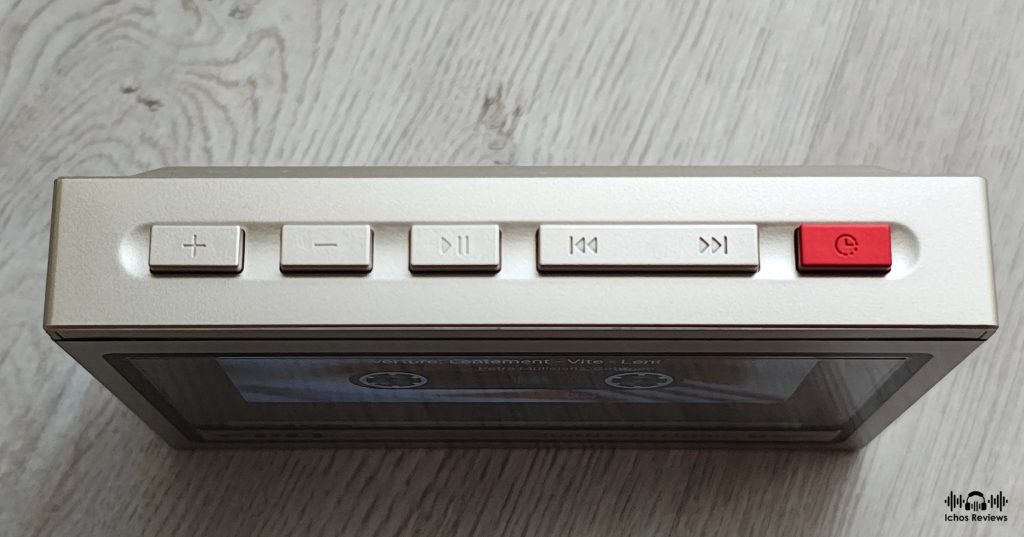
For the M21, FiiO has gone a step further as they have designed a special protective case that transforms the DAP into a cassette player with real hardware buttons and a lid. There are six buttons: two are used to raise/lower the volume, two to change previous/next track, one to play/pause the music and a red-colored button that is not for record but to power on/off the DAP and enter/exit the cassette mode.
The cassette player case (that is sold separately) is really unique and many people will love it, but not that practical because you can’t access the touchscreen unless you open the lid. It is better for listening to big playlists, using the buttons to control music playback.
Accessories
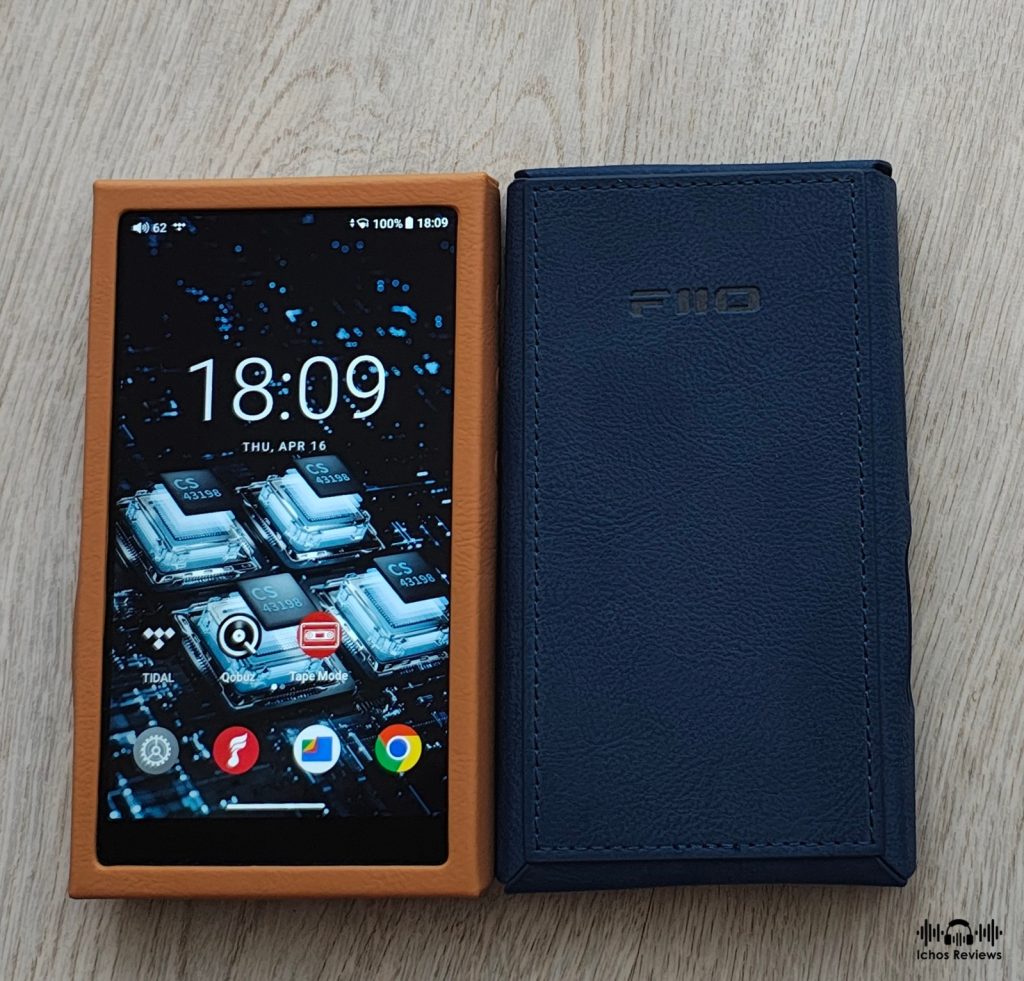
Except for the manual and the warranty card, the package also includes a silicone protective case in dark blue color and a USB data cable. A thin screen protector film is pre-applied from the factory.
A high quality, leatherette protective case in two different colors to choose from is available as an optional accessory.
Battery Capacity and Duration
The M21 is equipped with a 4000mAh capacity battery that supports 20W PD fast charging that lets it charge in about 1.5 hours. The battery has larger capacity than either the JM21 2400mAh or 3100mAh versions.
The M21 uses an advanced audio circuitry that drains a lot of power but the smart power management system can keep it running for about 11-12 hours depending on the situation.
Output Power and Noise
The device supports both battery and desktop working modes that have different output power ratings. In battery mode the FiiO M21 can do 720mW*2@32Ω from its balanced output, a number that rises to 950mW*2@32Ω in desktop mode. The single-ended output numbers are 290mW*2@32Ω and 405mW*2@32Ω respectively.
Not bad at all, the FiiO M21 is a powerful yet compact DAP that can drive a great variety of full sized headphones, especially in desktop mode where it doesn’t have any problem powering headphones like the 300Ω SIVGA Peng or the FiiO FT5. The noise floor is also exceptionally low, making it suitable for use with sensitive earphones, like the FiiO FA19.
The FiiO M21 is a versatile mid-range DAP that you can use on the go or at home, with a great variety of headphones and earphones.
Listening Evaluation
Sound quality is absolutely stellar and punches well above the FiiO M21’s asking price. This is a truly excellent sounding DAP that offers great transparency and linearity without sounding clinical or sterile. It has neutral and balanced sonic characteristics, enhanced with a touch of warmth and limited treble glare.
The technical performance is class-leading, while the timbre manages to stay natural and realistic enough with minimum digital artificiality. FiiO engineers have managed one of the best implementations of the commonly used CS43198 DAC chip in a rare combination of musicality and sonic fidelity.
The M21 is clearly a step above the entry-level JM21 which in comparison sounds a bit brighter, less musical and not as lifelike. It produces fuller textures throughout the whole frequency range, it manages to extract greater amounts of musicality and sound more engaging than the JM21.
This might not be the most organic sounding DAP, like say the Cayin N3Ultra, but it still produces sufficient harmonic variety and a mid-range that is articulate, rich and expressive enough to draw the attention of the listener and connect him with the music.
More Listening Impressions
The bass is fast, tight and controlled with surprisingly good amounts of weight and elasticity, rarely found at this price point where most of the competition tends to sound rather lean and dry. The M21 produces punchy and impactful bass that stays composed, clean and well defined under all circumstances, especially in desktop mode.
The treble is less bright and harsh than in the JM21 but still brilliant, extended and energetic. It is not exactly too smooth or relaxed but it never causes listening fatigue or ends up sounding sharp. The M21 is exceptionally resolving and allows the listener to focus into individual details without becoming too analytical or unforgiving. Treble textures are refined enough without any metallic artifacts or coarseness that could make the music sound fake or rough.
With four DAC chips instead of two, the soundstage of the M21 opens up significantly and expands to form a realistic and convincing soundscape with all kinds of music. Imaging and depth layering are impressively good for the category, the M21 is an adaptable DAP that sounds big, spacious and immersive with large scale music but also intimate and personal with smaller ensembles.
Given its excellent transparency and balanced sound signature, it doesn’t come as a surprise that the FiiO M21 pairs well with all kinds of earphones, from brighter to warmer ones. Just pick your favorite one and the M21 will make sure it sounds at its best without messing up with its tuning.
Vs the Competition
FiiO’s most affordable Android DAP is the JM21 that is priced at $259.99. Most differences between it and the M21 have been discussed above. Side by side comparison suggests that the M21 deserves the extra $80, not only because it has better specs, a larger capacity battery and the powerful desktop mode, but most importantly because it sounds superior than the JM21.
Some other competitive options include the Shanling M3 Plus that is priced at $499 and the iBasso DX180 at $529. Both feature the same Cirrus Logic quad DAC architecture and peak at 800mW@32Ω and 690mW@32Ω respectively as they don’t have a desktop mode.
In terms of size and weight, the M3 Plus measures 115×70.5x18mm and weighs 205g, while the DX180 comes at 123x75x16mm and 206g, both comparable to the M21. Battery life on the FiiO appears to last roughly an hour longer than the DX180, though I haven’t had the chance to test the M3 Plus. One standout advantage of the iBasso DX180 is that it is the only one of the three with a user-replaceable battery.
I am not going to write a detailed sound comparison between these three DAPs because I haven’t actually evaluated the M3 Plus. Judging from Shanling’s house sound, there is a great chance that it might sound a bit warmer and a touch more relaxed than the M21. On the other hand the DX180, that I have thoroughly tested, is clearly a step above in technical performance, transparency and overall fidelity but also sounds a little more academic in comparison.
In the end
If you have gone through this review, then it becomes clearly obvious why the FiiO M21 is a winner and the best affordable DAP in the market right now. FiiO has a great history into producing affordable DAPs that punch well above their category but this time they have really surpassed themselves.
The M21 ticks all the right boxes and many more at a retail price that is hard to believe, even after the recent price increase. At $369.99 it is really impossible to find another DAP with all the features and the sonic performance of the FiiO M21, that is currently the player with the highest price to performance ratio among all the competition.
Copyright – 2026.
Authored by Petros Laskis for Ichos Reviews. All content is original and copyrighted. Republishing full reviews or substantial portions without written permission is prohibited. Excerpts up to 100 words are allowed with a direct link.
+ Stellar audio quality
+ Neutral and balanced sound signature
+ Low digital artificiality and treble glare
+ Class-leading technical performance and transparency
+ Impressive imaging and soundstage size
+ Super Gain that raises output power to 950mW@32Ω
+ Desktop mode that bypasses battery
+ Good battery duration
+ Especially silent background
+ Relatively compact and lightweight
+ Excellent build quality
+ Global EQ and many sound tweaking options
+ Multiple features and connectivity options
+ Vibrant screen and responsive UI
+ Affordable and best value for money

- The Cassette case limits usability and adds bulk
- The leatherette protective cases are sold separately
- The silicone case has overly raised buttons









Leave a comment