

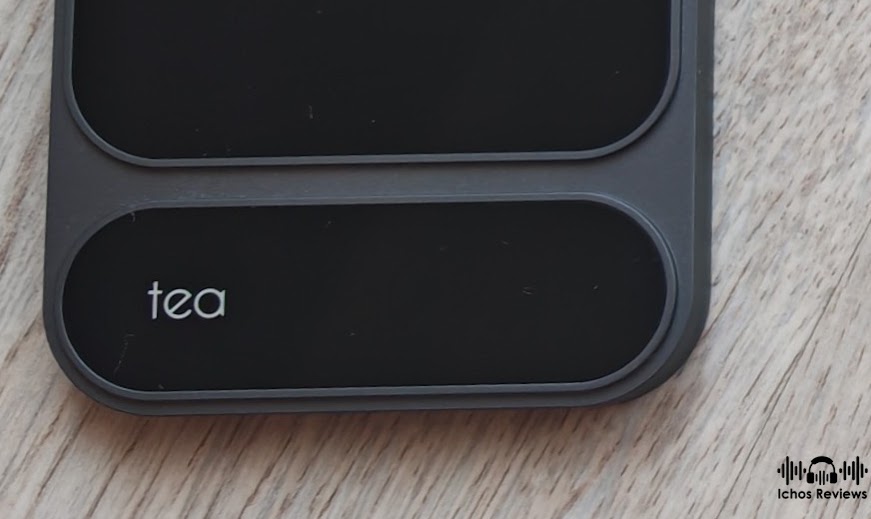

Today’s review is about the Khadas Tea Pro, an ultra-slim, battery powered USB DAC/amp with a magnetic attachment system that snaps at the back of compatible phones.
The review sample was kindly provided free of charge in exchange for an honest review. I didn’t receive monetary or any other kind of compensation and I don’t use affiliate links.
The price of the Khadas Tea Pro is $199 and you can buy it from Khadas Audio. It can be ordered with either a USB type-C to C or type-C to Lightning cable.
About Khadas Audio
Khadas Audio is a technology company from China that has established its fame in the audiophile market through a range of compact but high performing DAC/amps, as well as specialized mini PCs for various uses. Their most known audiophile ranges are the “Tone” and “Tea” that include well-regarded devices like the Tone2 Pro and the Tea Pro DAC/amps.
Khadas Tea Pro
The Khadas Tea Pro is an ultra-slim, battery powered USB DAC/amp with Bluetooth connectivity that packs serious technology under its hood, despite its compact size.
The audio circuitry is built around a top-of-the-range ES9039Q2M DAC chip by ESS in a fully balanced topology with dual OPA1612 op-amps for each of the I/V and Low Pass Filtering stages, plus two RT6863 headphone buffers and two NJU72315 volume controllers. High precision resistors and many other quality components are used in critical parts of the circuitry.
Thanks to the XMOS XU316 USB receiver, the Tea Pro supports input sampling rates up to 768kHz/32 bit PCM and native DSD512. Additionally, Qualcomm’s QCC5181 chip enables wireless Bluetooth connectivity with support for the SBC/AAC/aptX/aptX Adaptive/aptX HD and LDAC codecs.
The USB DAC input of the Tea Pro is plug ‘n play with iOS, Android, macOS and Linux while Windows OS requires installation of the Khadas Audio USB ASIO driver.
Moreover, the device is equipped with a built-in microphone for voice calls and it also supports CTIA earphones with in-line mic and controls.
Accessories
The only accessory included is a short USB type-C to C or Lighting to C cable in a white color that doesn’t match the outer appearance of the Tea Pro.
Khadas Audio should have included an adhesive magnetic attachment ring so you can use the Tea Pro with non magnetic phones.
Design and Appearance
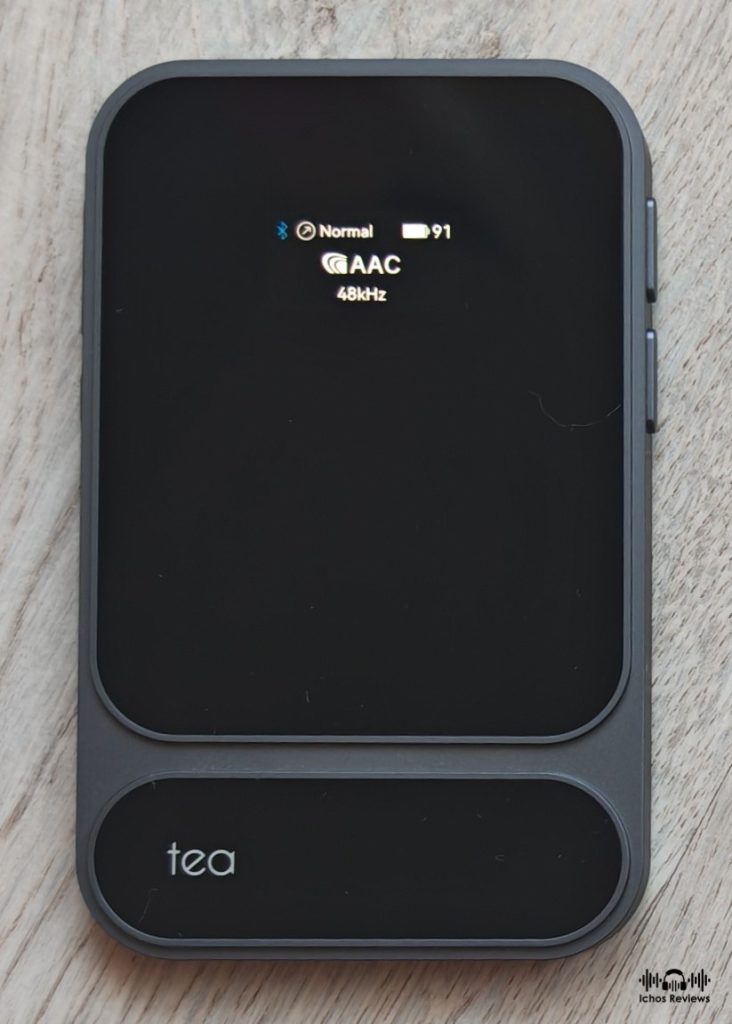
The rectangularly shaped chassis has softly rounded corners and is made from CNC-machined aluminum alloy. The front panel is divided into two slightly extending surfaces that are covered with Gorilla glass. The larger one incorporates a 0.95” color AMOLED screen that displays playback status and allows easy navigation of the configuration menu.
The most striking aspect of the Tea Pro’s design is how slim it is. At just 7.85mm thick, it is one of the slimmest USB DACs available, occupying minimal space when attached to the back of a phone and making it ideal for portable use on the go.
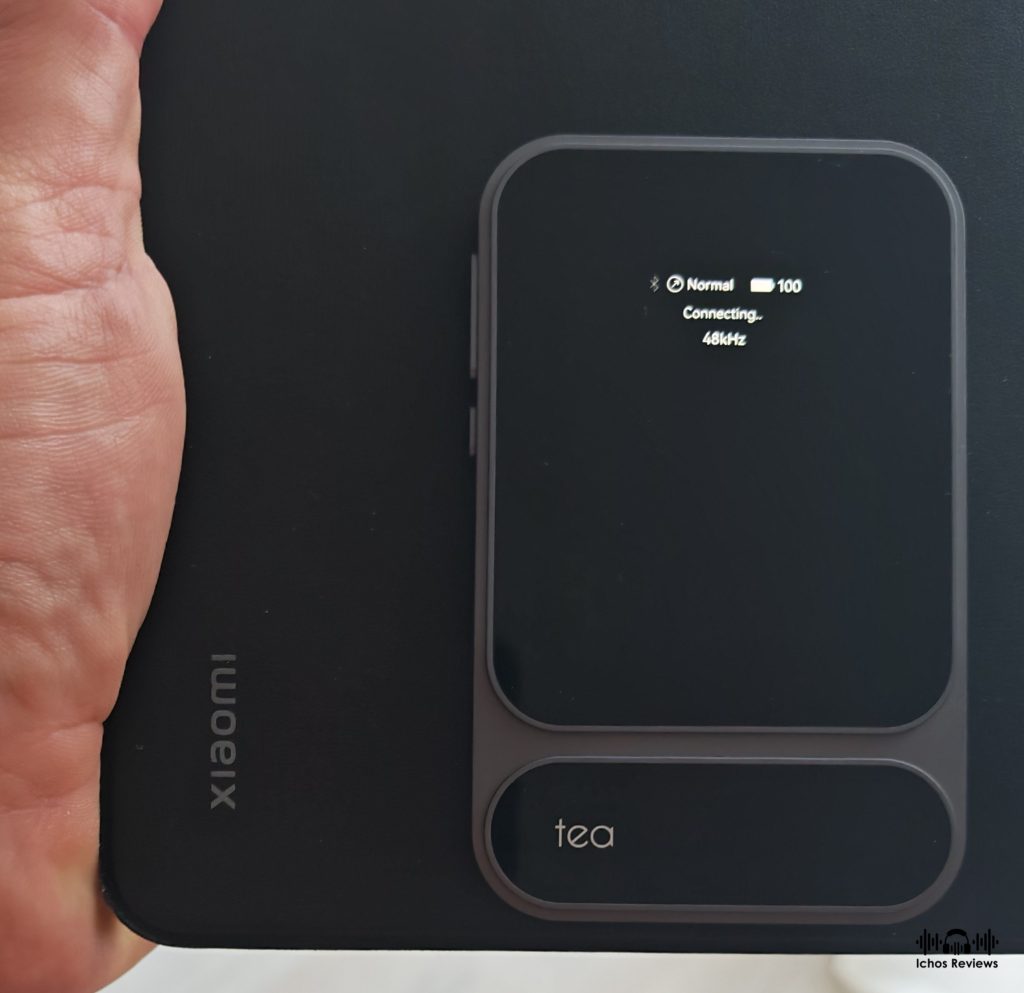
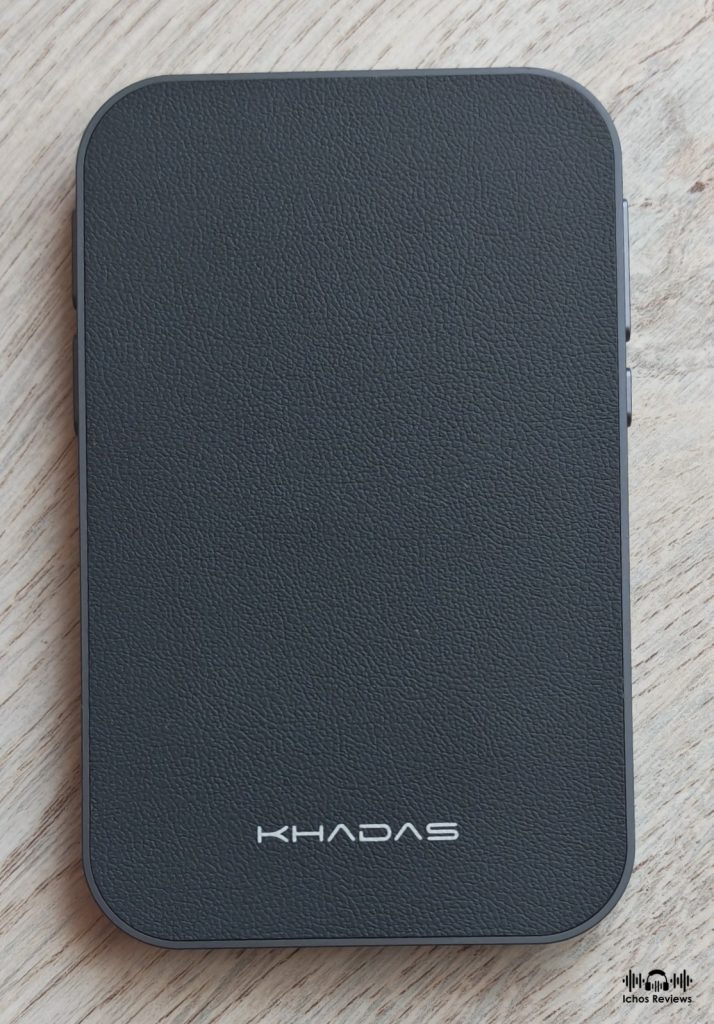
Inside the Tea Pro are 19 hidden high-strength N56SH magnets that allow it to attach securely to the back of iPhones and other MagSafe compatible devices. For devices without a magnetic rear panel, an adhesive magnetic ring can be used, although it is not included as an accessory. The rear panel is covered with premium leather that protects the phone from scratches.
The device measures 102.7×64.0x7.85mm and weighs 96g but the magnets are strong enough to support its weight and not let it slide downwards. In case you don’t like to have it attached to the back of your phone, it can easily slip inside a pocket. The Tea Pro is not only practical and easy to use but it is also an exceptionally well made and beautiful looking device.
User Interface
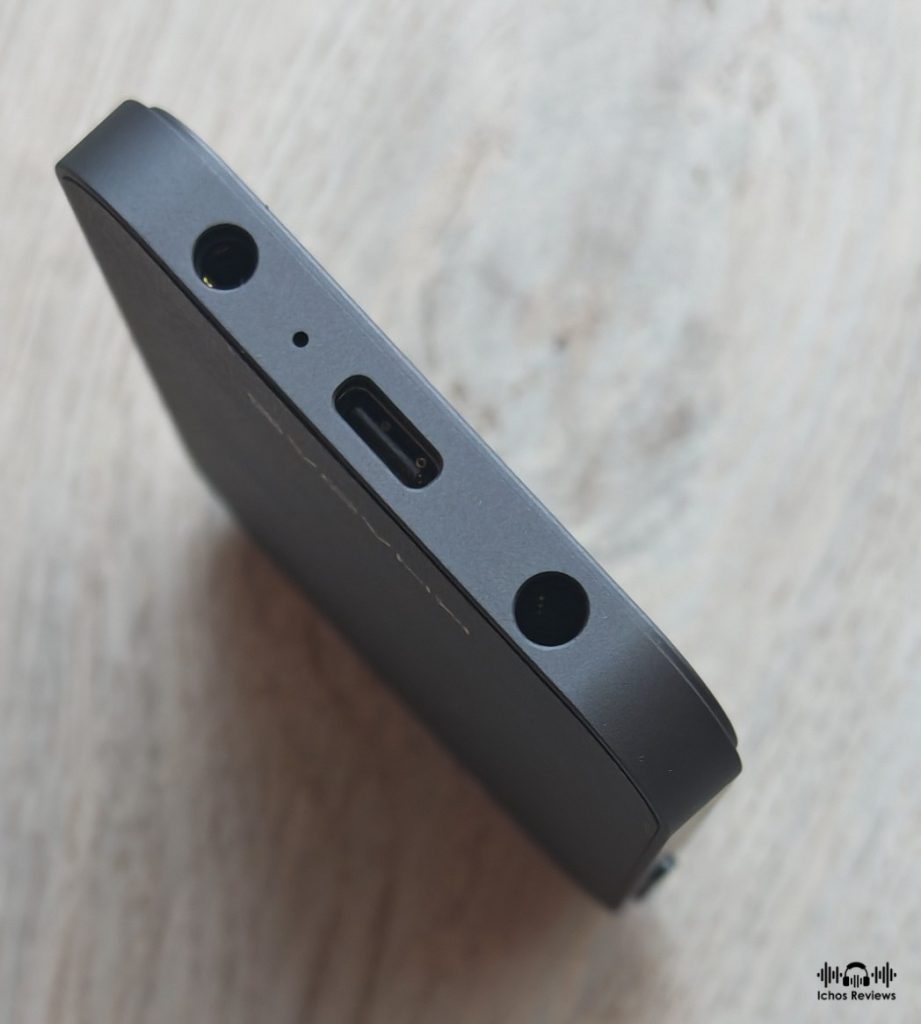
The Khadas Tea Pro is equipped with both 3.5mm single-ended and 4.4mm balanced headphone outputs, along with four hardware buttons located on the left and right sides of the device. A USB type-C port in the middle is for battery charging and USB DAC connectivity.
The upper left button is used for power on/off and the back function, while the lower left is used to enter the menu and confirm selections. The two buttons on the right side are used for volume adjustment and navigation through the menu options. You can also use the buttons to control music playback and handle incoming calls.
The following menu settings are available:
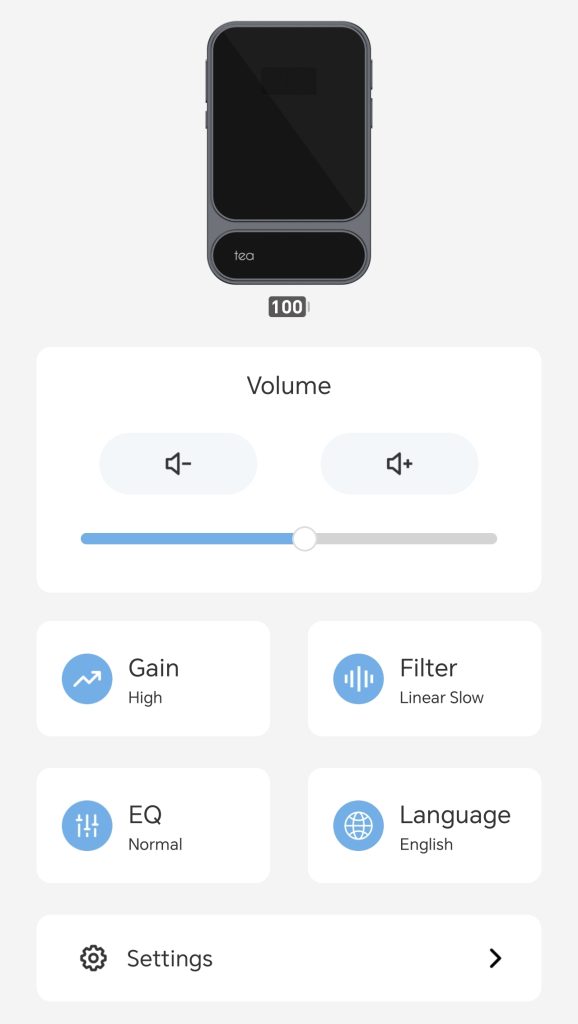
EQ mode (7 presets and one custom curve), amplifier gain (low and high), 8 low pass filters, brightness adjustment, enable /disable charging from the host device, unpair from phone, set screen time out, set auto power off timer, usb mode connection, pairing sound, headphone standard, factory reset and about screen.
The Khadas Audio Application
The Tea Pro is compatible with the Khadas Audio Application that is available to download for Android and iOS. You can use it to easily adjust the menu settings, perform OTA firmware updates for the Bluetooth chipset and customize the free slot of the 10-band Equaliser.
The user-defined curve is saved in the device’s internal memory and can be easily recalled from the EQ menu without the need for an active connection with the application.
Bluetooth Connectivity
Bluetooth reception is stable and noise free within a range of 5-10m around the device, even between walls. The Khadas Tea Pro supports the SBC/AAC/LDAC/aptX/aptX HD/aptX Adaptive codecs, practically making it compatible with all phones and tablets.
Sound quality is exceptionally good and just slightly inferior to the USB DAC connection. It is actually so good that the minor audible differences don’t justify bothering with cables unless you aim for pure reference, critical listening.
Battery Capacity and Duration
Despite its slim chassis, the Tea Pro is equipped with a 2100mAh battery, large enough to provide approximately 8 to 10 hours of operation depending on the usage scenario. The battery features a smart charging function that is designed to extend its lifespan.
When used as a USB DAC, the battery charging function can be enabled or disabled, so the Tea Pro will not drain the battery of the host device. A full charge takes around two hours using a 5V/1.5A charger, while wireless charging is not supported.
Output Power and Noise
With two RT6863 amplifier buffers, one would expect the Tea Pro to deliver more power than the average USB dongle. I was therefore somewhat disappointed to discover that its output is limited to 165mW*2 into 32Ω from the 4.4mm output and 120mW*2 from the 3.5mm output. This is enough for in-ear monitors, such as the FiiO FA19, but it lacks the current needed for more demanding loads. On the plus side, the background is practically silent, with no audible noise.
That said, a closer look at the specifications reveals an hidden advantage. The Tea Pro can deliver a stable 5Vrms into 600Ω, 300Ω, and 150Ω loads. This gives it the edge with high impedance headphones over most competing dongles that are usually limited to 4Vrms. In actual use, the Tea Pro might not push such headphones to their full potential, but it had no trouble driving the Sennheiser HD660S2 and the SIVGA Peng to satisfying listening levels.
Listening Evaluation
The overall sound signature of the Khadas Tea Pro is flat and neutral, with a touch of treble brightness, aided by its excellent transparency and technical performance. The Tea Pro doesn’t aim for a smooth sound, cozy warmth, or any other kind of sonic coloration. It is more about honesty and maximum fidelity as it mirrors the input material through the earphones without adding or subtracting anything of its own, just like studio monitoring equipment.
However, there is a notable difference with such equipment because the Tea Pro doesn’t sound too clinical or sterile and its textures are not that lean or dry, especially in the lower frequencies where the bass maintains good weight and elasticity. Rising higher, you can’t fail to notice the textures becoming slightly thinner and drier, especially in the upper treble that is also plagued by some metallic artificiality in its timbre.
The bass is extended and neutrally tuned, with good tonal precision and excellent technical performance. It is crystal clear, well-defined, fast, and controlled, with satisfying physical impact when the earphones are within the Tea Pro’s driving capabilities. It can easily follow the most demanding music while remaining composed and cohesive.
More Listening Impressions
The same tonal approach also applies to the midrange, which is flat and transparent, with class-leading articulation and exemplary clarity. Don’t expect the Tea Pro to sound particularly colorful or organic as its presentation is more academic and detached, so you’ll have to rely on your earphones to add flavor to the music. The Tea Pro will never offer the same level of harmonic richness or tonal coloration found in other DACs with stronger personalities.
The treble is where things partially depart from strict neutrality and become a little more lively. There is an undeniable emphasis in the treble that tends to stand out from the rest of the frequencies. It is slightly bright, but it never becomes piercing or fatiguing, at least for listeners who prefer a more energetic and vivid presentation.
The Tea Pro is very resolving, allowing the listener to discover subtle details hidden within the recording, but it never sounds monotonously analytical. As mentioned earlier, the timbre is not entirely free from a touch of metallic artificiality and digital glare, while the textures lack some weight compared to the lower frequencies.
The soundstage is open, wide and spacious with plenty of air around the performers and excellent depth layering for the category, at least when used with equally skillful earphones. Imaging precision is stellar, while the Tea Pro has the means to communicate the scale and the size of the recording, sounding grand or more intimate, depending on the situation.
Comparison with the Questyle M18i
The Questyle M18i is a battery powered USB DAC dongle with Bluetooth connectivity that sells for $349. It uses two ES9219Q DAC chips by ESS to handle audio decoding and Questyle’s patented “Current Mode Amplification” for headphone amplification duties.
The device’s overall dimensions make it slightly more compact than the Tea Pro and at 50g, it is 46g lighter but it is not as slim and doesn’t support magnetic attachment.
Another notable difference is that the M18i doesn’t connect with an application, it doesn’t support EQ function or voice calls and its battery duration is completely underwhelming with no more than two hours of use.
Questyle doesn’t specify the M18i’s output power in 32Ω and 16Ω loads but actual use suggests that it is more powerful than the Tea Pro with better power reserves for more demanding loads.
The M18i has an overall tuning similar to that of the Tea Pro, aiming for the same kind of transparency and technical fidelity. It is flat and neutral with plenty of treble energy without sounding clinical or too bright. These two devices sound quite alike with only a few differences here and there. The M18i offers more authoritative and powerful bass and its timbre is just slightly more organic in the mids and less glary at the treble. On the other hand, the Tea Pro is more resolving and and does with better clarity and reference transparency.
In the End
Khadas Audio might not be as famous or recognizable as most other similar brands, and its catalogue is rather limited, but with the Tea Pro it has managed to surpass the competition by making the slimmest battery-powered USB DAC/amp on the market.
The Khadas Tea Pro is not only exceptionally slim and well made, but it also supports magnetic attachment, has many features and offers stellar audio quality at a very competitive price, making it one of the most compelling options in its category and an easy recommendation.
Copyright – 2026.
Authored by Petros Laskis for Ichos Reviews. All content is original and copyrighted. Republishing full reviews or portions without written permission is prohibited. Excerpts up to 100 words are allowed with a direct link.
+ Stellar audio performance
+ Reference - neutral tuning
+ Excellent fidelity and transparency
+ Very good resolution
+ Spacious and expansive soundstage
+ User-adjustable EQ and app support
+ Can push 5V into high-Z loads
+ Good battery duration
+ Excellent Bluetooth performance
+ Magnetically attaching back
+ Ultra-slim and well made
+ 0.95” screen and mic for calls
+ Competitive price

- The presentation is more technical than musical
- Some digital artificiality on the treble
- Limited output power
- An adhesive magnetic ring is not included
- The cable’s color doesn't match that of the device





Leave a comment