

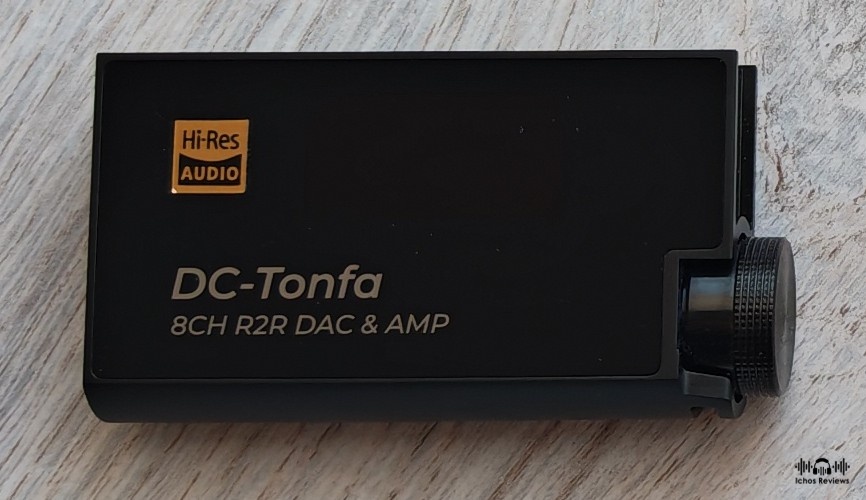

Today’s review is about the iBasso DC-Tonfa, a portable USB DAC and headphone amplifier, featuring an 8-channel discrete R2R architecture.
The review sample was kindly provided free of charge in exchange for an honest review. I didn’t receive monetary or any other kind of compensation and I don’t use affiliate links.
The price of the iBasso DC-Tonfa is €330 and you can buy it from here.
iBasso Audio
iBasso Audio is a boutique Chinese brand specializing in portable audio equipment, headphones and earphones, but it has also expanded into desktop audio equipment. It is best known for its innovative portable digital audio players (DAPs) and its products’ excellent price-to-performance ratio.
Ichos Reviews offers extensive coverage of iBasso. Click here to read our previous reviews and explore the brand’s product range.
iBasso DC-Tonfa
iBasso has a wide range of portable USB DAC dongles, from the entry-level Macaron to the mid-tier DC04 Ultra and its flagship models, the DC-Elite and Nunchaku.
Among its flagship models, the DC-Elite is based on the much-acclaimed MUS-IC BD34301EKV DAC chip by ROHM, while the Nunchaku takes things a step further by adding a tube-hybrid analog stage. The only thing missing from the line-up was an R2R DAC.
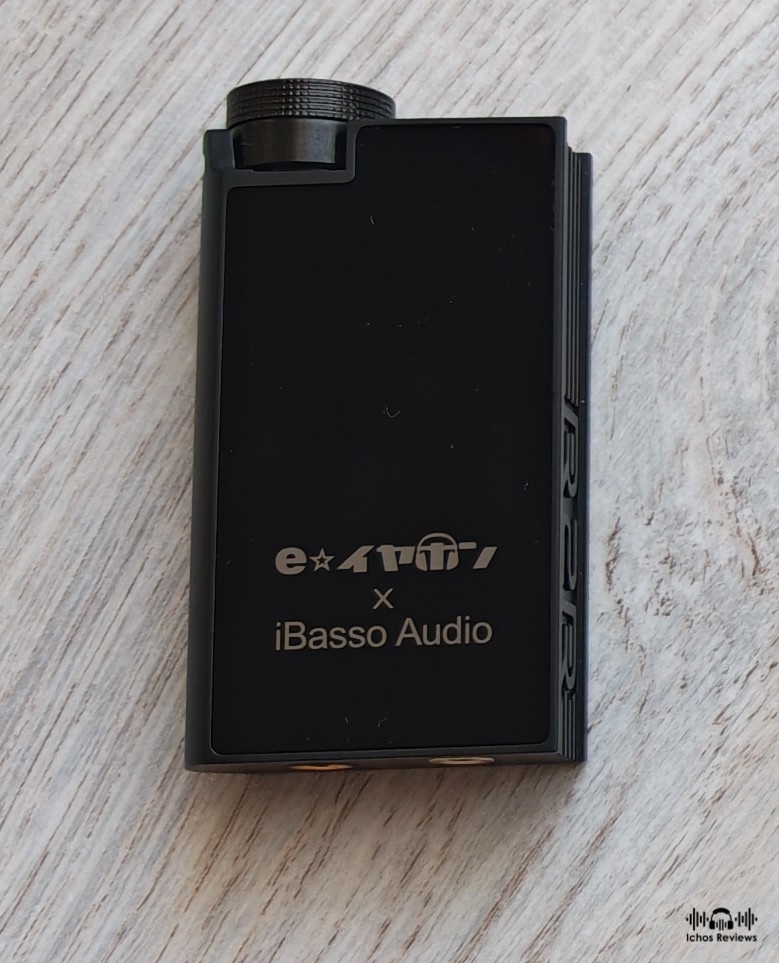
This is where the DC-Tonfa comes into play. Co-developed with “e-earphone”, Japan’s largest headphone retailer, it is a USB DAC dongle featuring an 8-channel R2R decoding architecture.
Technical Highlights
iBasso is no stranger to R2R technology, having already developed several audio devices based on different R2R implementations. These include its flagship DAP/amp, D17, the DX270 DAP, and the more affordable D18 DAC/amp, which was recently released.
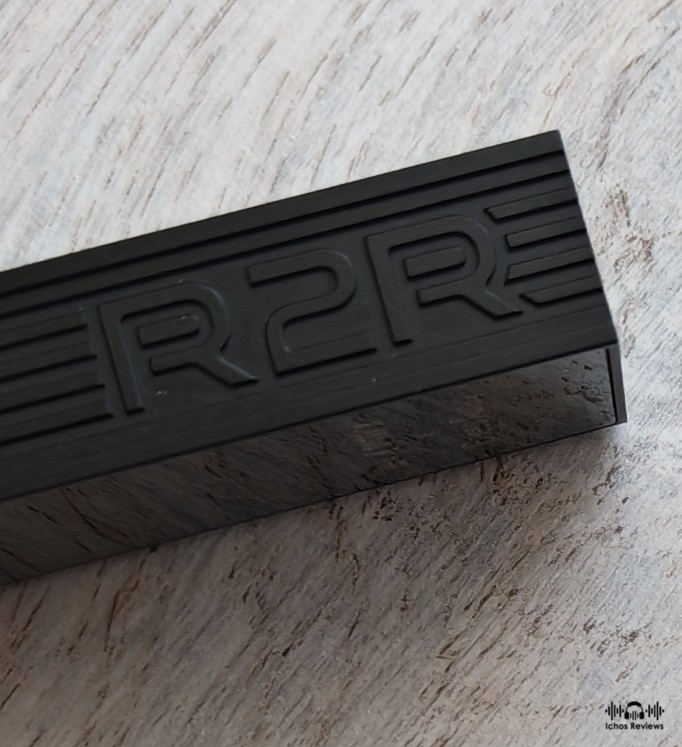
The iBasso DC-Tonfa features a 24-bit, true balanced, fully differential DAC architecture, proprietary FPGA processing algorithm and dual Accusilicon femtosecond oscillators. The resistor ladder consists of 312 high-precision metal-film resistors with a low temperature coefficient. Of these, 60 form a dedicated hardware compensation network for consistent linearity and stable operation across all channels.
The amplifier is built around two high-performance dual Texas Instruments operational amplifiers and four BUF634A buffers. The core DAC circuitry uses a dedicated Linear Technology LT3042 ultra-low-noise linear voltage regulator for better audio performance.
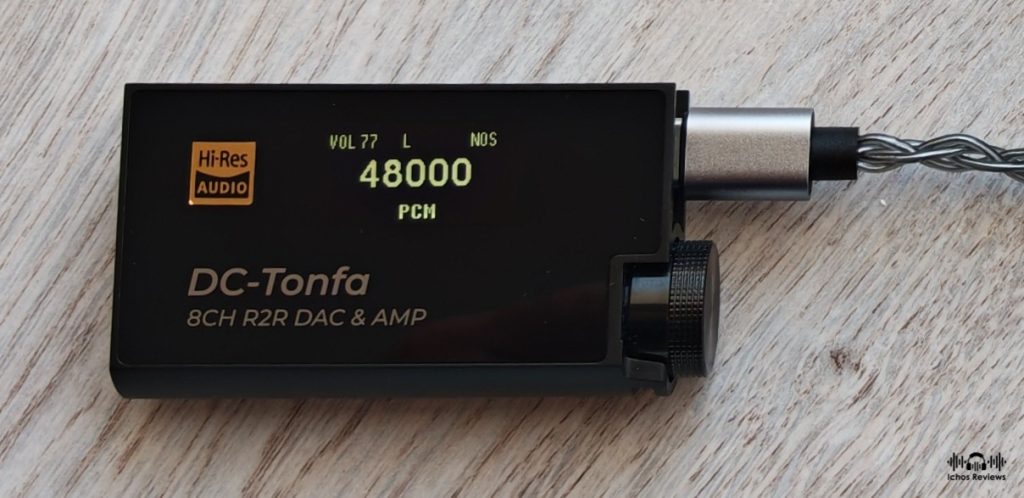
The DC-Tonfa is compatible with smartphones, tablets, Windows, macOS, Linux and game consoles in UAC 1.0 mode. It supports sampling rates up to 768kHz PCM and native DSD512, while the 3.5mm jack also doubles as SPDIF coaxial output, enabled from the menu.
In addition to the conventional NOS filter, which uses no oversampling, four proprietary digital filters are also available. This allows users to tailor digital processing to their personal sound preferences.
Design and Appearance
The outer appearance of the DC-Tonfa is similar to that of the DC-Elite and Nunchaku, featuring the same minimal, industrial design. It has a rectangular chassis made from high-grade aluminium alloy, with a curved recess on the upper surface that houses the multifunction volume control encoder.
The encoder protrudes slightly from the main frame, making it easier to operate. The corners and edges of the chassis are smoothly rounded, allowing for comfortable handling without any sharp contact points.
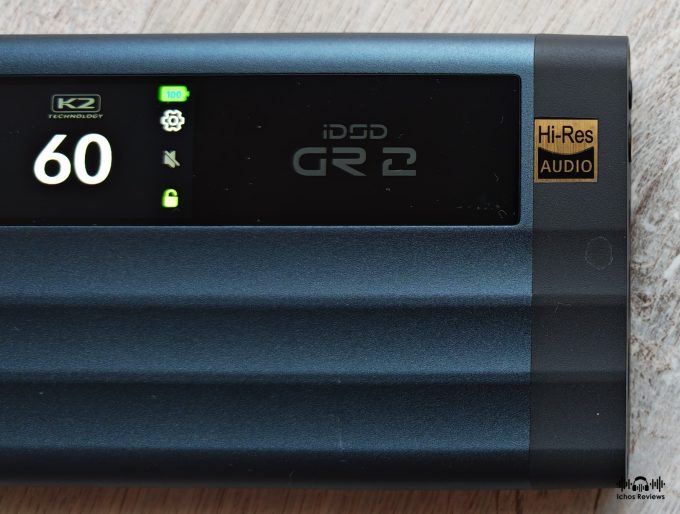
The front surface houses a 0.96-inch OLED display that provides a clear view of the current operating status and allows the user to adjust the settings directly on the device. Both the front and rear surfaces are covered with glass panels, adding a touch of premium luxury while enhancing durability.
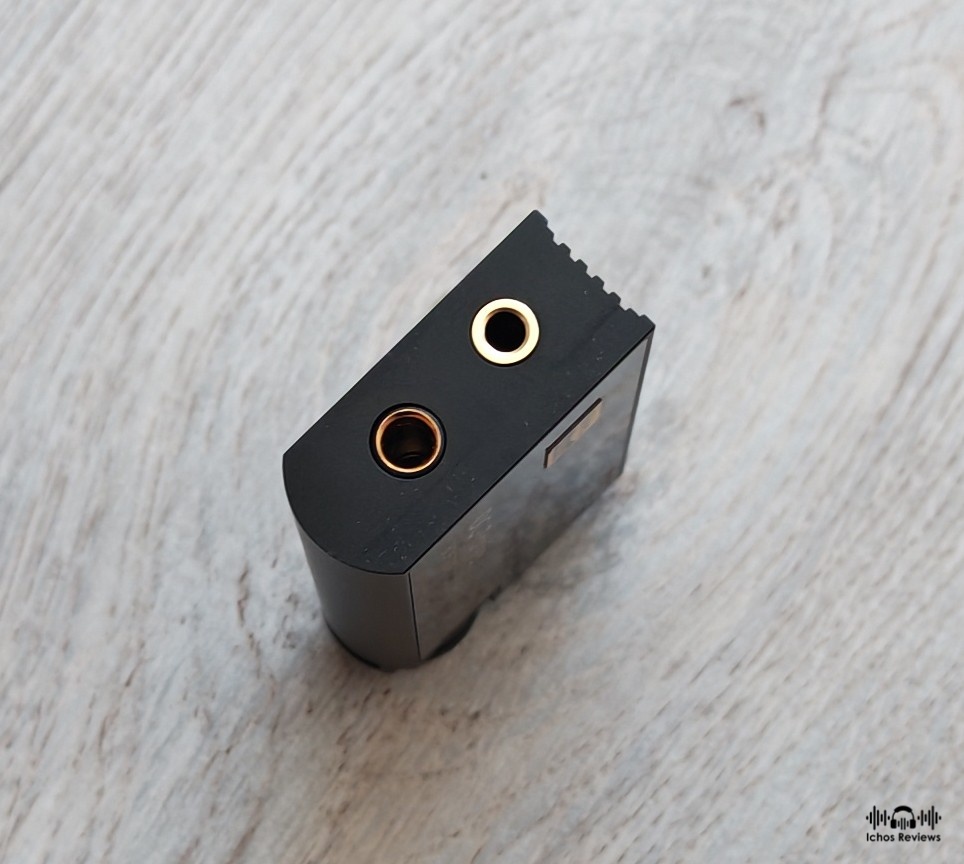
At the top, next to the encoder, there is a USB-C input, while the bottom houses the 3.5mm and 4.4mm headphone outputs. The device measures 61×34.6x15mm and weighs 45g, so while bigger and heavier than the average dongle, it is still compact and lightweight enough for portable use.
The iBasso DC-Tonfa is exceptionally well made and is available in three colours: black, red and blue.
User Experience
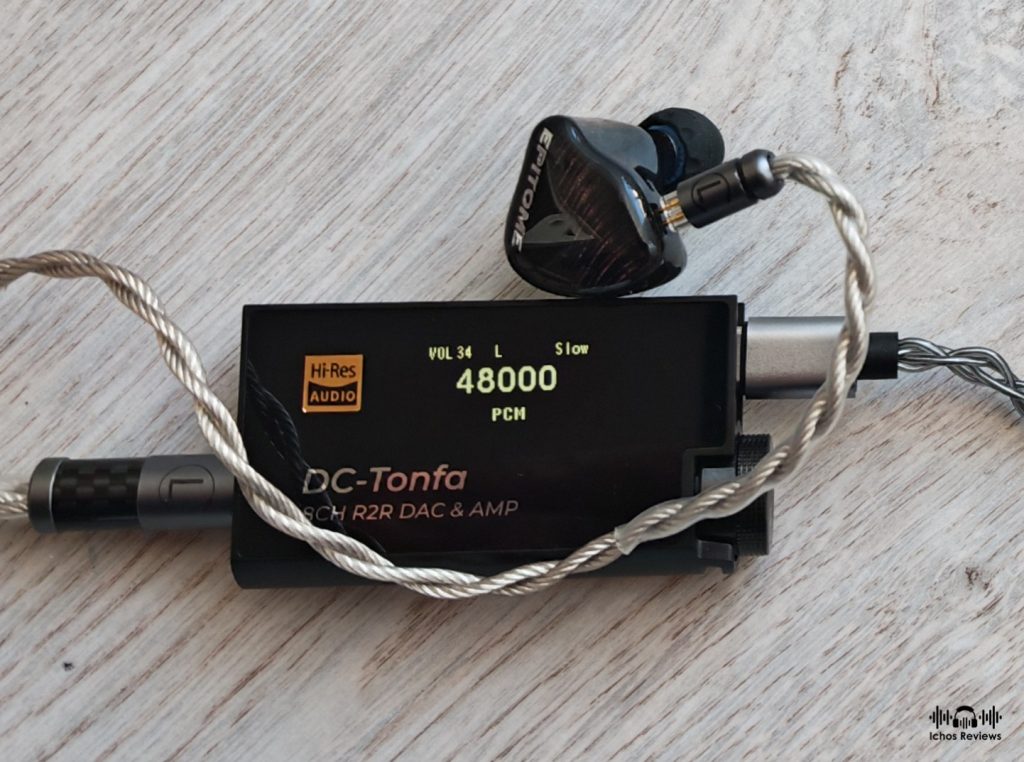
The device is plug-and-play with all major operating systems and easy to operate thanks to its OLED display. A long press of the multifunction wheel enters the settings menu where you can adjust digital filter, gain, enable/disable the coaxial output, set left/right balance, rotate the display, set volume wheel action, select UAC version and set screen timer.
The volume can be adjusted in single discrete steps, ranging from 0 to 100. The display is a little dim so it doesn’t strain the eyes during use, especially at night.
All settings and operations are also accessible through the iBasso UAC application, which is available for Android, or in a web-based interface for Windows and macOS that requires no installation. The only thing missing is a system-wide EQ application.
Accessories
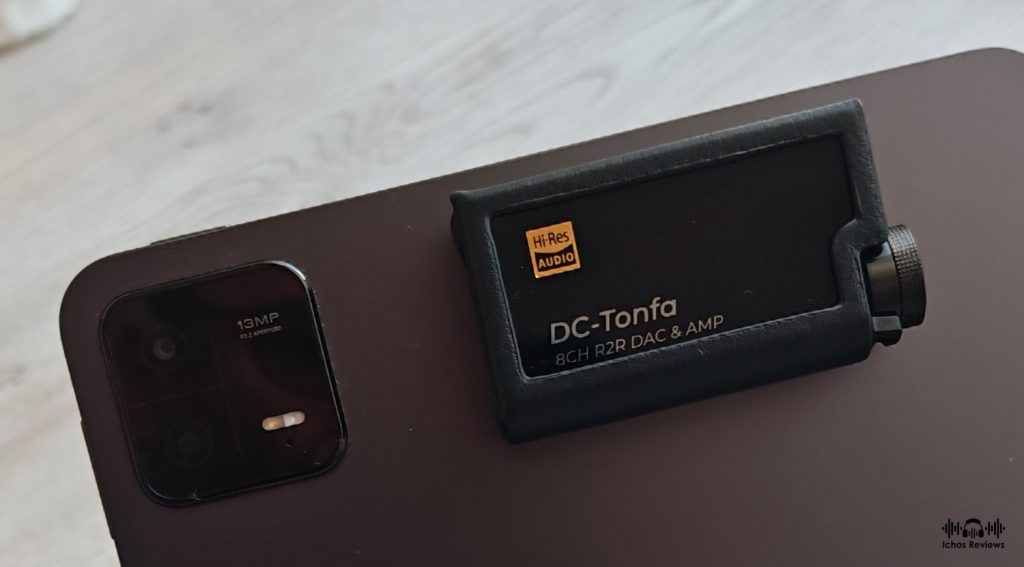
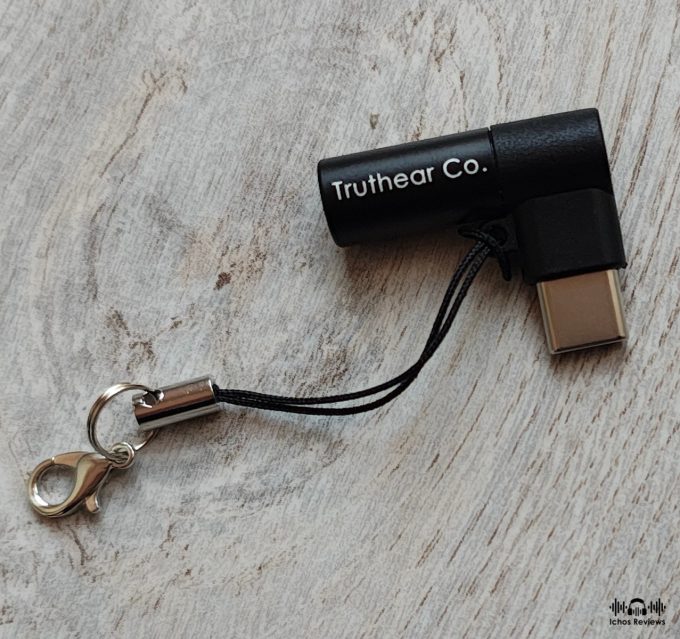
Except for the DC-Tonfa itself, the package also includes two high quality USB cables (C-C and C-Lighting), a USB adapter, and a MagSafe protective case in a color that matches that of the device. Depending on your phone or tablet, you might find that the case doesn’t attach too strongly and may slide a little bit.
Output Power and Efficiency
With an output power of 800 + 800 mW into a 32Ω load from its balanced 4.4mm jack, the DC-Tonfa is among the most powerful USB DAC dongles without battery. The single-ended output is no slouch either, delivering 219 + 219 mW into the same load. As a comparison, the DC-Tonfa is almost as powerful as the FiiO QX13 in desktop mode (900mW) and more powerful in non-desktop mode (605mW).
Output impedance is very low in both cases (0.5Ω and 0.2Ω, respectively), meaning that the DC-Tonfa can drive low-impedance earphones and headphones without any issues. Practically speaking, the amplifier is powerful enough to drive headphones such as the Grell Audio OAE2, while remaining completely silent even when used with very sensitive earphones like the iBasso Epitome.
Power consumption is very low. iBasso claims less than 100mA at 5V when playing 48kHz material in NOS mode. I measured 110mA with 96kHz material in NOS mode and 130mA in any of the OS modes. Very good results indeed, as the DC-Tonfa is powerful but won’t drain the phone’s battery too quickly.
Listening Impressions
(Comparisons with other USB DAC dongles are included)
Let’s start by underlining that the DC-Tonfa plays very well straight out of a smartphone or a PC, but its sonic performance improves considerably when paired with a high-quality digital transport, like the FiiO DT11 or the Volumio Rivo. It is excellent for portable use, while at the same time sounding even better at home when used with a more decent setup than a phone.
Readers familiar with the iBasso DX270 will not be surprised to learn that the overall sonic presentation of the DC-Tonfa is reminiscent of the DX270, but with less technical precision, clarity and transparency. In exchange it adds a touch more warmth, low-end weight and textural density. It is a classic R2R sound, with an organic and analog timbre, smooth treble and an immersive soundstage.
The sound is tonally balanced and realistic, the DC-Tonfa is musical and expressive, with rich overtones and strong melodic lines. At the same time, it retains very good levels of clarity and transparency, and can easily compete with chip-based DACs in terms of resolution and fidelity.
The overall sonic presentation of the DC-Tonfa sits somewhere between the DC-Elite and the Nunchaku. It is not as technical and precise as the former, but it is also less sterile, smoother and more relaxed. It has a harmonious and organic timbre but avoids the extra saturation and pleasant distortion of the Nunchaku’s tubes that some people might not like. And while you can always bypass the tubes in the Nunchaku for a fully solid-state operation, this mode doesn’t sound as natural and analog as the DC-Tonfa.
More Listening Impressions
Comparing the DC-Tonfa with the Cayin RU6, which is also an R2R-based DAC, it sounds cleaner, more transparent and better defined throughout the entire frequency range. The RU6 sounds a little fuller and weightier than the DC-Tonfa, but also a little veiled and not as accurate in placing the performers into the stage.
Speaking of the soundstage, the DC-Tonfa offers a spacious and immersive presentation that feels very convincing with both intimate and large-scale ensembles. Imaging precision might not be on the level of the DC-Elite, but it is still excellent. And while it can’t sound as holographic as the Nunchaku, it outperforms it in focus and precision.
The bass is visceral and weighty, but also well defined and layered, fast, tight and controlled. It doesn’t have a hint of dryness; it is elastic and physically impactful, especially at the high gain mode. The mid-range is melodic and expressive, without deviating from tonal linearity, while the treble is smooth, but not muted or stripped of energy.
The most impressive advantage of the Tonfa over most chip-based DACs is the complete absence of digital artificiality and high-frequency glare. Decay is also more relaxed, so high-pitched instruments sound especially natural and lifelike, without thin or metallic textures.
The NOS mode excels in these traits and sounds even more analog than the other available options, which you can use when you want to enhance technical precision and overall clarity, while also making the presentation a bit tighter and more focused.
In the End
The iBasso DC-Tonfa brings the classic R2R sound to the palm of your hand, allowing you to enjoy its analog and organic timbre virtually anywhere. The device also scales very well with higher-quality transports and can deliver desktop-like sonic performance and driving power when used at home with your full-sized headphones.
Beautifully designed, easy to use and exceptionally well made, the iBasso DC-Tonfa is ideal for anyone looking to experience high-quality R2R sound from a portable USB DAC dongle. It is not without competition, but for the time being, it offers superior sound quality and functionality, making it the best overall choice.
Pros
Analog and organic timbre
Visceral and impactful bass
Harmonious and expressive mids
Smooth but not muted treble
Resolving yet not analytical
Complete absence of digital glare and artificiality
Competitive technical performance and transparency
Immersive and spacious soundstage
Powerful and silent headphone amplifier
Low power consumption
Easy to use and control
NOS and OS digital filters
Excellent build quality
Supplied with high-quality cables and a MagSafe case
Cons
Not as resolving or transparent as some chip-based DACs
No dedicated line output that bypasses the amplifier stage
iBasso UAC application not available for iOS
No EQ application
Copyright – 2026.
Authored by Petros Laskis for Ichos Reviews. All content is original and copyrighted. Republishing full reviews or portions without written permission is prohibited. Excerpts up to 100 words are allowed with a direct link.



Leave a comment