


Today’s review is about the FiiO DT11, an Android-based portable music transport, that is to say a DAP without a DAC and amp stage, featuring dedicated circuitry for providing clean digital outputs.
The review sample was kindly provided free of charge in exchange for an honest review. I didn’t receive monetary or any other kind of compensation and I don’t use affiliate links.
FiiO originally produced the DT11 in a limited batch to test the market’s reaction. Eventually, the DT11 sold out in the blink of an eye, and FiiO is now seriously considering resuming full-scale production. Price will be around $300
About FiiO
FiiO is such a well-known brand in the audiophile community that it hardly needs an introduction. With a product catalog spanning everything from in-ear monitors to speakers, and from portable DAC/amps to speaker amplifiers, FiiO offers pretty much everything you might need to enjoy high-quality music playback, at very affordable prices.
Ichos Reviews has covered an extensive range of FiiO’s audio devices, headphones and earphones, as you can discover by clicking here.
FiiO DT11
The FiiO DT11 is a portable digital transport, a device about the size of a DAP such as the FiiO M21, but without a DAC or analog outputs. Instead, it features digital-only outputs, allowing it to be connected to portable and desktop DACs and used as a digital source.
The question that naturally springs to mind is why use the DT11 when you can use a smartphone, tablet or PC as a source. The answer is pretty simple: none of them was primarily designed to operate as a digital transport, unlike the FiiO DT11, which features dedicated circuitry in order to deliver clean, low-jitter digital streams, free from electromagnetic interference and noise.
Outer Appearance and Design
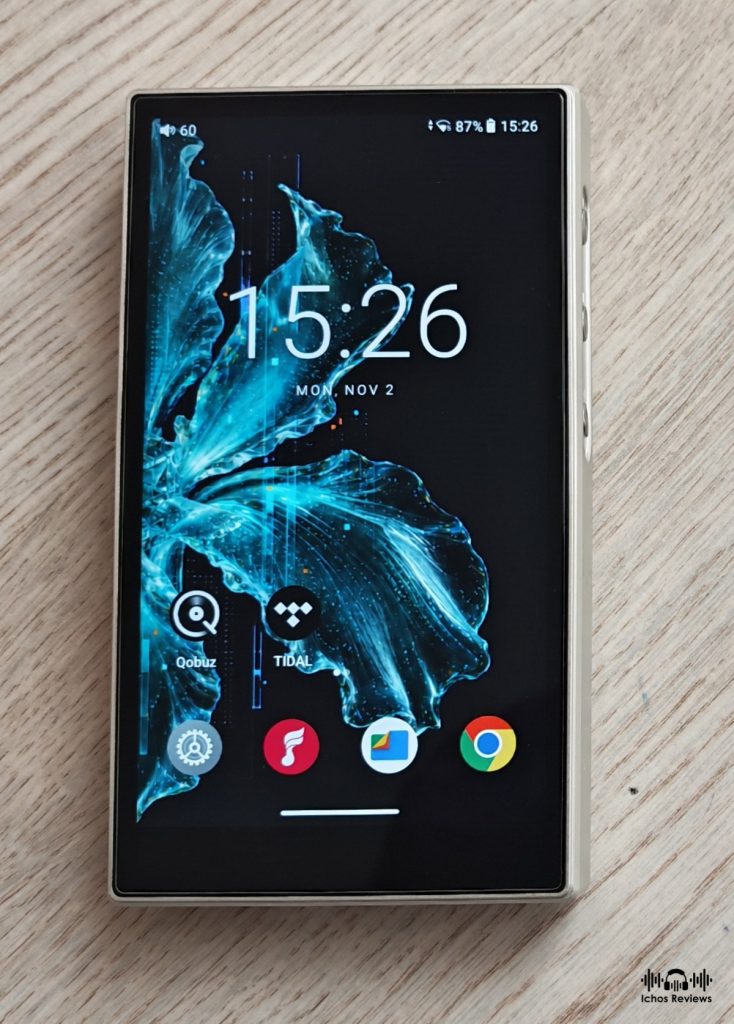
Measuring 121×68.7×17.7mm and weighing 192g, the DT11 has virtually the same dimensions and weight as the FiiO M21, with which it also shares the same design language and battery capacity.
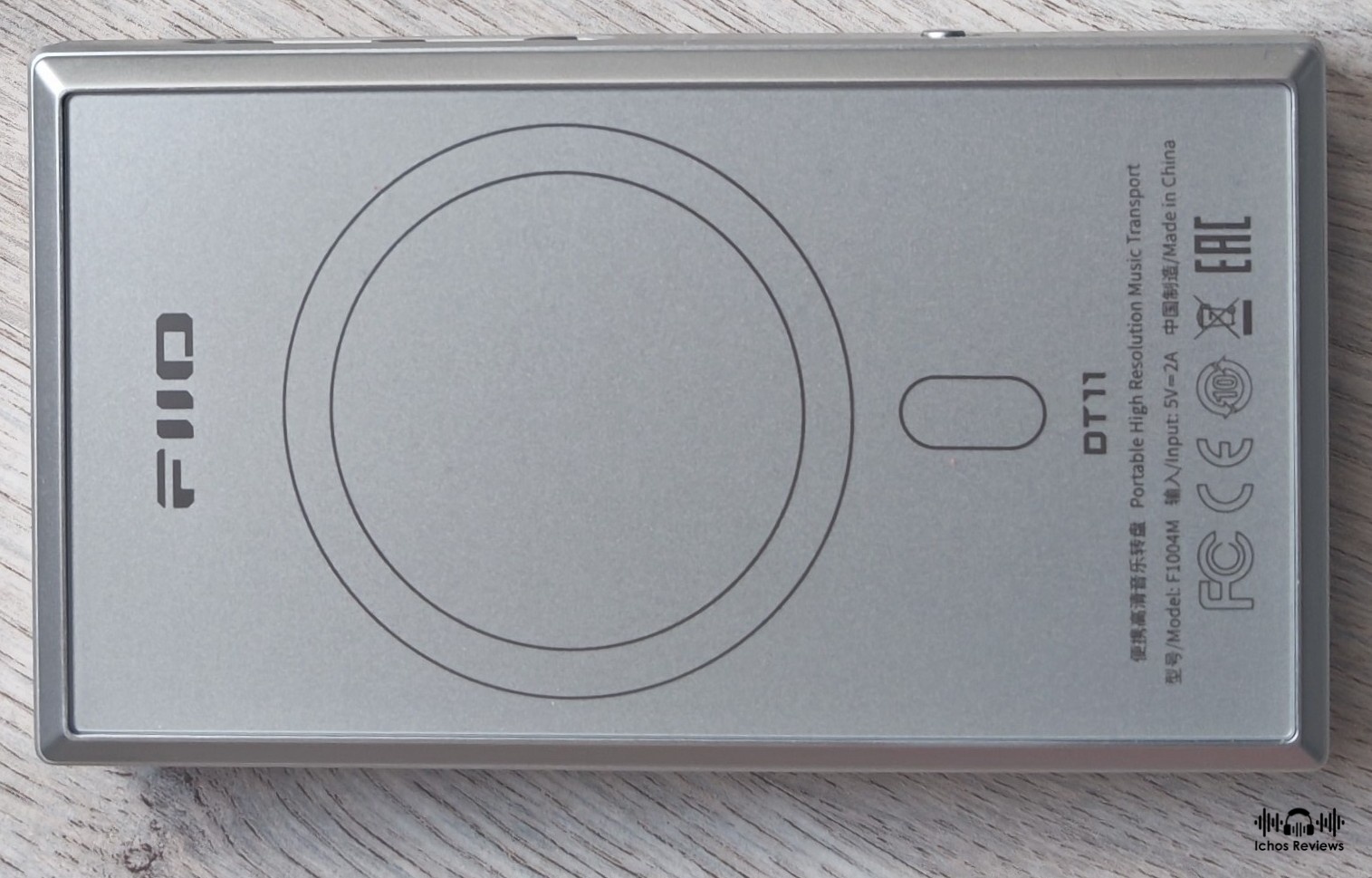
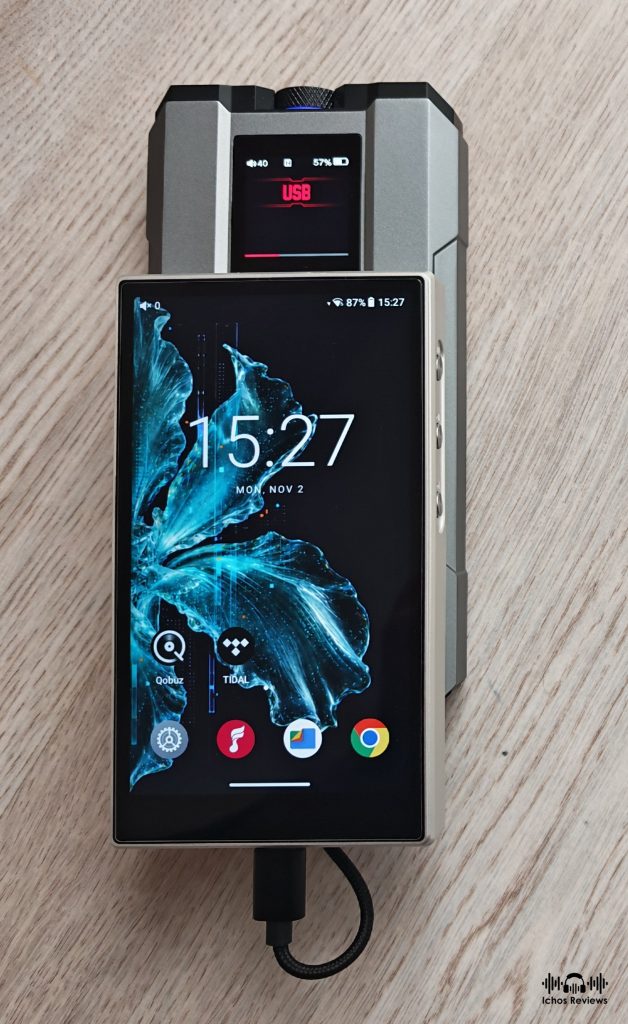
Given the absence of a DAC and analog circuitry, one might expect the DT11 to be lighter than the M21, but it has a hidden ace up its sleeve. Its back features a built-in magnetic attachment system that allows it to snap onto DACs with metallic (non-aluminium) surfaces or MagSafe compatible devices.
I like this minimalist approach, which eliminates the need for a magnetic case. However, using the DT11 bare will eventually lead to wear and tear on its back surface. A protective case with an integrated magnetic attachment system would have been a safer option.
Actually, FiiO has made an optional leather case for the DT11 which also has a special metallic sheet that enhances the magnet’s strength so it can be attached more securely.
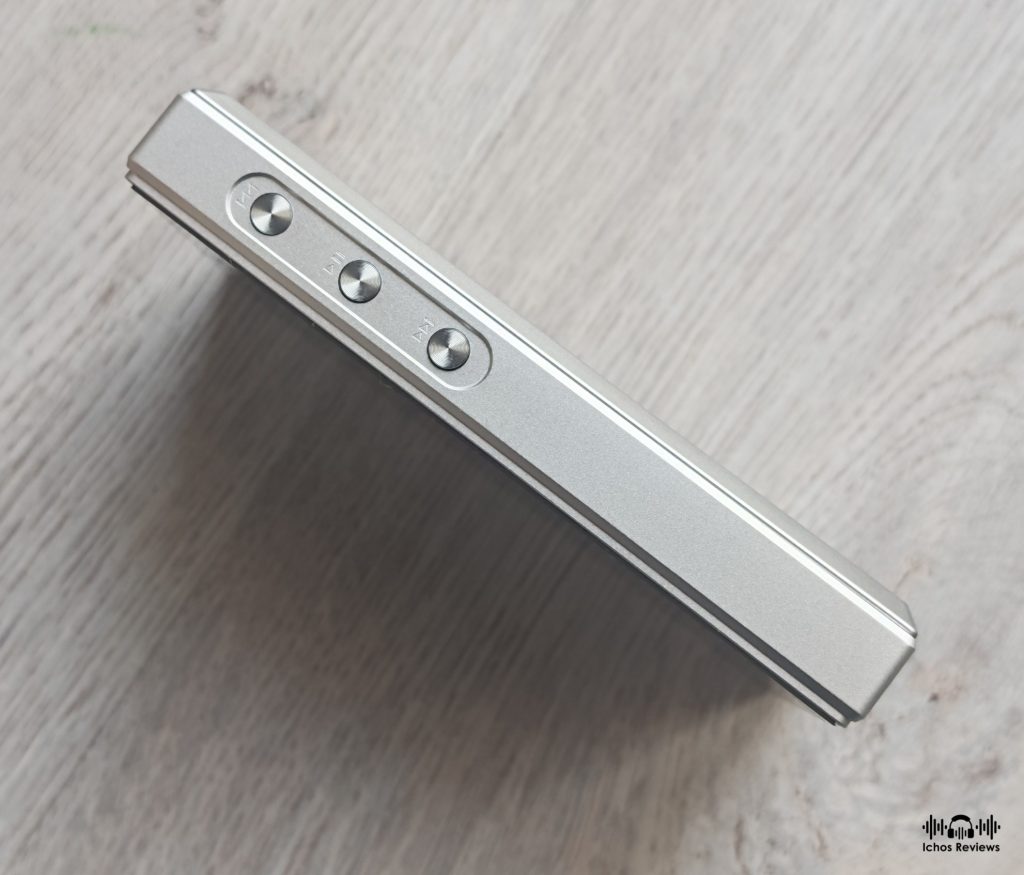
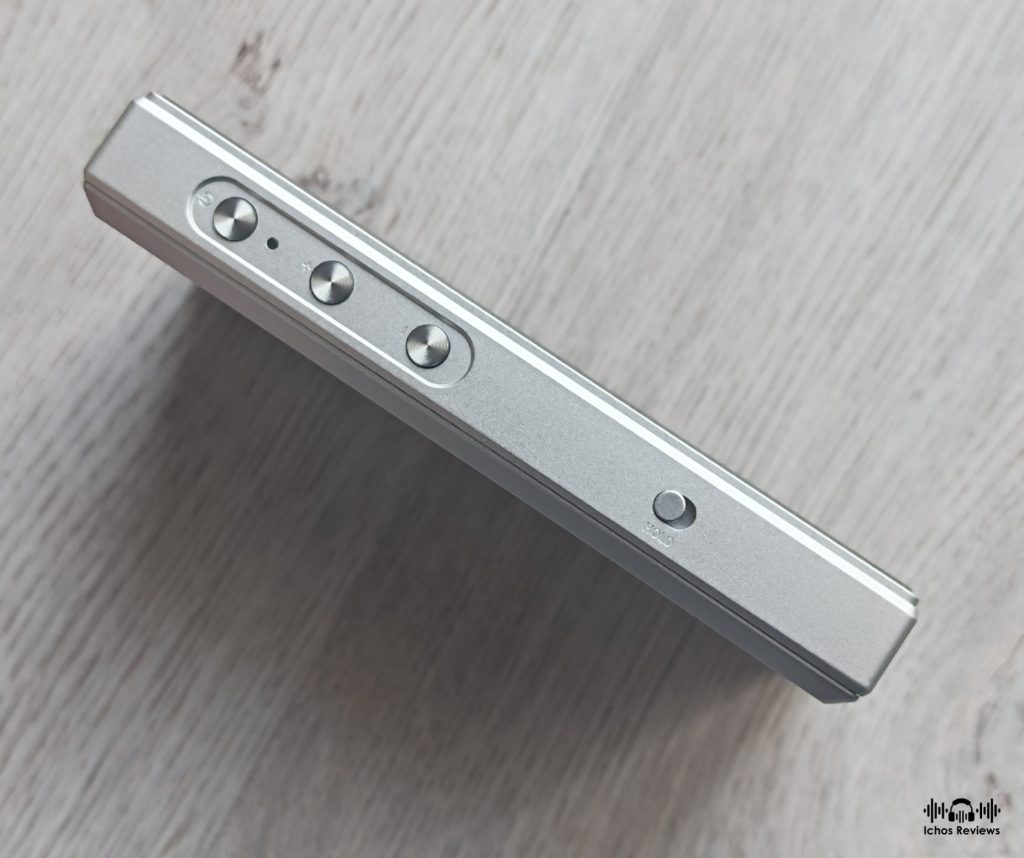
The plain rectangular design and I/O layout are almost identical to those of the FiiO M21. The DT11 has three buttons on the right side for music playback control and another three on the left for volume adjustment and powering the device on and off. There is also a hold switch but no dedicated Desktop Mode switch or multifunction button.
As is usually the case with FiiO, the DT11 is exceptionally well made, leaving nothing to be desired. You can’t really beat FiiO when it comes to manufacturing and material quality.
Accessories
What accessories? The package includes only a USB charging cable. While I can totally understand FiiO trying to keep price as low as possible, throwing in a plain silicone case would have not cost more than a couple of bucks and saved the rear from wear and tear.
Technical Overview
As a pure digital transport, the DT11 features the same clock architecture as FiiO’s flagship DAP, the M27. It combines a high-capacity FPGA with dual femtosecond crystal oscillators to improve audio performance. Each subsystem is independently powered to ensure a cleaner and more stable signal, while the power supply uses high-capacitance tantalum capacitors to provide ample energy reserves.
The Digital Outputs
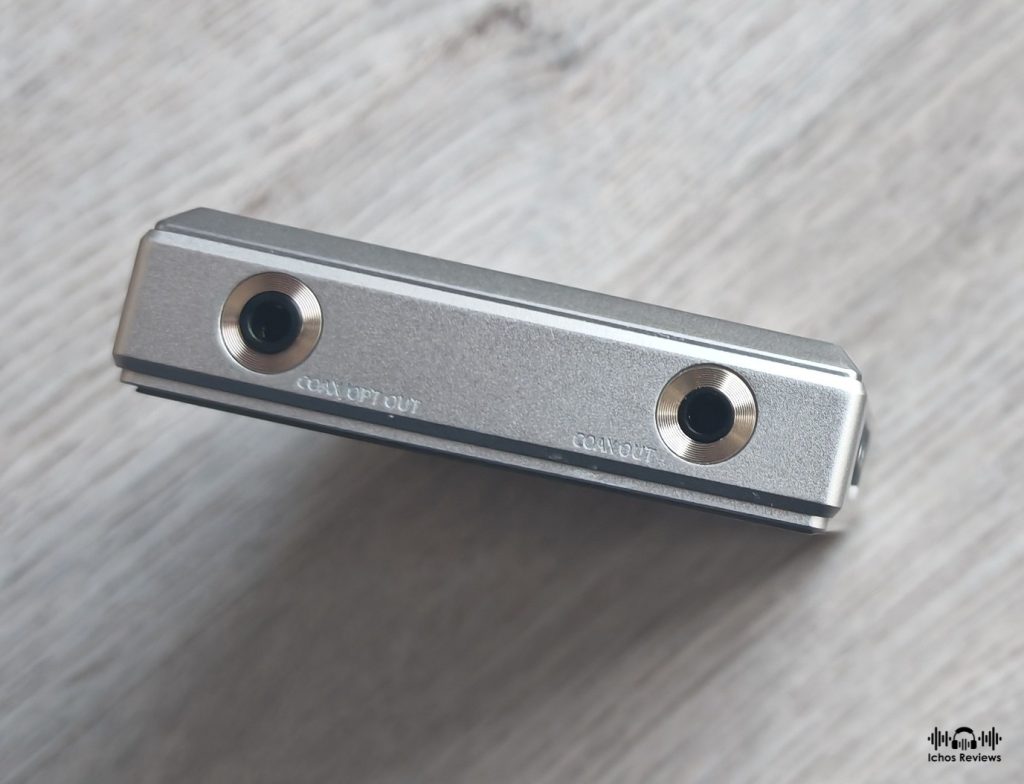
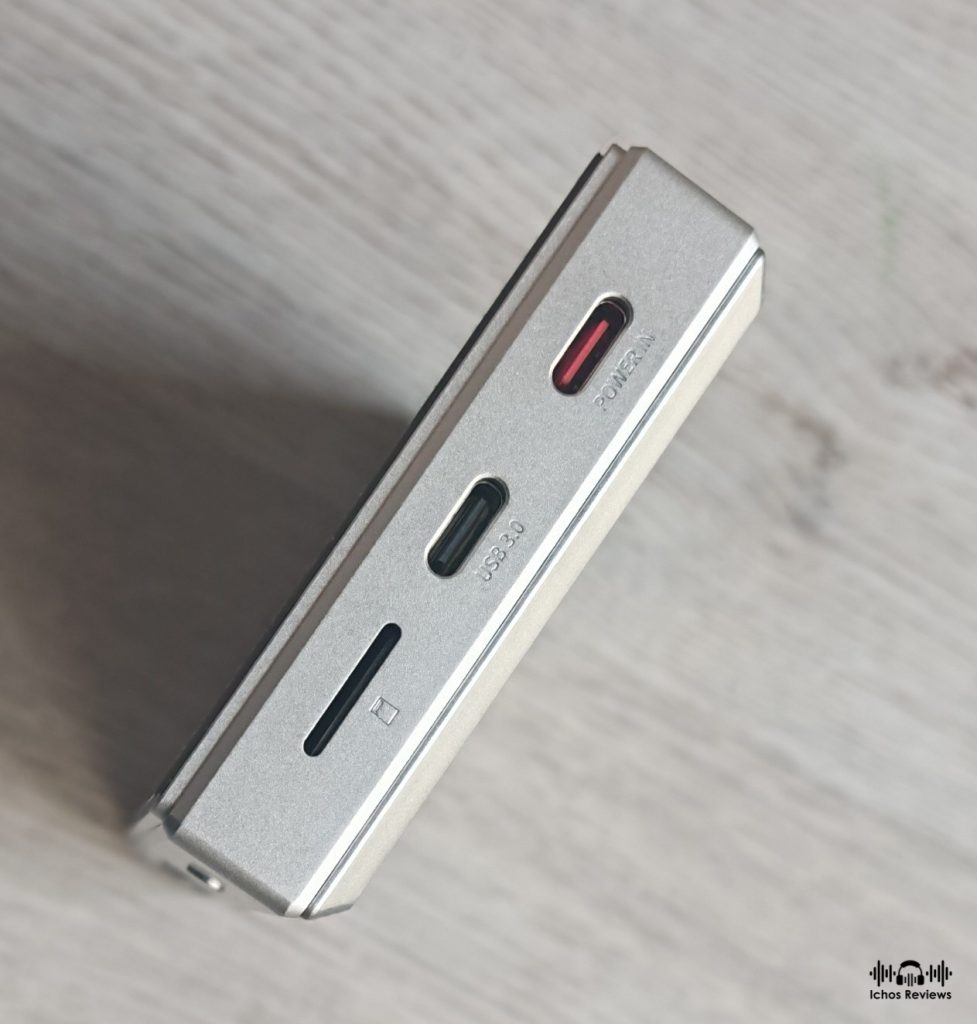
The DT11 is equipped with three digital outputs: one USB-C at the bottom, plus one dedicated 3.5mm coaxial and one 3.5mm coaxial/optical combo at the top. There is also another USB-C input dedicated to power and a micro SD card slot, both at the bottom.
All three digital outputs deliver clean, conditioned signals and support fixed or adjustable volume, but each has some distinguishing features.
The Clean Coaxial Output
The clean coaxial output circuitry additionally employs a high-quality isolation transformer, a feature usually found in much more expensive desktop streamers. This provides even lower jitter compared to the regular combo output.
This output is compatible with 4-pin 3.5mm plugs, while the combo output also supports 3-pin and 2-pin connectors, as well as optical connections. This practically covers all possible pinouts, making adapters unnecessary.
The USB Interface
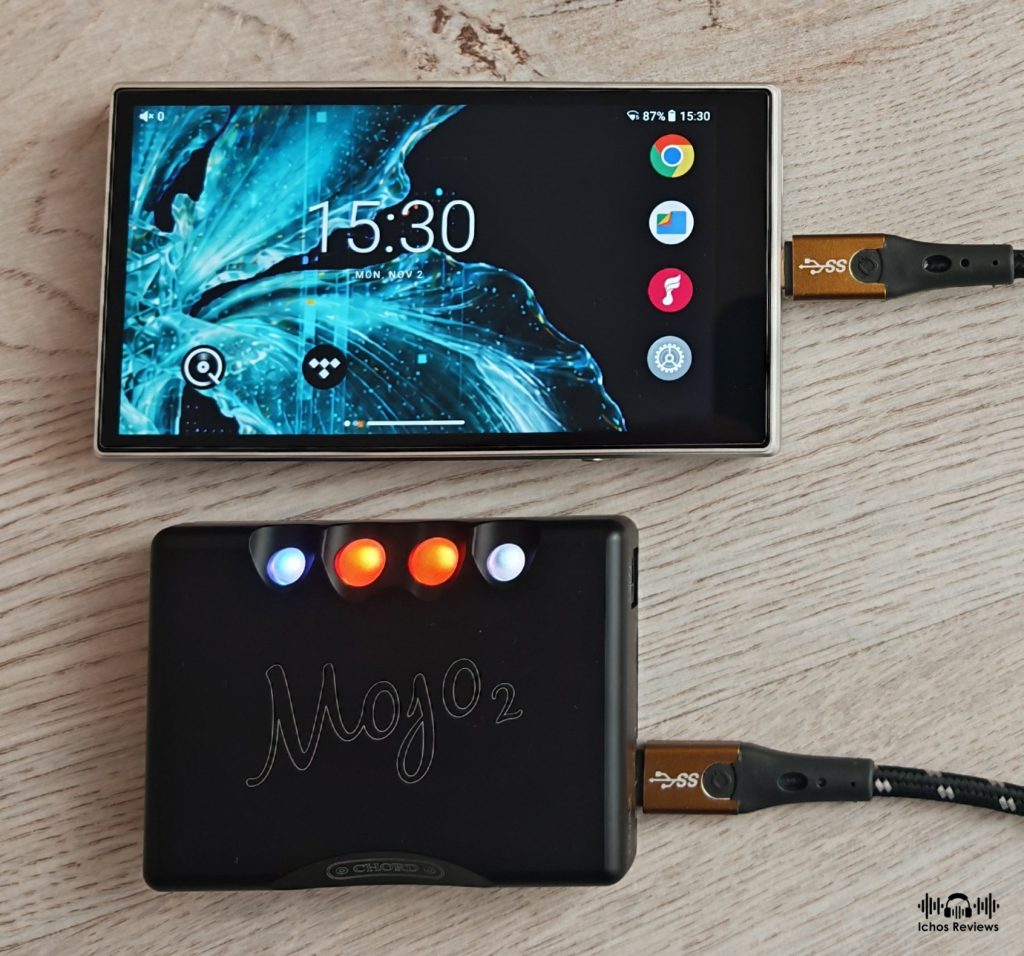
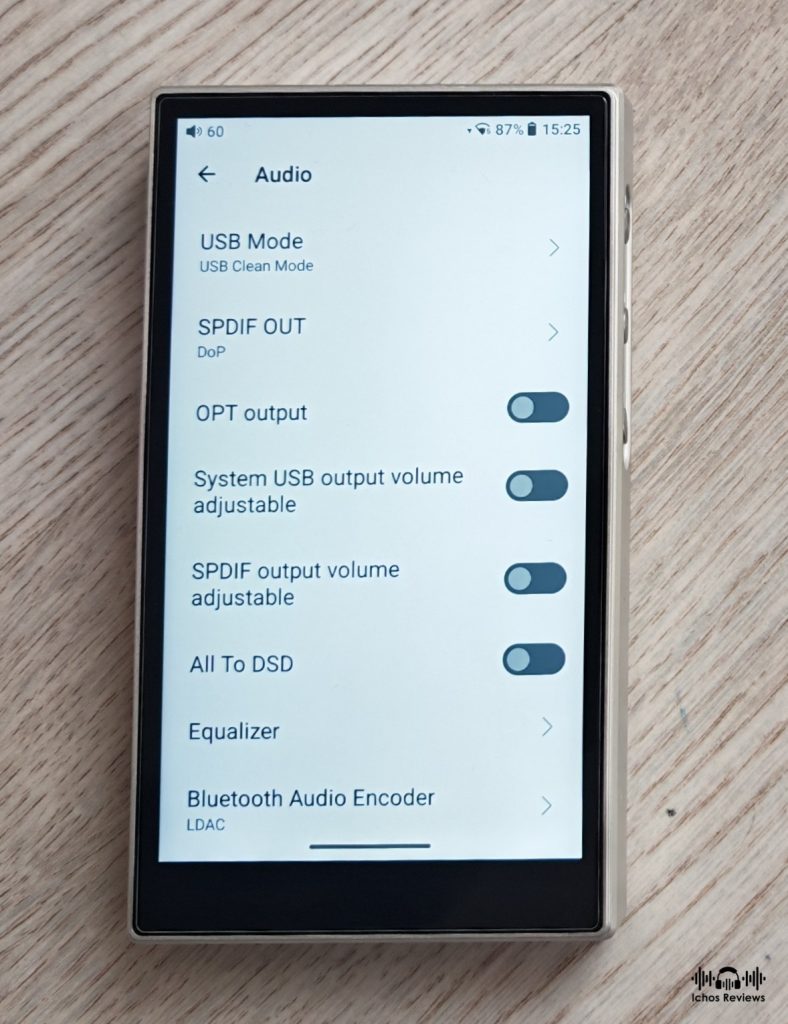
The USB-C interface offers two operating modes: Direct and Clean. In Direct mode, the USB-C port can be used as an audio output or digital interface, as well as for data transfer and charging.
Clean mode additionally employs a dedicated digital signal conditioning circuit to significantly improve signal purity. However, it can only be used as a USB audio output. For example, you can use Clean mode to connect the DT11 to a DAC, which is actually the recommended option, but you need to switch to Direct mode when connecting to a PC.
Both USB modes can provide up to 9W of power to an external device, allowing you to connect and operate USB DACs that require power from the host.
Battery Duration and Desktop Mode
The device is equipped with a 4000mAh battery that supports 20W PD fast charging, allowing it to recharge in just 2 hours. Since the DT11 doesn’t have any power-hungry digital or analog circuits, its battery lasts considerably longer than that of a DAP with similar specifications.
I performed an endurance test with the DT11 streaming high-resolution music from Qobuz to an external, self-powered DAC, with its screen constantly switched off. The battery lasted for an impressive 20 hours. In more realistic conditions, with the touchscreen in use, duration is only slightly lower, at approximately 18 hours. This is a truly spectacular performance.
If you are going to use a USB DAC dongle connected to the DT11, then the battery is not going to last as long and its duration depends on the power drawn from the dongle.
Moreover, the DT11 has an extra USB-C input dedicated to power, allowing you to use the other USB output and charge the device simultaneously.
Additionally, you can enable FiiO’s patented Desktop Mode, which completely bypasses the battery, preventing it from charging or discharging. Unlike most of FiiO’s other DAPs, the DT11 doesn’t have a dedicated external switch for Desktop Mode; instead, it is enabled through the settings menu.
User Experience
Just like the FiiO M21, the DT11 is powered by the Qualcomm Snapdragon 680 processor, with 4GB of RAM and 64GB of internal storage, plus a microSD expansion slot that supports cards of up to 2TB. The operating system is Android 13, specially optimized for audio applications and bit-perfect playback, or “DAPS”, as FiiO calls it.
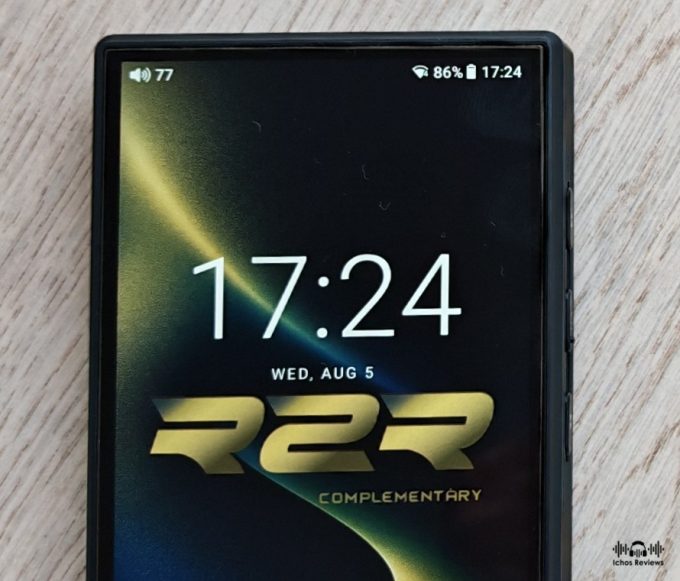
The edge-to-edge 4.7-inch touchscreen has the ideal size for easy operation while keeping the device sufficiently portable. It is a bright display with vivid colors and sharp definition, which also supports double-tap to wake.
Using the DT11 is just like using an ordinary smartphone or DAP. It supports Google Play Store out of the box, allowing users to download and install their favorite streaming services, music players or any other applications.
Other built-in applications include FiiO’s own music player and an advanced PEQ with global effects and an Auto EQ function. Additionally, when the DT11 is out of reach, you can use FiiO’s control application as a remote control to adjust the volume and change tracks directly from your smartphone.
I have used the DT11 with Qobuz, Tidal and Spotify, as well as for local file playback, without noticing any performance issues. The device is fast and responsive, handles all actions smoothly and never crashes or freezes. Excellent performance by all means.
Bluetooth Connectivity
The humble FiiO DT11 also supports two-way Bluetooth 5.0 connectivity. It can receive Bluetooth streams using the SBC and LDAC codecs, but more importantly, it can transmit using the SBC/aptX/aptX HD/LDAC/LHDC codecs. This means that you can use it as a source with Bluetooth headphones or earphones, as well as any other Bluetooth enabled device, such as speakers.
I have tested it with the Moondrop Pudding earphones and the OneOdio Studio Max 2 headphones, and remained very satisfied with both the connectivity and audio performance.
Listening Set-up
I have been using the FiiO DT11 as my main streamer since the first day I received the sample, which was more than three weeks ago at the time of writing this review.
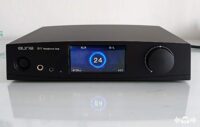
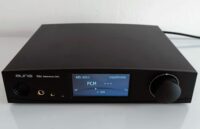
It was tested with the FiiO Q15 and the iBasso D17, as well as with desktop DACs such as the Aune S18 EVO. I have also used it with the FiiO QX13, to check host operation.
Listening Impressions
Digital bits are bits, so it doesn’t come as a surprise that some people believe digital transports don’t have their own sonic identity. However, this is far from the truth, as every transport has a certain sound signature that affects the performance of the connected DAC.
This kind of behaviour is not something that will alter the sonic profile of a given DAC, but it does affect its perceived timbre, clarity, resolution and overall technical performance. Please note that whenever you read that the “DT11 sounds…”, it always refers to how it makes the connected DAC sound.
The FiiO DT11 is a very accomplished digital streamer, with an audio performance so good that I would go as far as comparing it with desktop streamers such as the iFi Zen Stream or even the much more expensive Volumio Rivo.
It delivers clean and transparent digital streams to the connected DAC, helping it achieve the best possible performance. It makes sure that the music sounds clean and well defined, with controlled bass, articulate mids and resolving treble. The background is as black as the DAC can deliver, the soundstage is focused and the timbre natural, without any grainy textures. Put simply, the D11 doesn’t handicap the DAC’s performance, as happens with other generic sources.
Versus a Smartphone or a PC
The comparison with a smartphone or a PC used as a transport is vastly in favor of the DT11. It is like lifting a veil from the music and instantly removing all the background noise that pollutes the sound. Switching back and forth, there is no way of going back to a PC or smartphone, even if you have been using signal conditioning gizmos to improve their performance.
Versus a DAP as a Digital Transport
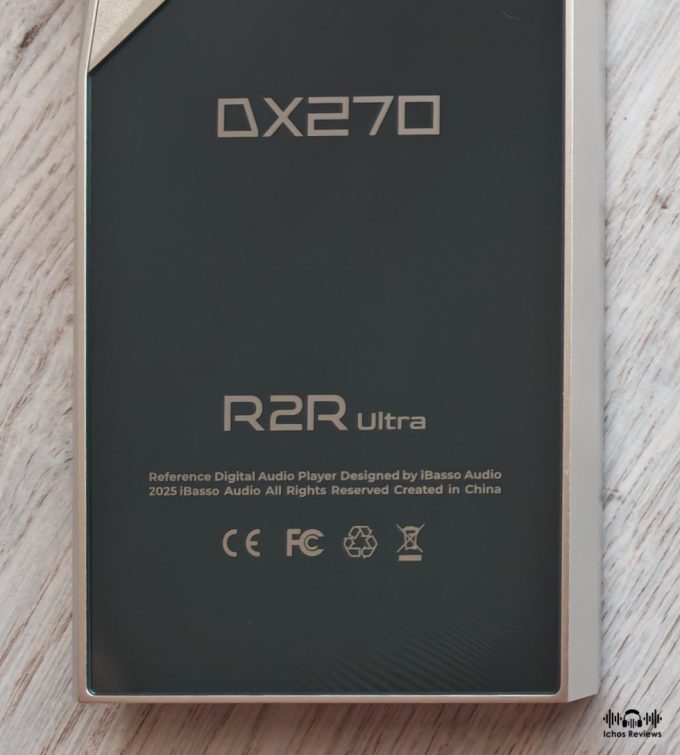
The DT11 offers better signal purity than a DAP acting as a digital streamer. I have compared its performance with that of its own sibling, the FiiO M21, but also with the much more expensive iBasso DX270, and ended up preferring the DT11 in both cases.
At this point, I should share my opinion for anyone wondering whether to buy the DT11 when they already own a high-quality DAP or are planning to get one. If your main use is listening to music with the DAP and only occasionally using it as a transport, then there is no need for the DT11. But if you want a dedicated full-time transport, or the best possible performance even if it will be used only occasionally, then you should definitely consider getting the FiiO DT11.
Versus the Fosi Audio S3 Lite
Another very interesting comparison is with the Fosi Audio S3 Lite, a compact desktop streamer that retails for $299.
The S3 Lite is a non-Android streamer that supports Tidal, Qobuz and Spotify Connect with Lossless playback, as well as Google Cast, AirPlay and UPnP. It is also Roon Ready. It has USB, coaxial and optical digital outputs, comes with a remote control and is accompanied by a user-friendly application that supports a 10-band EQ. It offers good sound quality and a flawless user experience, with only minor potential USB handshake issues with some DACs.
Comparing the two side by side, the FiiO DT11 slightly outperforms the S3 Lite with its stock power supply in terms of signal purity and sound clarity. The DT11 sounds a little cleaner, more defined, focused and tighter, with increased separation and definition. However, upgrading the Fosi’s stock power supply to something better, like the iFi iPower 2, significantly closes the gap, and the two streamers end up sounding almost identical.
So, provided that the S3 Lite’s owner is willing to upgrade its power supply, I would choose between the two based on form factor and intended use alone. The S3 Lite might be compact in size, but that doesn’t change the fact that it is a desktop device. The DT11, on the other hand, is ideal for portable use, but it can also double as a desktop unit thanks to its Desktop power mode.
USB vs Coaxial
I am pretty sure that many of you are going to ask which one of the two, USB or Coaxial, offers the best sonic performance. Honestly speaking, I cannot detect any differences in sound quality that I would not categorize as placebo.
Both sound equally great to my ears and I would choose solely based on the digital implementation of my DAC. As an example, I find the iBasso D17 better sounding from its coaxial input than the USB so I opted using this one. However, for most other DACs of my collection, I ended using the clean USB output.
In the End
The FiiO DT11 has instantly become one of my all-time favorite gadgets, and I think it is one of the most innovative and useful devices ever designed by FiiO.
At a time when almost every audiophile owns a high-quality portable DAC, whether battery-powered or not, the FiiO DT11 is the best option available to make the most of its sonic capabilities while still remaining portable. It offers better sound quality, period, than any smartphone or PC I can think of.
Its sonic performance is so good that it can easily compete with many desktop streamers and double as one in your home, without having to worry about charging its battery, thanks to its dedicated Desktop Mode.
The DT11 is not exactly a new concept. A few other brands, like Aune Audio and xDuoo, have produced similar portable transports in the past. However, this is the first one to support both streaming services and local file playback, plus many other modern features, and the only one featuring such carefully designed circuitry for signal purity.
Thankfully, FiiO has decided to put the DT11 into mass production. And, as usually happens, I am pretty sure that now that FiiO has paved the way, other manufacturers will soon follow suit with similar devices.
Pros
Class-leading digital signal purity and sonic performance
Supports USB, coaxial and optical digital outputs
USB clean mode with dedicated signal conditioning
Coaxial clean output through isolation transformer
Supports all possible plug pinouts
Secondary USB input dedicated to power supply
Excellent battery life
Desktop Mode with battery bypass
Android 13 with full streaming service support
PEQ application with global effect
Fast and stable operation
Two-way Bluetooth connectivity with LDAC and aptX HD
Many other useful features
Compact and portable with magnetic attachment system
Excellent build quality
Cons
No Multifunction button and dedicated Desktop Mode switch
Magnetic attachment system is not that strong
No protective case included with the risk of damaging the rear
USB-C and coaxial cables are not included
The clean coaxial output is limited to 4-pin plugs
Copyright – 2026.
Authored by Petros Laskis for Ichos Reviews. All content is original and copyrighted. Republishing full reviews or portions without written permission is prohibited. Excerpts up to 100 words are allowed with a direct link.





Leave a comment