

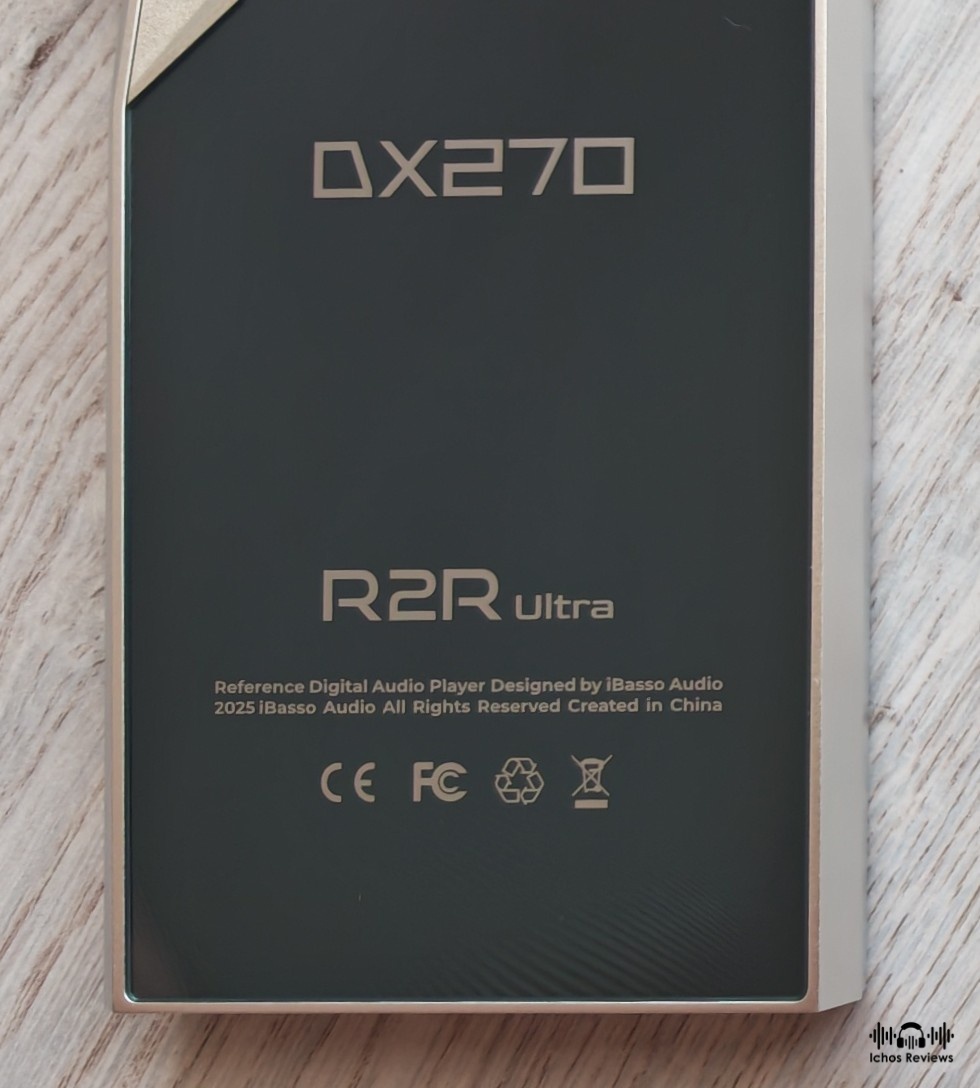

Today’s review is about the iBasso DX270, a reference digital audio player (DAP) that features the brand’s proprietary R2R Ultra decoding architecture and 12V DC external power input that significantly boosts its output power.
The review sample was kindly provided free of charge in exchange for an honest review. I didn’t receive monetary or any other kind of compensation and I don’t use affiliate links.
The price of the iBasso DX270 is $1,149 and you can buy it from here.
iBasso Audio
Not familiar with iBasso? Then click here to explore our previous reviews and learn more about this boutique audio brand from China, which specializes in DAPs, portable and desktop DAC/amps, headphones, and earphones, offering excellent sound performance and build quality at very reasonable prices.
iBasso DX270
The DX270 is iBasso’s first digital audio player to use R2R decoding technology. But this is not a conventional R2R implementation; instead, iBasso calls it R2R Ultra, a hybrid architecture that combines a 20-bit R2R DAC with a 4-bit string DAC, along with a hardware resistor compensation network.
This is essentially a segmented DAC, where the Most Significant Bits (MSB) are handled by the 4-bit string DAC, while the Least Significant Bits (LSB) are handled by the 20-bit discrete R2R ladder DAC. Using a string DAC for the MSBs lowers spurious energy and THD+N, while greatly enhancing dynamic range.
The downside of this hybrid decoding technique is the need for more high-precision resistors. iBasso uses 344 resistors in total (76 for the hardware resistor compensation network, 64 for the string DAC and 204 for the R2R DAC), with 0.01% accuracy and low temperature drift.
The iBasso DX270 utilizes a fully balanced architecture with separate L+, L-, R+, and R- paths, each internally containing two R2R DACs, forming an “8-channel R2R” configuration.
The hybrid DAC structure is coordinated by the self-developed FPGA-Master 3.0 algorithm engine, alongside the hardware compensation network designed to eliminate zero-crossing distortion near zero voltage. The main audio controller fetches data directly from the SoC, using synchronized system clocks generated by two Accusilicon femtosecond oscillators.
The end result is a discrete DAC that, unlike traditional R2R ladder DACs, offers impressive measurements, with a dynamic range as high as 130dB, THD+N as low as -97dB, and outstanding linearity even at -120dBFS.
The 12V DC External Power Input
The headphone amplifier of the DX270 supports iBasso’s patented 12V DC external power input, which boosts its operating voltage from ±8V in battery mode to ±12V. This enables the “Super Gain Mode,” which increases the output power from 1050mW + 1050mW (6Vrms) at 32Ω in battery mode to 1575mW + 1575mW (7.3Vrms), allowing it to drive more demanding loads.
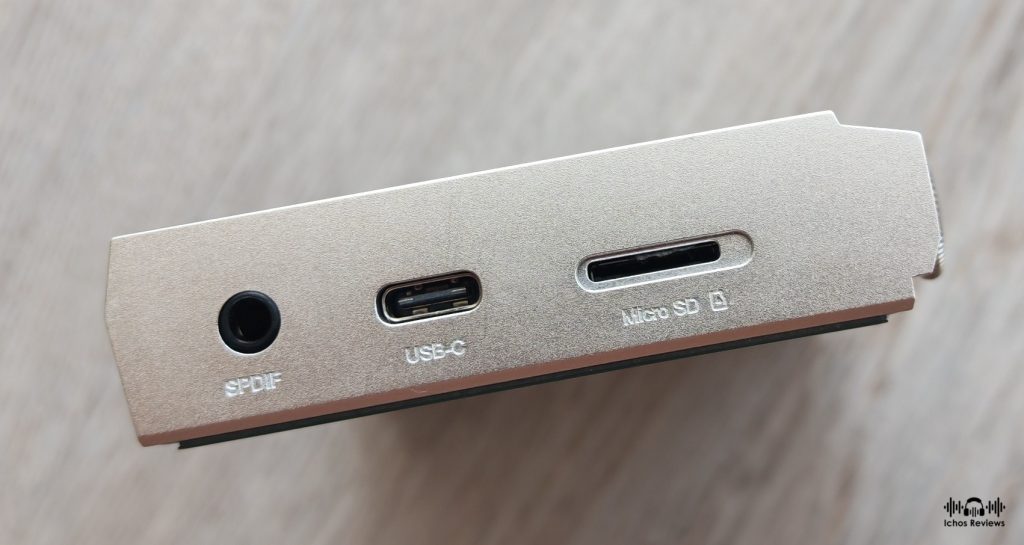
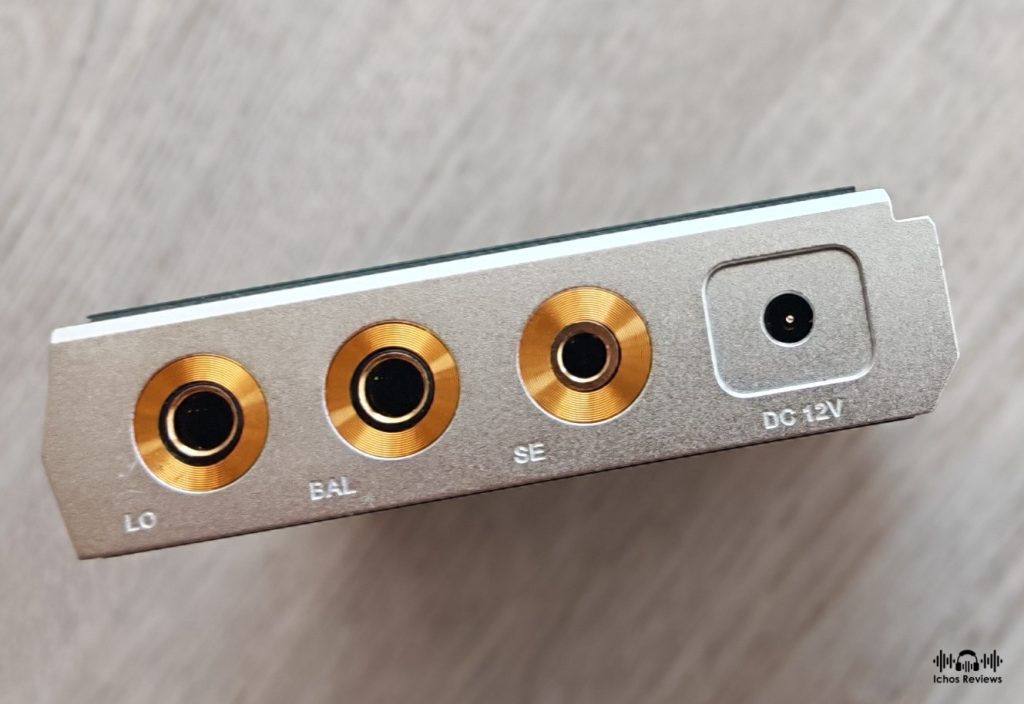
To enable Super Gain Mode, the user must connect the supplied 12V AC adapter to the DC 12V port located at the bottom-right side of the player.
The amplifier is also equipped with two dual-channel JRC analog volume-control ICs, forming a 4-channel volume control. At low volume levels, this volume control synchronously attenuates noise, achieving a SINAD of over 91dB at a typical listening level of 50mV and ensuring a clean and natural sound.
User Experience
iBasso equipped the DX270 with the 11nm octa-core Qualcomm Snapdragon 665 SoC, along with 4GB of RAM and 128GB of internal storage. These are not particularly impressive specifications by modern standards, especially the amount of RAM, which feels rather low for a flagship DAP. The internal storage can be expanded by up to 2TB via the microSD card slot.
The user experience is not that bad, though. The player is snappy and fast enough for everyday use, whether you are running different music players or streaming applications such as Qobuz. However, honestly speaking, it leaves something to be desired, especially when multitasking or doing some web browsing.
If you use the player primarily for music listening, as I do, you are unlikely to find its overall performance underwhelming. Still, I would have expected a more advanced hardware configuration at this price point.
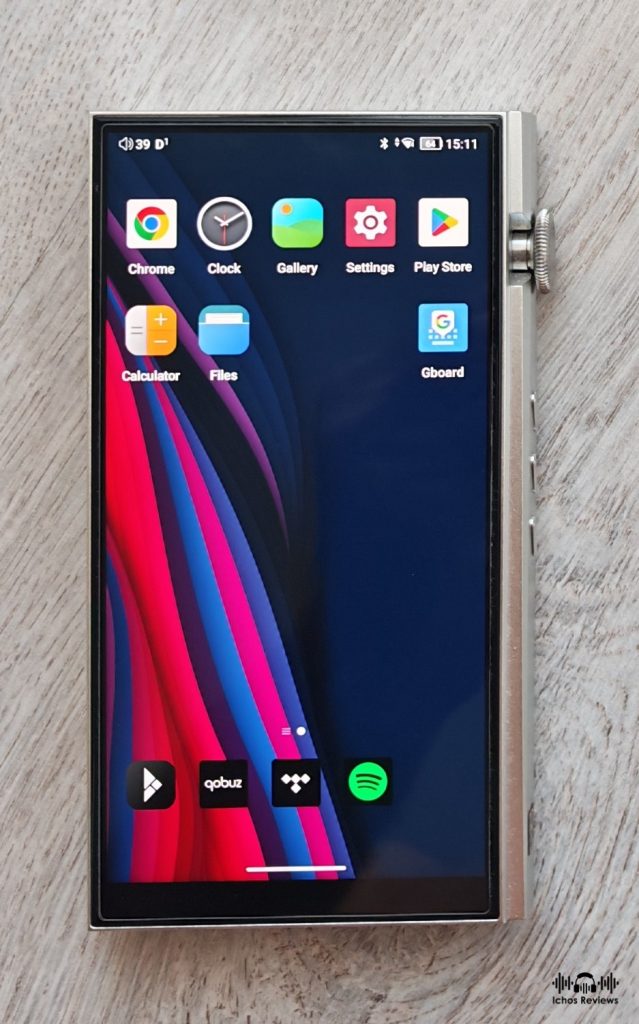
The 5.5-inch 1080p display extends from edge to edge and produces vibrant colors with good clarity. Unfortunately, it doesn’t support double-tap-to-wake. The capacitive touchscreen is fast and responsive, with all actions registering correctly and without any noticeable lag.
Software Features
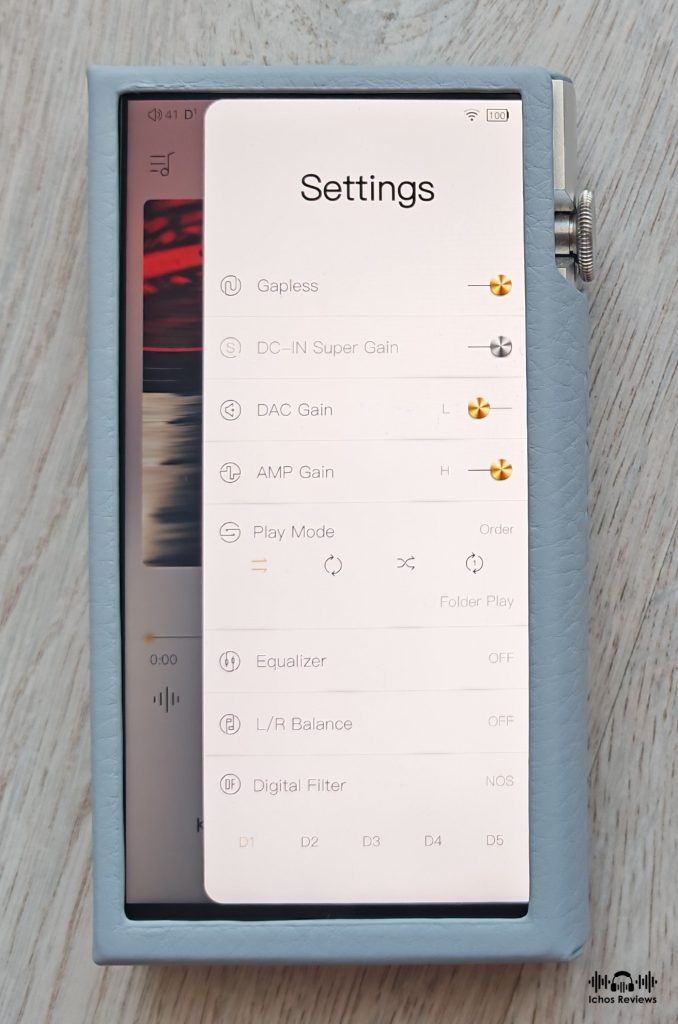
The iBasso DX270 features a dual-OS system that allows the user to switch between Android 13 with global SRC bypass and iBasso’s Linux-based operating system, Mango OS. The latter is a specially designed OS that runs various advanced algorithms and is dedicated to pure audio playback, with features such as lower SoC load, no Wi-Fi and Bluetooth interference, and lower EMI.
Google Play Store comes pre-installed, allowing users to easily download their favorite music players and streaming applications. The DX270 doesn’t offer a system-wide PEQ, as EQ functionality is limited to Mango OS. However, users can install a third-party EQ application when running Android.
Connectivity
The iBasso DX270 features both 3.5mm and 4.4mm analog output interfaces, with dedicated 4.4mm headphone and line outputs, plus a 3.5mm phone output.
The 3.5mm mini coaxial jack supports digital output up to 384kHz PCM, while the USB Type-C port can be used either as a USB DAC input, supporting up to 32-bit/768kHz PCM and DSD512, or as a USB digital output supporting up to 32-bit/384kHz PCM and native DSD256.
Wireless connectivity is provided through dual-band Wi-Fi and two-way Bluetooth 5.0. When used as a Bluetooth transmitter, the DX270 supports the LDAC codec but Bluetooth reception is limited to AAC and SBC.
Design and Layout
The DX270 has the minimalist industrial design that was first introduced with the release of the DX180 and DX260, where the smoother lines of previous-generation iBasso players were replaced with a more aggressive and bold appearance.
Measuring 136×73.5x19mm and weighing 265g, the DX270 is lightweight enough for everyday portable carry and one-handed operation. Its size and form factor hit the sweet spot, ideally balancing ease of use and portability with the player’s many functions and large screen.
The chassis, which is made from high-quality CNC-machined aluminum, is exceptionally well finished and assembled, and is available in silver and grey finishes. The user-removable back cover is made from plastic but is covered with high-quality tempered glass.
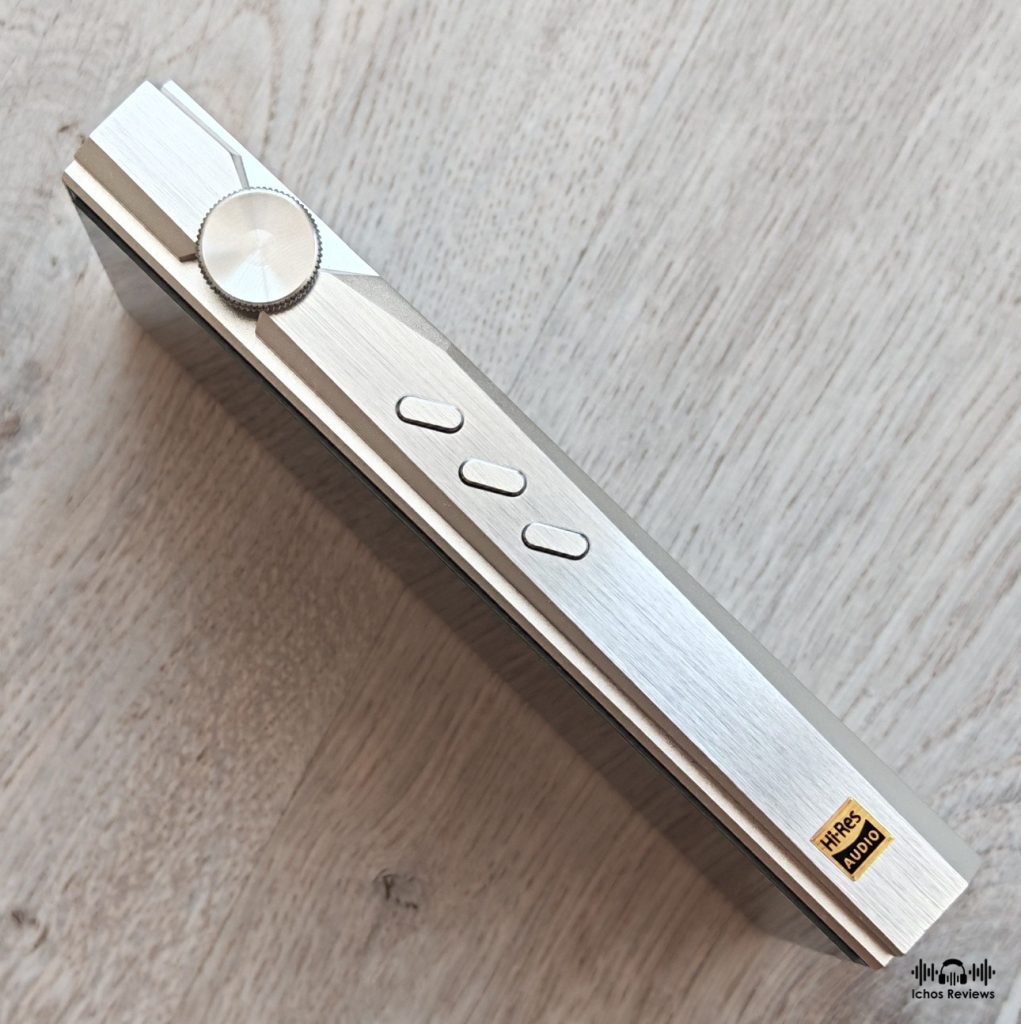
The user interface is plain and minimalist. The player is equipped with just one multifunction rotary wheel and three playback control buttons positioned underneath. The wheel might look fragile, but it is actually quite sturdy, as it has a metallic shaft that connects directly to the inner board. The position of the playback buttons is not that ideal and you may find yourself pressing them accidentally.
Accessories
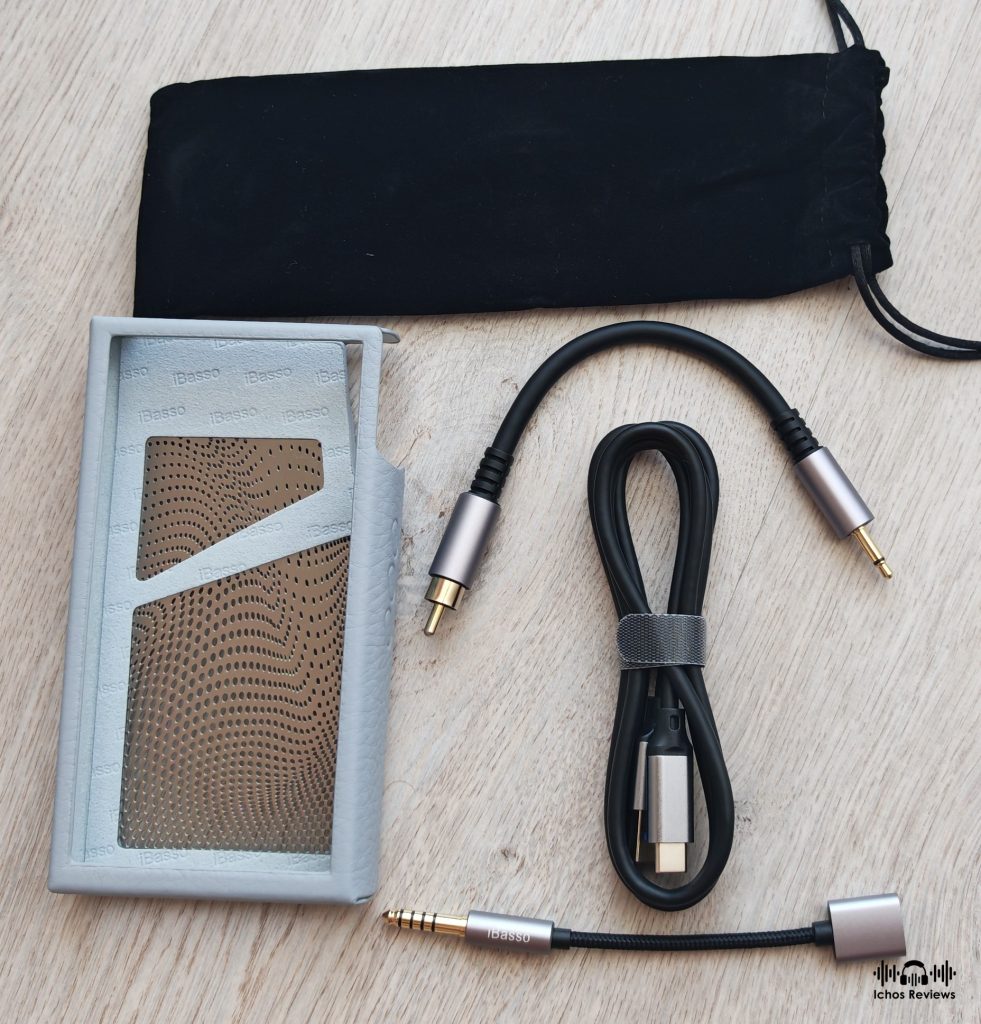
Except for the player, the package also contains a 12V AC adapter, a high-quality protective case, iBasso’s famous burn-in cable, a coaxial cable, a USB Type-C cable and a spare screen protector. The cables are stored inside a handy pouch.
The leatherette case fits the player like a glove and is designed with a perforated metallic frame at the back to aid with heat dissipation. Its colour is attractive but it can stain and show dirt easily.
Battery Duration and Bypass
Unlike the flagship DX340, the DX270 is equipped with a single 4400mAh battery that powers both the analog and digital sections of the circuit. The battery supports QC3.0 and PD3.0 fast-charging protocols, allowing it to charge in about 2.3 hours.
Playback time is advertised at up to 13.5 hours, although this rating refers to specific test conditions. In actual use, I get about 9 to 10 hours maximum, in high gain mode when streaming music from Qobuz through the balanced output.
Using the 12V DC external power supply bypasses the battery section that powers the analog stage, preserving overall battery life. Similarly, the battery section for the digital circuitry is bypassed if a 5V charger remains plugged into the USB-C port after reaching a full charge. With both supplies kept plugged in at the same time, the DX270 completely bypasses its internal battery and runs strictly on external power.
As with all recent iBasso DAPs, the battery is user-replaceable and easily accessible under the back cover. iBasso guarantees battery availability for many years to come. Just think that they still stock batteries for the iBasso DX100.
Output Power and Noise
With 1050mW*2/32Ω in battery mode and 1575mW*2/32Ω in DC desktop mode, the iBasso DX270 is very powerful and can easily drive a wide variety of full-sized headphones, including the iBasso SR3 and Meze Audio Poet.
Except for the DC Super Gain Mode, the DX270 amplifier supports high and low gain settings (only available in battery mode), while the DAC output can be set between high and low.
At the same time, the noise floor is practically inaudible even with sensitive earphones, such as the iBasso Epitome, which sonically pairs incredibly well with the DX270. The player also runs relatively cool, and I haven’t encountered any overheating issues regardless of the load.
Listening Evaluation
The iBasso DX270 is not like your grandfather’s R2R DAC from the ’90s, and its sonic presentation differs considerably from that of most R2R DAPs, such as the FiiO M33 R2R or Cayin N6III/R202, as well as many desktop DACs like the Denafrips Ares 12th. It offers considerably better neutrality and transparency than most traditional R2R DACs without sacrificing the analog-like and organic timbre they are known for.
This duality is what truly sets the DX270 apart. iBasso’s R2R Ultra sounds at least as precise, clean and technically accomplished as the best D/S chips, while retaining plenty of the harmonic richness and tonal realism for which R2R ladder DACs are renowned. At the same time, the sound is completely free from any audible digital glare or artificial timbre.
More listening impressions
The bass is fast, tight and controlled, with excellent definition and layering, while remaining sufficiently full-bodied, weighty and elastic. The powerful amplifier makes your favorite headphones and earphones sound punchy and impactful, especially in 12V DC mode, which I recommend using whenever you are near a power source.
The midrange remains clean, articulate and tonally balanced, as you would expect from a flagship DAP, while also having a touch of warmth and a dense organic timbre that make it sound particularly natural and lifelike. Voices and instruments are reproduced with an impressive sense of realism, while their weighty textures are exceptionally refined and well resolved. The DX270 delivers reference-grade sonic performance while remaining highly engaging and deeply expressive with all kinds of music.
The treble presentation is where the DX270 differs noticeably from traditional R2R DACs, which usually sound a little rolled-off and muted in this range. Here, the high frequencies are fully extended and bursting with energy, without ever sounding harsh or bright. There is plenty of clarity and resolution, but the sound never becomes clinical or too analytical.
And some more…
Textures are smooth and remarkably well-defined, with plenty of finesse and a complete lack of metallic artificiality. In contrast to most D/S-based DAPs, the DX270 ideally balances transient speed and attack with natural decay and a weighty note presentation. High-pitched instruments, even notoriously piercing ones like the natural trumpet or piccolo, are reproduced close to reality without getting thinned out or becoming unnaturally sharp and aggressive.
R2R DACs are famous for their holographic and atmospheric soundstage, and the iBasso DX270 doesn’t disappoint in this regard, while also adding to the mix plenty of the precise and pinpoint imaging of D/S chips.
The stage is wide and deep but not unnaturally expanded, always adapting to the size of the ensemble. Intimate with solo performances and grandiose with full-scale orchestral and choral works, the DX270 handles all kinds of music with fidelity and immense realism, creating a highly convincing sense of space and scale.

Fine Tuning the Sound
Except for the typical NOS (Non-Oversampling) filter found on R2R DACs, the iBasso DX270 also supports four OS filters: Fast Roll-off, Slow Roll-off, Low Latency Fast Roll-off, and Low Latency Slow Roll-off. As expected, the NOS filter sounds distinctly different from the other four OS options, which in turn don’t sound significantly different from each other.
The NOS option showcases the full potential and unique timbre of the R2R ladder DAC, while the other four add a touch of D/S flavor. NOS is my favorite, as it sounds the most organic and natural, but I can see plenty of use cases for the other four, depending on the upstream gear or headphones.
The Balanced Line Output
The DX270’s balanced line output is directly derived from the DAC without passing through the amplification circuit. The output level is fixed and can be set to either 4Vrms or 3Vrms, depending on the DAC gain setting (High or Low).
Audio quality remains exactly as described above, making this the best option for enjoying the DX270’s unique timbre through an external headphone amplifier, such as the iBasso PB6, or using it as a DAC in a 2-channel speaker system. The latter is an option that should not be overlooked, as the DX270 can easily compete with various desktop DACs and serve as the main source in a speaker-based listening system.
Comparison with the FiiO M33 R2R
The FiiO M33 R2R is the brand’s first DAP to feature an R2R ladder DAC. Unlike the sophisticated DAC architecture of the iBasso DX270, the M33 R2R uses a simpler 24-bit resistor array across four independent channels, utilizing a total of 192 precision thin-film resistors with 0.1% accuracy.
Despite its lower price tag ($650), the M33 R2R is equipped with a more powerful Snapdragon 680 SoC paired with 8GB of RAM. This translates to a faster and smoother user experience, particularly when multitasking while streaming or playing music.
It also features a Desktop Mode that completely bypasses the internal battery, alongside a Super High Gain Mode that boosts output power to 1100mW*2/32Ω. Both modes require only a standard 5V fast charger and no extra 12V DC power supply like on the DX270.
That said, the DX270’s dedicated 12V DC input does deliver higher peak output (1575mW*2/32Ω), so it comes down to whether you prioritize power or single-cable convenience (not to mention the DX270’s user-replaceable battery).

Sonic Comparison
The iBasso DX270 gives up some of the M33’s warmth and timbral richness in favor of a more neutral and technically accomplished presentation. In a way, it combines the precision, transparency, and technical performance of a high-end D/S DAC with the organic, analog-like character of R2R.
The DX270 isn’t simply a brighter or more clinical-sounding version of the M33. It retains plenty of the characteristic R2R tone, but feels as if some of the warmth and richness have been traded for greater clarity, faster transients, tighter and punchier bass, sharper imaging, a stronger sense of spaciousness, and higher resolution.
Overall, the DX270 is the more technically capable player, with stronger fidelity and transparency. On the other hand, it doesn’t sound quite as lush and analog as the M33, nor is it as musical and forgiving.
The M33 takes a more romantic approach, somewhat reminiscent of vinyl, with richer harmonics and fuller textures. It sounds smoother and more relaxed, however, it cannot match the DX270 when it comes to the remarkably realistic rendering of timbre.
In order to be fair, though, it must be pointed out that the iBasso DX270 costs about two times as much as the FiiO M33 R2R and uses more advanced decoding technology, so its sonic strengths don’t come as a surprise.
Comparison with the Cayin N6iii & R202 Motherboard
The Cayin N6iii & R202 Motherboard combination costs around $1,500 (depending on VAT). Its greatest strength lies in its modular system: with a single swap, you can change not only the amplifier module, as with the iBasso DX340, but also the DAC.
Currently, there are four motherboards to choose from, but let’s focus on the R202. It features both a discrete R2R PCM DAC with 192 resistors of 0.1% precision and a discrete 1-bit DSD DAC with 128 resistors of 0.1% precision.
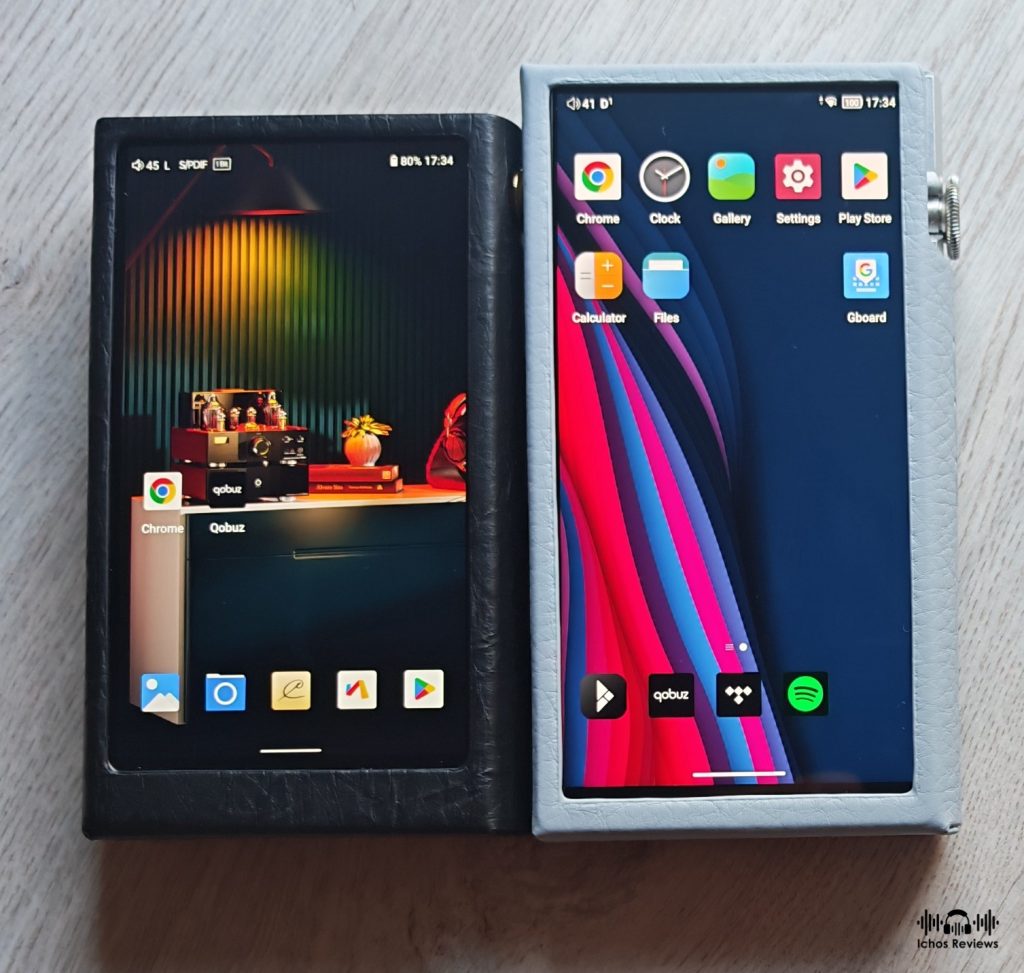
The Cayin N6iii is equipped with the same Snapdragon 665 SoC as its rival, but with 6GB of RAM instead of 4GB; however, its performance is not noticeably snappier than the DX270. While the N6iii is more compact, you trade the 5.5-inch screen for a 5-inch display, and it is heavier than the DX270.
The N6iii lacks both a user-replaceable battery and a desktop mode, and its output power is limited to 550mW*2 at 32Ω, making it suitable primarily for earphones and highly sensitive headphones. However, the larger 9,000mAh battery and lower power consumption deliver about 13 to 14 hours of playback during streaming.
Sonic Comparison
With the DAC mode set to R2R, the overall sonic character of the N6iii resembles more that of the FiiO M33 R2R than the DX270, with perhaps a touch more clarity and transparency than the former, but it can’t really touch the technical superiority and tonal realism of iBasso’s player.
Switching to 1-bit decoding increases resolution and transparency, at the expense of some organic density, however the DX270 still wins hands down in all these parameters, while also sounding more natural and lifelike.
There is no doubt that the Cayin N6iii/R202 is an excellent sounding DAP with many sonic merits, but the truth is that the iBasso DX270 plays at another level.
In the End
The iBasso DX270 is really unique because its hybrid R2R & 1-bit architecture manages to capture all the great tonal characteristics usually associated with R2R DACs without rolling off the treble or compromising technical performance and transparency. It is an ideal choice for anyone looking to experience R2R timbre without sacrificing modern technicalities and fidelity.
The DX270 has the right size and weight for everyday portable use, while offering desktop-like power reserves when a nearby AC socket is available. The user experience could be a little snappier, but other than that, the iBasso DX270 is one of the best DAPs your money can buy, especially if you are after the most natural and realistic sonic presentation.
Copyright – 2026.
Authored by Petros Laskis for Ichos Reviews. All content is original and copyrighted. Republishing full reviews or portions without written permission is prohibited. Excerpts up to 100 words are allowed with a direct link.
Pros
Hybrid R2R and 1-bit architecture
Natural, organic and realistic timbre
Excellent technical performance and transparency
Outstanding extension from top to bottom of the frequency range
Harmoniously rich and expressive presentation
Highly resolving but not analytical
Completely free from digital glare
Immersive and holographic soundstage
12V DC input raises output power
User-replaceable battery with bypass mode
NOS and four OS filters offer effective fine-tuning
Dual-OS operating system (Android 13 & Mango OS)
Handy size and weight
Exceptionally well made
Generously accessorized
Cons
4GB of RAM is too little for a modern flagship DAP
UI could be more responsive
Battery bypass mode requires two chargers
Average battery life










Leave a comment