

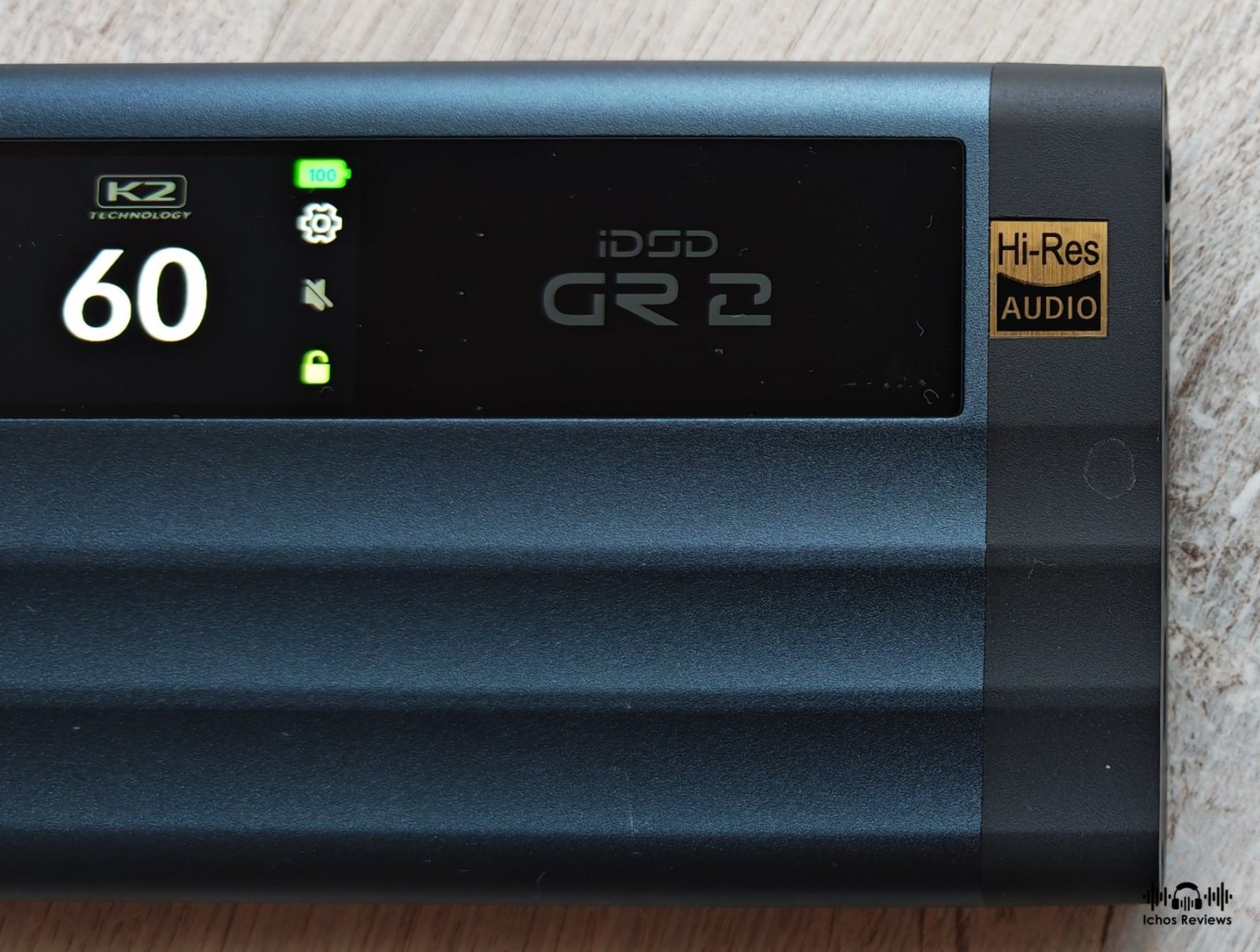

Today’s review is about the iFi iDSD GR 2, a battery-powered portable DAC and headphone amplifier that is the successor to the much-acclaimed and award-winning iFi xDSD Gryphon.
The iFi iDSD GR 2 was kindly provided free of charge in exchange for an honest review. I didn’t receive monetary or any other kind of compensation and I don’t use affiliate links.
The price of the iDSD GR 2 is €549 and you can buy it directly from iFi or authorized dealers around the world.
iFi Audio
iFi Audio doesn’t really need an introduction. It is a British audio company known for its DACs, headphone amplifiers and portable audio devices.
Popular models include the iDSD Diablo 2 and xDSD Gryphon, the desktop-oriented NEO and ZEN series, and the portable GO series. Most of their products have earned a strong reputation among audiophiles and headphone enthusiasts.
Please click here to read all our past iFi reviews.
iFi iDSD GR 2
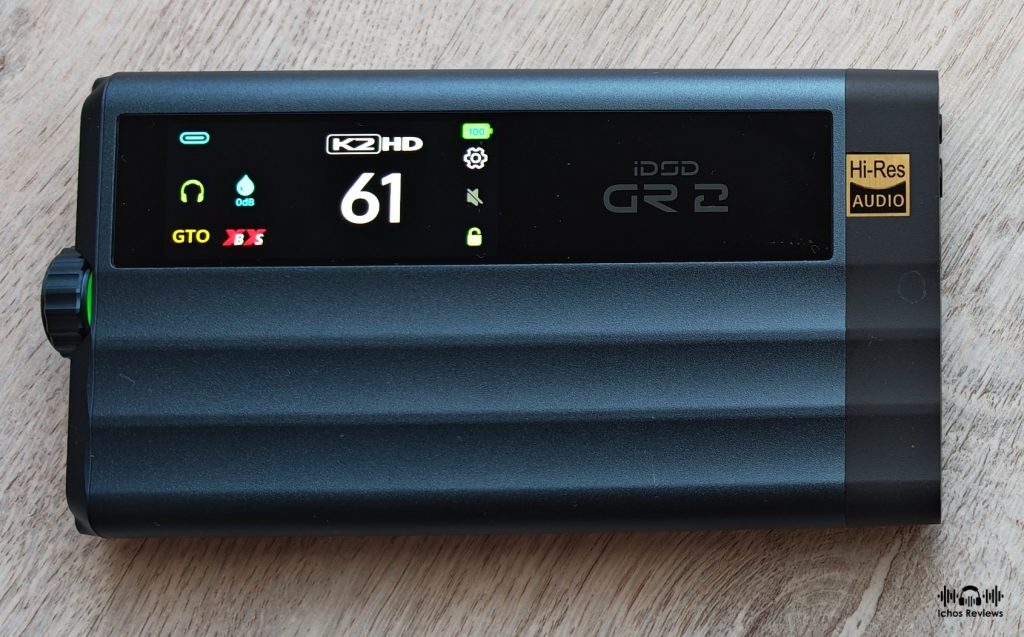
The iFi iDSD GR 2 is a battery-powered portable DAC and headphone amplifier that despite continuing the story of the much celebrated xDSD Gryphon, it is essentially a brand new model designed from the scratch.
iDSD GR 2 VS xDSD Gryphon at a Glance
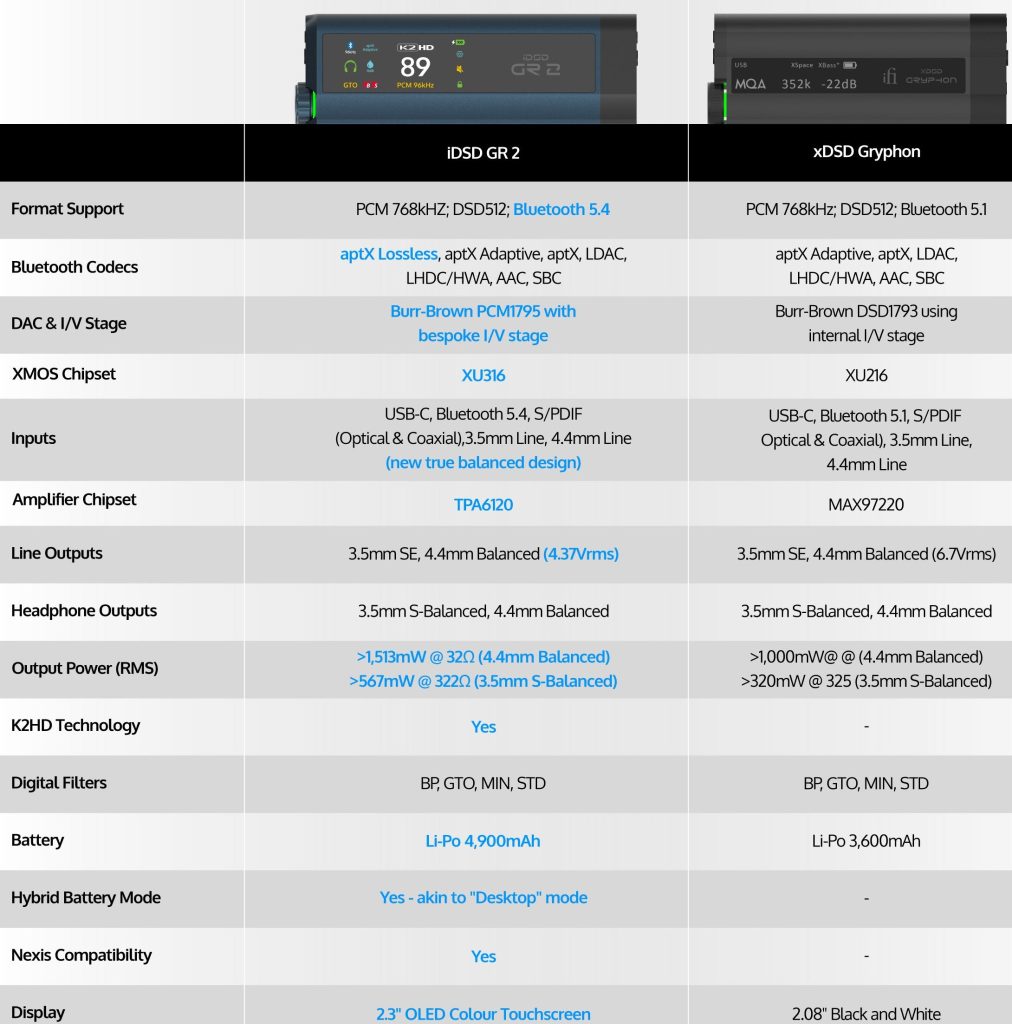
The iDSD GR 2 is not just a reworked version of the xDSD Gryphon but is engineered with a host of new and innovative features, from the DAC chips to the amplification circuitry and much more.
Please refer to the following picture to learn more about their differences.
Technical Overview
The renovation starts from the very heart of the device, the digital-to-analog conversion stage, which has been assigned to the Burr-Brown PCM1795 chipset. This is a true 32-bit high-resolution DAC with a current output instead of voltage, which gives the engineer the freedom to get creative when designing the analog output stage.
For the iDSD GR 2, iFi engineers have opted to use Class A op-amps in combination with TI’s current-feedback TPA6120A2 headphone amplifier IC, in a fully balanced, from end-to-end, topology. The iEMatch circuitry has also been reworked and upgraded with low-impedance MOSFETs.
Output Power and Noise
The new amplification stage delivers up to 1,513mW RMS into 32Ω from the balanced output, which is 50% more headphone drive than the xDSD Gryphon. The single-ended output is also powerful, delivering 567mW RMS into 32Ω, while employing iFi’s proprietary S-balanced circuitry to reduce noise and distortion.
The amplifier has three gain settings: 0dB, +6dB for more demanding loads, and -12dB for sensitive earphones. The latter setting also automatically enables the iEMatch circuitry.
I have used the iFi iDSD GR 2 with various headphones and earphones. Its power output is sufficient to drive both high-impedance dynamic headphones, such as the SIVGA Peng, and lower-impedance models, such as the Grell Audio OAE2. At the same time, background noise is practically inaudible, even with very sensitive earphones like the iBasso Epitome.
Bluetooth Connectivity
The iDSD GR 2 supports Bluetooth 5.4 wireless reception, topping out at the advanced aptX Lossless codec, which delivers audio at CD quality (44.1kHz, 16-bit). LDAC with bitrates of up to 990kbps, as well as aptX Adaptive, aptX, LHDC/HWA, AAC and SBC codecs, are also supported.
Bluetooth reception is stable, even from room to room, and if you are lucky enough to have a phone that supports the aptX Lossless codec, the audio performance is absolutely stellar and only slightly inferior to a wired connection. It is so good and practical to use at the same time that you are probably going to ditch the cable.
JVCKENWOOD’s K2HD Technology
iFi is the first company to adopt JVCKENWOOD’s K2 technology, an advanced algorithm that restores depth, tone, and musicality by reintroducing subtle harmonic details to bring recordings closer to their original intent. It was first introduced in the iFi GO bar Kensei and has since been featured in most of their portable and desktop audio devices.
JVCKENWOOD’s K2 technology has been upgraded to K2HD, a more advanced algorithm that also applies upsampling for even better results. K2HD is essentially K2 combined with the GTO filter, which upsamples to 176.4/192kHz.
It is beyond the scope of this review to provide detailed listening impressions regarding the K2 and K2HD technologies. They are not always beneficial, as it depends on the recording, but when they work, they tend to make the sound more natural and less digital. It is a welcome feature that adds greater versatility to the iFi iDSD GR 2, allowing the user to experiment and fine-tune the sound.
Sonic Enhancements
Apart from the K2 and K2HD technologies, the user has the option to select one of the four available digital filters and enable XSpace and XBass+, pure analogue signal processing (ASP) circuits that enhance spatial perception and bass respectively. These two options can be enabled separately or in combination.
The filters include the following options: ‘BP’ (Bit-Perfect) for no digital filtering, ‘GTO’ (Gibbs Transient Optimised), which upsamples to 352/384kHz, ‘MIN’ (minimum phase) for slow roll-off with minimum pre- and post-ringing, and ‘ST’ (standard) for modest filtering and modest pre- and post-ringing.
Battery Duration and Other Features
The device is equipped with a 4,900mAh battery (the Gryphon had a 3,600mAh battery) that needs about 3.5 hours to recharge with a high-power charger. It provides about 6 to 7 hours of play time from the balanced output at high gain with K2 enabled. Not bad but it could be better considering the capacity of the battery and the size of the iDSD GR 2.
The battery supports a hybrid mode where, when enabled and an external power supply is connected, external power is given priority. If extra power is needed for some reason, the iDSD GR 2 will also draw power from the internal battery and then automatically return to prioritising external power once the demand is reduced. In hybrid mode, the battery is also charged until full capacity is reached. This is not a pure desktop battery-bypass mode and will not increase the output power of the iDSD GR 2.
The device also has an auto-off function and switches off after a few minutes of inactivity. This function cannot be disabled or adjust the timer.
Connectivity
The iDSD GR 2 is equipped with a wide selection of digital and analog interfaces that can cover most use scenarios.
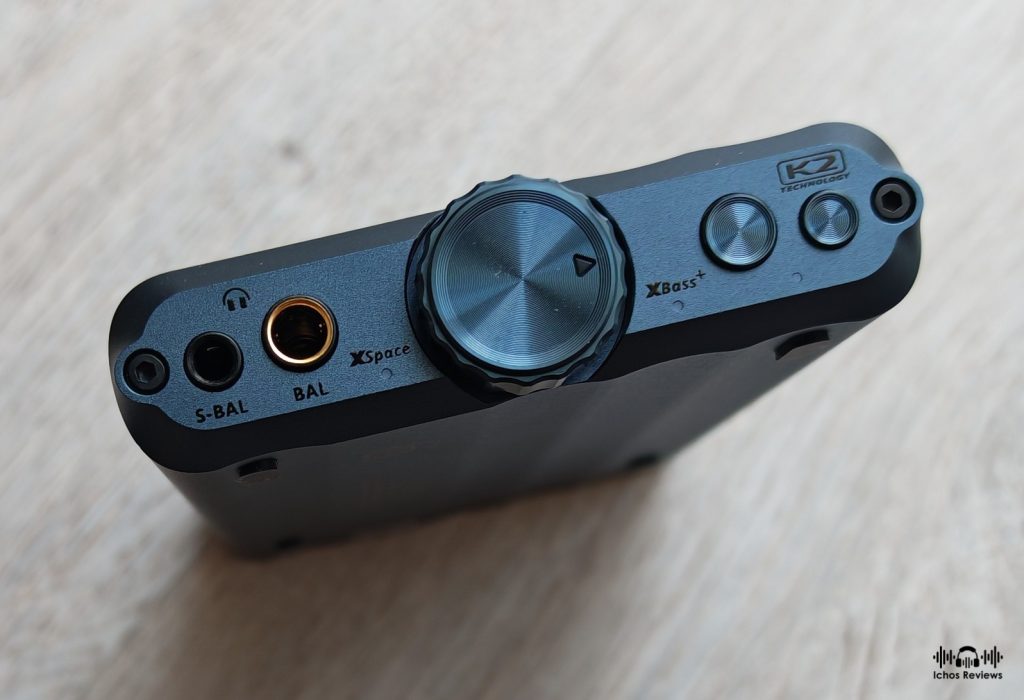
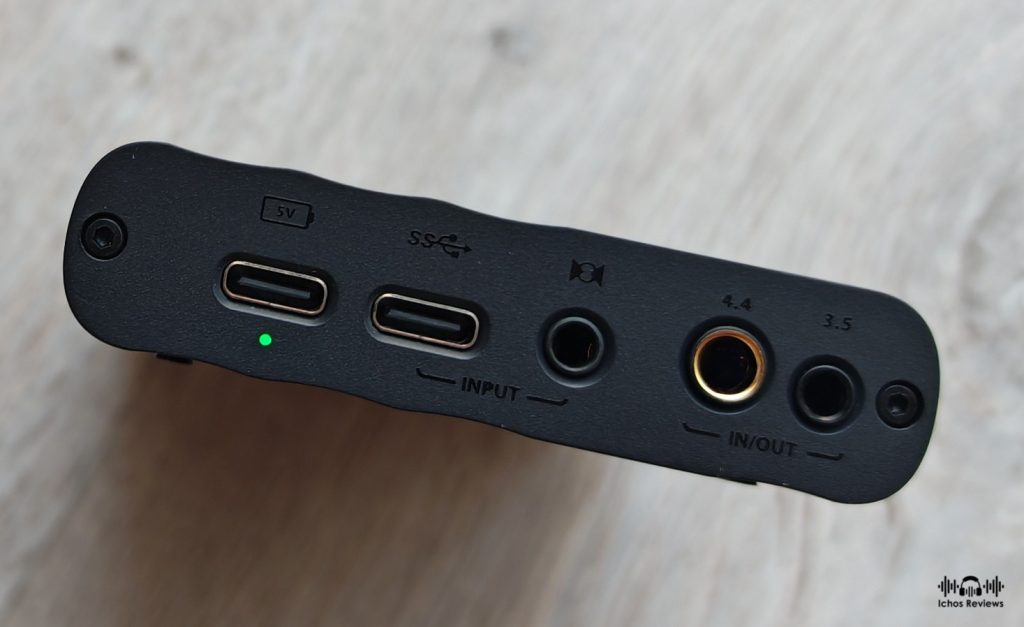
At the back of the chassis, there are two USB Type-C inputs (one for power and the other for data/power), a S/PDIF 3.5mm coaxial/optical input, as well as balanced 4.4mm and single-ended 3.5mm combined line outputs/inputs. This allows you to use the iDSD GR 2 both as a fixed-output DAC and as an analog headphone amplifier connected to an external source.
The front panel hosts 4.4mm and 3.5mm headphone outputs that also double as variable line outputs. Both the fixed and variable line outputs bypass the headphone amplification stage and can be enabled from the main configuration menu. For headphone listening, you must tap and select the headphone icon, while for pure line output, you select the speaker icon. In line output mode, gain is disabled.
Design and Practical Use
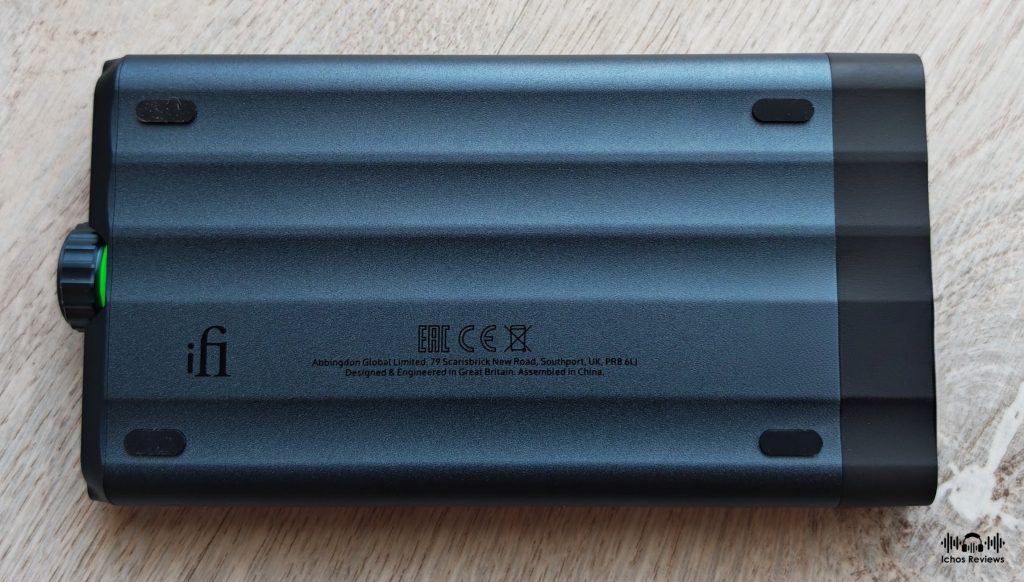
There is an obvious resemblance in the outer appearance of the iFi iDSD GR 2 and the xDSD Gryphon. Both devices share the same three-wave extruded aluminum chassis profile, but the silver finish has been replaced with an eye-catching metallic blue. The GR 2 is exceptionally well made and finished with a premium-looking, modern industrial design.
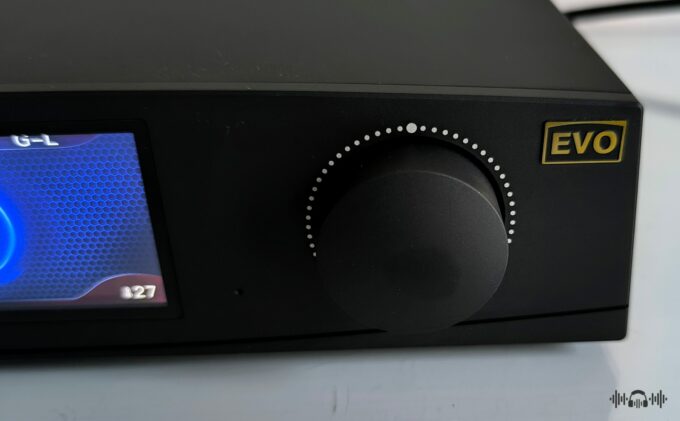
A major physical upgrade on the GR 2 is the addition of a capacitive OLED touchscreen interface on the upper panel, allowing for more direct and easier menu navigation compared to the Gryphon’s button-and-wheel setup.
Measuring 141x75x19mm and weighing 268g, the iDSD GR 2 is 53 grams heavier and 18mm longer than the Gryphon. It is still a slim and compact device, but maybe heavy and large for everyday use with a phone. It is best used placed horizontally on a desktop surface, which is why it is equipped with four low-profile rubber pads that protect the chassis and keep it stable.
Touch Screen and User Interface
As mentioned above, the most obvious physical upgrade is the addition of a color capacitive OLED touchscreen display that allows easy control and direct navigation without complicated menus.
Everything needed is displayed on the screen, and the only thing the user has to do is short or long press the corresponding icon to make a selection.
The left column displays the input selection, output mode, and digital filter touch icons. The next column contains the gain setting and XSpace/XBass+ touch options. At the center of the screen, a large volume reading is displayed, while above it you can touch to select K2 and K2HD. The right column displays the battery level and the settings, mute, and screen lock touch icons.
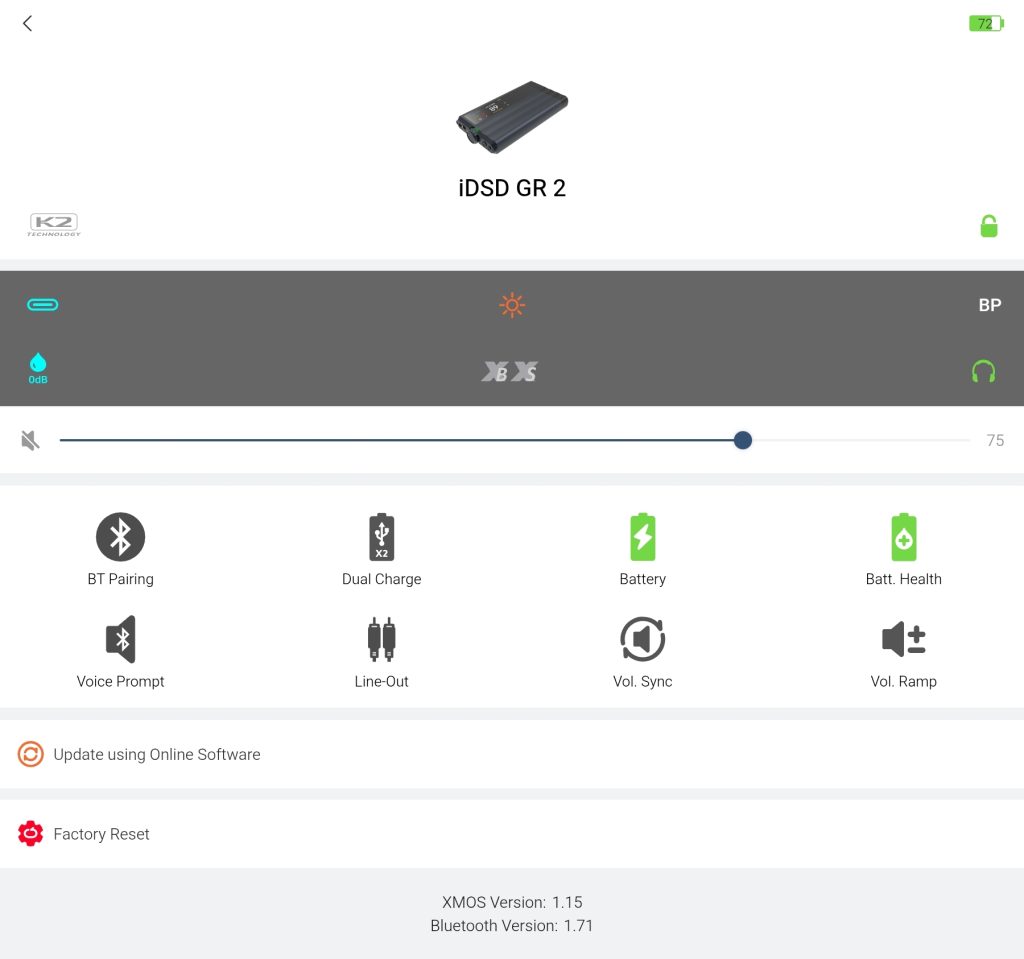
There is only a second-layer menu that opens when you touch the settings icon. This sub-menu includes options to adjust BT pairing, voice prompts, dual charge mode, line output, battery mode, volume sync, battery health, volume ramp, and display timer. There are also two more icons, one to display firmware information and the other for a factory reset.
The GR 2 only has two physical buttons and the power on/off-volume adjustment wheel. Short press the right button to cycle through the inputs, or long press it to enable the K2 and K2HD technologies. Short press the other one to cycle through the XSpace/XBass+ options, or long press it to open the settings menu. I don’t think that the buttons are really necessary but you might think otherwise.
The iFi Nexis application
The iDSD GR 2 is compatible with the iFi Nexis application, which allows the user to control the device and make adjustments without having to reach for the device itself. It is also necessary to update both the Bluetooth and XMOS firmware.
In order to update the latter, the Nexis application must be installed on an Android device, and the GR 2 must be connected through its USB input. Until recently, PC and Mac/iOS updates were not available, but iFi is now providing the XMOS firmware through its website, allowing updates via a PC.
The iDSD GR 2 has many sound tuning features but it lacks a true PEQ application, like say the FiiO Q15.
Accessories
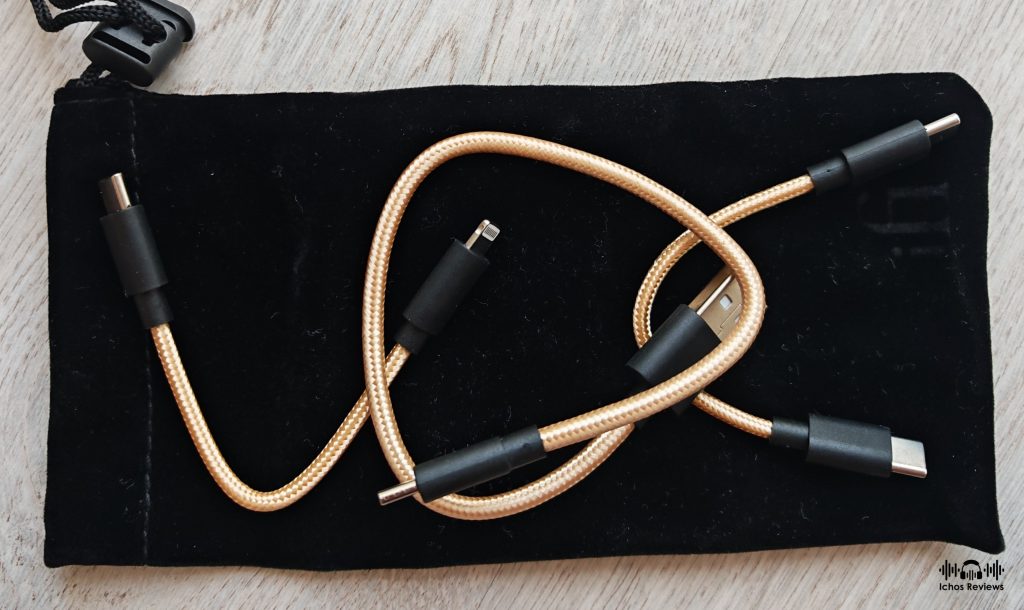
The package includes one Type-A to Type-C and one Type-C to Type-C USB cable, along with a microfiber protective pouch. A faux-suede protective case with MagSafe compatibility is available separately for €49. In my opinion, it should have been included as standard with the retail package.
Listening Impressions
The iFi iDSD GR 2 sounds just like a high-quality modern device should do, successfully combining stellar neutrality and transparency with a natural sonic profile. iFi engineers have designed a DAC/amp with impressive lab measurements but also took the time and effort to apply traditional, by-the-ear, fine-tuning in order to reach sonic perfection.
The sound is inviting and engaging, without any compromises in fidelity and technical precision. The iDSD GR 2 is tonally balanced with a very natural and realistic timbre, free from any metallic or digital artificiality. It is not as harmoniously rich and organic as it would be with tubes or an R2R ladder DAC, but still the presentation is extremely lifelike, without a hint of clinical sterility or flatness.
The music flows like spring water, letting the earphones/headphones or the speakers do the translation. The GR 2 doesn’t get in the middle, but it still has this uncanny ability to imbue the music with life and some analog quality, making it sound realistic and convincing, just like sitting in the concert hall at the front of the performers.
This is something that gets especially noticeable in the mids that have a touch of warmth and a little bit of sweetness without sounding syrupy or deviating from linearity. With the GR 2 everything sounds just right, not much character but not lacking in personality either.
More Listening Impressions
The bass is fast, tight and controlled with an impressive dynamic contrast and physical impact. Technically proficient, it can handle anything you throw at it without losing composure or its pace. The textures are full-bodied and weighty but still exceptionally well defined and layered.
Excellent performance both as a DAC alone and a DAC/amp combo, you will equally enjoy the GR 2 as a dedicated source and as an all-in-one device. The tuning is reference-flat but the user can always resort to XBass+ to add some emphasis to the low-end.
Its class-leading clarity and the complete lack of background noise let the listener focus on individual details inside the recording without losing track of the music. The iDSD GR 2 is resolving and refined, however it doesn’t sound analytical or too unforgiving. The treble is extended, airy and exciting, yet smooth and remarkably controlled without a hint of brightness.
The soundstage is exceptionally realistic, neither magnifying nor shrinking the ensemble, but faithfully reflecting its size and preserving the recording’s ambient cues. Large-scale works sound big and impressive, with plenty of width, excellent layering and precise imaging. Smaller ensembles are presented more intimately, bringing the listener closer to the performers. The XSpace feature can further expand the soundstage of some recordings and restore a sense of lost space, although it can also exaggerate the presentation with others.
Needless to say, the iFi iDSD GR 2 is a reference audio component that can pair with all kinds of headphones, bright or dark, as long as they are among your favorites, and play any tune you throw at it. A DAC/amp equally capable of handling classical music and modern bass-heavy tracks, it will appeal to the most demanding critical listeners as much as to everyday casual users.
Vs the Competition
Unfortunately, I don’t have the iFi xDSD Gryphon anymore as it was a loaner unit, so I cannot provide a direct sonic comparison. I remember liking it a lot, but I think that the GR 2 is a step up in clarity and overall refinement. The amplifier stage is also more competent, while the new model comes with many more sound-tuning features.
There are a lot of competitive devices at this price point, each one with its own strengths and weaknesses, and, of course, different sonic profiles.
The Chord Mojo 2 may sound a little more transparent and neutral, but it lacks many of the features found on the GR 2. The Questyle Sigma, with its unique appearance and very good sound quality, is still one of my favorites, but many people will prefer the added convenience and extra features of the GR 2. The FiiO Q15 might have been discontinued, but it is also a good alternative if you can find one on the used market. It is bigger and heavier but is slightly more powerful and has a global PEQ application.
And so on – the options are simply too many to list them all. Read some reviews carefully or, even better, arrange an actual audition and pick your poison.
In the End
With the release of the iDSD GR 2, iFi has successfully upgraded one of its best-selling products. Building on the legacy of the legendary xDSD Gryphon, the new model surpasses its predecessor in both sound quality and features.
The iFi iDSD GR 2 delivers class-leading sonic performance and plenty of power for its size, it has a handy OLED touchscreen, as well as an extensive selection of sound-tuning features and connectivity options. It is a remarkably complete package that leaves very little to desire.
Honestly speaking, the iDSD GR 2 is one of the most accomplished battery-powered portable DAC/amps available today and definitely deserves a place on your shortlist.
Copyright – 2026.
Authored by Petros Laskis for Ichos Reviews. All content is original and copyrighted. Republishing full reviews or portions without written permission is prohibited. Excerpts up to 100 words are allowed with a direct link.
Pros
Class-leading sonic performance
Excellent balance of neutrality and musicality
Natural and realistic timbre
Powerful headphone amplifier
Virtually silent background
Extensive connectivity options
Bluetooth with aptX Lossless support
Convenient OLED touchscreen
Excellent user experience
Compatible with the iFi Nexis application
Straightforward firmware updates
Extensive features and sound-tuning options
Attractive design and excellent build quality
Cons
No PEQ application
Battery life could be better
Hardware buttons are of limited usefulness
iOS users must use a PC to update the firmware





Leave a comment