

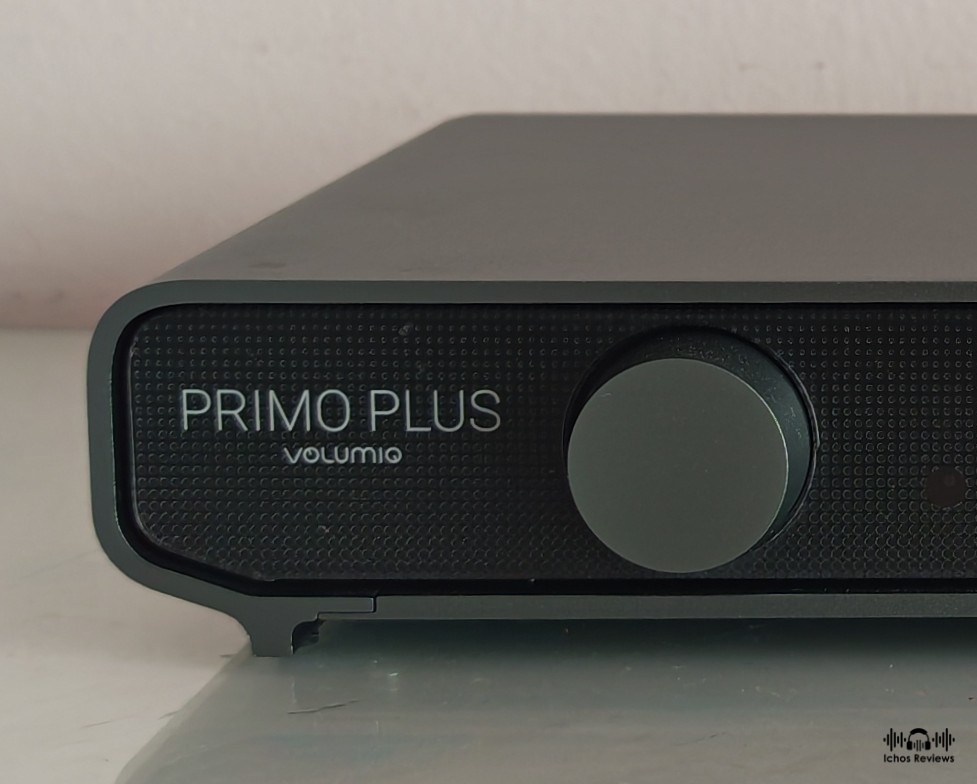

Today’s review is about the Volumio Primo Plus, a balanced streaming DAC that runs the Volumio premium OS.
The review sample was kindly provided free of charge in exchange for an honest review. I didn’t receive monetary or any other kind of compensation and I don’t use affiliate links.
The price of the Primo Plus is 1.199,00€ and you can buy it directly from Volumio. The price includes shipping, import duties and sales taxes. Buying the Primo Plus also grants you a lifetime subscription to the Volumio premium OS. The Primo Plus is also available through authorized dealers around the world, like Chameleon Audio.
Volumio
The Volumio brand was established in 2013 out of the passion of a small group of audio enthusiasts who came together to create a user-friendly and sonically transparent operating system for the Raspberry Pi, which was then widely used as an audio streamer. Thus, the Linux-based Volumio OS was born, an open-source software platform that can be installed on any Raspberry Pi-based streamer or PC.
It didn’t take long for Volumio to expand into designing and manufacturing its own music streamers and DACs in various configurations and at different price points. Its extensive portfolio includes the following devices: the Preciso, the Motivo, the Rivo, the Rivo Plus, the Primo, the Primo V3, the Primo Plus, the Integro, the Lineo5, and the Remoto.
You can learn more about these audio devices and what they do by visiting Volumio’s website, or read our previous reviews, as Ichos Reviews has been following the brand from the very beginning and has reviewed almost every product in its lineup.
Volumio Primo Plus
The original Volumio Primo was the brand’s first all-in-one audio device, combining a DAC and a built-in music streamer in a single chassis. After a first revision to the Volumio Primo (v2) , and many years of a successful commercial run, Volumio decided it was time for a brand new generation, or rather two new models, as it released two updated versions of the Primo just a few months apart.
The flagship Primo Plus arrived first, followed by the slightly scaled-down and more affordable Primo V3. In this article, we review the Primo Plus, while the Primo V3 review will follow soon.
The Volumio Primo Plus is a streaming DAC featuring a dual mono ESS design, low noise power architecture and precision clocking. The DAC section is almost identical to the award winning Preciso, the brand’s only standalone DAC, and the streaming board is based on their flagship streamer, the Volumio Rivo Plus.
Technical Overview
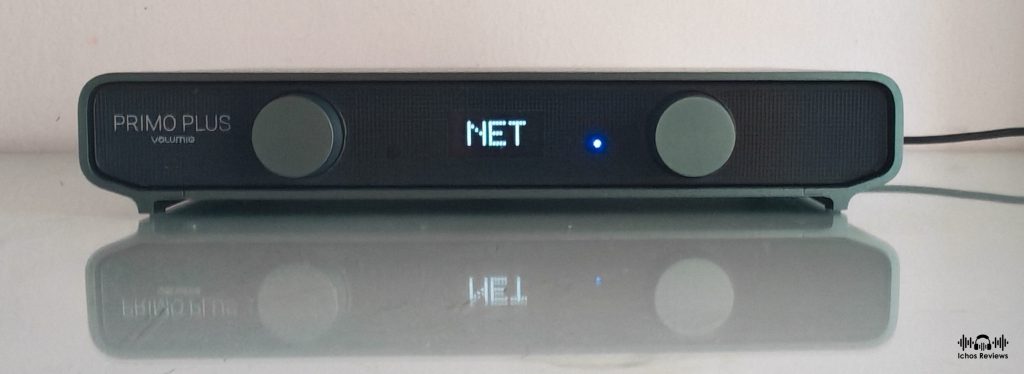
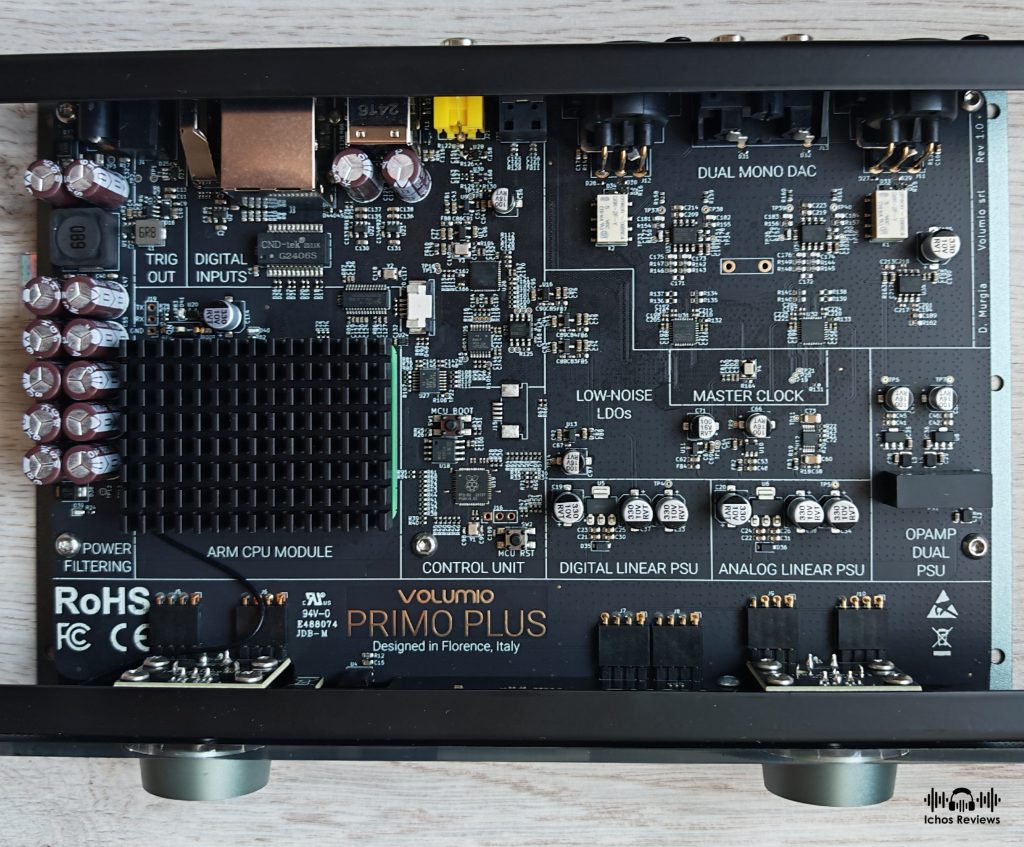
The Primo Plus takes the circuitry of the Primo V2 to a whole new level as it is designed with two ES9039Q2M DAC chips by ESS in a dual mono configuration with upgraded op-amps in the signal path. A high-precision clock with ultra-low phase noise (90fs) is used to keep jitter as low as possible.
Built from scratch is the ultra-low noise dual linear power supply, that uses advanced LC filtering and has dedicated regulation for the analog and digital sections. Instead of using a few big capacitors, filtering is split into 14 low-value 680μF capacitors in order to minimize ESR.
The streaming board is based on a Cortex-A72, Quad Core 1.5 GHz CPU alongside 2GB LPDDR4 RAM and 16GB eMMC ROM, plenty to run the Volumio premium OS that has minimal computing demands.
Analog and Digital Connectivity
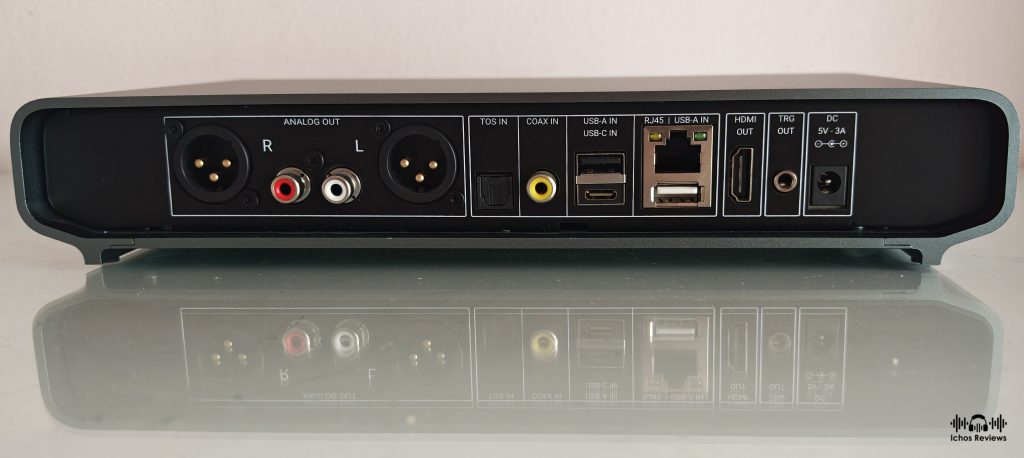
In comparison to the previous Primo, the Primo Plus features a broader range of digital and analog inputs that can cover most usage scenarios.
A USB Type-C input handles high-resolution audio playback through PC, Mac, smartphones and tablets. Also included are coaxial and optical digital inputs for connecting legacy devices like CD transports or digital tuners.
A USB Type-A (5V/1.33A) input supports external storage flash drives and HDD/SDD drives that you can use to playback stored audio files. This port is also used as a digital audio output to external DACs when you want to use the Primo Plus as a streaming transport.
Another USB Type-A (5V/0.56A) input is used to connect mouse and keyboard when you want to mirror the Volumio OS app into an external display through the HDMI video output.
High speed network streaming is supported through Gigabit LAN and Wi-Fi (2.4G and 5G bands), while Bluetooth 5.0 wireless connectivity is also available.
Analog outputs include both unbalanced RCA and balanced XLR connectors, with support for pre-amp mode to drive power amps or active monitors directly.
The output voltage can be easily configured through the menu in 8 different levels, ranging from 0.5Vrms to 3.15Vrms for the unbalanced output and from 1Vrms to 6.30Vrms for the balanced, thus making the Primo Plus able to match both professional and consumer power amps.
Design and build quality
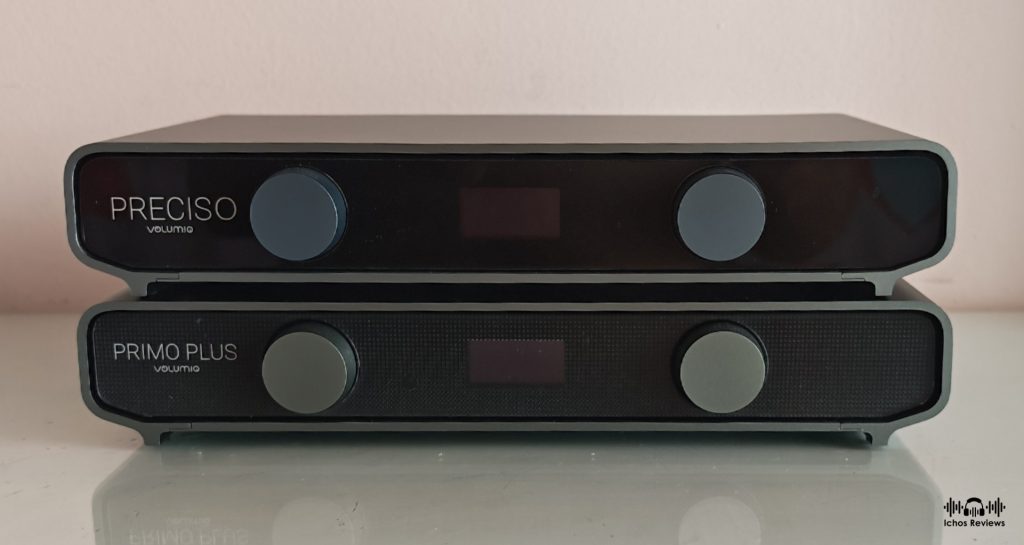
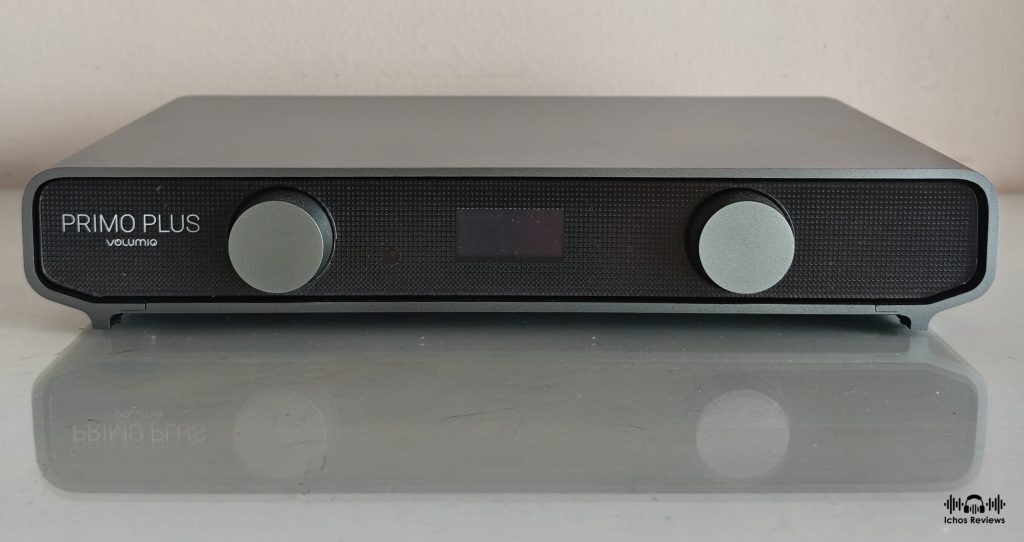
Just like all other products in the line-up, the Primo Plus is designed by the renowned studio Design Narratives Ltd. and looks identical to the Volumio Preciso. It has a minimalistic yet very attractive appearance, with a small 1.3” OLED display at the center of the front face and two rotary multifunction knobs at the sides. Looking at the Primo Plus it is impossible not to think about the famous Italian gusto.
Using an external power adapter has the benefit of keeping the chassis low-profile and compact. Measuring 27x15x5cm, the Primo Plus is exceptionally slim and can fit virtually any Hi-Fi rack or a cramped desktop surface. The enclosure is made from high-quality aluminum alloy that is well finished and assembled.
The Primo Plus doesn’t have a big screen for displaying cover art or fancy UI themes. Instead, it follows a radically different design philosophy, focusing on minimalism, ease of use, and compact dimensions. Some of you might disagree, but personally, I don’t care much about big displays and touch interfaces because I simply use my tablet as a remote control and information hub.
User Experience
The Primo Plus is very simple to operate, and most advanced options are configured through the Volumio application, which is available for Android, iOS, or as a web-based interface.
The left knob is used to turn on/off the device or enter standby mode, and to cycle through the digital inputs. The right knob is used to increase/decrease the volume, mute/unmute, and select the DAC filter. Instead of using the knobs, you can use the included remote control, which additionally controls music playback in Network mode.
A notification LED indicates the current operating status, while the LCD screen can display the input source and volume level. The input sampling rate is not displayed, or at least I couldn’t find a way to display it.
First-time setup is very easy; the only thing you have to do is follow the instructions on the Volumio application.
The Primo Plus runs the Volumio premium OS, which, except for local file playback, also supports AirPlay via Shareport Sync, Tidal & Tidal Connect, Qobuz & Qobuz Connect, while it is a UPnP/DLNA renderer with OpenHome support.
Other services available through external plug-ins are Spotify, YouTube, Squeezelite, Radio Paradise, Podcasts, Pandora, Fusion DSP, Roon Bridge, SoundCloud, and Mixcloud. Spotify lossless is not yet supported.
You can learn more about the Volumio premium OS and its many features here.
Advanced Hardware and Software Parameters
Besides serving as an advanced and easy to use music player, the Volumio application is also used to adjust various advanced hardware and software parameters of the device and perform OTA firmware updates. The updates are split into two parts, one for the streamer and another for the DAC firmware.
The hardware settings allow the user to adjust the LED and display brightness, customize the user interface display, enable or disable the auto power-saving mode, set auto power-on, etc.
You can also select the output device (analog or digital), choose the DAC filter from the eight available options, enable or disable the internal DAC NOS mode, and configure the output voltage of the analog outputs.
There are also many more configuration options to explore in the Volumio application.
Listening set-up
I have used the Primo Plus exclusively with its internal streamer, as I think this is the major selling point when opting for an all-in-one device. Otherwise, you can buy a dedicated DAC, such as the Preciso, and combine it with a network streamer like the Rivo Plus.
I evaluated the Primo Plus both in my main 2-channel speaker system, consisting of the Audio Physic Spark speakers and the Kinki EXM1 integrated amplifier, and with various headphones in combination with the Flux Mentor headphone amplifier.
Listening Evaluation
The DAC stage of the Primo Plus is identical to that of the Volumio Preciso, so it doesn’t come as a surprise that I could not discern any significant audible differences between the two. The Primo Plus sounds at least as good, while also offering the convenience of an integrated streamer.
To be really honest, the Preciso and Rivo Plus combination sounds just a little more transparent and cleaner, and perhaps a bit more convincing and realistic when playing demanding music. Still, the audible differences are minimal and would only really matter in a high-end audio system, or to someone willing to spend an additional €899 for the set, in order to get the best possible audio quality without worrying about the extra expense. This is how high-end audio works, you pay a lot to get less, but the “clever” buyer would buy the Primo Plus and call it endgame.
So how does it sound?
For those of you who are too lazy to read the whole Preciso review, let me summarize and adapt it to the Primo Plus.
With the DAC filter set to one of the regular OS options, the Primo Plus is an exceptionally clean and transparent DAC with excellent technical precision and fidelity, but without falling into the trap of sounding too clinical or sterile, or even emotionally detached like many other D/S DAC rivals from the Far East.
The Primo Plus is a DAC that, despite its class-leading transparency and linearity, remains enjoyable and engaging without letting its technical excellence dominate its musical character and this is probably its greatest strength.
Just like it happens with the Preciso, the bass is extended, neutral and controlled with correct timing. It is well defined and textured while remaining composed even under stress conditions. It is not the most visceral or weighty bass out there, but you wouldn’t call it overly lean or dry either, and it always manages to sound punchy and impactful.
The mid-range is evenly tuned and well balanced with excellent clarity and articulation. It mostly focuses on precision and linearity, but it doesn’t sound lifeless or flat. The Primo Plus is not especially rich in its harmonics and it doesn’t have the most organic or analog timbre, but it is still expressive and emotionally engaging enough, with a natural and realistic overall tonality.
Rising higher to the treble, you can’t fail to notice how brilliant, energetic and fast it is; however, it never crosses the borders to become sharp, harsh or overly bright. It still doesn’t have the most analog or colorful tones, but it skilfully avoids the artificial or metallic character sometimes associated with the best “measuring” D/S DACs.
More Listening Impressions
The Primo Plus is very resolving, but it doesn’t push details in your face, so it never sounds like monitoring gear. Some traces of digital glare can be heard, but it handles them better than most of the competition, while also sounding less boring or academic.
The soundstage is open wide and spacious, with excellent separation and very precise imaging. It extends well beyond the physical boundaries of the speakers and can make your favorite headphones sound especially open.
Generally speaking, the Primo Plus might not be as holographic or atmospheric, and is less harmonically saturated and rich than other more sophisticated DACs, but it gets most things right for the price. Most importantly, it manages to balance its excellent technical performance and transparency with enough musicality, making it a DAC that is easy to enjoy rather than admire it for its measurements.
The NOS mode
Just like the Preciso, the Primo Plus also benefits from the addition of the NOS mode, which offers a slightly different sonic presentation compared to the native OS mode.
With NOS enabled, the sound becomes a bit more natural and organic, with a smoother and more relaxed character and less of the subtle digital glare that is noticed in OS mode.
There is a tiny trade-off in transparency and technical precision, but the difference is small enough that the NOS mode remains a very worthwhile alternative, especially for listeners who prefer a more musical and engaging presentation.
The NOS mode exhibits less of the usual D/S digital glare and artificiality, more closely resembling the analog-like timbre of DACs with discrete architectures.
Except for Cirrus Logic DACs that come with a factory embedded NOS mode, designers seldom take the time to add a NOS mode to D/S chips, especially those by ESS. This is therefore a much welcomed innovation by the Volumio team that adds greater sonic versatility to the Primo Plus.
The Volumio Lineo5 LPS
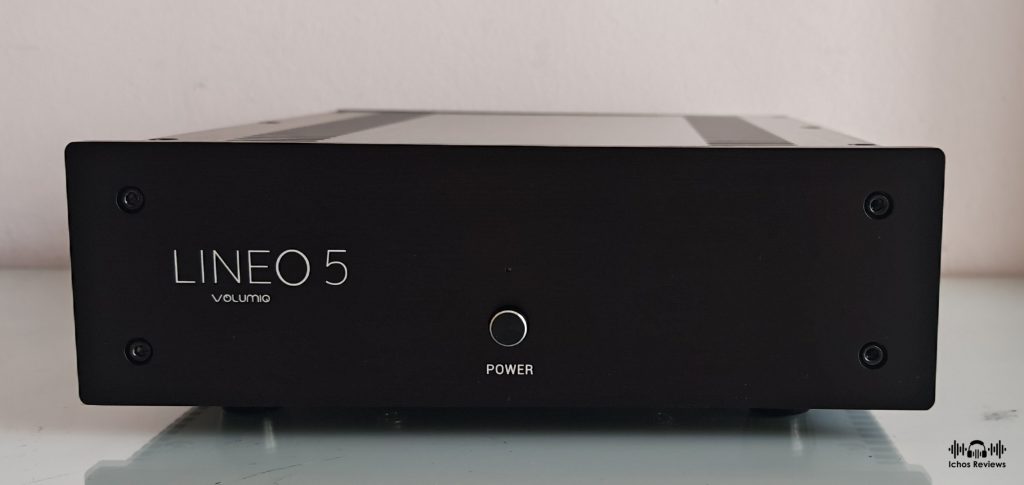
A worthwhile and meaningful upgrade that doesn’t cost an arm and a leg is the addition of the Volumio Lineo5, a 5V/5A linear power supply designed to enhance the performance of the Rivo/Primo/Preciso line-up.
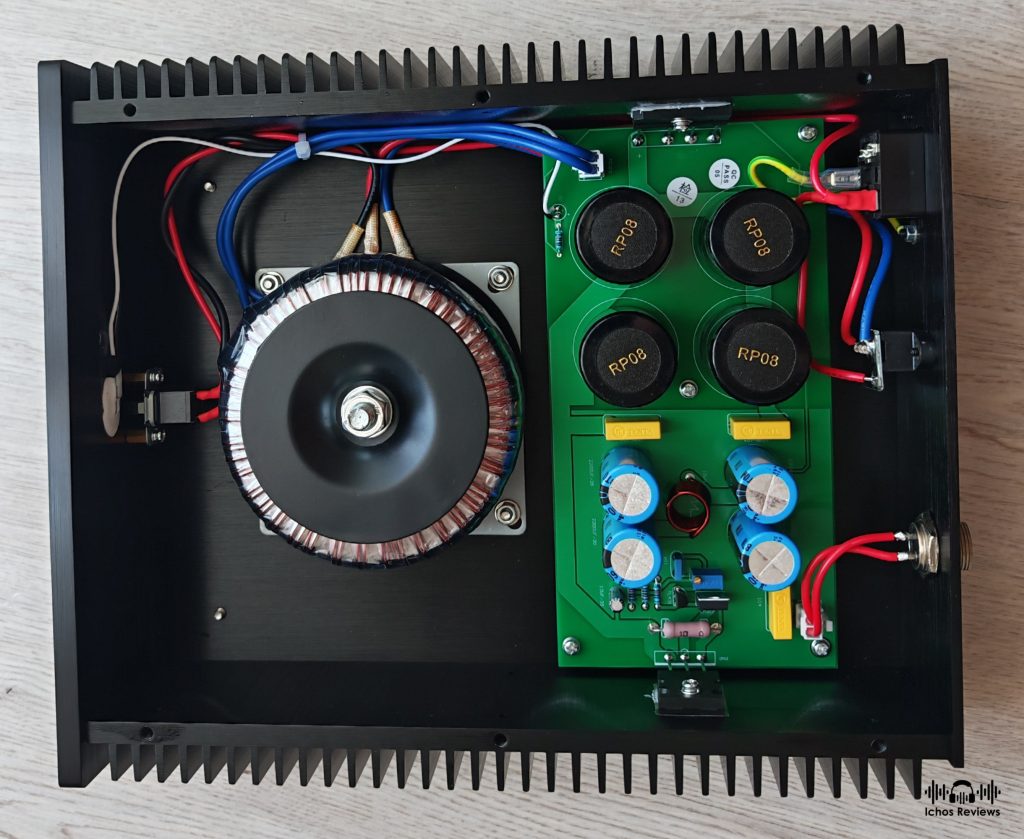
The Volumio Lineo5 is designed around an oversized 120W toroidal transformer by Pandora and uses a two-stage filtering architecture, with four 10,000μF Nover LA Audio-grade power capacitors at the first stage and four 3,600μF Nichicon capacitors at the second, plus a high-frequency coil filter.
Do I need one?
Some skeptics might ask what the point is of using an external LPS since the Primo Plus is already designed with an internal ultra-low-noise dual linear power supply.
The answer to the question is pretty simple and straightforward: the power supply of the Primo Plus is powered by a noisy switching power adapter that considerably degrades the overall sonic performance.
The Lineo5 makes sure to supply the internal LPS with ultra-clean and stabilized power, free from mains interference and high-frequency noise, making its task far easier and allowing it to perform at its best.
Experienced readers will know that adding a high-quality LPS to the audio chain doesn’t translate into a night-and-day sonic performance improvement.
Instead, you get subtle enhancements that, when combined, can make the music sound more natural and realistic, cleaner and better defined, less harsh and edgy, while also improving low-end dynamics and soundstage imaging. The background also becomes blacker, allowing more intricate details to surface and contribute to the overall sense of realism.
In the End
Volumio has taken an already successful recipe and refined the ingredients to make it even better. The Primo Plus is a much-improved version of the Primo V2 that combines the already excellent Preciso DAC and Rivo Plus streamer under the same hood, creating an all-in-one device that is more user-friendly and costs significantly less than the two separate units.
The Primo Plus might lack a big screen or the fancy touchscreen interfaces of some competing products, but it stands out with its minimalist design and compact footprint, while sounding at least as good – and in some respects even better – than the competition.
Another key advantage is that it runs Volumio’s premium OS, which has much stronger audiophile credentials than its various clones or tweaked versions of Android used by other brands in their network streamers.
At €1,199, the Primo Plus is one of the best all-in-one DAC and network streamer solutions you can buy without sacrificing anything in terms of audio performance or functionality. Don’t let its diminutive size fool you, because it offers a lot more than you would normally expect, making its overall value even more impressive considering its size.
Copyright – 2026.
Authored by Petros Laskis for Ichos Reviews. All content is original and copyrighted. Republishing full reviews or portions without written permission is prohibited. Excerpts up to 100 words are allowed with a direct link.
Pros
Class-leading neutrality and fidelity
Excellent transparency and resolution
Natural and engaging sound without clinical sterility
Low amounts of digital glare and artificiality
Spacious soundstage with precise imaging
NOS mode provides a more natural timbre
All-in-one streaming DAC convenience
Extensive I/O with adjustable pre-amp mode
Lifetime Volumio Premium OS subscription included
Easy setup and intuitive operation
Classy, minimalist design with a compact footprint
Remote control included
Excellent price-to-performance ratio
Cons
Basic display lacks input sampling rate info
No touchscreen or cover art UI
Spotify Lossless is not currently supported
Bass and mid-range textures lack weight and body
Soundstage is less holographic than other competitors
Standard OS mode is not entirely free from digital glare











Leave a comment