

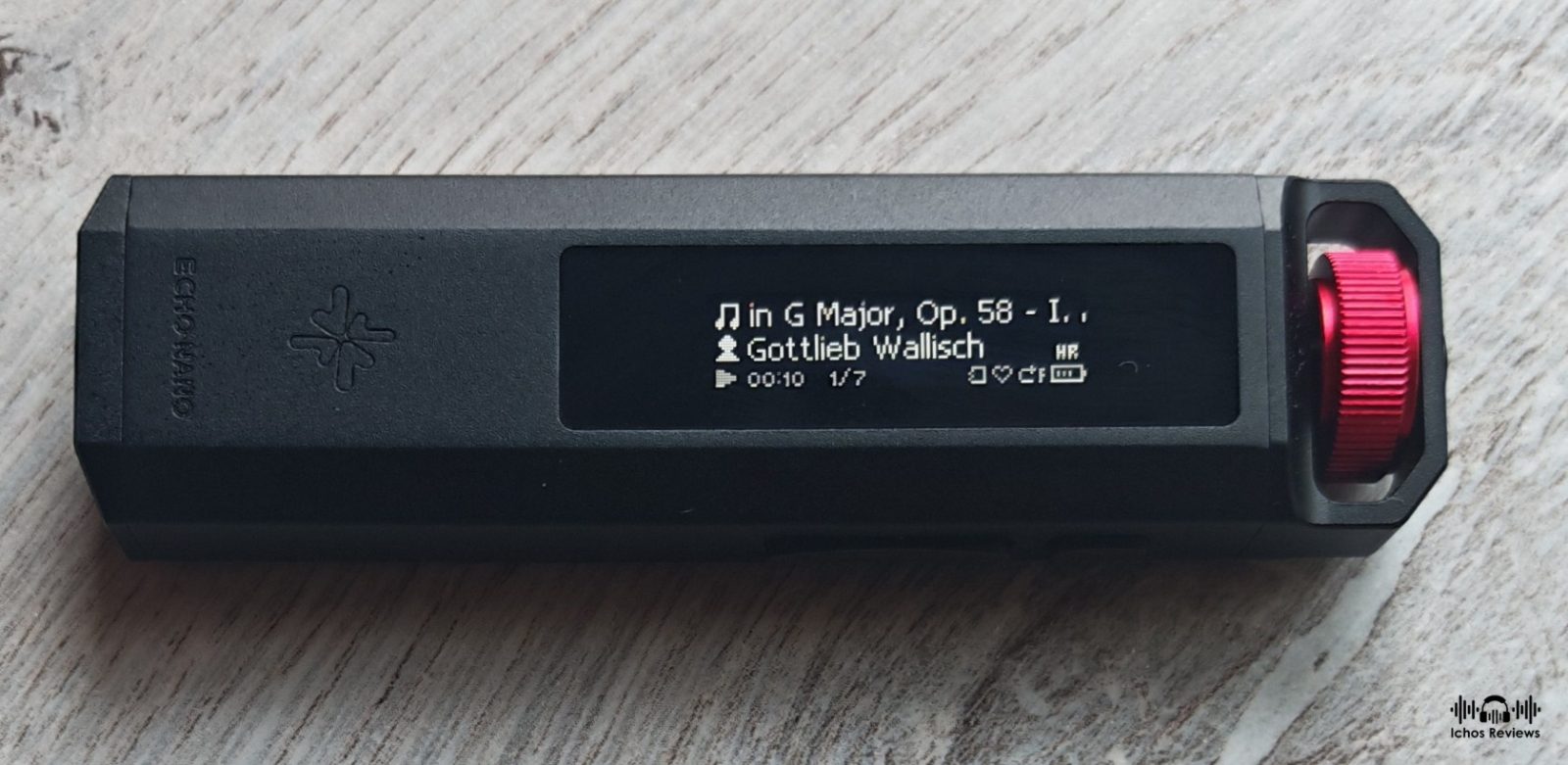

Today’s review is about the FiiO Snowsky Echo Nano, an ultra-compact, retro-inspired digital audio player that supports music playback from microSD cards.
The review sample was kindly provided free of charge in exchange for an honest review. I didn’t receive monetary or any other kind of compensation and I don’t use affiliate links.
The price of the Echo Nano is about $50 and is available to buy from here.
FiiO Snowsky Echo Nano
Snowsky and Jade Audio are both FiiO sub-brands created with the aim of offering affordable audio products to a wider audience. The main difference between them is that Snowsky is aimed at younger people, adopting a retro-inspired yet fresh and youthful design.
The FiiO Snowsky Echo Nano is the latest addition to a series of affordable digital audio players (DAPs) and FiiO’s least expensive player to date. Other DAPs released under the Snowsky brand name are the DISC, the Echo and the Echo Mini. As the naming scheme suggests, the Echo Nano is the most compact and lightweight of the three models.
Technical Overview and Design
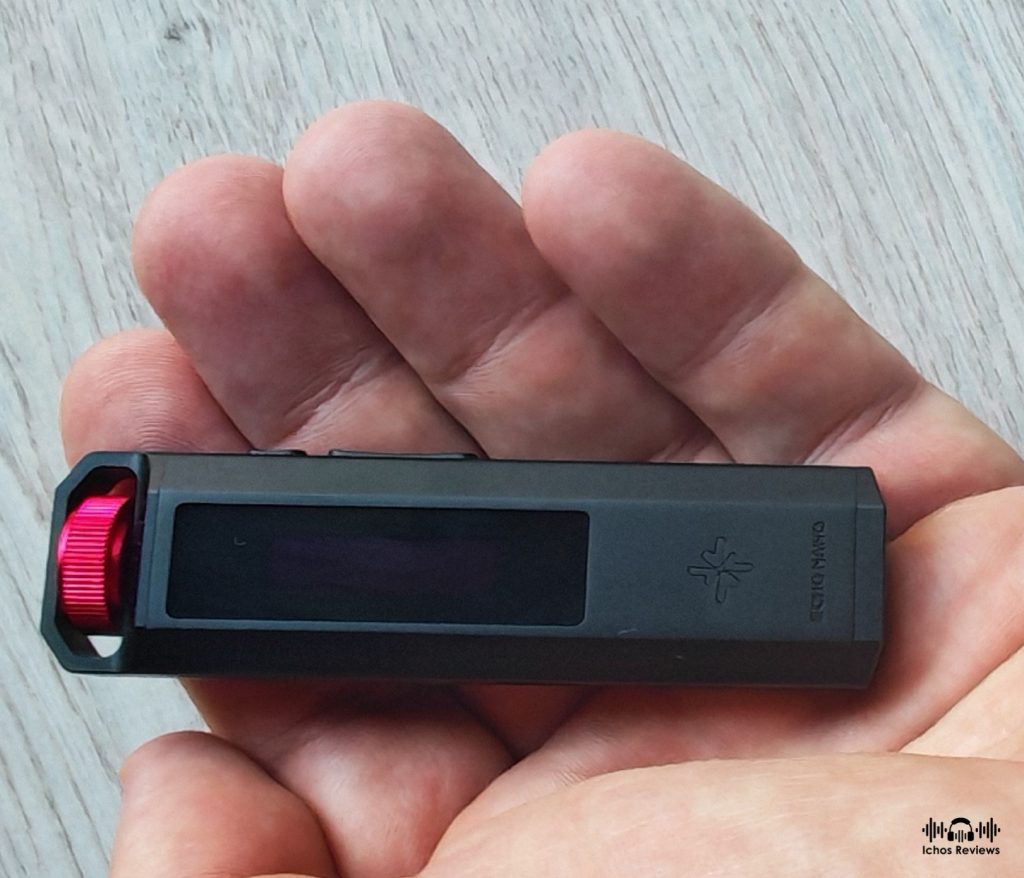
The Echo Nano is a thumb-sized DAP inspired by Sony’s stick-like MP3 Walkmans, such as the NWZ-B183, which was released back in 2014.
It is equipped with a CS43131 DAC chip paired with a dedicated audio-grade crystal oscillator. It supports PCM playback up to 24bit/192kHz across various file formats, including WAV, FLAC, APE, MP3, M4A, and OGG, as well as native hardware decoding of DSD64, DSD128, and DSD256 files.
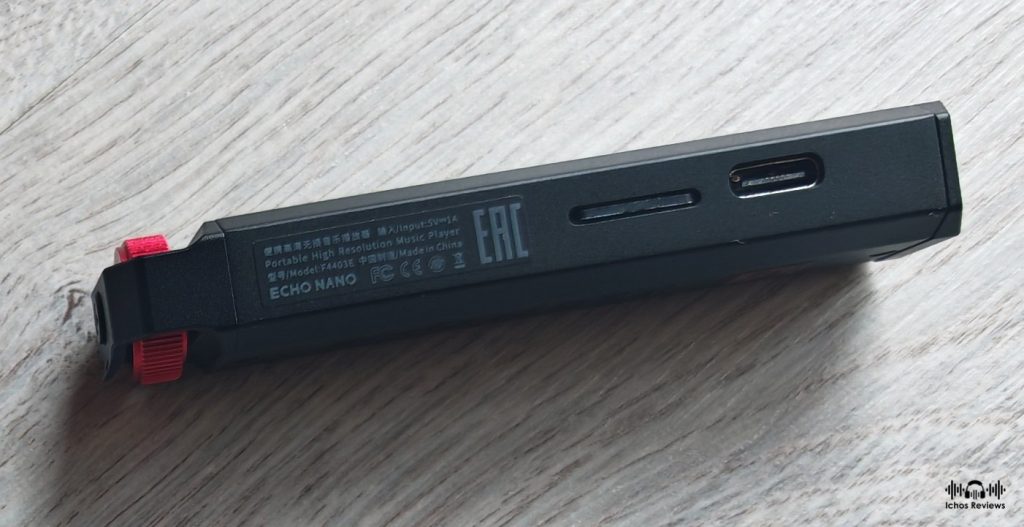
It has a 3.5mm single-ended headphone jack with an output power of up to 120mW+120mW/32Ω, thanks to the CS43131’s integrated headphone amplifier. The jack also supports CTIA-standard in-line controls.
The little device doesn’t have a big internal memory, but it can read microSD cards with a capacity of up to 256GB. You can also use it as a plug-and-play USB sound card, although playback is limited to PCM 16bit/48kHz. A handy feature is that battery charging can be disabled in this mode, so the Echo Nano won’t draw power from the host device to charge its battery.
The chassis has an elongated, thumb-stick shape, measuring 81x20x11mm and weighing about 33.5g. You can throw it in your back pocket and forget that it’s there. It is made from 6-series aluminum-magnesium alloy, CNC-machined, and available in White, Black, Pink, Green, Titanium, and Sky Blue finishes.
Interface and User Experience
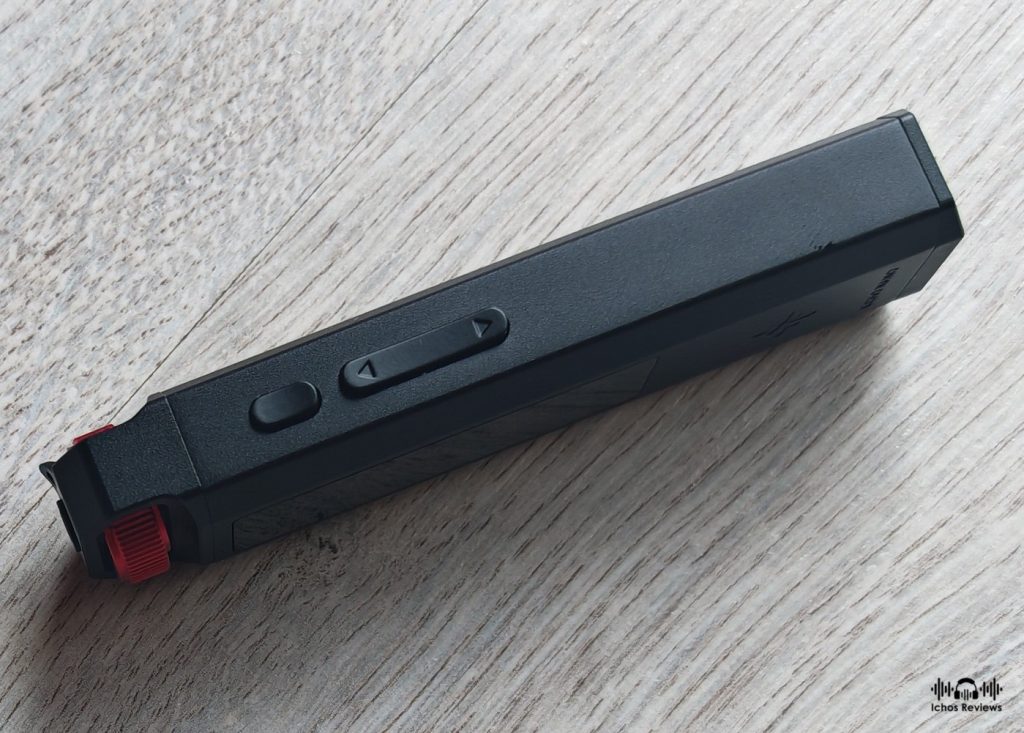
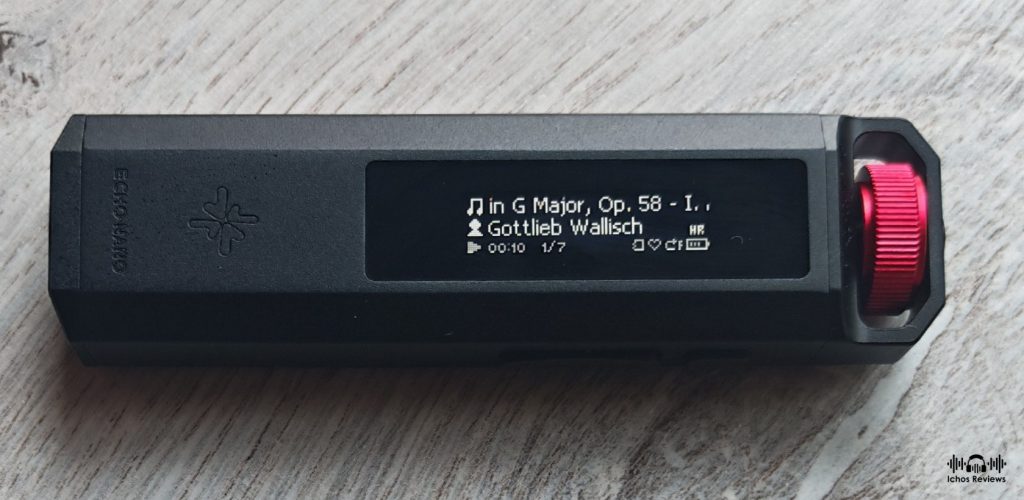
Navigation is made possible through the 0.91-inch OLED display, the metal multi-function scroll wheel and two side buttons. The wheel provides tactile, click-like feedback, and actions register with good precision as long as you turn it slowly. However, it also makes an audible friction noise when rotated.
The user interface requires a small learning curve, but it is not difficult. You use the wheel or the double button to scroll, while the small button is used to confirm a selection or return to the previous menu. A tiny circular button at the center of the wheel is used to wake the device, put it to sleep or lock the screen.
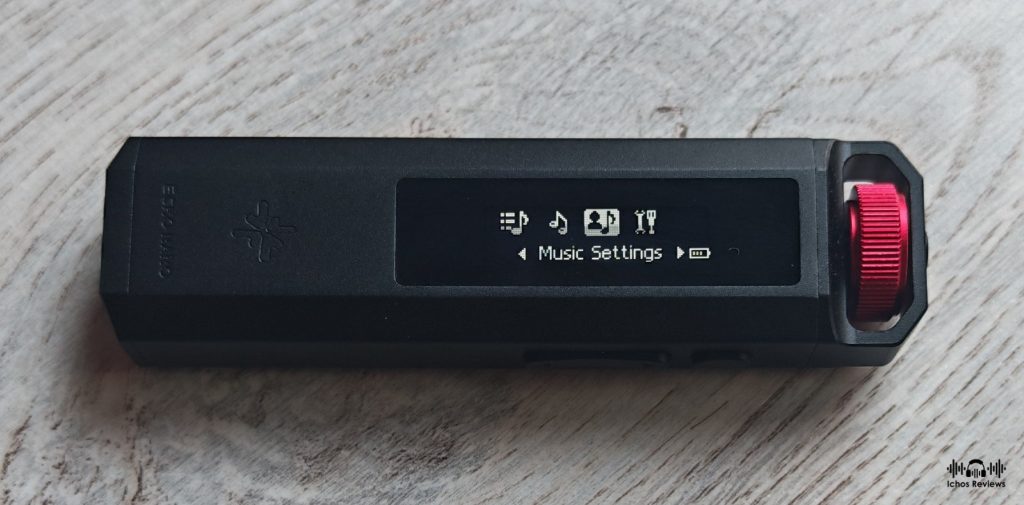
As you would expect from a display of this size, the menus are difficult to read, and less young people (like me) will definitely need their glasses. The main screen provides access to the file browser, media library, music playback, music settings and system settings.
In the music settings menu, you can adjust the playback loop, select one of the four OS or NOS filters, configure the equalizer, set the channel balance and volume limit, and select high or low gain. In the system settings menu, you can adjust various screen and power timer settings, format the SD card and internal memory, configure the knob controls, etc.
The playback screen displays the track and artist names, elapsed time, battery status, etc. A single press of the small button will play or pause the music, while a quick double press opens a submenu where you can adjust various playback and audio parameters. The double button is used to skip to the previous or next track, select or deselect a track as a favorite, fast-forward or rewind, and open a spectrogram display.
The Handy Equalizer
There is a handy equalizer application with six preset options (Retro, Bass, Heavy, Pop, Jazz and Unique), and, surprisingly enough, a custom option that opens a tiny menu where you can individually adjust five frequencies (100, 200, 1K, 3K and 10K Hz) in 20 discrete steps, ranging from +10dB to -10dB.
As we can see, the FiiO Snowsky Echo Nano might be tiny, but it offers all the basic functions and much more for a complete user experience. The only limitation worth noting is that gapless playback is not supported.
Battery Duration
The player is equipped with a small capacity battery, however playback time can range between 6 to 7 hours that is not bad for the size. Given that most people will not listen to music more than two – three hours daily, the device will last for a couple of days before recharge.
Accessories
The package includes only a USB charging case.
Listening Impressions
With 120mW+120mW/32Ω on tap, the FiiO Snowsky Echo Nano is suitable for driving sensitive earphones, something that perfectly aligns with its intended use. I wouldn’t buy such a tiny device for my daily commute and expect it to drive my full-size headphones. On the plus side, background noise is practically inaudible, something that is going to be appreciated when listening in a quiet environment. Plug something like the FiiO JH13 and you are good to go.
The sound quality is more than satisfying for casual listening, not only when you are out and about, but also at home, where you can concentrate on your favorite music with fewer distractions.
The sonic performance is typical of a single CS43131 DAC chip, which FiiO uses frequently and knows how to tune well. The Echo Nano offers very good tonal balance, a flat frequency response, excellent clarity for the category and a touch of warmth to keep the listening experience pleasant enough. It is not warm or syrupy or anything like that, it is just a bit warmer and fuller-sounding than similar devices, such as the Hidizs AP30 Music Boy.
More Listening Impressions
The bass is quite fast, clean, tight and controlled, with good definition for the category. It certainly doesn’t sound one-note, and while it is not especially impactful, it can become quite dynamic when the music demands it. It is not the most weighty or visceral presentation, but it is not particularly dry and lean either, while sounding full enough.
The mid-range is tonally neutral, without much harmonic saturation or organic elements, but it doesn’t sound too clinical or sterile. It is lush and warm enough to connect the listener with the music and make it sound interesting and engaging. Clarity and articulation are very good for such an affordable DAP. The same goes for the treble, which is extended and resolving enough, with plenty of energy and sparkle, without sounding bright or edgy.
The soundstage is spacious and wide enough to keep things moving, without making the sound congested or lacking in scale when needed. Don’t expect any miracles in depth layering, imaging precision or holographic presentation, but honestly, I wouldn’t care much given the intended use. And the truth is that it is amazing how technology has progressed and allows for such high-quality sound from a simple, entry-level DAP.
Comparison with the Hidizs AP30
The HIDIZS AP30 (Music Boy) is a similar type of entry-level portable DAP to the FiiO Snowsky Echo Nano, but it is larger, heavier and more expensive. On the other hand, it comes with a 2-inch color display that is considerably easier to read, a bigger capacity battery and a few more features, like Bluetooth connectivity.
The Echo Nano is priced at $49.99, making it less expensive than the AP30, while being considerably more compact and lightweight. The AP30 has the advantage of a true 4.4mm balanced output, whereas the Echo Nano relies exclusively on its 3.5mm single-ended jack. Still, the latter delivers up to 120mW+120mW/32Ω, which is not that much less than the 137mW of the AP30. Battery life is slightly better on the AP30 which lasts for about 9 hours, but the FiiO’s tiny body makes it much easier to carry inside a slim pocket.
Sonic comparison
The AP30 uses the CS43198 DAC chip with a separate SGM amplifier, while the Echo Nano features the CS43131, which is essentially the CS43198 with a built-in headphone amplifier. As a result, it doesn’t come as a surprise that the two players sound quite alike, but also a little different.
The AP30 has a slight advantage thanks to its balanced output, and it sounds a little more spacious and open than the Echo Nano. Resolution and separation are also marginally better, as is bass impact. On the other hand, the Echo Nano has a less bright top end, while its textures are somewhat fuller and carry more weight.
Ultimately, the choice comes down more to size and weight than to any major sonic differences. The Echo Nano is the better option if you want the smallest and lightest device possible, while the AP30 is preferable if you value the convenience of its larger, easier-to-read display, along with a touch of extra power, better battery life and Bluetooth connectivity.
In the End
The FiiO Snowsky Echo Nano does very well what it is designed to do without asking for much. Load it with your music library, plug in your favorite earphones, and enjoy high-quality sound wherever you go, without worrying about Wi-Fi coverage or having to carry bulky and heavy equipment.
Copyright – 2026.
Authored by Petros Laskis for Ichos Reviews. All content is original and copyrighted. Republishing full reviews or portions without written permission is prohibited. Excerpts up to 100 words are allowed with a direct link.
Pros
Excellent sound quality for everyday use
Ultra-portable and lightweight
Easy to carry and use
Premium build quality and appearance
USB DAC mode with charging bypass
Expandable storage via microSD card
Good battery life for its size
Very affordable
Cons
Small and difficult to read screen
No usable internal storage
Limited output power
Basic user interface
The wheel is a little noisy




Leave a comment