

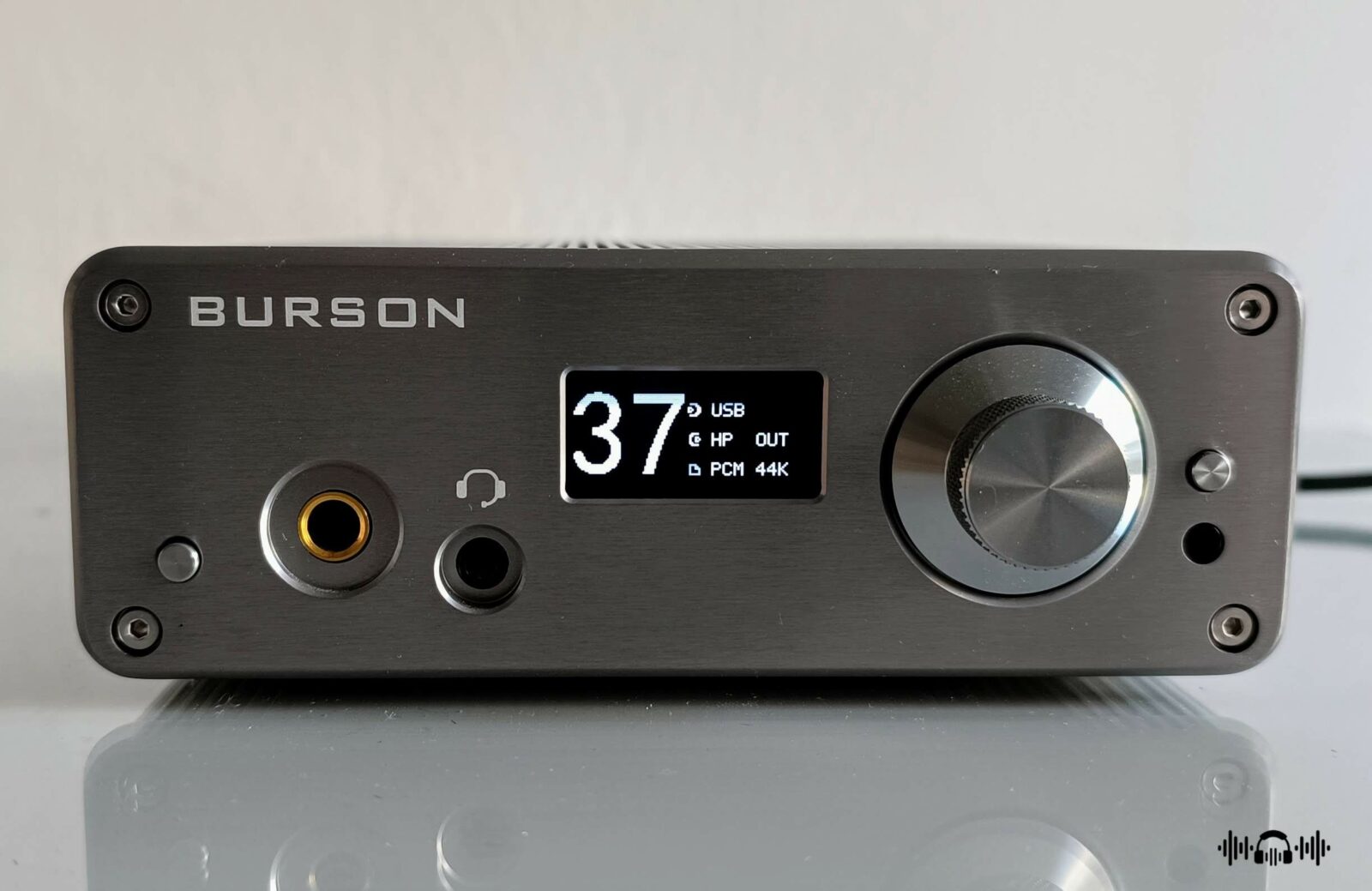

The Burson Playmate 2 review sample was kindly provided free of charge. I only covered import fees and tax. I didn’t receive monetary or any other kind of compensation and I don’t use affiliate links. The price of the Burson Playmate 2 is $544 for the basic version and $744 for the deluxe. The basic version comes with 2 x NE5532 and 2 x NE5534 op-amps installed while the deluxe includes an extra 2 x V6 Vivid dual, 2 x V6 Vivid single op-amps and a remote control. Both can be ordered from the Burson Audio online shop.
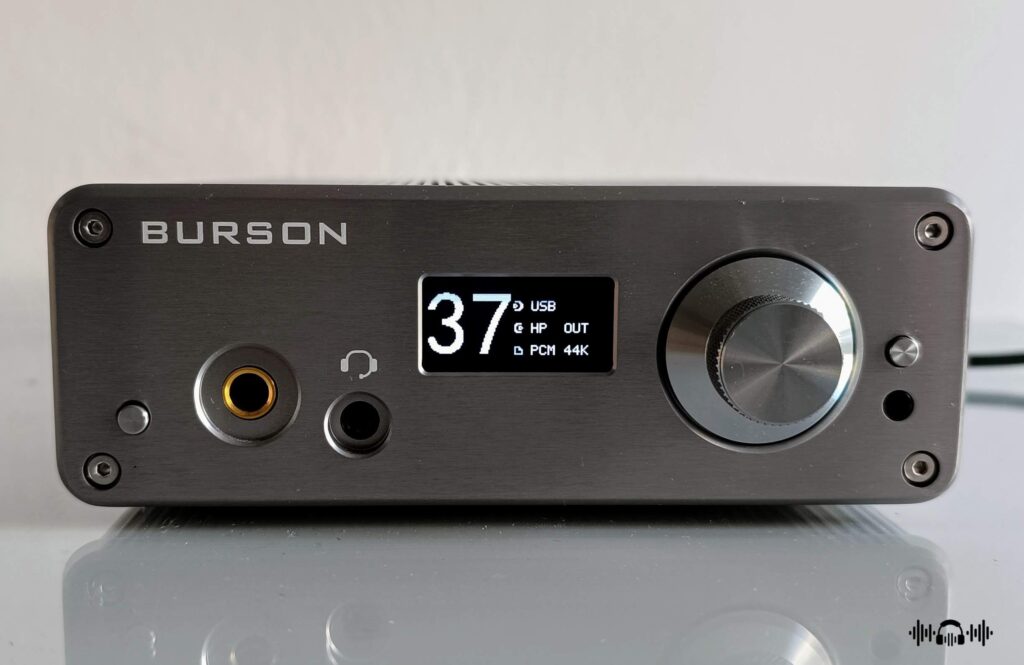
Burson Playmate 2 Review
For readers not familiar with Burson Audio, it is an Australian audio manufacturer making products with no op-amps and all discrete circuitry for a lavish musical experience.
The Burson Playmate 2 is a compact, all-in-one DAC and headphone amplifier that has evolved significantly from its predecessor by combining aesthetics with high-end functionality.
Featuring a single ES9038Q2M DAC chip and Xmos USB input, the Playmate 2 supports high-resolution audio formats up to 32bit/768kHz PCM and DSD512, making it compatible with Android, Windows, and Mac operating systems.
The discrete headphone amplifier of the Playmate 2 operates in pure class-A, delivering 3W/16Ω with two gain levels for optimal headphone matching.
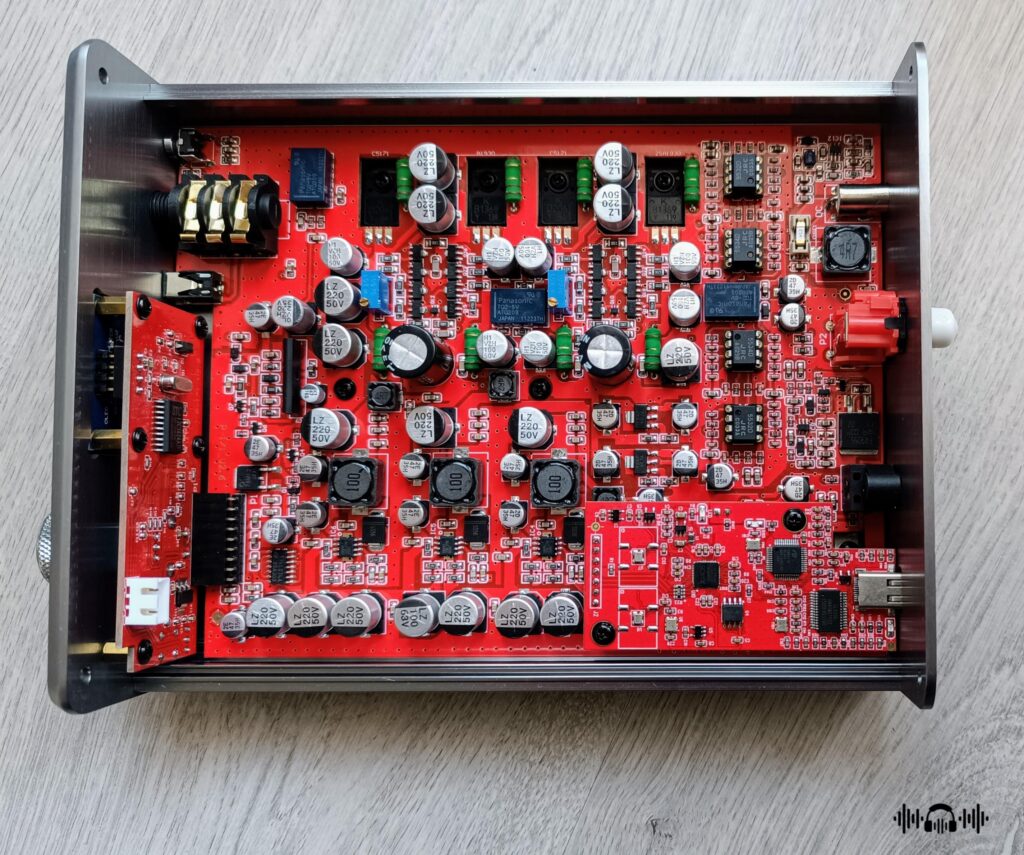
A unique feature of the Playmate 2 is the ability to tune the sound through op-amp rolling using the four detachable DIP sockets. By simply unscrewing and removing the lid, users can access the DIP sockets. The Playmate 2 comes with 2 x NE5532 and 2 x NE5534 op-amps pre-installed, which can be swapped with compatible op-amps like the Burson Audio Vivid discrete op-amps.
Burson Audio has also integrated their proprietary Max Current Power Supply technology into the Playmate 2, significantly enhancing audio quality. More information about this technology can be found here.
Appearance and build quality
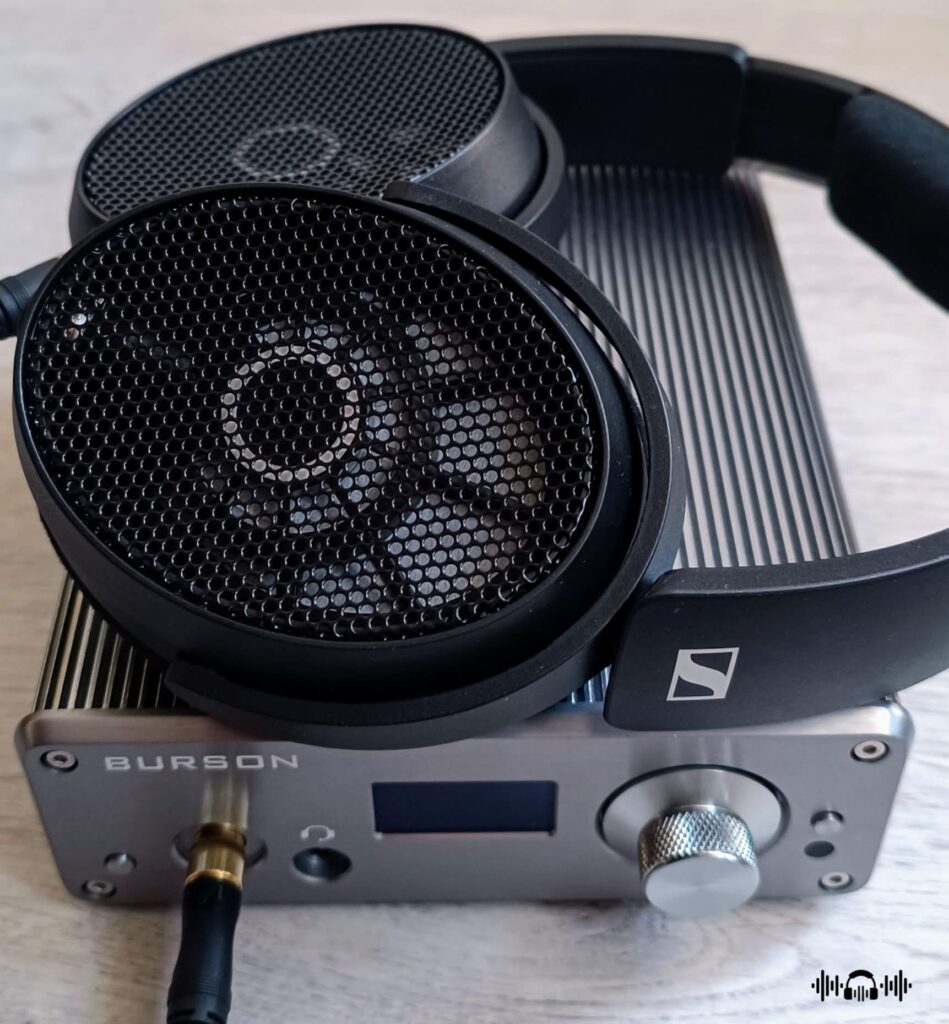
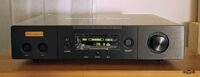
The Burson Playmate 2 has a compact design, featuring a chassis crafted from precision-machined aluminum alloy. Its unique design serves as a unified heat-sink, ensuring optimal functionality. This well-built device exudes an industrial aesthetic and its compact size allows for versatile placement. Additionally, users have the choice to purchase a stand for vertical positioning, further optimizing space utilization. It is worth noting that the deeply engraved lines on the chassis tend to attract dust and require frequent cleaning.
Operation and interface
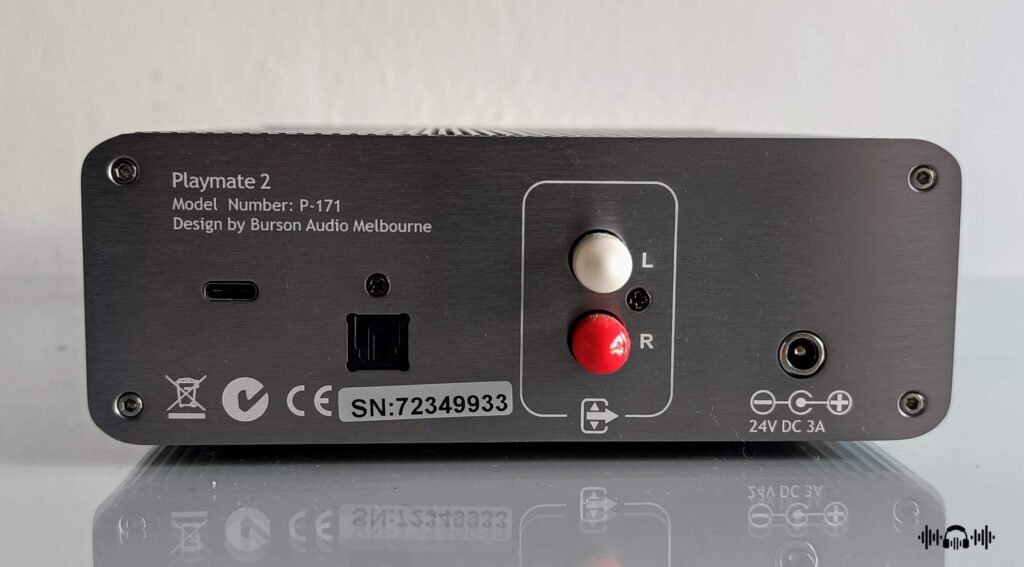
The Playmate 2 headphone DAC/amp features a variable RCA line output that functions as a preamplifier for active monitors or a power amplifier. Despite the absence of a line input, the device offers digital inputs via USB type-C and optical, with a coaxial input missing. These ports are conveniently located at the back alongside a 24V/3A DC input for connecting the external power adapter.
The front panel features a small OLED display positioned in the middle, a versatile knob, a 6.35mm headphone jack, and a 3.5mm jack that serves as both an HD microphone input for gaming. Also included in the package is a mic splitter, allowing you to connect both a microphone and headphones at the same time.
The display on the screen provides details such as the volume level and input sampling rate. It is used to navigate through the configuration menu, enabling you to adjust various parameters such as amplifier gain and digital filters. However, reading the digits on the screen can be quite challenging due to their small size. Additionally, the multifunction knob sometimes requires multiple continuous clicks to register an action, including adjusting the volume. In my opinion, including the remote control as a standard accessory would have been beneficial.
Accessories
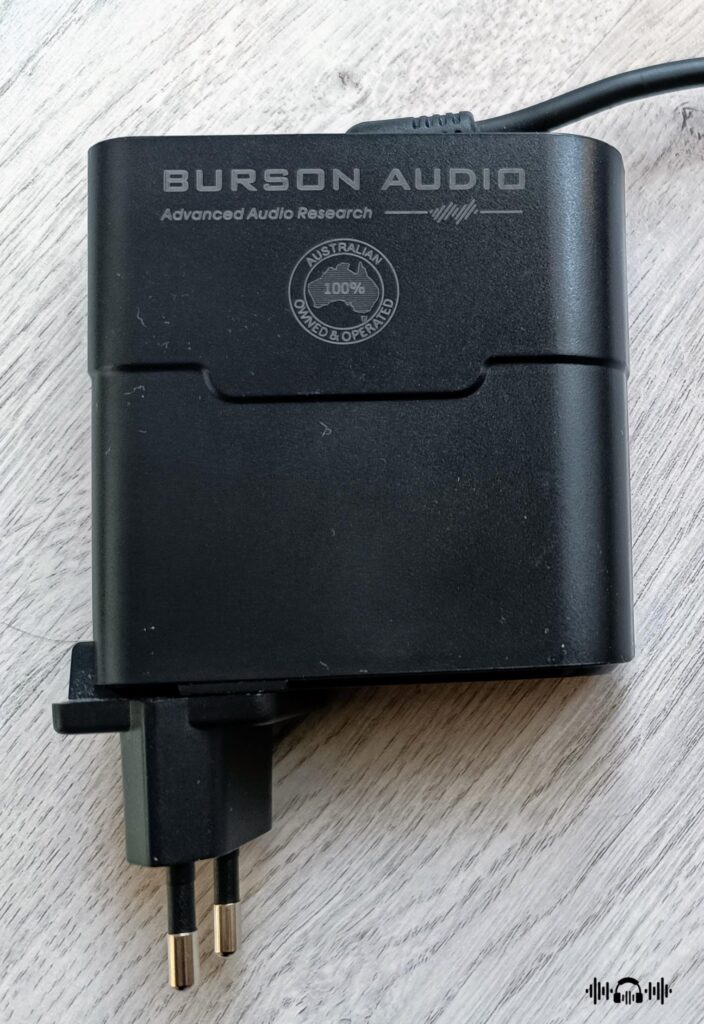
The bundle consists of a USB type-C cable, a microphone splitter, an external power adapter, and a hex key for detaching the cover to reach the op-amps.
Power output and noise floor
The Playmate 2 offers a power output of 3.5W/16Ω or 2.5W/32Ω, along with a 2Ω output impedance and a robust power supply for instant current supply. It can easily drive both low and high impedance headphones, except for extremely challenging loads like the HIFIMAN Susvara. Headphones such as the Focal Clear Mg, HIFIMAN Arya Organic, iBasso SR3, and Sennheiser HD660S2 are handled effortlessly by the Playmate 2, although it may get too loud too quickly with highly sensitive loads even at low gain settings.
While the Playmate 2 remains quiet enough for regular headphones, it may introduce some noise and hiss when used with sensitive earphones. The Burson Super Charger , a low noise power supply, can help reduce the noise floor to some extent. However, the Playmate 2 is not the best match for sensitive earphones. One drawback is the audible “pop” noise produced when turning the amplifier on and off, as it lacks a dedicated circuit for eliminating such noise.
Listening impressions
The ES9038Q2M DAC chip offers a wide range of sound possibilities, from ultra-linear and technical to natural and organic, depending on the implementation and design choices made by the manufacturer. The output stage and headphone amplifier design play a crucial role in determining the final sound quality. In this regard, the Playmate 2 by Burson Audio stands out with its unique tuning, diverging from the prevalent trend of THX or current feedback amplifiers that prioritize technical performance over musicality. As a result, the Playmate 2 delivers a more vibrant and engaging sound, avoiding the sterile and lifeless sound often associated with other amplifiers.
The Burson Playmate 2 has a warm, melodic sound profile that emphasizes timbre accuracy and texture refinement over pure technical prowess. Despite this focus, the Playmate 2 still excels in terms of transparency, definition, and clarity, providing impressive detail retrieval and well-defined layering in a laid-back presentation that avoids overwhelming the listener with technicalities.
More impressions
The Playmate’s sound profile emphasizes harmony and melody, offering a rich and harmonious presentation that is weighty and full-bodied. It features colorful overtones and realistic timbre. The treble is smooth with minimal artificiality and digital glare, providing a forgiving listening experience without any roughness or harshness. Despite this smoothness, it maintains good extension, energy, and clarity. The mid-range is transparent with nice articulation and satisfying resolution, accurately reproducing voices and instruments with a full-bodied and lush sound that is lifelike, euphonic, and organic. The bass is weighty yet tight and controlled. While layering, definition, and dynamics are good, they may not be class-leading, as some competitors excel in these areas. However, the Playmate offers a warmer and more visceral low-end that can enhance lean and dry sounding headphones.
The Playmate 2 offers a wide, spacious soundstage with excellent depth layering and height. While positioning accuracy and imaging are satisfactory, higher technical amplifiers may enhance them further. Nevertheless, these amplifiers may struggle to replicate the holography and grandeur of the Playmate 2. Furthermore, many THX implementations fall short in recreating the ambient atmosphere of recordings, often sounding dull and lacking vitality compared to the Playmate 2, which adds a sense of fluidity to the music.
The competition
The review section highlights the distinctive sound signature of the Playmate 2 in comparison to amplifiers utilizing op-amp designs in their output stages. When pitted against similarly priced DAC/amps such as the $520 Yulong Aurora or the $320 AUNE X1s GT with discrete output stages, the Playmate 2 holds its ground admirably. While these audio devices offer similar sound characteristics, variations lie more in their functionality and user interface rather than in sound quality.
For instance, the Aurora and the X1s GT boast balanced headphone or line outputs, multiple digital inputs, Bluetooth connectivity, and even a line input. However, they lack the flexibility of op-amp exchange and sound customization offered by the Playmate 2. Furthermore, the Playmate 2 is designed for single-ended performance, contrasting with the balanced outputs of the other two devices. Therefore, if you prefer single-ended headphones, the Playmate 2 comes highly recommended.
In the end
Fortunately, audio devices differ in their sound characteristics and audio engineers often choose diverse approaches when creating them. If you find yourself growing weary of the constant competition in measurements and the uninspiring nature of many current audio devices, consider adding the Playmate 2 to your list of options. With its captivating and melodious sound profile, this DAC/amp will rekindle the true essence of music in your listening experience. While it may have a few idiosyncrasies, they can easily be overshadowed by its superb sound quality and the remarkable convenience it offers in swapping op-amps.
Copyright – Petros Laskis 2024.
+ Musical with very natural timbre
+ Good technicalities and transparency
+ Visceral and weighty bass
+ Immersive and holographic
+ Powerful headphone output
+ Remote control
+ Easy op-amp swapping
+ Preamplifier
+ LCD display
+ Compact sized and well made
+ Value for money

- Not class leading technicalities
- Small LCD screen is difficult to read
- The multifunction knob is not accurate
- Not recommended for sensitive earphones
- No coaxial or line input
- Remote control is optional










How do you feel this compares to the Aune S9c?
Hi, they are both musical and organic sounding with natural timbre. The Aune has better technicalities without loosing the essence of music. It is also more silent and has more inputs/outputs and functionality. The Burson has the uniqueness of op-amp rolling if you are into that sport. I would rate the Aune a bit higher as an overall performance.